Gassan Sadakazu (2nd Generation): Forging Technique of a Living National Treasure and the Osaka Shintō Style
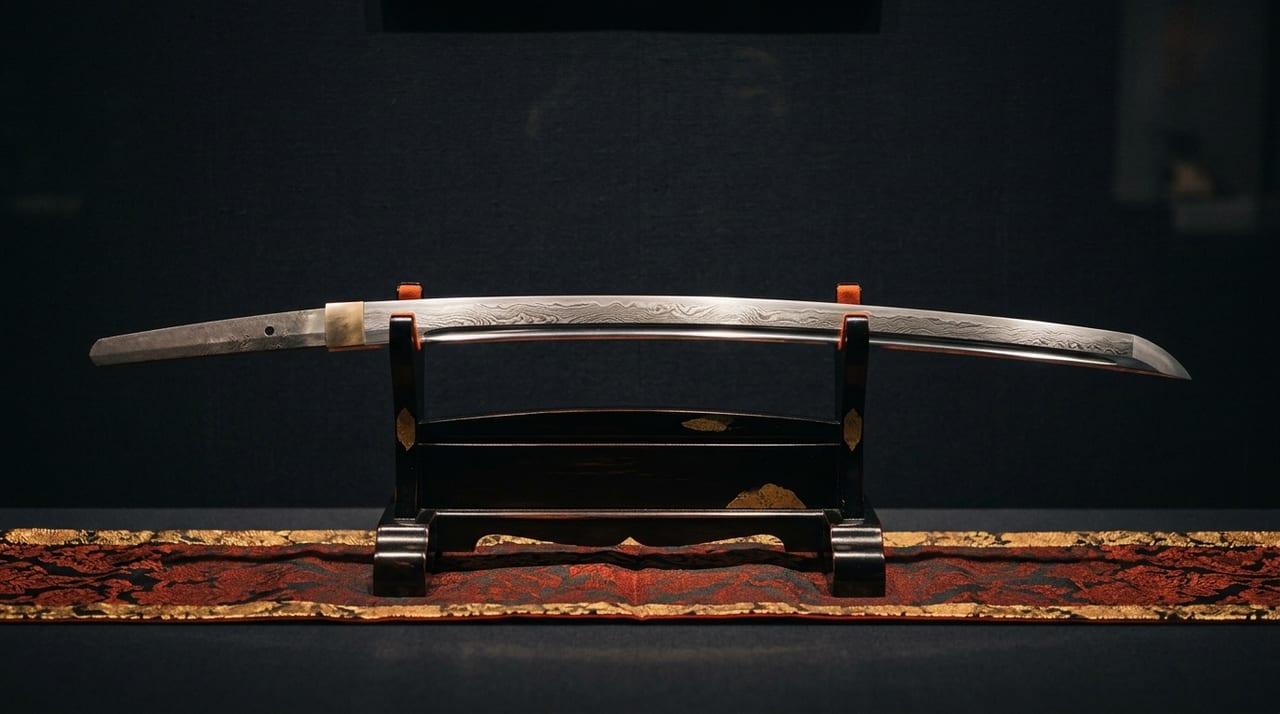 * Image is for illustrative purposes only.
Table of Contents
Gassan Sadakazu II—20th Century Living National Treasure
Gassan Sadakazu II (1907–1995) was one of the foremost bladesmith of the Showa period and was designated a Living National Treasure (Intangible Cultural Property holder) in 1971 (Showa 46) in the field of Japanese swords. This designation was based on technical evaluation as an inheritor of the "Gassan school's ayasugi-hada technique." The mechanism of the Living National Treasure certification for swordsmiths itself is explained in detail in Living National Treasure Swordsmith Certification.
The name Gassan is said to derive either from Gassan Shrine at Mount Gassan (present-day Yamagata Prefecture) or from the school of bladesmiths forged at Mount Gassan. Its origins are believed to trace back to the late Heian period.
History of the Gassan School—From Yamato and Dewa to Osaka
The Gassan school's history is ancient, with multiple lineages transmitted.
Ancient Gassan (Dewa Gassan)
Bladesmiths are said to have existed around Mount Gassan in Dewa Province (present-day Yamagata Prefecture) since ancient times. Gassan Shrine at Mount Gassan in Dewa had an aspect as a guardian deity of bladesmiths and became the origin of the bladesmith name "Gassan."
Yamato Gassan School
The Gassan school of Yamato Province (present-day Nara Prefecture) was a lineage active from the Kamakura through Muromachi periods that employed Yamato tradition techniques.
Osaka Gassan (Early-modern Lineage)
During the Edo period, a bladesmith lineage bearing the name Gassan emerged based in Osaka. This Osaka Gassan lineage connects to the subsequent lineage of Gassan Sadakazu (1st and 2nd generation).
Gassan Sadakazu (1st Generation) (1836–1918): A leading bladesmith of the Meiji period who continued working as a bladesmith through the difficult era following the Sword Abolition Edict (1876). He is evaluated as the early-modern master of the Osaka Gassan school.
Gassan Sadakazu (2nd Generation): Grandson of the 1st generation and the representative figure of the Showa Gassan school. His designation as a Living National Treasure meant the Gassan school's technique would be protected and transmitted at the national level.
Ayasugi-hada (Wavy Sugi-grain)—The Signature of the Gassan School
The most distinctive characteristic of the Gassan school is the unique steel surface pattern called "ayasugi-hada" (wavy cedar-grain).
What is Ayasugi-hada?
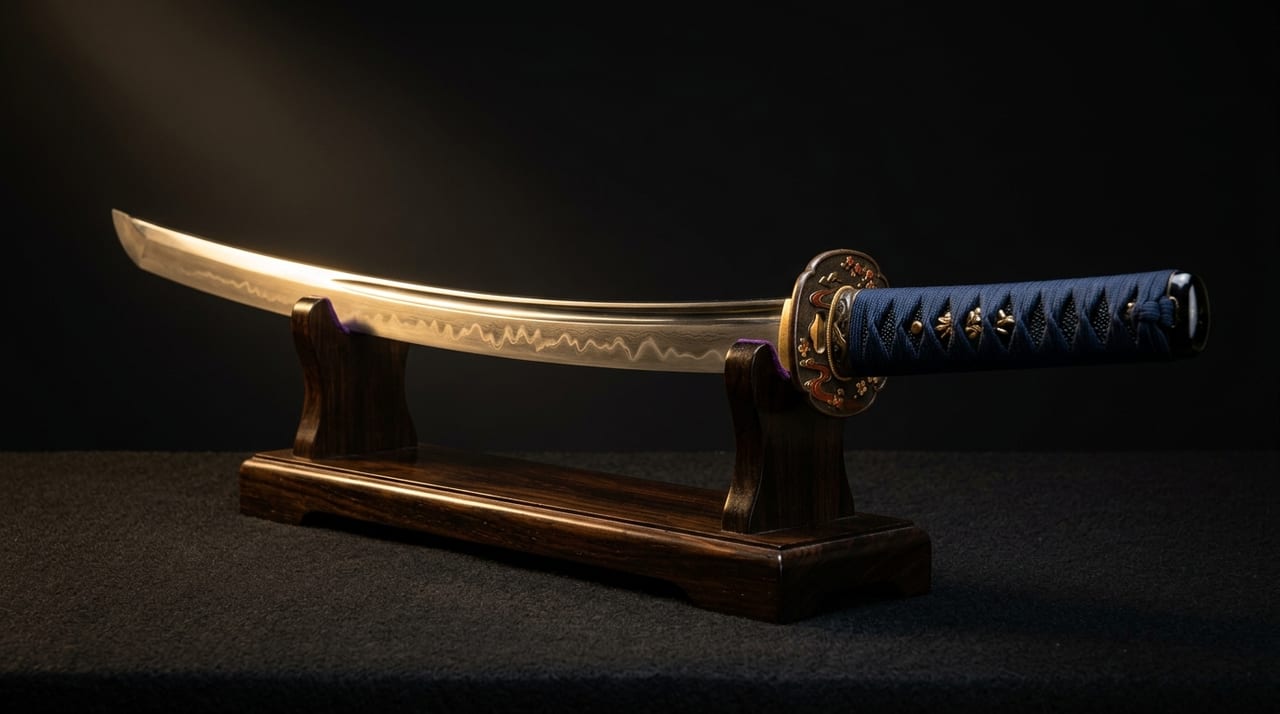
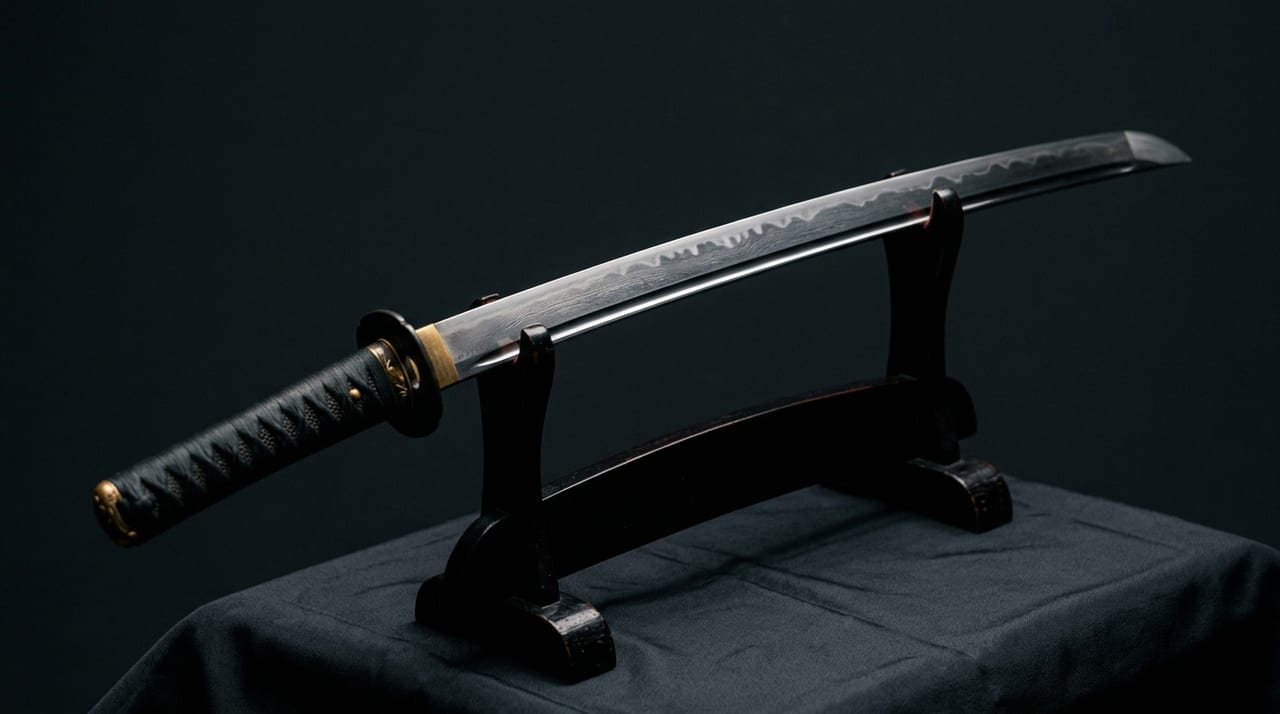
Ayasugi-hada is a type of "mokume" (wood grain pattern) appearing on the jigane (steel surface) of the blade, characterized by wave-like and flowing patterns resembling the grain of a cedar tree viewed at an angle. It is also expressed as "wave-patterned surface" or "flowing wood grain."
The general classification of jihada such as itame, masame, and ko-itame is summarized in Jihada Typology.
Compared to the steel surfaces of other schools (itame, masame, ko-itame, etc.), ayasugi-hada features:
- Wave and flow-like patterns: Rather than uniform, linear grain, there is undulating movement
- Fineness and density of pattern: Fine waves packed closely together are considered refined
- Three-dimensional depth: The pattern changes with shifts in light angle, creating an impression of being "alive"
Production Technique of Ayasugi-hada
Creating ayasugi-hada requires special folding and hammer work different from typical sword construction:
Twisting Tempering (Neji-tanren): When folding steel, rather than a normal fold, a special "twist" is applied, which creates the wavy crystal structure. The direction, intensity, and number of these "twists" determine the quality of the ayasugi-hada.
Judgment in Hardening: How beautifully the ayasugi-hada manifests after hardening cannot be completely predicted beforehand. The furnace temperature, timing of the twist, and hardening conditions interact in complex ways.
Technical Contributions of Gassan II
Gassan Sadakazu II researched and refined the ayasugi-hada technique, making technical contributions in the following areas:
- Stabilization of Ayasugi-hada: Achievement of consistently stable, high-quality "well-proportioned beautiful ayasugi-hada" praised by connoisseurs
- Harmony with Blade Pattern: Refined the balance between the ayasugi-hada steel surface and the hamon (blade pattern). By pairing the animated steel surface with restrained straight-line blades or fine interlocking patterns, maximum contrast between surface and blade was achieved
- Completion of Aesthetic Appreciation: During the transition from functional swords to artistic blades (early Showa through postwar), the technique evolved to enhance artistic completeness.
Appreciation Points of Representative Works
Specific checkpoints when appreciating works by Gassan Sadakazu II:
Quality of Ayasugi-hada
- Are the wave patterns fine and densely packed?
- When the viewing angle changes, does the pattern appear to "move"?
- Are the patterns uniformly distributed across the entire blade (uneven areas indicate problems)?
Blade Pattern Type and Balance
Gassan II executed diverse blade patterns, with the most common:
- Suguha (straight blade): A quiet blade pattern providing contrast to the dynamic steel surface of ayasugi-hada
- Ko-gunome (small interlocking): Gentle wave-like blade pattern
Finishing of the Kissaki
The kissaki of Gassan II's works is known for its refined proportions. The bōshi (the hamon in the point) is typically ko-maru to chū-maru with a deep kaeri (turn-back).
Signature Carving Style
The characteristic style of the "Gassan Sadakazu" signature provides an important basis for authentication when compared against signature references.
NBTHK Authentication and Market Value
Works by Gassan Sadakazu II receive high evaluation as the work of a Living National Treasure:
- Specially Important Sword (NBTHK highest rank): 2–5 million yen and above
- Important Sword: 800,000–2 million yen
- Specially Preserved Sword: 300,000–1 million yen
Since the Living National Treasure designation occurred in 1971, works created before and after this designation sometimes show price differences.
The Gassan School in Wartime and Its Transmission Today
Even during the mass production of military swords in the Shōwa 10s (1935–1944), the Gassan school continued to preserve its traditional techniques. For details of that era, see The Gassan School in the Military Era. Following the death of Gassan Sadakazu II in 1995, his technique was inherited by successors.
Gassan Sadatoshi: The third son (biological son) of the 2nd generation, who continues to carry on the Gassan school's techniques today. His modern swords are introduced in Gassan Sadatoshi: Modern Blade Craft. The ayasugi-hada technique lives on in the modern era, making it an important bearer of Japanese sword culture.
Conclusion—The Meaning of Technology Protected by a Living National Treasure
The designation of Gassan Sadakazu II as a Living National Treasure represented a decision to "protect at the national level a school possessing the unique ayasugi-hada technique."
Having survived the difficult era following the Sword Abolition Edict, and amid the postwar demand for artistic blades, the Gassan school most incisively embodied the transformation of the Japanese sword from "function to art." Its ayasugi-hada remains today one of the pinnacles of artistic possibility in the Japanese sword and continues to be evaluated as such.