The Modern Swords of Tōshō Gassan Sadatoshi: Passing On the Techniques of the Nara Gassan School and Modern Swordsmithing
 * Image is for illustrative purposes only.
Table of Contents
The Modern Swords of Tōshō Gassan Sadatoshi: A Present-Day Smith Carrying On the Techniques of Nara
Gassan Sadatoshi is a present-day tōshō (swordsmith) who works from his workshop in Sakurai, Nara Prefecture (Takashimaya, "Hyakuren Seitetsu: Tōshō Gassan Sadatoshi Exhibition"). His father, Gassan Sadakazu II, opened the Gassan Nihontō Tanren Dōjō, a training hall for forging Japanese swords, in Chihara, Sakurai, in 1965 (Tokyo National Research Institute for Cultural Properties, "Gassan Sadakazu"). While carrying on the techniques of the swordsmiths of earlier times, he makes swords that meet the demands of the present day. His work is an important example of how the tradition of Japanese sword making has been handed down to the present. As an heir to the Gassan school, he is one of those who carry the future of Japanese sword making.
The Gassan School and Its History
Summarizing the obituary article of the Tokyo National Research Institute for Cultural Properties, the history of the Gassan family is as follows (Tokyo National Research Institute for Cultural Properties, "Gassan Sadakazu"). The family did not move to Nara until the Shōwa era.
- Kamakura period: The Gassan smiths arise in Dewa (present-day Yamagata Prefecture). The Gassan family regards them as its founders
- Around Tenpō 4 (1833): Gassan Sadayoshi moves to Osaka, and the Osaka Gassan family begins
- 1935: Gassan Sadakazu II moves his forge from Osaka to Mount Yoshino in Nara
- 1965: Sadakazu II opens the Gassan Nihontō Tanren Dōjō in Chihara, Sakurai, Nara Prefecture
Gassan Sadatoshi's Techniques and Characteristics
The characteristics of Gassan Sadatoshi's sword making can be seen in the following points.
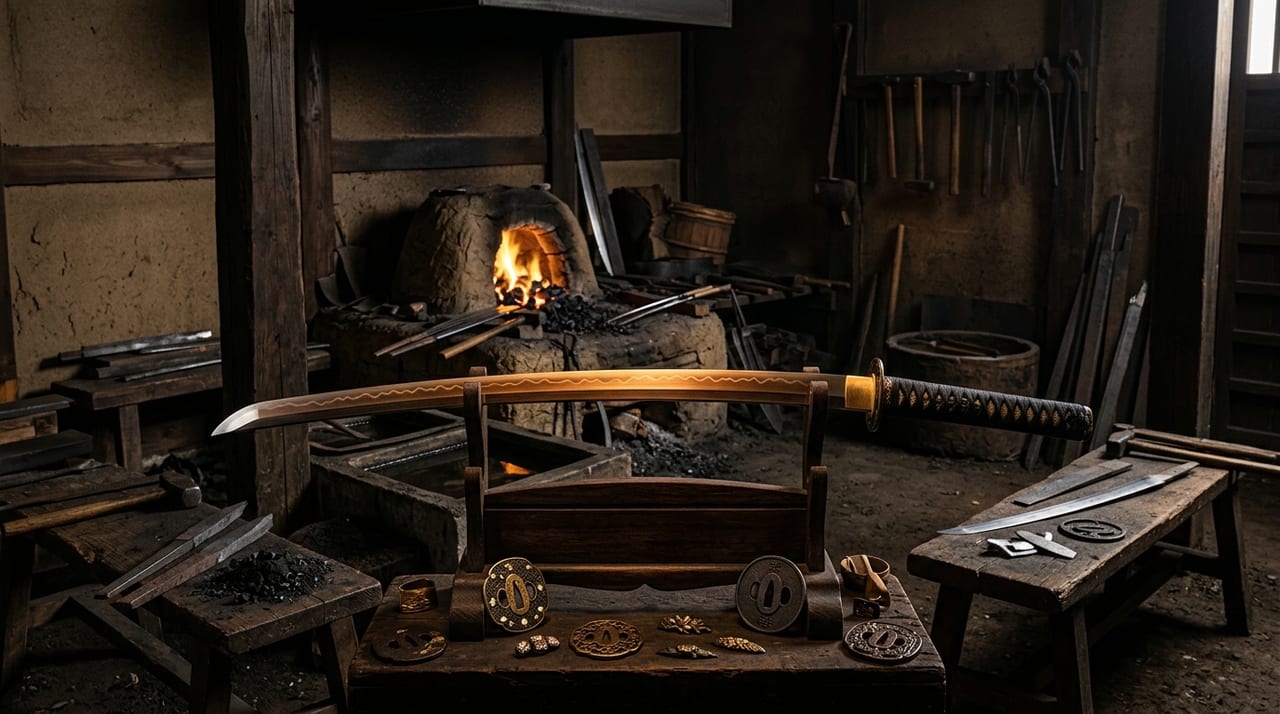
Traditional forging methods Gassan Sadatoshi uses forging (tanren) techniques that have been handed down since the Edo period. Starting from tamahagane, he folds and forges the steel again and again to create a blade that is both sturdy and supple. In essence, this technique is no different from that of the swordsmiths of 1,000 years ago. In their daily work at the forge, swordsmiths bring tradition and modern techniques together. The steel is hammered at high temperature, cooled, and heated again. Through this repetition, jigane of the highest quality is produced.
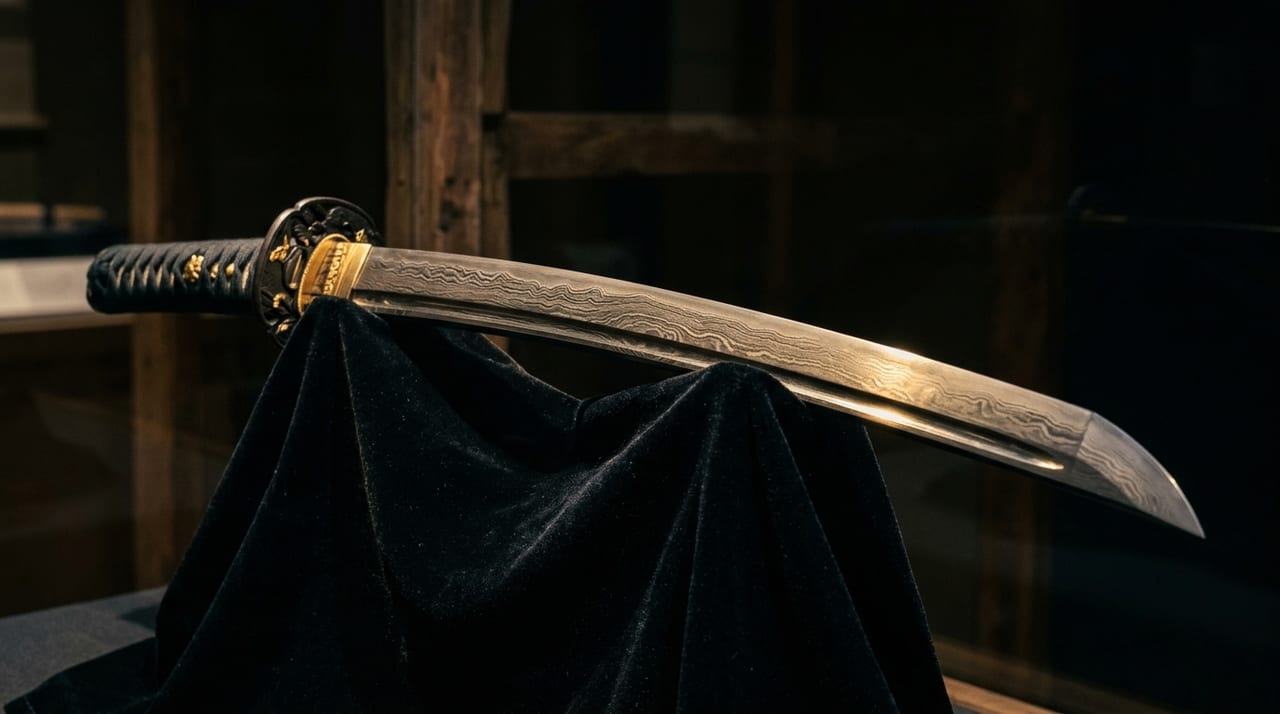
The texture of the jigane The character of the Gassan school shows in the jigane (the steel of the blade surface). A fine, even grain and a dark, clear ground color are the distinguishing features of the Gassan school. They are the result of a complex process achieved through temperature control during forging and the precision of each hammer blow. The jigane is so beautiful that one look at a Gassan school sword is enough to recognize it as Gassan work.
Expressing the hamon Quenching the blade (yaki-ire) is the swordsmith's most important skill. Gassan Sadatoshi can produce a wide range of hamon, from suguha (a straight temper line) to chōjiba (a clove-shaped temper line). Each hamon is chosen according to the purpose of the sword and suited to the needs of the user. The beauty of the hamon shows the swordsmith's artistic sense.
The Value and Significance of Modern Swords
Swords made by modern swordsmiths such as Gassan Sadatoshi are not mere craft objects; they carry the following combination of values.
1. Technical value As the work of an heir to traditional techniques, Gassan Sadatoshi's swords are a medium that conveys Japan's cultural heritage to the present day. They bear the subtle adjustments of a craftsman's hand, which machine production can never achieve. This skill has been handed down through the training of master and apprentice over generations. To protect the technique is nothing other than to protect the culture.
2. Artistic value The curve of the blade, the expression of the jigane and the undulation of the hamon all radiate the beauty of a work of art. Gassan Sadatoshi's works show a fusion of technical perfection and aesthetic sense. Those who look at the sword will be moved by its beauty. This beauty is the product of a tradition hundreds of years old.
3. Practical value A genuine Japanese sword is designed with practical use in mind. Gassan Sadatoshi's swords are sometimes used in training where bamboo and straw are actually cut. They may also be used in the practice of traditional martial arts, and they still function as practical tools today. Combining practicality and beauty is the mark of a true sword.
4. Spiritual value The process of making a Japanese sword is close to an act of meditation. In his daily forging, the swordsmith holds a dialogue with the sword. A sword born of that process becomes a work that embodies the spirit of its maker. Through the sword, the craftsman's thought and philosophy find expression.
The Succession of the Gassan School and Its Challenges for the Future
Swordsmiths such as Gassan Sadatoshi play an important role in passing their techniques on to the younger generation. Japanese sword making depends heavily on the transmission of individual skills, and the master–apprentice relationship lies at the core of passing on the techniques. The training of apprentices will decide the future of the Gassan school. Training successors is the most important challenge of the present day.
Through daily forging, the apprentices refine their sense and skill as swordsmiths. Young apprentices learn the techniques by watching their master's back as he works. This master–apprentice relationship is the very mechanism by which traditional culture is passed on.
The Significance of the Gassan School in Nara
The activity of the Gassan school in Nara Prefecture shapes the cultural identity of the region. The combination of the ancient capital of Nara and swords is a symbol of Japan's traditional culture. Because swordsmiths like Gassan Sadatoshi continue their work, Nara still exists today as a "town of swordsmiths." Continuing this tradition is not merely an economic activity; it carries the mission of passing Japanese culture on to later generations. By making use of the region's cultural resources, it also contributes to regional revitalization.
Conclusion: The Harmony of Tradition and the Present
Gassan Sadatoshi's modern swords are a harmony of tradition and the present. While preserving old techniques, they have the flexibility to meet the demands of the present day. This approach is the very proof that the Japanese sword is not merely an "old weapon" but still functions today as a living culture. Through the work of today's swordsmiths, the traditional craft of the Japanese sword will surely be handed down to the next generation. The future of the Gassan school symbolizes the cultural future of Japan itself.