Genroku Culture and Swords: The Aesthetic of Ornamental Blades and the Flourishing Sword Fittings Industry
 * Image is for illustrative purposes only.
Table of Contents
Society and Swords in the Genroku Period
The Genroku era (1688–1704) coincided with a prosperous period under the reign of Tokugawa Tsunayoshi, the fifth shogun of the Edo shogunate. Amid prolonged peace, commerce flourished and townspeople culture blossomed. Genroku culture, which emerged centered on the Kansai region, nurtured diverse arts including woodblock prints, kabuki, haiku poetry, and puppet theater, and also brought significant changes to the world of swords and sword fittings.
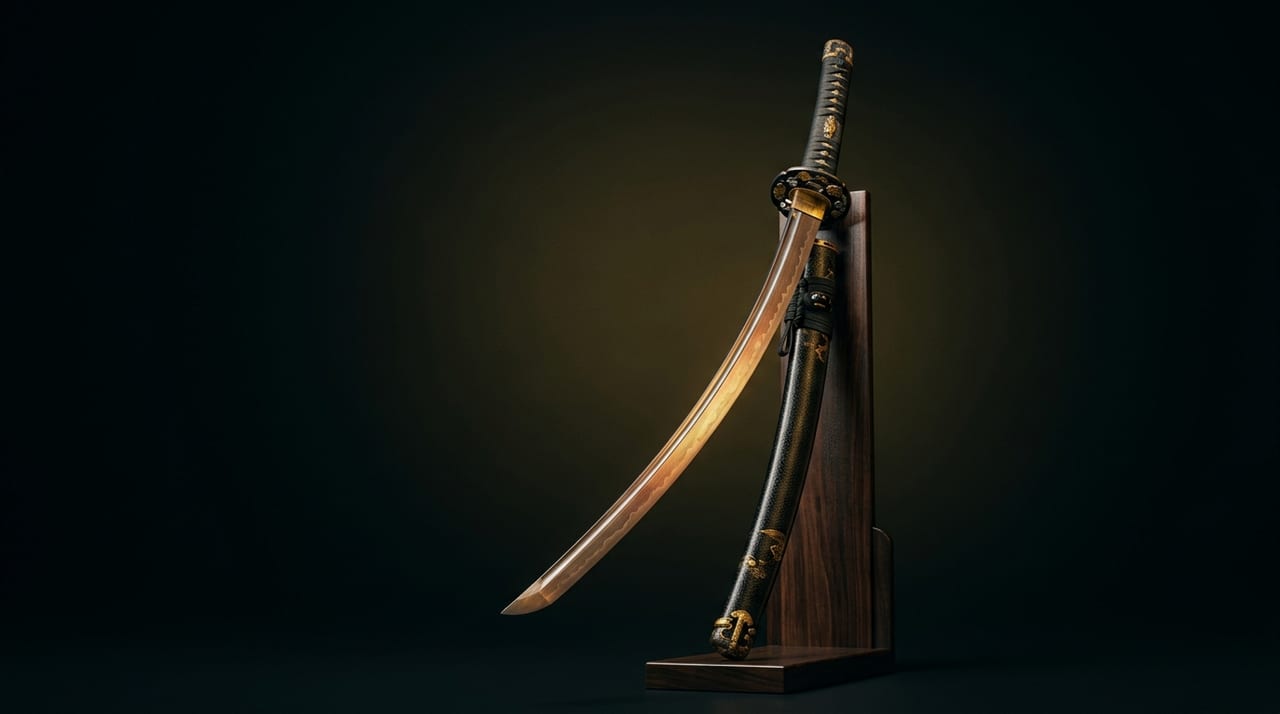
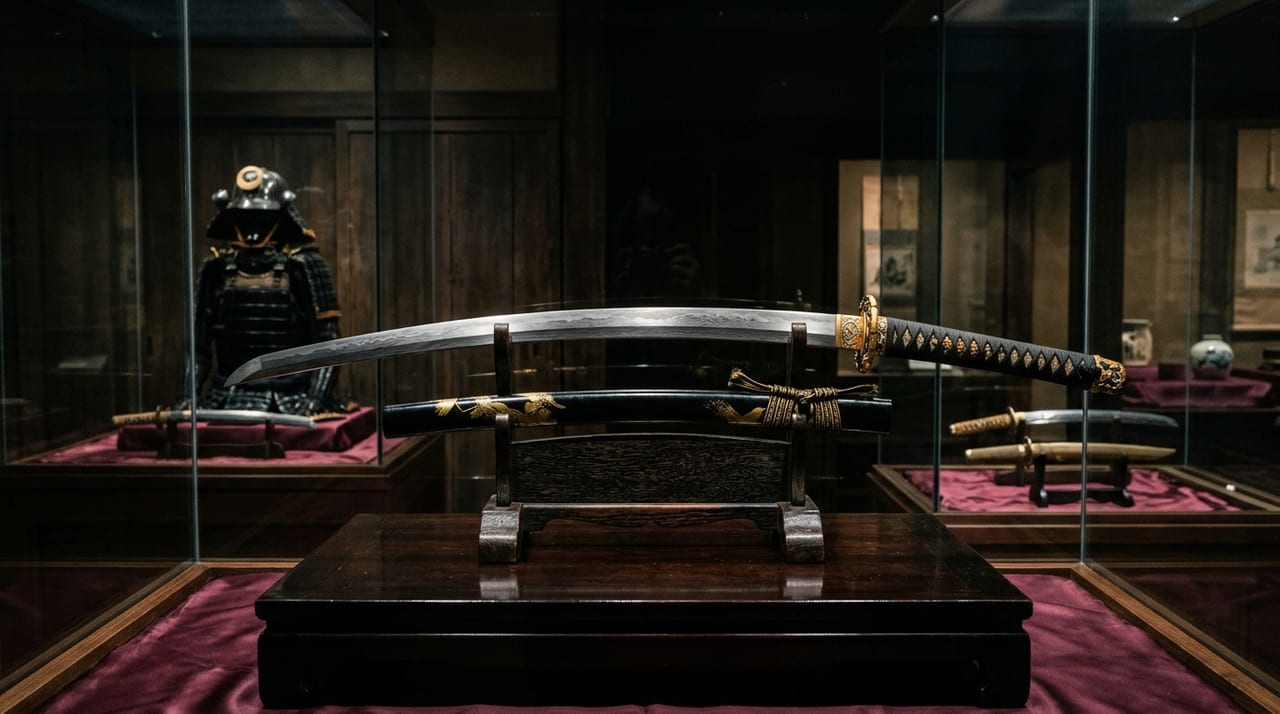
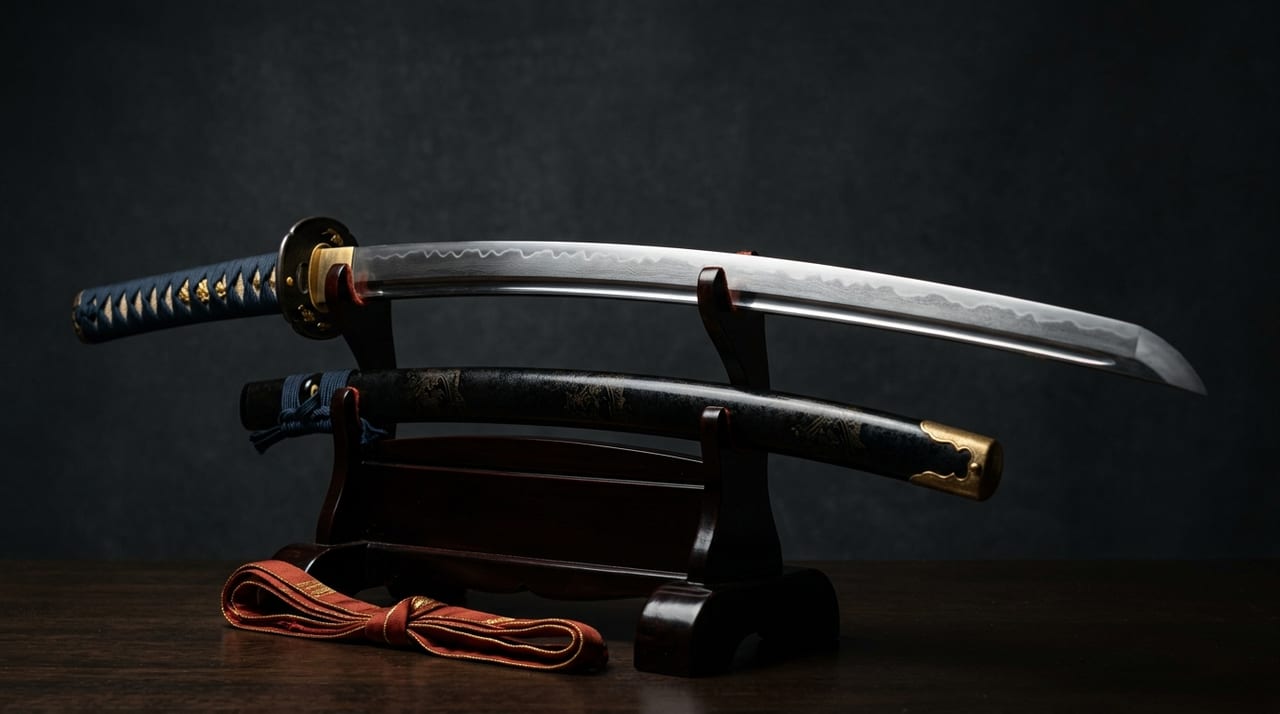
As swords transformed from "practical combat tools" to "formal regalia indicating social status" in an era without warfare, the aesthetic value of the entire sword fittings (koshirae) came to the fore rather than the blade's form itself. For samurai of the Genroku period, swords were simultaneously weapons and symbols of fashion.
The Shift Toward "Ornamental Swords"
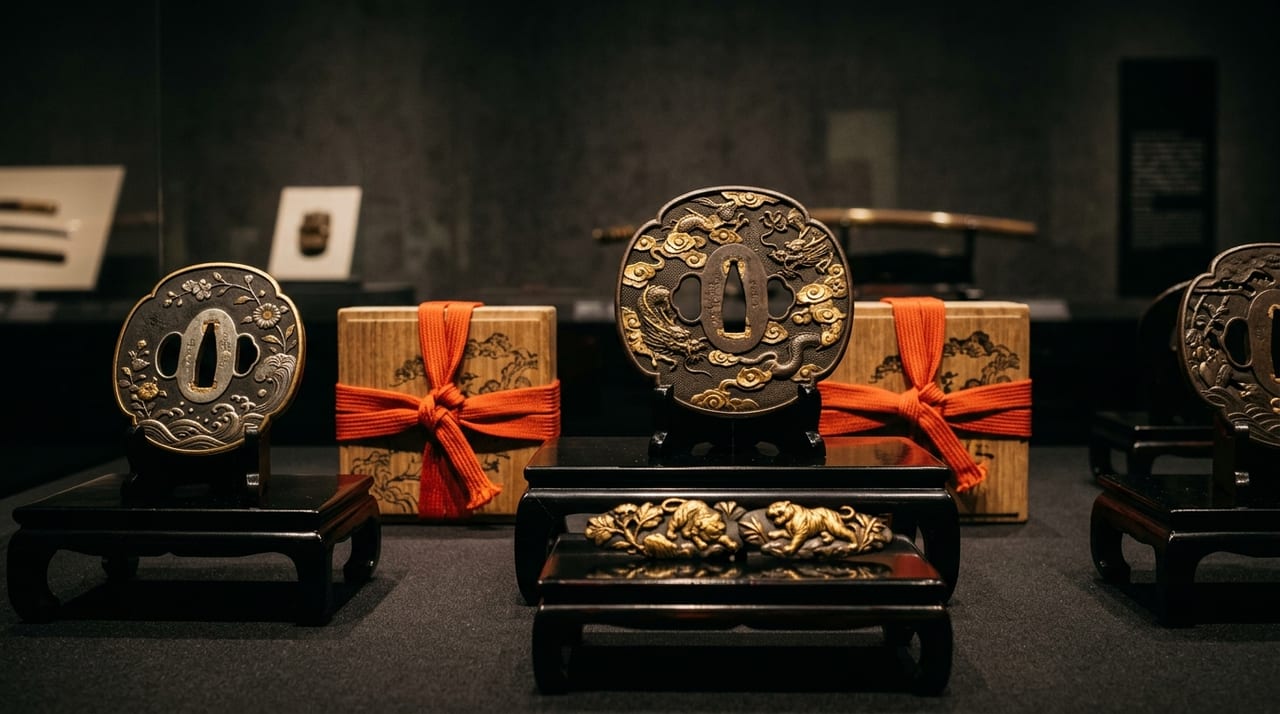
During the Genroku period, greater emphasis was placed on the refinement of sword fittings rather than blade forging. Sword fittings comprised the following types, and numerous metal workers, led by the Goto family, competed keenly to create them.
- tsuba
- menuki
- fuchigashira
- kozuka
- kogai
In particular, the Goto family's technique of carving into shakudo nanako-ji (red copper with fish-egg texture) was widely sought after by the upper classes of this era.
Meanwhile, among the merchant class, the Genroku atmosphere of favoring splendor gave rise to ostentatious koshirae. Ornate wakizashi with lacquered scabbards decorated with gold maki-e and gold powder became fashionable, contributing to the background for the strengthening of "sumptuary edicts" during the later Kyoho period.
Higo Koshirae and Samurai Aesthetics in the Genroku Period
Changes also occurred in the aesthetic sensibilities of the samurai class. The "Higo koshirae," which developed centered on the Hosokawa clan (Higo), instead pursued a rustic and austere beauty. A simple composition featuring a tsuba with rounded iron surfaces, a rattan-wrapped handle, and a plain lacquered scabbard was favored by samurai as a reaction against excessive ornamentation. Higo koshirae permeated as a counter-style expressing samurai pride within Genroku's brilliant culture.
Sword Makers and the Development of the Shinto Period
In terms of sword makers' technique, the Genroku period corresponds to the late period of shinto (new swords). Sword makers who were disciples of Tsuda Echizen no Kami Sukehiro of Osaka were prominent during this period. While blades employing techniques that inherited Sukehiro's "tōran midare" (turbulent wave pattern) were sought after by the wealthy of the Kansai region, in Edo master craftsmen following Nagasone Kotetsu continued to forge swords combining practicality and beauty.
By the Genroku period, the master craftsman Echizen no Kami Sukehiro (second generation), who is considered the peak of the shinto period, had already passed away (died in 1682), and the Genroku years, which followed shortly after, were also a period when the techniques inherited by his disciples' generation were scattered throughout the regions.
The Flourishing of the Sword Fitting Industry
The economic prosperity of the Genroku era had direct consequences for the sword fitting industry. The workload of craftsmen such as metal workers, scabbard makers, handle makers, and polishers increased, and especially in Osaka and Kyoto, artisan districts with concentrated specialized workshops developed. Metal workers wielded alloys including gold, silver, red copper, and shibuichi to mass-produce sword fittings with precise carved decoration.
On the other hand, concerns about quality degradation due to mass production began to emerge. When Tokugawa Yoshimune later regulated extravagance through the "Kyoho Reforms" during the Kyoho period (1716–1736), demand for excessively ornate koshirae subsided, but the technical foundation cultivated during the preceding Genroku period was inherited by later sword fitting culture.
What Genroku Culture Left in Sword History
The Genroku era was a turning point when Japanese swords shed their identity as "weapons" and established their status as "artworks and cultural properties." The precise metal carving techniques on tsuba and menuki, the gold maki-e decoration on lacquered scabbards, and the establishment of the koshirae industry in which scabbard makers, handle makers, and metal workers collaborated—all of these were products of the economic prosperity and cultural flowering of the Genroku period. The origin of modern sword fitting appreciation and collecting lies precisely in this era.
Yokoya Sōmin—Founder of the Machi-bori School
The figure who brought the greatest transformation to the Genroku metalwork world was Yokoya Sōmin (1670–1733). After training in the Goto school, Somin became independent around 1690 and, departing from his master's house style, founded the "machi-bori" (town carving) school. While the Goto family adhered to the conventional form of high-relief depictions of flora and fauna on shakudo nanako-ji, Somin freed himself from constraints of material, composition, and subject matter, freely combining openwork carving, nunome zogan (textile-pattern inlay), and kata-kiribori (single-stroke carving). This transformation, which opened the beauty of sword fittings not only to samurai but also to wealthy merchants, embodied the "openness" of Genroku culture in the metalwork world. Somin's lineage was inherited in later generations as the Edo Yokoya school.
Tsuda Echizen no Kami Sukehiro and Osaka Shinto
When discussing the sword world of the Genroku period, the master of Osaka shinto, Tsuda Echizen no Kami Sukehiro (1637–1682), cannot be overlooked. Sukehiro is renowned as the founder of the "tōran midare" (turbulent wave) hamon distinctive of the shinto period and was active as the retained sword maker of Aoyama Munetoshi, the Osaka Castle administrator. However, he passed away at the young age of 46 in 1682—six years before the Genroku period (1688–1704) began. As mentioned in the existing text, the Genroku period was precisely the time when Sukehiro's disciples' generation inherited his "tōran midare" and scattered throughout the regions. Sukehiro's technical legacy passed to the wealthy of the Genroku period and became the core of Kansai sword culture.
The Goto Family's House Carving—400 Years of Shogunal Patronage
The Goto family presided at the summit of sword fittings in the upper samurai society of the Genroku period. Since the founder Yūjō (1440–1512), the Goto family had served powerful rulers during the Ashikaga, Oda, Toyotomi, and Tokugawa periods for seventeen generations, monopolizing the supply of the three shogunal fittings (menuki, kozuka, and kogai) for approximately 400 years. Successive heads of the Goto family during the Genroku period adhered to the standard form of high-relief carving on shakudo nanako-ji known as "ie-bori" (house carving), continuing to supply the most formal presentation and ceremonial pieces to daimyo families. Works by the Goto family are held in numerous Western museum collections, and their international reputation remains unshaken to the present day.
Summary: The Genroku Sword Fitting Industry
The legacy that Genroku culture left in the world of sword fittings can be summarized in three points.
- The Goto family's ie-bori established itself as a completed form, becoming the standard for "formal sword fittings" thereafter
- With the rise of Yokoya Sōmin's machi-bori, the makers and patrons of sword fittings expanded from samurai to civil society
- The prosperous Genroku economy deepened the layers of the entire artisan industry, establishing the technical foundation that continues to be inherited in the present day
Even after Genroku prosperity ended and the Kyoho reforms regulated extravagance, the techniques and aesthetic sensibilities cultivated in this era did not disappear but became the foundation for Japanese sword fitting culture thereafter.