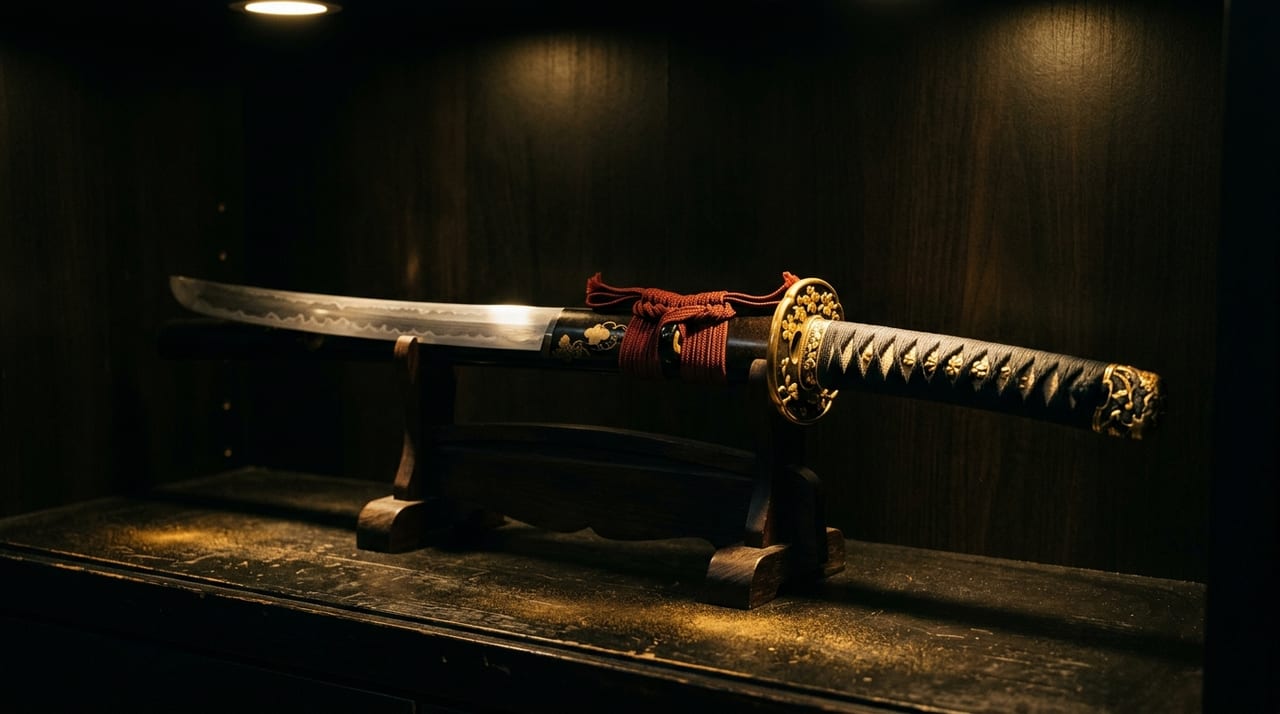
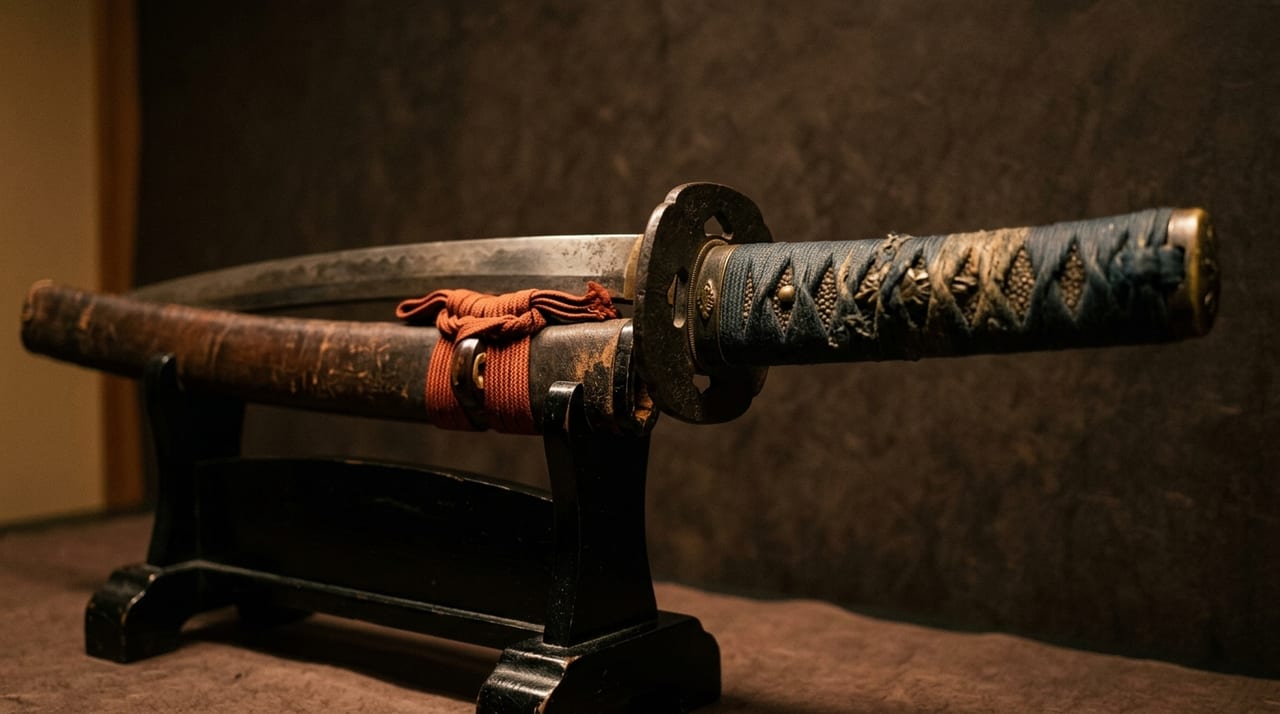
Shintō of the Edo Period — The Aesthetic Revolution in Sword Culture Nurtured by Genroku Culture
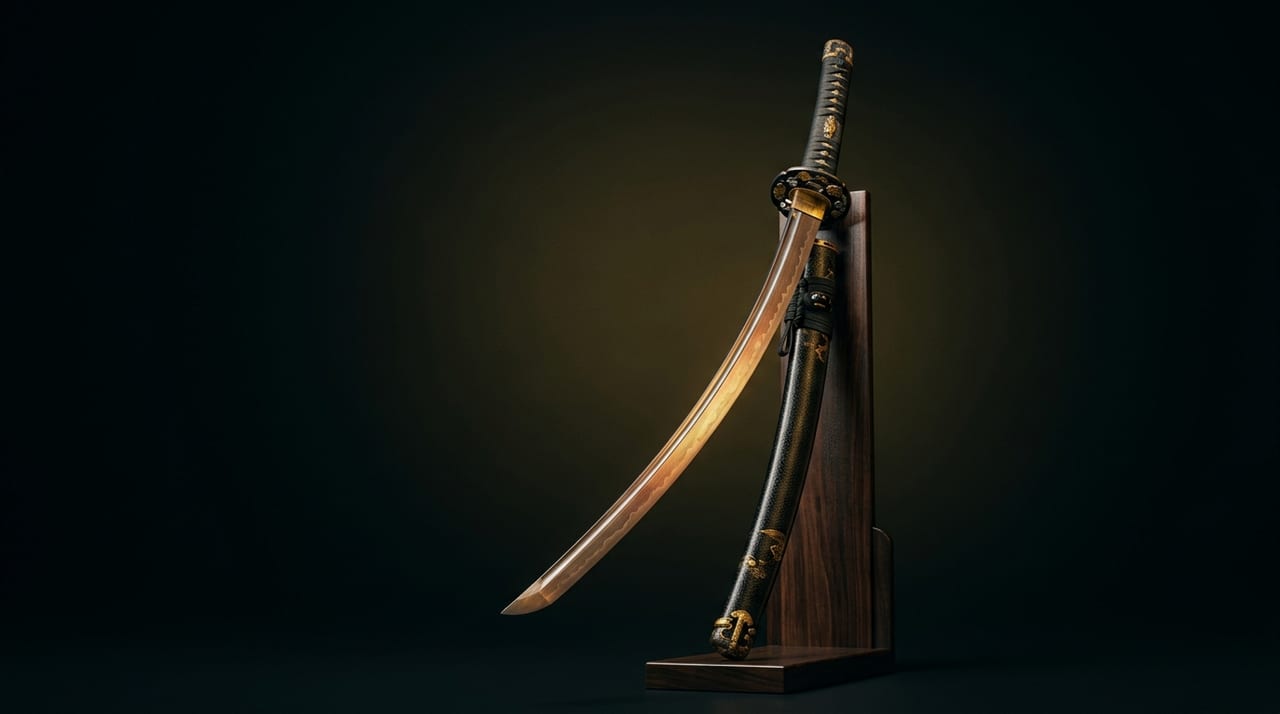 * Image is for illustrative purposes only.
Table of Contents
The Birth of the "Sword of Peace" — The Dawn of the Shintō Era
In the history of the Japanese sword, "shintō" refers to swords produced from the Keichō era (1596–1615) onward through the Bakumatsu period (the early nineteenth century). The greatest difference from kotō lies in the social context of the era in which they were made. While kotō were combat swords produced in response to the demands of war, shintō were swords born in the peaceful era ushered in by the Tokugawa shogunate (Genna Enbu, from 1615 onward).
What would become of the sword in an age without war? One path was gradual obsolescence alongside the decline in practical use, but the sword culture of the Edo period chose a different direction — deepening as an art form. For the samurai, the sword remained a symbol of status, and competing over its beauty became a mark of cultivation. Tōshō, too, continued to innovate in order to produce refined and beautiful works in response to the changing market.
The Formation of Shintō Production Centers — The Rise of Edo, Osaka, and Echizen
While the main production centers of kotō were concentrated in the "five traditions" of Bizen, Yamashiro, Yamato, Mino, and Sōshū, in the shintō era Edo, Osaka (Settsu), and Echizen (Fukui Prefecture) emerged as new centers.
Edo (Bushū): In the heartland of the Tokugawa shogunal family, talented tōshō gathered from across the country. The tōshō of the Bushū tradition, while influenced by Sōshū-den, produced refined swords suited to Edo's samurai culture. Nagasone Okisato (art name: Kotetsu) was the leading figure among them, active in the early Edo period.
Settsu (Osaka): Even in Osaka, where power had shifted from the Toyotomi to the Tokugawa, the sword industry flourished. Renowned smiths of Settsu such as Inoue Shinkai and Tsuda Sukehiro produced works of graceful elegance and technical perfection, establishing a distinctive style known as "Osaka shintō."
Echizen (Hokuriku): Under the patronage of the Echizen Matsudaira domain, Echizen Yasutsugu was active and established a recognized reputation as "Echizen-mono."
Kotetsu — The Pinnacle of Edo Shintō
Nagasone Okisato, commonly known as "Kotetsu" (active in the seventeenth century), commands overwhelming popularity even today as the foremost tōshō of the shintō era. Tradition also holds that Okisato, who is said to have been an armorer (katchūshi), turned to sword-forging after the age of forty, and the tale of the late-blooming genius has been passed down through the generations.
The characteristics of Kotetsu's swords are as follows.
- hamon: Many feature a lively hamon centered on notare and gunome, with abundant ji-nie and rich activity within the blade.
- jigane: The well-forged ko-itame surface creates a distinctive depth through its darkish hue.
- sugata: Most display a well-proportioned, graceful shape with exquisite balance of sori.
Kotetsu's swords are also well known for the large number of forgeries produced from the Edo period onward. It was said even at the time that "Kotetsu means many fakes," and to this day the number of works authenticated as genuine by NBTHK (Society for the Preservation of Japanese Art Swords) remains limited. As a paradoxical proof that the greater the number of false mei, the greater the fame, Kotetsu's reputation remains unshakeable.
Tsuda Sukehiro and the Aesthetics of Osaka Shintō
If Kotetsu is the symbol of Edo's tōshō, then Tsuda Sukehiro of Settsu (1637–1682) is the supreme master of Osaka shintō. Sukehiro's swords are known for a distinctive hamon called "tōran-midare" — this hamon, in which large undulations evoking ocean waves continue in a bold succession, was a bold new design without precedent before Sukehiro.
The merit-based aesthetic standard nurtured by the culture of Osaka as a commercial city crystallizes in Sukehiro's swords. His swords survive to the present day as a singular presence in which high technical perfection and strong visual impact are fused.
The Full Flowering of Genroku — The Zenith of Tōsōgu Culture
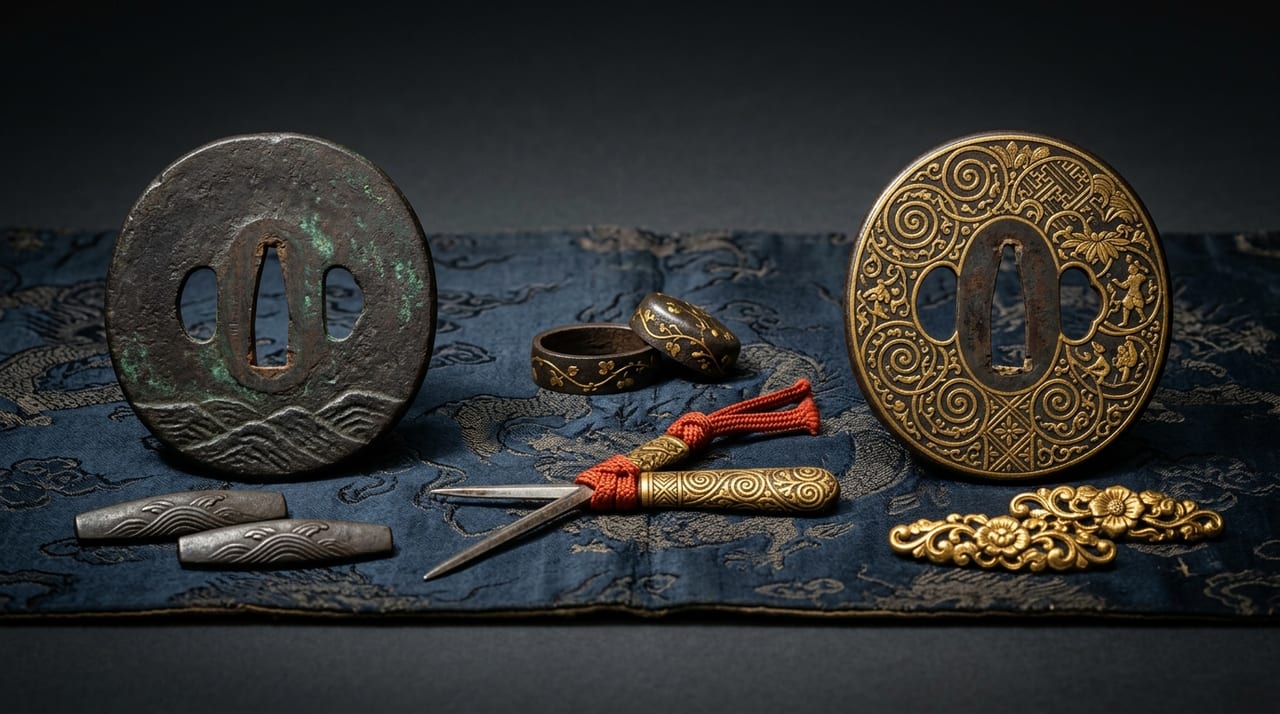
The Genroku era (1688–1704) was a period in which townspeople's culture reached its full bloom under the rule of Tokugawa Tsunayoshi. The aesthetic sensibility of the samurai also transformed, and demand grew for lavish koshirae for display and ostentation rather than practical tōsōgu.
Yokoya Sōmin and Yanagawa Naomitsu, who were active in this era, elevated yoroidōshi and uchigatana koshirae to a kind of total work of art. Yokoya Sōmin in particular is said to have been a revolutionary of chōkin, producing tsuba and menuki by boldly applying the techniques of nunome-zōgan and takabori. It is not uncommon for his works to be traded at several million yen or more in modern auctions.
The culture of "daishō-soroi," in which the koshirae of an uchigatana and wakizashi were unified as a matched pair in their design, also emerged in the Genroku period, and the market for tōsōgu expanded greatly.
Art Born of Peace — The Legacy of Shintō
The Japanese swords of the shintō era are sometimes criticized as "swords of peace" that prioritized appearance over sharpness. In reality, however, the tōshō of the shintō era were taking on the higher-level challenge of pursuing beauty while maintaining cutting performance.
Modern research has metallurgically confirmed that celebrated shintō of the Edo period are no less functional than kotō. It was no coincidence that Kotetsu's swords were favored by the Bakumatsu swordsman Kondō Isami. Kondō, who went into actual combat as the commander of the Shinsengumi, judged Kotetsu — which combined beauty with sharpness — to be the finest choice.
The greatest legacy that the Edo period left to the Japanese sword is the establishment of a culture of appreciating swords as pure art. This culture survived even under the Sword Abolishment Edict (Haitōrei) of the Meiji era and after, and has become the direct foundation of the modern sword collection and connoisseurship culture.