The Era of Shinshin-to—The Revivalist Movement Forged by Late-Edo Masters: Suishinshi Masahide, Minamoto Kiyomaro, and Koyama Munetsugu
 * Image is for illustrative purposes only.
Table of Contents
What are Shinshintō? —The Edo Period Sword Renaissance
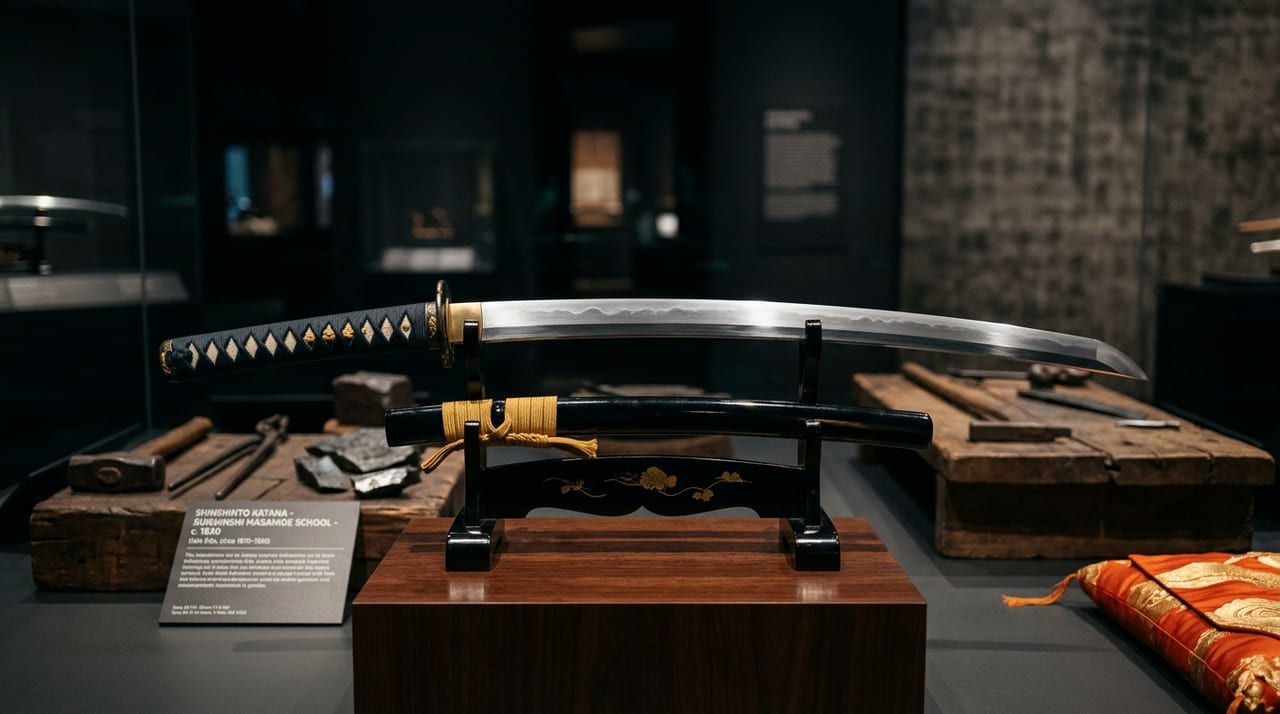
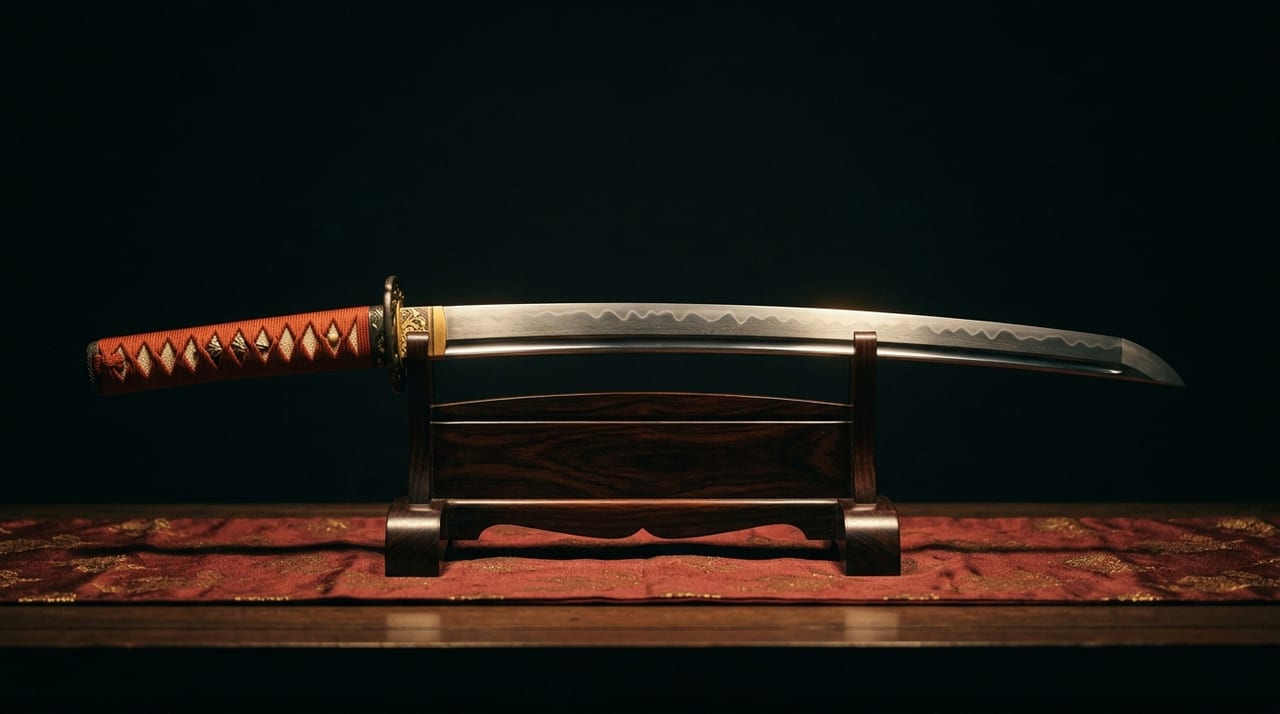
Shinshintō refers to Japanese swords collectively made during the late Edo period (approximately 1781 until the Haitōrei edict of 1876). This chronological classification was established as a successor to the Shintō period (1596–approximately 1780), and is characterized by a revivalist approach in the hamon, jihada, and overall form that took ancient swords (Heian to Muromachi) as a model.
In reaction to the grandiose hamon and standardized sword profiles that had become prevalent during the Shintō period, smiths of the Shinshintō era grappled with the question of "how to revive the beauty of ancient swords in the present day." The reason it is still highly evaluated today is that this was not mere nostalgia, but a serious revival movement that drew on the metallurgical knowledge and forging techniques of the time.
Three swordsmiths who epitomized this era—Suishinshi Masahide, Taikei Naotane, and Minamoto Kiyomaro—each possessed different schools and individual styles, yet under the common ideal of "reclaiming the spirit of lost ancient swords," they left brilliant marks on the history of Japanese swords.
Suishinshi Masahide—A Revolutionary Who Fused Theory and Practice
Suishinshi Masahide (1750–1825) was a swordsmith from the Yonezawa clan of Dewa Province (present-day Yamagata Prefecture). After establishing himself independently in Edo, he brought revolutionary influence to the world of swordsmiths both as a theorist and practitioner.
The core of his philosophy lay in his "theory of ancient sword revival." In his works Tōken Bengi and Kenkō Hidenshi, Masahide argued: "Contemporary swordsmiths are bound by the formalized Shintō style and have strayed from true Japanese sword beauty. The path to sword rebirth lies in returning to the ancient methods of the Sōshū, Bizen, and Yamato traditions." The reason he received high praise from scholars of his time was that this argument was not merely theoretical—Masahide himself continuously proved it through his actual works.
Masahide's works were diverse, ranging from reproductions of Bizen-style chōji hamon using tamahagane to modern interpretations of the vigorous nie found in Sōshū tradition. His consistent approach of "preserving the spirit of ancient methods while elevating them through modern technique" continues to be reflected in his works, many of which receive NBTHK Important Sword designation to this day.
Among his students were Taikei Naotane, Koyama Munetsugu, and many other talented craftsmen. The seeds of "ancient sword revival" that Masahide planted were inherited through his disciples into the late Edo and Meiji periods, becoming the foundation for modern swordsmiths.
Taikei Naotane—Master Who Revived the Bizen Tradition for Modern Times
Taikei Naotane (1779–1857) was a senior disciple of Suishinshi Masahide and is known as the swordsmith who achieved the most remarkable results in reviving the Bizen tradition.
His greatest achievement lies in the complete revival of the chōji midare hamon. This hamon, characteristic of the Bizen tradition from the Heian to Kamakura periods, takes its name from the resemblance of the flowing pattern to the flowers of the clove tree. This technique, which had been said to be "impossible to recreate" after the Shintō period, was revived by Naotane through exhaustive research and experimentation. Scholars have noted that the beauty of his work even surpassed that of his teacher Masahide, and many of his pieces remain designated as NBTHK Special Important Swords.
In addition to being a technician, Naotane was also an appraiser and author, actively advancing the academic study of swords. His dedication to training the next generation was one of the factors that kept the Bizen lineage alive.
Naotane's active period coincided with the turbulence of the late Edo period. While receiving commissions from daimyō and the Shogunate, as the movement for imperial restoration and expulsion of foreigners gained momentum, he also supplied swords to these loyalist activists. Naotane's works embodied the demands of the late Edo period: the combination of a cutting edge capable of withstanding actual combat and a beautiful hamon that lifted the spirit.
Minamoto Kiyomaro—The Brilliance of Genius and an Untimely Death
Minamoto Kiyomaro (1813–1855) was a legendary swordsmith who, in a short life of 42 years, established himself as the greatest genius of the Shinshintō period.
Born to the Yamaura family, a wealthy household in Shinano Province (present-day Nagano Prefecture), Kiyomaro studied under Kawamura Toshitaka, a craftsman of the Ueda clan, alongside his elder brother Masao. After moving to Edo, he rapidly established his reputation, and his life continues to captivate later generations through the originality of his artistic approach.
When discussing Kiyomaro's work, the richness of his nie is indispensable. The nie produced by Kiyomaro possessed a mass and brilliance unseen in previous Shinshintō work. His distinctive jihada, known as "Kiyomaro-hada," features a powerful flow of fine itame, and the thick appearance of ground nie perfectly embodies the essence of the Sōshū tradition. Rather than merely technical reproduction, Kiyomaro's swordmaking possessed what might be called a vital energy and dynamism, which is why he is called a "genius."
In terms of reviving the Sōshū tradition, his work stood on par with Masahide and Naotane's revival of the Bizen tradition, but Kiyomaro's work was singularly outstanding in its originality unbound by the teachings of his teachers. Kiyomaro's swords achieve a high-level coexistence of three elements:
- Practical cutting ability
- Beauty of the nie
- Powerful jihada
His swords, combining all three qualities, receive numerous designations as NBTHK Special Important Swords and Important Art Objects (jūyō bijutsuhin), and command top prices at auction. The epithet "Yotsuya Masamune" was bestowed upon Kiyomaro, testimony to how the Sōshū-style work produced in his Edo Yotsuya workshop was compared to the great Kamakura master Masamune.
Kiyomaro lived during the intensification of the late Edo loyalist and expulsion movement, and his swords found their way to the hands of activists from various clans. In 1855 (Kaei 7 / Ansei 1), he ended his life, leaving behind approximately 300 swords. This rarity has further elevated his posthumous reputation.
Koyama Munetsugu—A Prodigy of the Sōshū Tradition
Koyama Munetsugu (1803–1854) was a master of the Sōshū tradition who rose to prominence during the Shinshintō period and was born in Shirakawa, Mutsu Province.
A student of Suishinshi Masahide, Munetsugu faithfully inherited his teacher's theory of ancient sword revival while interpreting the Sōshū tradition from his own unique perspective. His characteristic style took as its foundation the Sōshū tradition with abundant nie, frequently featuring a "turbulent gunome" pattern that developed forcefully in the hamon. Combined with the overall balanced form, his work imparts both power and purity to the viewer. Many of his pieces today receive NBTHK Important Sword designation or higher, earning high regard from experts and collectors.
The Yotsuya district of Edo where Munetsugu worked was a cultural crossroads where samurai and commoners mingled, and the swords forged there found their way to the hands of diverse people in the late Edo period. Alongside Kiyomaro, Munetsugu's position in sword history as a representative swordsmith of the Sōshū revival of this era remains unshakeable.
Conclusion—The Final Golden Age Closed by the Sword Ban Edict
The seeds of "ancient sword revival" planted by Suishinshi Masahide flowered magnificently through the talents of three masters: Taikei Naotane, Minamoto Kiyomaro, and Koyama Munetsugu. Each brought their own school and individuality to illuminate the Shinshintō period, raising late Edo sword culture to an uncommonly high level.
| Swordsmith | Life Dates | School / Characteristics |
|---|---|---|
| Suishinshi Masahide | 1750–1825 | Proponent of ancient sword revival theory, led return to ancient methods of Sōshū, Bizen, and Yamato traditions |
| Taikei Naotane | 1779–1857 | Bizen tradition revival, complete restoration of chōji midare |
| Minamoto Kiyomaro | 1813–1855 | Genius reinterpreter of Sōshū tradition, known as "Yotsuya Masamune" |
| Koyama Munetsugu | 1803–1854 | Established unique Sōshū tradition, powerful development of turbulent gunome in hamon |
Yet this golden age came to institutional end with the Sword Ban Edict of 1876 (Meiji 9). In the context of the dissolution of the samurai class and the wave of modernization, the sword lost its meaning as an everyday carried weapon and shifted its position to become a pure work of art and cultural property.
Yet the technical accumulation of the Shinshintō period did not disappear. The knowledge of jihada, hamon, and forging technique honed by swordsmiths active from the late Edo period into the Meiji period was unbroken conveyed to today's holders of Intangible Cultural Property (Living National Treasures). Even today, the proposition that Suishinshi Masahide posed and continued to ask—"What is true Japanese sword beauty?"—remains an eternal theme in the world of swordmaking.