Jōkotō, Kotō, Shintō, Shinshintō: A Practical Appraisal Guide to the Four Chronological Periods — Reading the Era through Sugata, Jigane, Hamon, and Nakago
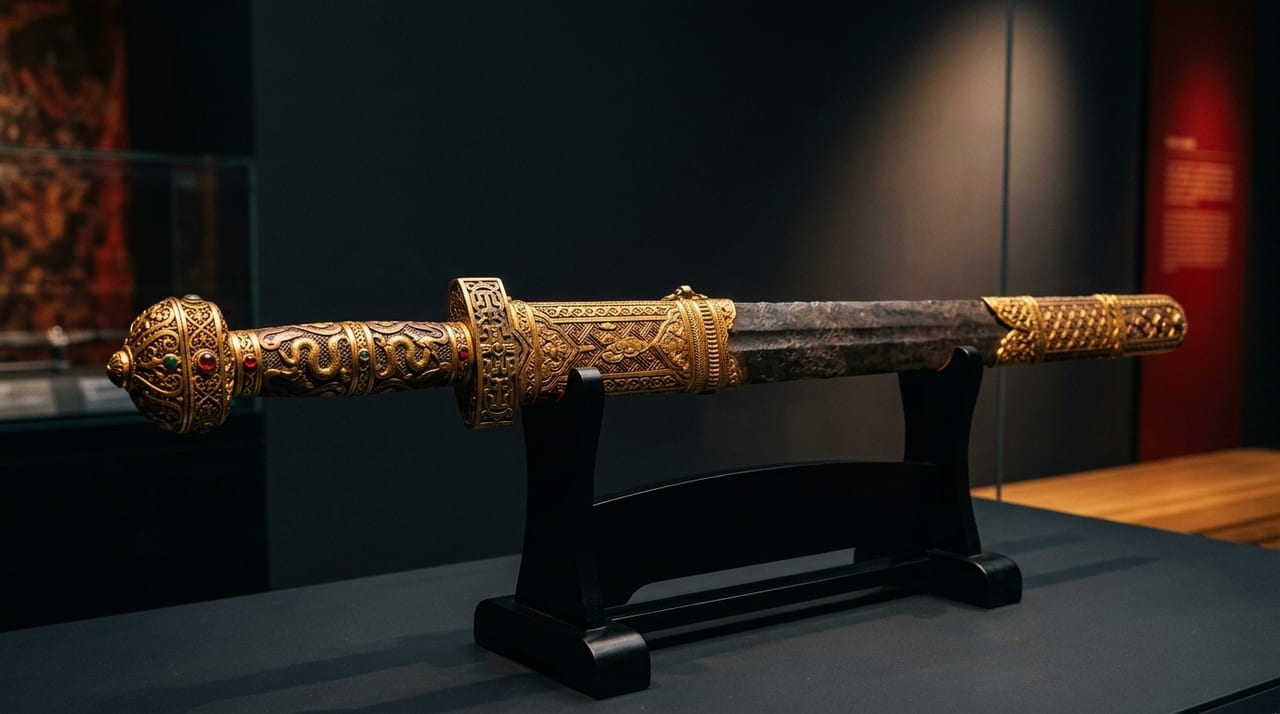 * Image is for illustrative purposes only.
Table of Contents
The history of the Japanese sword spans approximately 1,200 years. Indispensable for organizing this vast history are the four chronological periods known as jōkotō, kotō, shintō, and shinshintō. These differ not merely in date but fundamentally in blade form, forging technique, purpose of use, and cultural background, making them essential foundational knowledge for appraisal, collecting, and research alike. This article compares the characteristics of each period from three perspectives: morphology, technological history, and appraisal practice.
Jōkotō — The Straight-Blade Era Before Curvature
Jōkotō refers generally to swords made before the early Heian period (around the end of the 9th century). In a broader sense, it also includes chokutō (straight swords), iron swords, and kantō tachi (ring-pommel swords) from the Kofun period through the Nara period.
The most important morphological characteristic is that sori (curvature) is absent or extremely slight. These swords were made using ironworking techniques transmitted from the continent (China and Korea), and the cross-section is often shinogi-zukuri or hira-zukuri, with a straight blade profile. The Kenuki-gata Tachi is a representative example of jōkotō, characterized by its distinctive form featuring a tweezer-shaped openwork cutout in the nakago (tang) section.
Forging technique was still in a developmental stage, and the number of orikaeshi tanren (folding) passes was low. Tamahagane had not yet been established, and the method was close to a "continental-style process" of forging iron sand directly. As a result, the jigane (steel of the blade surface) is less uniform in quality than that of later-period Japanese swords, and the hamon (temper line) is mostly a straightforward suguha.
As an appraisal note, surviving jōkotō are extremely rare, and most are enshrined or housed in shrines and museums. Those bearing a mei (signature) are even rarer, and there are cases where distinguishing them from contemporary Chinese- or Korean-made swords is difficult.
Kotō — The Golden Age of the Japanese Sword (Late Heian to Keichō)
Kotō refers generally to swords made from around the end of the Heian period (10th–11th century) through roughly the Keichō era (1596–1614). This is the broadest of the four periods, encompassing the turbulent eras of Kamakura, Nanbokuchō, Muromachi, and Sengoku.
In terms of form, it was during this period that the "curved Japanese sword (sword with sori)" was established and developed. The characteristics differ by era.
In the late Heian to early Kamakura period, the dominant form was koshi-zori, in which the blade curves strongly near its base, suited to the "drawing cut" of mounted warfare. The blade is slender and long, with many small kissaki (point). Representative production centers were Awataguchi in Yamashiro (around Kyoto) and Osafune in Bizen (Okayama).
In the Nanbokuchō period (14th century), ōdachi and nodachi suddenly became fashionable. Enormous swords with a blade length exceeding 90 cm were produced in large numbers, and many were subsequently shortened by suriage (shortening) and repurposed as uchigatana.
In the Muromachi to Sengoku period, the practical uchigatana became dominant, with blades wide and showing little change in mihaba (blade width), and chū-kissaki (medium point) increasing in number. The Gokaden (five traditions) — Yamashiro, Yamato, Bizen, Sōshū, and Mino — were established, and the distinguishing characteristics of each production center became pronounced.
The technical pinnacle of kotō is the "jigane rich in nie (visible martensite crystals) and bold, wild hamon" perfected by Masamune of Sōshū-den. This became the technical standard that later tōkō (swordsmiths) aspired to.
Shintō — The Era of Edo Peace and Morphological Change (Keichō to Pre-Bakumatsu)
It is generally accepted that shintō covers the period from around Keichō (1596) to around Meiwa 1 (1764). With the end of the Sengoku period and the establishment of the Edo shogunate as a turning point, this was an era in which the role of the sword shifted from "practical weapon" to "ceremonial item and symbol of the samurai."
The morphological changes most worthy of note are the shortening of nagasa (blade length) and the thinning of kasane (blade thickness, at the spine side). In a time of peace, large swords such as ōdachi became unnecessary, and the uchigatana of around two shaku three sun (approximately 70 cm) became standardized. A "small difference between motohaba and sakihaba" is the typical shintō form, and "hiranie ga tsuku (the cross-section takes on a rounded shape)" is also characteristic.
As a production center, Osaka rose to prominence, giving rise to Osaka Shintō exemplified by Sukehiro and Shinkai. The large undulating hamon known as "tōranba" is emblematic of Osaka Shintō, the result of a pursuit of aesthetic value for appreciation and ceremonial use.
In Edo, Nagasone Okisato Kotetsu made a name for himself with "practical cutting ability," and in regional domains such as Mito and Satsuma, domain-retained tōkō (swordsmiths) also established their own individual styles.
From an appraisal standpoint, shintō swords survive in greater numbers than kotō, and those with kanteisho (appraisal certificate) (Tokubetsu Hozon through Jūyō Tōken) are also easier to obtain. However, works from the Keichō period (late kotō to early shintō) display the characteristics of both eras in combination, and specialized knowledge is needed to assign attribution.
Shinshintō — The Era of Revivalism and Technical Innovation (Meiwa to Early Meiji)
Shinshintō covers the period from around Meiwa (1764) to around the early Meiji period (approximately 1876, around the time of the Sword Abolishment Edict (Haitōrei)). This was an era in which a revivalist movement calling for "a return to kotō" swept the sword world.
The philosophy that symbolizes this era is set out in works such as "Kenkō Hiden Shi" and "Tōken Bengi" written by Suishinshi Masahide. He argued that "the soft steel and showy hamon of shintō run counter to the spirit of kotō," and advocated a revival of Bizen-den and Sōshū-den.
In terms of form, works imitating kotō styles — particularly the "ikubi kissaki (boar's-neck point)" and "ko-kissaki" of Kamakura kotō — increased. Taikei Naotane attempted to reconstruct Bizen-den, and Minamoto Kiyomaro brought the Sōshū-den nie-laden midare hamon to its extreme.
However, it was not a complete revival, and "the distinctive character of shinshintō itself" also emerged. In the Bakumatsu period, alongside the rise of the sonnō jōi movement, demand for "practical swords" revived, and many of the swords used by the Shinsengumi and patriot loyalists were shinshintō. The nagasa (blade length) was two shaku three to four sun, the hamon is diverse ranging from suguha to gunome-midare and more, and the tension of the era is reflected in the form of the blades.
Morphological Comparison of the Four Periods: Key Points for Appraisal Practice
The following summarizes the comparison points useful for period identification.
| Period | Sugata (Form) | Jigane (Steel) | Hamon (Temper Line) | Nakago (Tang) and Mei (Signature) |
|---|---|---|---|---|
| Jōkotō | Straight with little sori. | Coarse skin with large itame mixed in. | Mostly suguha. | |
| Kotō | Kamakura period: koshi-zori and ko-kissaki. Nanbokuchō: large-scale with chū-kissaki or ō-kissaki (large point). Muromachi: chū-zori and chū-kissaki. | Ko-Bizen features itame mixed with mokume. Masamune school has jigane with coarse nie. | Greatest diversity by era and school (chōji, gunome, midare, etc.). | Nakago rust is deep, ranging from red rust to black rust. Many kotō have been shortened by suriage, in which case the original mei is lost. |
| Shintō | Little difference between motohaba and sakihaba, with full hiranie. | Fine itame tightly packed and clean. | Osaka school: large midare and tōranba hamon. | Rust is shallow. |
| Shinshintō | Many pieces imitating kotō form; large individual variation. | Much jigane consciously imitating kotō. | Centered on kotō reproductions. | Rust is shallow. |
Conclusion — The Four-Period Classification as the Starting Point for Appraisal
The four chronological periods of jōkotō, kotō, shintō, and shinshintō form the foundational map for understanding the Japanese sword systematically. Even within the category of "Japanese sword," the form, jigane, hamon, and condition of the nakago each strongly reflect the era in which they were made.
In collecting and appreciation, judging "which period this sword belongs to" is the starting point for evaluation. Different periods call for different standards of comparison: even the same "midare hamon" — the chōji of kotō versus the tōranba of shintō — differs entirely in its technical background and evaluative framework.
Understanding the four-period classification is the ability to read fine swords correctly, and also the first step toward a deep respect for Japanese sword culture.