The Transition from Ancient Straight Swords to Curved Swords: When and How the Curve Was Born
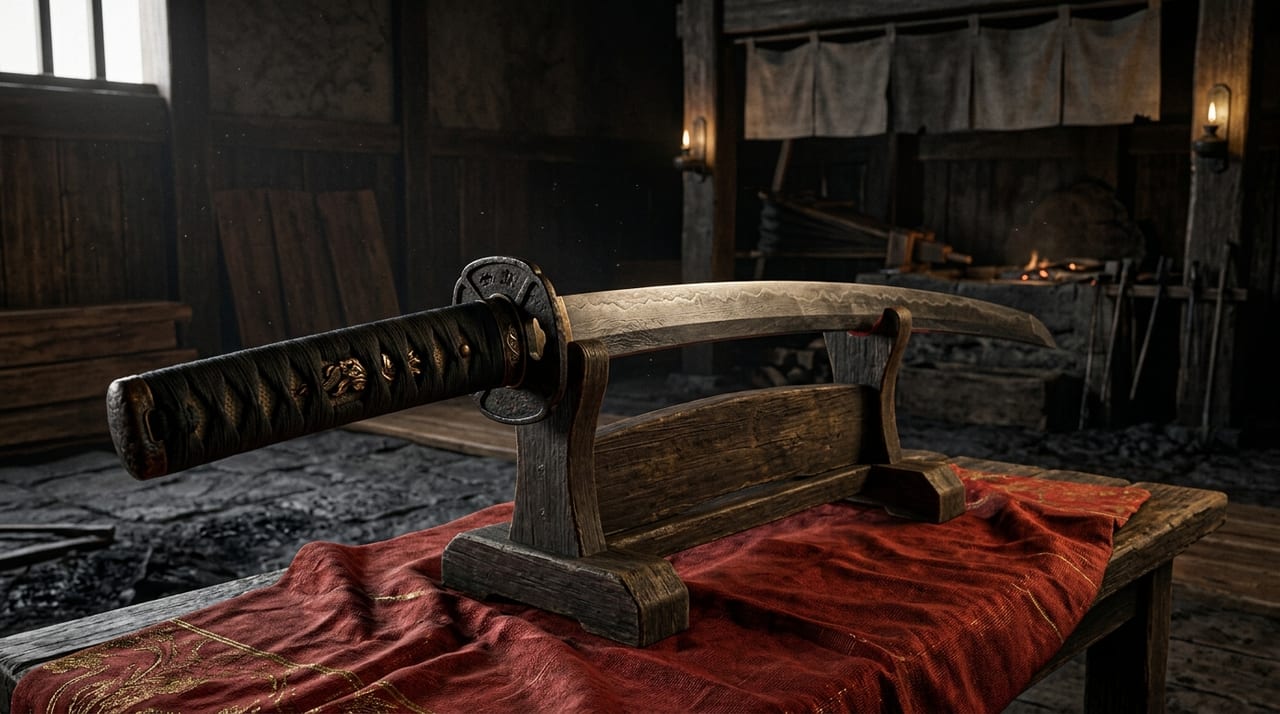 * Image is for illustrative purposes only.
Table of Contents
The "Curve" is the Essence of the Japanese Sword
What distinguishes the Japanese sword most among the world's blades is the "curve (sori)"—the curvature of the blade. This curvature is not merely an aesthetic feature but also a functional necessity directly linked to cutting power, portability, and draw speed. Why is the Japanese sword curved? And when and how did this come into being? This article is an intellectual adventure exploring the origins of the "curve."
The Era of Ancient Swords (Straight Swords)
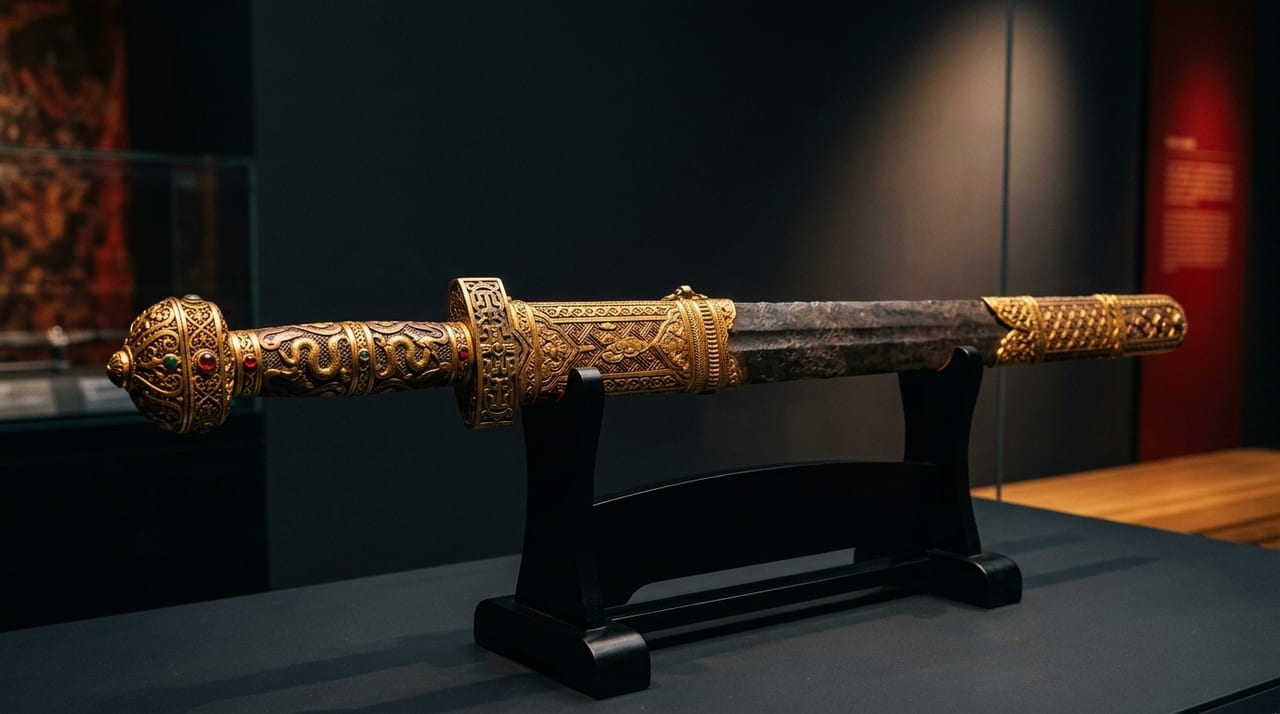
The blades of Japan before the Nara period (before the 7th century) were almost entirely straight swords (chokuto). These were called "ancient swords (jōkotō)" and were strongly influenced by techniques from China and the Korean Peninsula.
Characteristics of Ancient Swords:
- Linear blades that were either double-edged or single-edged
- Blade lengths varied widely, ranging from approximately 40 to 90 cm
- The angle between the hilt (tsuka) and blade was nearly a straight line
- Names such as "tachi" (large sword) and "tsurugi" (sword) were used
All swords stored in the Shosoin of the Nara period and ring-pommel large swords (kantoutachi) excavated from ancient tombs were straight swords, and curved blades did not exist in this era.
The Transition Period—The Turning Point of Early Heian (9th–10th Centuries)
According to mainstream historical research, the transition from straight swords to curved tachi swords occurred during the early Heian period (9th to early 10th century). Multiple factors prompted this transition.
Use on Horseback—Functional Necessity
The primary factor cited for the transition from straight swords to curved tachi is "adaptation to horseback combat."
From the mid-Heian period onward, Japan's combat style shifted to a style of fighting by "mounted warriors" resembling horseback archery. Cutting an enemy from horseback is far superior with a curved sword than with a straight sword:
- Horizontal cuts with a straight sword are constrained by arm movement when on horseback
- Curved swords are well-suited to "drawing cuts (hikigiri)"—as the blade travels along the pulling motion, cutting power increases
- As the blade follows an arc, a larger cross-sectional area can be cut with the same force
The biomechanical relationship between "drawing cuts" and the curve is a scientific fact acknowledged by modern swordsmiths and researchers.
Development of Forging Techniques—Creating Intentional Curves
Another factor in the development of curvature is "technical advancement in the forging process."
Japanese swords naturally curve during the forging (tanzo) process:
- Differential thermal expansion of outer and core steel: When outer steel with higher carbon content (kawagane) is combined with core steel with lower carbon content (shingane), the difference in shrinkage rates during cooling creates curvature
- Curvature from hardening (yakiire): The difference in cooling rates between the edge side and spine (mune) side strengthens the curvature
Swordsmiths of the Nara period may have corrected this natural curvature as a "defect," but swordsmiths of the Heian period are believed to have instead reversed this approach, transitioning their techniques to utilize and emphasize curvature as an "advantage."
Establishment of the Tachi—10th to 12th Centuries
By the late Heian period (10th–12th centuries), the form of the curved "tachi" became established.
Characteristics of Heian-Period Tachi:
- Blade length: 70–90 cm
- Position of curve: "waist curve (koshizori)"—the apex of the curve is at the base (waist) of the blade
- Method of wearing: "wearing style" with the edge facing downward and worn at the waist
- Ornamentation: "tachi fittings (tachi goshirae)" lavishly decorated with gilt bronze, lacquer, and leather
Among representative famous swords of this era is "Mikazuki Munechika" (late Heian period, forged by Sanjō Munechika), one of the oldest known tachi swords in existence.
The Kamakura Period—The Perfected Form of the Tachi
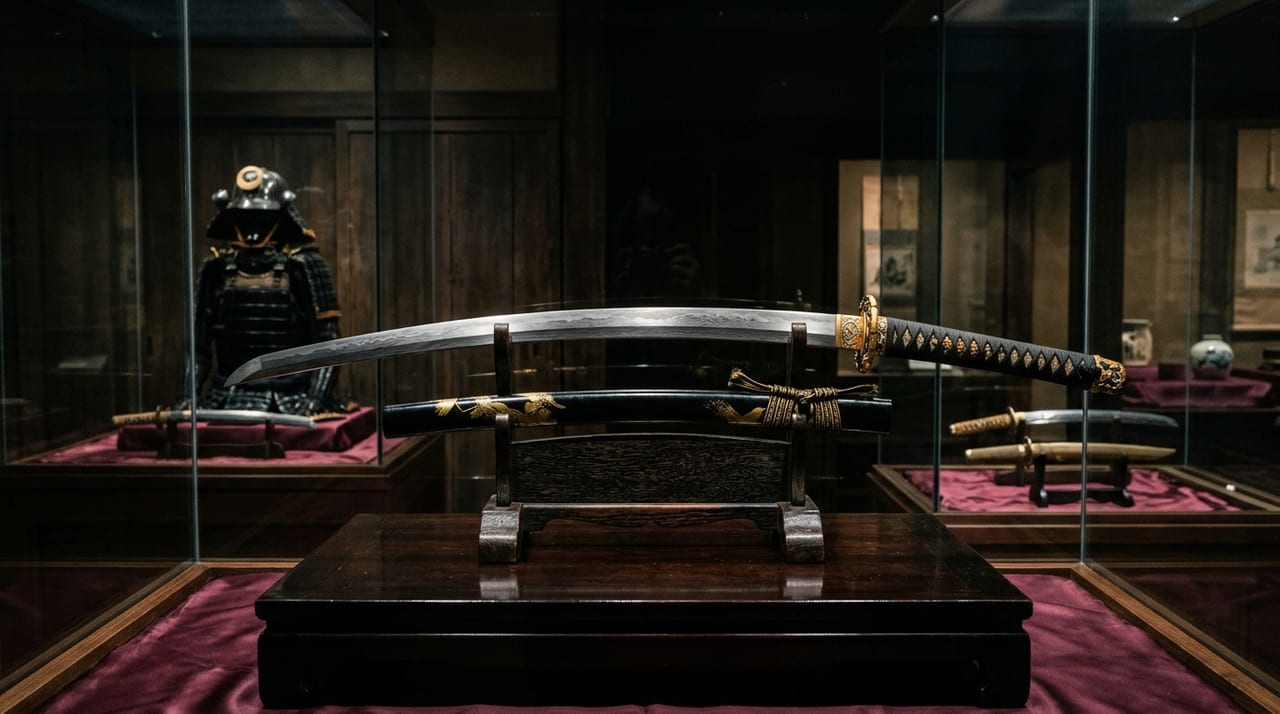
The Kamakura period (1185–1333) was the era when the form of the tachi reached completion. The rise of the samurai class and practical combat demands refined the shape of the tachi functionally.
Characteristic Changes in Kamakura-Period Tachi:
- The position of the curve shifted from "waist curve" to "mid-curve (nakazori)"—the apex of the curve comes near the center of the blade
- The difference between the width at the base (motohaba) and width at the tip (sakihaba) increased, emphasizing "fullness (funbari)" where the blade tapers toward the point
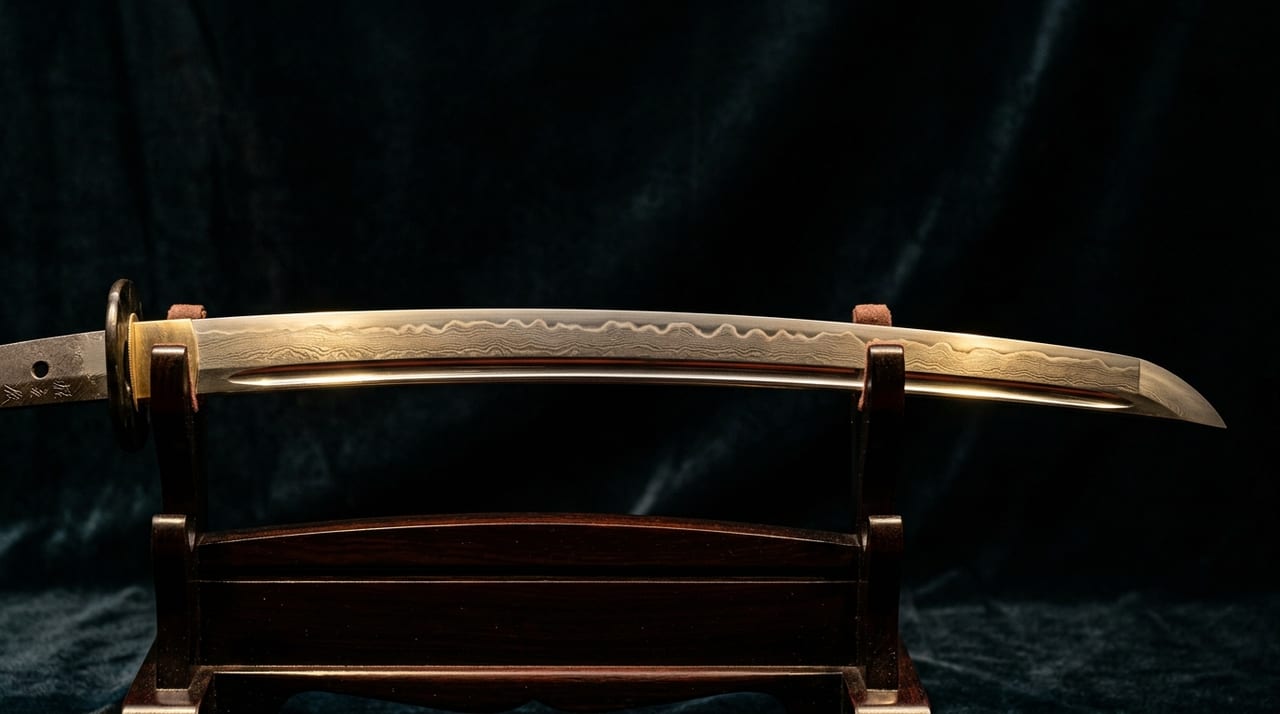
- Hamon (edge patterns) became more complex—regional characteristics became clear, such as the clove-blossom pattern (choji midare) of Bizen and the straight edge (suguha) of Yamashiro
The tachi produced by master craftsmen of this era, including Nagamitsu, Mitsutada, Rai Kuniyuki, and Okazaki Masamune, formed the golden age of the "old sword (kotō)" of Japanese blades.
The Muromachi Period—Transition to the Uchigatana and Changes in Curvature
During the Muromachi period (1336–1573), the style of wearing swords changed. This marked a transition from the "tachi" (worn with edge downward) to the "uchigatana" (worn with edge upward).
Characteristics of the Uchigatana Curve:
- The curve tends to be shallower (approximately 0.5–1.5 cm)
- "Tip curve (sakizori)"—swords with the apex of the curve near the tip became more common
- Blade length shortened—60–70 cm became the standard to increase mobility
Since the uchigatana is worn with the edge upward at the waist, the relationship between "drawing" and curve changed. "Tip curve" is better suited for quick drawing, making this shape change a functional necessity.
Standard Curve Values in Modern Swords
In modern Japanese sword making, the amount of curve is set according to use, style, and personal preference. General guidelines:
| Type | Blade Length (approx.) | Curve (approx.) |
|---|---|---|
| Tachi | 70–80 cm | 2.5–3.0 cm |
| Uchigatana | 60–75 cm | 1.5–2.0 cm |
| Wakizashi | 30–60 cm | 0.5–1.5 cm |
| Tantou | Less than 30 cm | 0–0.3 cm (nearly straight) |
Conclusion—The Curve is a Fusion of Function and Beauty
The curve of the Japanese sword is no "accident." It is an inevitable shape born from the convergence of two forces: the functional requirement of horseback combat and the intentional application of forging techniques. From the turning point of the Heian period through the Kamakura and Muromachi periods to the present day, the curve has evolved while reflecting the combat styles and aesthetic sensibilities of each era. By understanding the history of these changes, one can more deeply understand the stories of time and technique that a single blade tells.