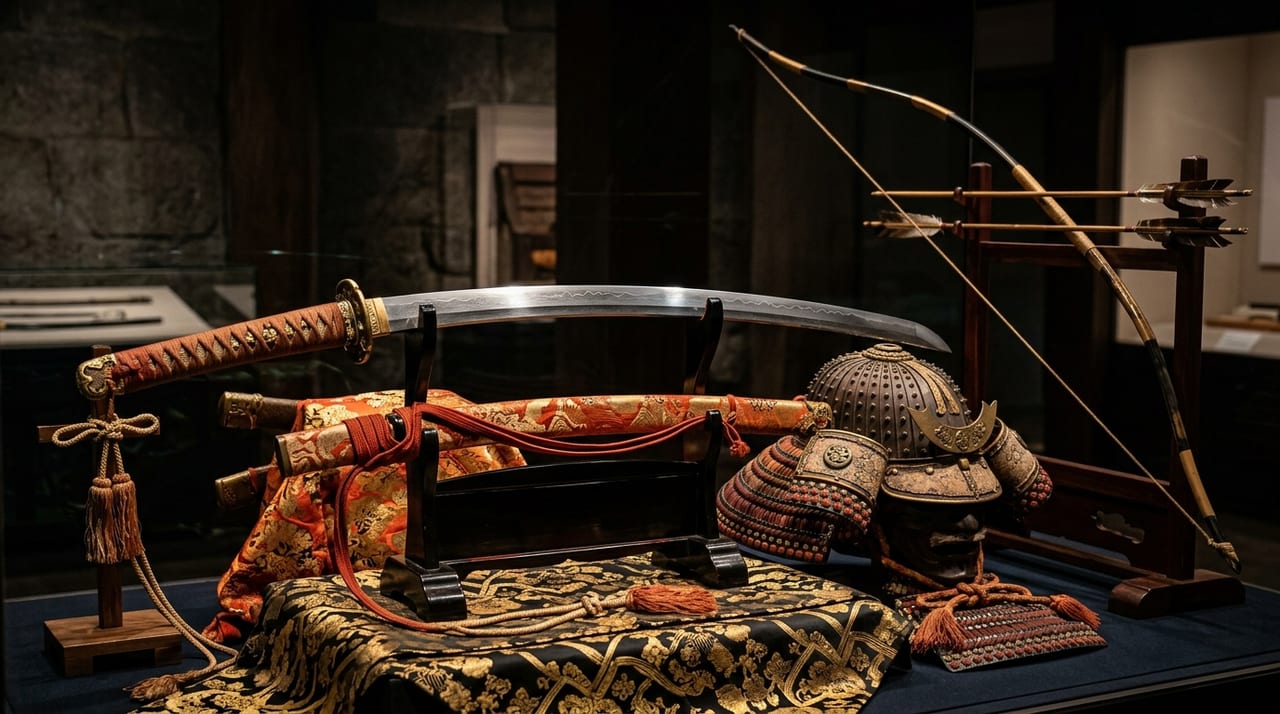
Jokoto: The Straight Blades Before the Japanese Sword — Nara, Early Heian Excavations, and the Shosoin Swords
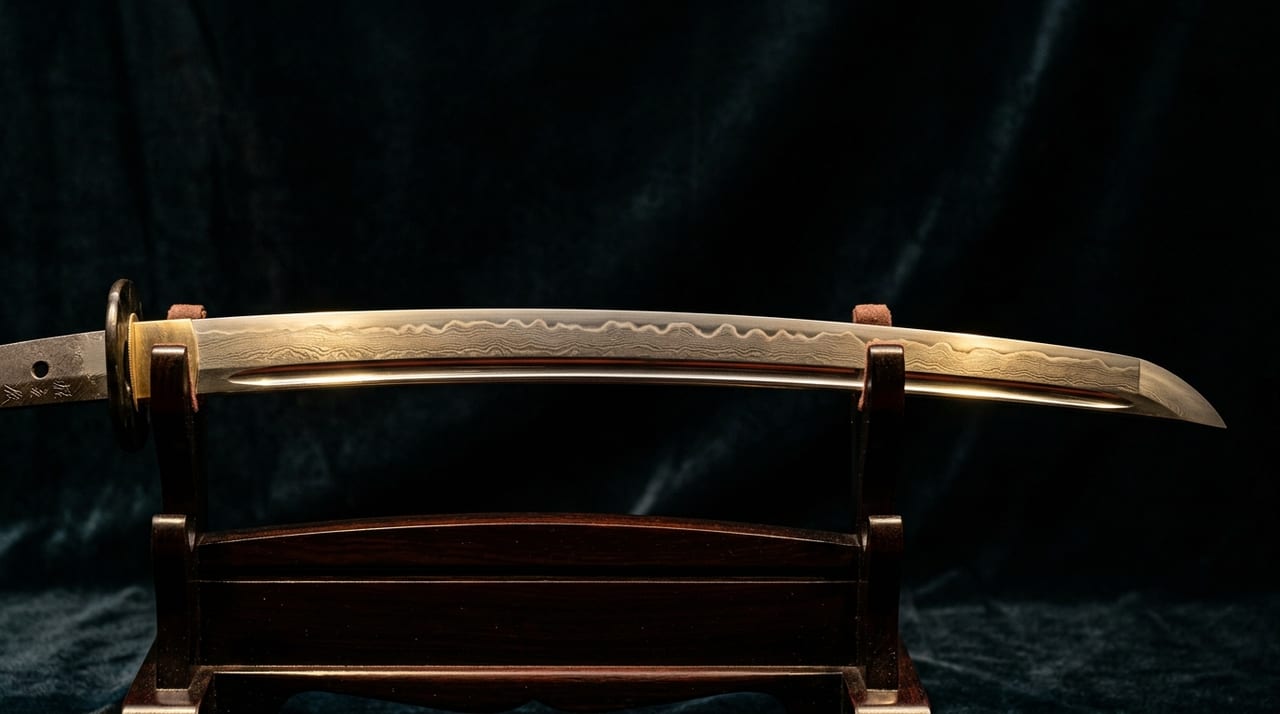 * Image is for illustrative purposes only.
Table of Contents
Joko-to: The Earliest Form of Japanese Swords
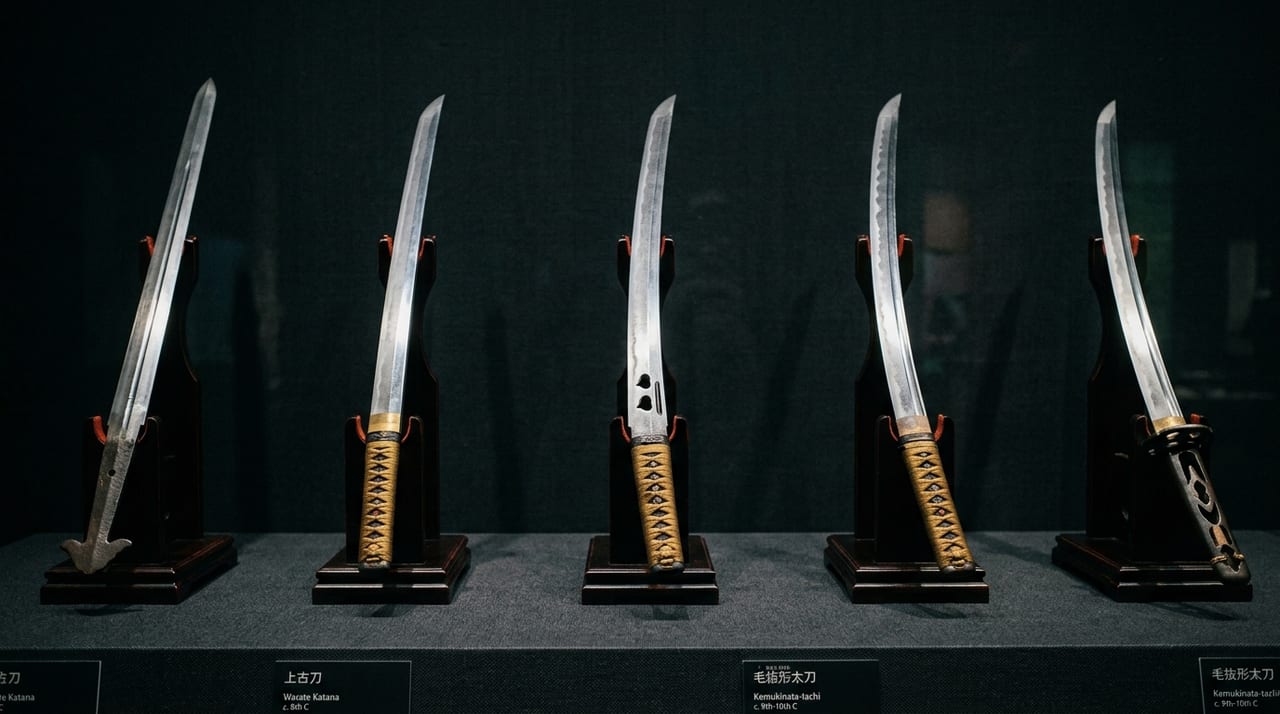
The history of Japanese swords is divided into five periods: joko-to, koto, shinto, shinshinto, and gendai-to. Joko-to refers to swords made before the Heian period's middle (around the 10th century), before curved blades with sori became established. The shape was heavily influenced by straight swords that came from China and the Korean peninsula, with the blade being nearly straight as its defining characteristic.
Existing joko-to are extremely rare, with most either transmitted as sacred treasures at institutions like the Shosoin (Nara), Kasuga Taisha, and Atsuta Jingu, or as fragments unearthed from kofun tumuli and archaeological sites. Complete examples number fewer than several dozen worldwide, making this the most important and enigmatic field in sword history research.
It should be noted that the term "joko-to" itself became established as a period classification in later sword history research, and the people of that time did not actually call their swords by this name. Currently, joko-to itself rarely circulates in personal sword sales, and the opportunities for enthusiasts to see them in person are limited to exhibitions in museums and shrine treasuries, or photographs and illustrations published in excavation reports.
The Spread of Iron-Working Culture from the Continent and Swords of the Kofun Period
Full-scale iron-working culture arrived in the Japanese archipelago from the late Yayoi period through the Kofun period. Iron materials and blacksmithing techniques came from the Korean peninsula, with agricultural tools being the initial focus, but production of weapons—especially iron swords—eventually began. Most iron swords unearthed from kofun closely resemble southern Korean peninsula styles, suggesting they were either imported or made by craftsmen with continental techniques.
Blades were straight and single-edged, typically 60-90 centimeters in length. The inscribed iron sword unearthed from the late 5th century Inariyama kofun in Saitama Prefecture bears an inscription recording the lineage of "Owake no Omi," demonstrating that sophisticated blacksmithing and decorative techniques already existed at that time.
Iron corrodes more readily than bronze, and most swords buried in soil for extended periods do not retain their original form, with only fragments or the core structure remaining in most cases. The preservation state of unearthed items is greatly influenced by burial conditions (soil moisture, acidity, etc.), so even kofun from the same period show variation in the preservation of grave goods. This variation in preservation is one factor making joko-to research difficult.
Swords of the Nara Period—Insights from Shosoin Collections
The best primary sources for directly understanding Nara period swords are the treasures stored in the Shosoin. Among the items presented by Empress Komyo to the Great Buddha of Todai-ji in 756 were several swords, including the "Kingin Densō no Karatachi" (gilded and silvered sword with mother-of-pearl inlay). All were straight-sword form with elaborate Tang-style ornamentation.
The Kingin Densō no Karatachi has an overall length of approximately 99.9 centimeters, blade length of approximately 78.2 centimeters, and no curvature. The scabbard features intricate designs with mother-of-pearl inlay and gold and silver metalwork, demonstrating that swords functioned not merely as weapons but as symbols of prestige in diplomacy and ritual.
The Shosoin houses several other straight swords from the same period; while individual variations appear in design and decoration, all reflect strong influence from Tang styles. These treasures are originally not open to the public, and opportunities for the general public to see the actual stored swords are limited; most knowledge comes through reports and catalogs by researchers.
However, the unique forging techniques of Japanese swords—the layering technique combining kawagane and shingane, blade-pattern formation through quenching—are thought to have still been under development during the Nara period.
Early Heian Period—The Transition from Straight to Curved Swords
The 9th century saw a dramatic change in sword forms. This was the shift from straight swords to curved swords with sori. When and why this transition occurred remains one of sword history's greatest mysteries, but it is understood that multiple factors worked in combination.
- The Spread of Mounted Warfare: During the Emishi campaigns (780–811), the imperial court army adopted mounted warfare tactics. Through combat experience, it became recognized that curved swords were superior to straight swords for drawing and striking from horseback.
- Evolution of Materials and Forging Techniques: Development of tatara iron-smelting using Japanese iron sand fostered a unique steel culture. Japanese iron sand, containing few impurities, naturally produces uniform steel, and it was empirically discovered that the cooling differential after quenching produces natural sori.
- Changes in Social Demand: The relaxation of the ritsuryo system and the rise of regional warlords and warrior classes increased demand for more practical combat weapons.
These three factors did not work independently of each other; rather, tactical necessity drove experimentation in materials and techniques, which warrior classes then incorporated through combat experience, with all three influences interacting—the natural way to view this development. The works of master swordsmiths connected to the early Heian "Hōki Yasutsuna" tradition, with their perfected sori and beautiful hamon, are regarded as the earliest examples of the "perfected form" of Japanese swords.
Metallurgical Analysis of Joko-to
Through fluorescent X-ray analysis and metallographic analysis, the carbon content and heat-treatment practices of joko-to are becoming increasingly clear. Survey results show that pre-Nara swords include both those bearing traces of folded forging and those composed of relatively uniform low-carbon steel. The former indicates influence from continental advanced forging techniques, while the latter likely represents inexpensive mass-produced items by local blacksmiths.
Most such analyses are conducted as non-destructive investigations that do not cut or damage samples. This is an important technique in joko-to research on rare existing pieces, as it allows estimation of internal structure and composition without compromising their value as cultural artifacts. Analysis results provide clues for estimating the date and technical lineage even of swords whose excavation location or transmission history is unclear.
Notably, layered structures have been confirmed in 5th century kofun artifacts, which can be seen as evidence of advanced techniques transplanted from the continent beginning independent development within the islands.
Modern Significance of Joko-to
Joko-to, due to their scarcity, have long tended to be overlooked as "prehistory" in Japanese sword history. However, recent research increasingly recognizes that without this era, the Japanese sword culture of later periods would never have emerged.
The work of adopting continental forging techniques and allowing them unique development within Japan's materials and environment culminated in the "koto" from the 10th century onward. The gold and silver decorated straight swords that rest in the Shosoin are not mere crafts but symbolic witnesses to Nara-period Japan as a crossroads of East Asian civilization.
Currently, most Japanese swords traded with certificates of authenticity were made after the koto period, and there are few opportunities to actually handle joko-to themselves. However, understanding the process of how the form changed from straight to curved swords is an indispensable perspective for grasping the fundamental principles of sword-making philosophy—why later tachi and uchigatana took their characteristic forms.