The Balance of Fumibari and Sakihaba: The Philosophy of Center-of-Gravity Design That Differs Between Combat and Aesthetic Swords
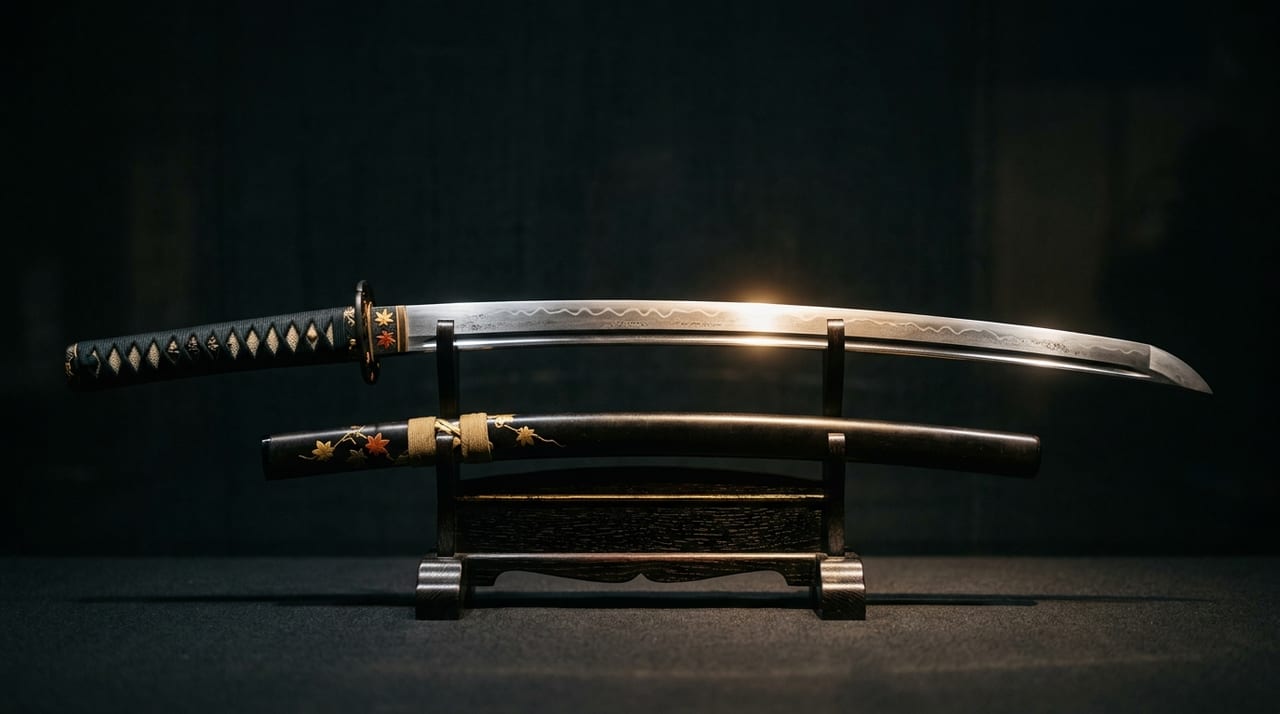 * Image is for illustrative purposes only.
Table of Contents
The Balance of Fumibari and Sakihaba — Center-of-Gravity Design That Differs Between Combat and Aesthetic Swords
The form of the nihontō varies subtly according to its purpose and the era in which it was made. This difference is not merely an aesthetic matter but a physical design that directly determines how the sword actually functions. The balance between fumibari and sakihaba is a critical factor that determines the placement of the sword's center of gravity and how it is swung.
What Are Fumibari and Sakihaba?
Fumibari: The width at the base of the blade (the part closest to the tsuka). It determines strength and ease of grip.
Sakihaba: The width at the tip of the blade. It affects sharpness and the mobility performance of the tip.
The ratio of these two measurements defines the overall character of the sword.
Center-of-Gravity Design in Combat Swords
Combat swords from the Sengoku period through the early Edo period display distinctive shape characteristics.
A design with wide fumibari and a tapered sakihaba: The center of gravity shifts toward the base of the blade, making it easier to support the sword by hand. When repeatedly cutting an opponent, the strain on the arm is reduced. Furthermore, the increased thickness at the base makes it easier to prevent the entire blade from bending, improving durability in actual combat.
The significance of tapering the sakihaba: By making the tip lighter, the acceleration of the sword tip increases, raising the efficiency of cutting strikes. Furthermore, the lightness of the tip facilitates the motion of quickly recovering the blade during "kaeshi" (the action of deflecting the opponent's sword).
A combat sword is thus a practical design that balances three qualities: ease of swinging, durability, and sharpness.
Aesthetic Swords and Aesthetic Balance
From the mid-Edo period onward, as swords came to be treated as works of art, changes also appeared in their form.
An elegant design in which sakihaba is maintained: A more balanced proportion between fumibari and sakihaba came to be demanded. This ratio expresses a sense of stability and elegance when viewed with the eye. When the sakihaba is appropriately wide, the sword as a whole gives a harmonious impression.
The combination of sori and sakihaba: A sword with shallow sori and a relatively wide sakihaba radiates a sense of stability and refinement in appearance. Such a sword can be said to be designed with the premise of being gazed upon and admired, not intended to be swung.
In evaluating value as a work of art, the smoothness of the transition from fumibari to sakihaba and the elegance of the overall silhouette become the points of assessment.
The Clash Between Physical Performance and Aesthetics
The designs of combat swords and aesthetic swords in fact contain many opposing elements.
When pursuing cutting efficiency: The base should be wide and the tip tapered. However, this balance gives an impression of "thickness" when viewed with the eye, causing the sword to lose elegance.
When pursuing beauty: The overall proportions should be balanced. However, widening the sakihaba causes efficiency during cutting to decline.
The tōkō have sought subtle points of compromise between the patron's intended use and aesthetic sensibility.
Reading Era and Purpose from the Sword's Form
Sword appraisers can roughly infer the era of manufacture and purpose of a sword from the ratio of fumibari to sakihaba.
Sengoku to Azuchi-Momoyama period: A tendency toward wide fumibari and tapered sakihaba. This is a trace of an era in which demand for combat was high.
Mid-Edo period onward: A tendency for fumibari and sakihaba to be more balanced. This reflects an era in which sword culture shifted toward scholarship and aesthetics.
Bakumatsu to Meiji: Wider fumibari with combat in mind once again becomes more common. At the same time, imitation of old celebrated swords (the kotō revival movement) also flourishes, and designs mixing elements of different eras begin to appear.
The balance of fumibari and sakihaba is an important appraisal point that tells the story of the era and social context in which the sword itself was placed.
The Limits and Ingenuity of Manufacturing Technique
Achieving the balance between fumibari and sakihaba is also a technical challenge for the tōkō.
To achieve wide fumibari and sakihaba simultaneously, uniform forging and precise togi are indispensable. Furthermore, when the angle of the sori changes, the visual transition from fumibari to sakihaba also changes. Managing these elements in an integrated manner becomes an indicator of the tōkō's skill.
The older the celebrated sword, the more often the balance of fumibari and sakihaba is exquisitely calculated. Concentrated within it is the obsessive dedication and skill of the tōkō who sought to achieve both beauty and function.