Reading Yakiba Width and Yakidashi: An Entry Point to Understanding Hamon Design
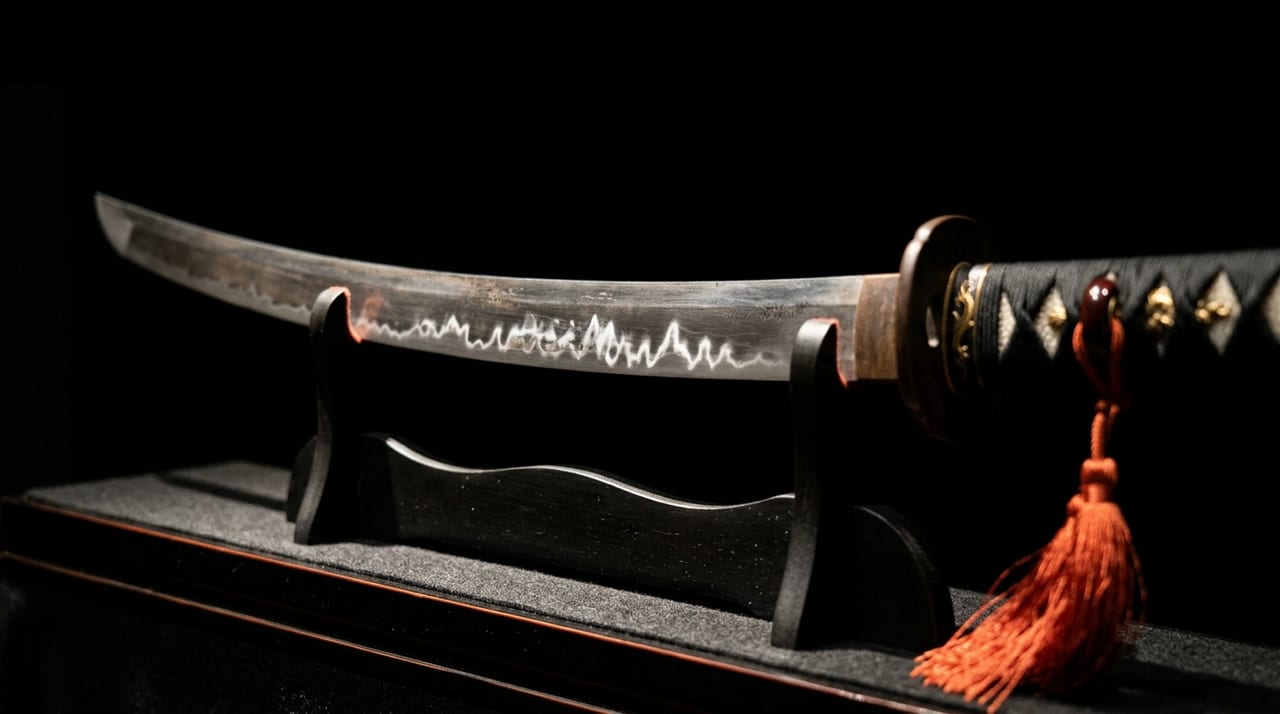 * Image is for illustrative purposes only.
Table of Contents
What Are Hamon Width and Hamon Emergence?
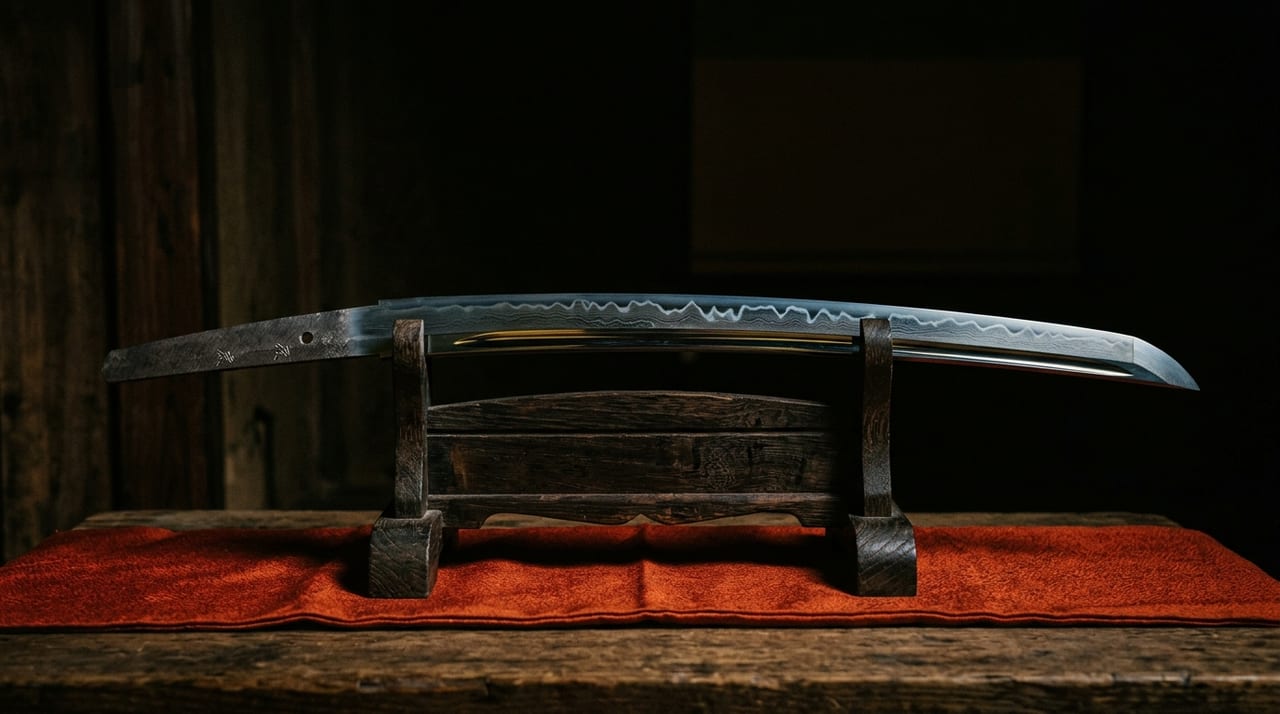
When viewing the hamon of a Japanese sword, many people first focus on the "form" of patterns such as suguha and midare. However, alongside form, what is equally important are two elements: the "width of the hamon" — how far the hamon extends from the blade edge — and the "hamon emergence" — how the hamon rises from near the hamachi. Both are design elements determined at the stage when the swordsmith applies yakiba-tsuchi before tempering, and they influence the overall impression and quality of a single blade.
The width of the hamon refers to the distance from the blade edge to the boundary of the hamon (nioiguchi). By observing what proportion of the blade width the hamon occupies, it is described as wide, medium, or narrow. The hamon emergence refers to the point where the hamon begins above the hamachi, on the hand side of the blade. Whether the hamon rises gradually from below or suddenly stands up directly above the hamachi makes a significant difference in appearance.
- Hamon width: The distance from the blade edge to the nioiguchi, referred to as wide tempering, medium tempering, narrow tempering, and so forth.
- Hamon emergence: The point where the hamon begins near the hamachi, marking the entrance of the entire hamon.
- Temper gap: A form in which the hamon does not begin directly above the hamachi but rises from an untempered section.
- Nioiguchi: The boundary between the hamon and the ji, a band-like area where nie and nioi are connected.
Simply by paying attention to these two elements, one can distinguish between "a fine and crisp suguha" and "a broad and gentle suguha" that otherwise appear similar.
How Hamon Width Is Determined
The width of the hamon is the extent of the steel hardened by rapid cooling during tempering. Before tempering, the swordsmith applies yakiba-tsuchi to the entire blade. At this stage, the paste is applied thinly on the edge side and thickly on the spine side. The thin areas undergo rapid cooling in water and become hardened tissue, while the thick areas cool more gradually and become less hardened. The boundary between these thicknesses becomes the position of the hamon.
In other words, the width of the hamon is intentionally determined by the swordsmith based on how far from the blade edge the paste is applied thickly. When the paste is applied in a wave pattern to create the shape of the hamon, there is a base width in the swordsmith's mind, and variations and waves are added on top of that.
When Hamon Width Is Wide
A blade with a wide hamon has a hamon that extends to the middle of the blade, giving a brilliant impression. In appreciation, when light is shone on it, the brightly gleaming section appears large, making it easy to enjoy the variations in the hamon. On the other hand, the broader the tempering, the more prone the blade becomes to warping during tempering, and the risk of defects such as tempering cracks correspondingly increases. A wide hamon width is a design that tests the swordsmith's skill.
When Hamon Width Is Narrow
A blade with a narrow hamon has hardening only near the edge, creating a quiet and dignified impression. This tendency is often seen in suguha works, but one cannot simply say that narrow is simple and wide is superior. Works with a narrow hamon width featuring fine details or a deep and clear nioiguchi have much to appreciate.
How to View Hamon Emergence
The hamon emergence is one of the first places that catches the eye when appreciating a sword. By confirming how the hamon begins near the hamachi, one gains insight into the sword's style and the condition of its subsequent polishing.
Hamon Emergence Rising from the Hamachi
The form in which the hamon naturally stands up directly above the hamachi is the standard hamon emergence. The hamon firmly grasps the hamachi and continues toward the kissaki. Because the hamon connects unbroken at the hamachi, the overall impression becomes stable.
Hamon Emergence with a Temper Gap
A temper gap is a form where the section immediately above the hamachi is untempered, and the hamon begins somewhat higher up. Because the area around the hamachi is not tempered, there is a view that the hamon does not fade easily even if the blade is reduced through polishing. However, because the appearance changes depending on wear and re-polishing, one must look at actual examples to judge. The presence or absence of a temper gap is said to vary by period and school, but since there are no definitive examples in all cases, judging individual swords by looking at them is the fundamental approach.
Wear from Polishing and Hamon Emergence
On swords that have been polished repeatedly over many years, the edge gradually wears away, causing the hamon width to appear relatively narrower, and the position of the hamon emergence to appear different. When appreciating or purchasing a sword, it is good practice not to judge the style based solely on the current hamon width, but to also consider the possibility of changes due to wear from polishing.
Points to Observe When Appreciating a Sword
When actually viewing a sword, it is helpful to confirm the following points in order:
- Observe the hamon emergence near the hamachi: Does the hamon rise naturally from the hamachi, or is there a temper gap?
- View the hamon width in the middle of the blade: Is the width from the nioiguchi consistent throughout, or does it vary depending on location?
- How does the hamon width change toward the kissaki? Does it widen further, or does it remain constant?
- Considering the effects of wear from polishing, surmise whether the current appearance reflects the original state when the blade was created.
The way light is directed is also important. When the hamon is viewed with light coming from an angle and the blade is slowly tilted, the boundary of the nioiguchi stands out. By observing the hamon width and hamon emergence consciously, the design intent of the maker becomes apparent — something one would not have noticed when simply tracing the shape of the hamon.
Reading the Hamon Comprehensively
Hamon width and emergence are not factors that alone determine the quality of a work. They are to be judged comprehensively alongside other elements such as the shape of the hamon, the crispness of the nioiguchi, the quality of nie and nioi, and harmony with the ji. However, because these two well express the "design" aspect of the hamon, they serve as an entry point for understanding the swordsmith's intent in creating a single blade.
When appreciating a Japanese sword, the eye is often drawn to the shape of the hamon, but by becoming aware of the hamon width as a "measuring stick" and the hamon emergence as an "entrance," one's engagement with a single blade deepens. When viewing photos of interesting swords in the online catalog of sword lists, focusing on and comparing the hamon near the hamachi and in the middle of the blade makes the differences easy to see.