How to Read Notare and Yakiotoshi — the Gently Undulating Hamon and the Condition Where the Hamachi Receives No Quenching
 * Image is for illustrative purposes only.
Table of Contents
In appreciating hamon, the eye tends to be drawn to "hamon with clearly defined shapes" such as chōji or gunome. Yet even in understated details — the gently undulating notare and the manner in which quenching reaches the area around the hamachi — there are clues for reading the character and history of a blade. This article organizes how to read notare, and the differences in how the yakiba begins — the latter known as yakiotoshi.
What Is Notare?
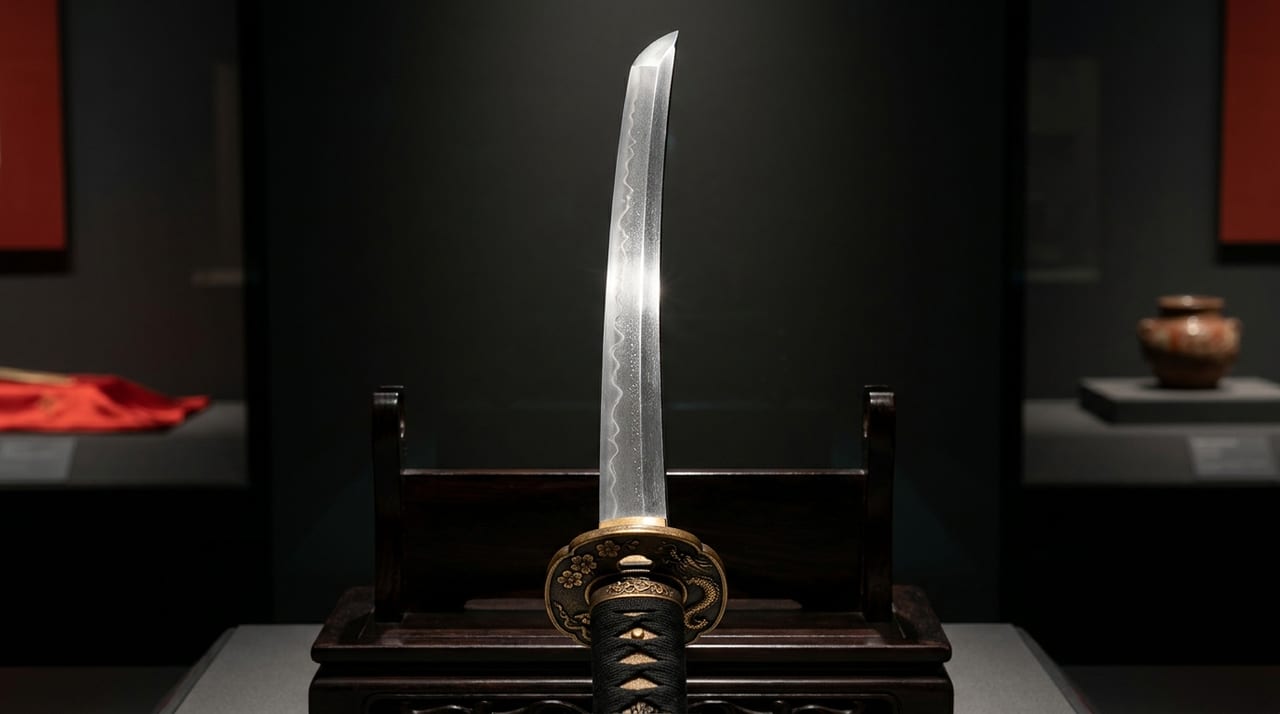
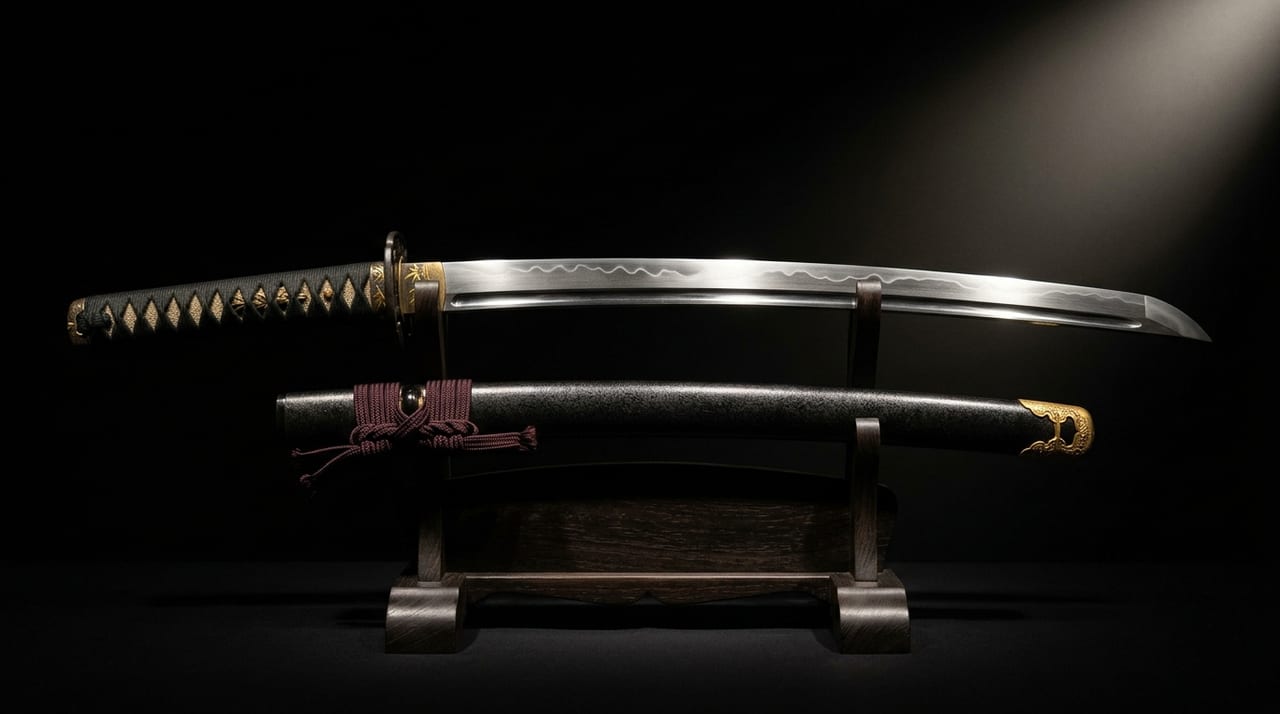
Notare is a hamon that undulates in broad, gentle waves. The sword guide of the Kyoto National Museum likewise describes notare as "a hamon that undulates in broad, gentle waves," noting that chōji, gunome, and other patterns may appear within it (Kyoto National Museum Sword Guide).
Points to Watch When Distinguishing It
- The peaks and troughs of the waves are gentle, with little angular undulation
- The waves are wide, with a single wave spanning a long portion of the blade
- Waves with large height variation are sometimes called ō-notare; those with smaller variation, ko-notare
- When gunome is mixed into the notare, the pattern is sometimes called gunome-notare
The practice of distinguishing by wave size, and names such as suguha-notare and gunome-notare, vary in usage across references. When looking at an actual blade, rather than focusing too much on names, putting into words the impression of the wave's breadth and height will advance your appreciation.
Differences from Suguha and Midare-ba
Suguha is a hamon in which the edge runs almost straight; notare looks as though that straight line gently sways up and down. Chōji and gunome, by contrast, are hamon in which peaks and troughs repeat with clear definition. Some hamon appear intermediate between notare and gunome, and where the boundary lies may differ from viewer to viewer.
What Is Yakiotoshi?
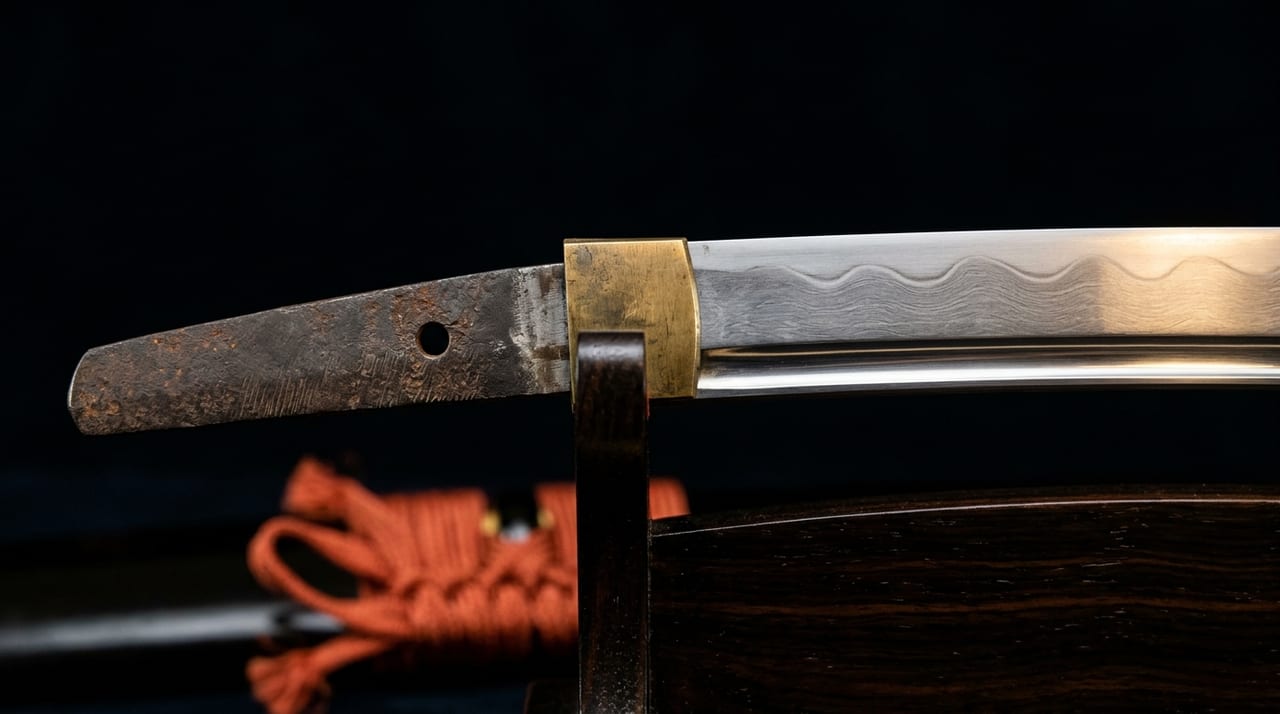
Yakiotoshi refers to the condition in which the hamachi (the notch marking the boundary between the blade and the nakago) receives no quenching, and the yakiba begins a short distance above it. The terminology guide of Touken World explains that while the yakiba ordinarily begins at the edge of the hamachi, in yakiotoshi the yakiba begins above the hamachi, leaving the hamachi itself unquenched (Touken World, "Yaki-otoshi").
Where It Appears
Yakiotoshi appears not in the middle of the hamon but just above the hamachi — that is, at the "starting point" of the hamon. It does not appear on the nakago. Examine the edge of the hamachi to determine whether the yakiba rises from the hamachi itself, or whether it stops short and the hamachi remains unquenched.
Contexts in Which Yakiotoshi Is Discussed
The same guide notes that yakiotoshi is characteristic of blades from the late Heian through early Kamakura period, and that a tachi by Bungo no Kuni Yukihira is cited as an example. It is said to prevent breakage below the hamachi, while some consider it simply a habit of the tōkō.
Some references also explain that because saiba (a blade that has been re-quenched) tends not to have the nakago quenched, yakiotoshi is common in saiba, making it a clue for suspecting re-quenching (Touken World, "Understanding Saiba"). However, the presence of yakiotoshi does not in itself establish that a blade is a saiba. Since it is also seen in zaimei tachi of earlier periods, it is important not to judge by a single feature alone, but to look at the jigane, overall form, mei, and all other aspects together.
Differences in How to Read Notare and Yakiotoshi
| Item | Notare | Yakiotoshi |
|---|---|---|
| What to look at | The overall wave shape of the hamon | How the yakiba begins at the hamachi edge |
| Where to look | The broad extent of the blade | Just above the hamachi |
| Classification | A type of hamon | A characteristic of how the yakiba is formed |
| Clue | Breadth and height of the waves, and their gentleness | Whether the hamachi is quenched |
Since notare concerns the "shape of the hamon" and yakiotoshi concerns "how quenching begins" — two different axes — both may be observed on a single blade.
How to Approach Appreciation
- First look at the hamon as a whole and get a rough sense of whether it is suguha, notare, or midare-ba
- Then shift your eye to the edge of the hamachi and check whether the yakiba begins at the hamachi
- Also look at the quality of the nie and nioi along the hamon edge
Nie and nioi are discussed in How to Tell Nie and Nioi Apart. For a full overview of hamon types, see Complete Guide to Hamon Patterns; for defects arising from yaki-ire, see Hamon Failures and Defects.
Summary
- Notare is a hamon that undulates in broad, gentle waves, within which chōji or gunome may sometimes appear
- Yakiotoshi refers to the condition in which the hamachi is unquenched and the yakiba begins above the hamachi
- While yakiotoshi is said to be seen on tachi of earlier periods, it is also discussed as a clue to saiba
- Do not judge by a single feature alone; look at the jigane, overall form, and mei together
When you want to compare different hamon, photos of blades currently listed can be viewed in TOUKENZA's online catalog (sword listings). For any questions, please contact us via the inquiry form.