Uchinoke, Hakikake, and Nijūba — How to Read the Fine Activities That Appear in the Hamon
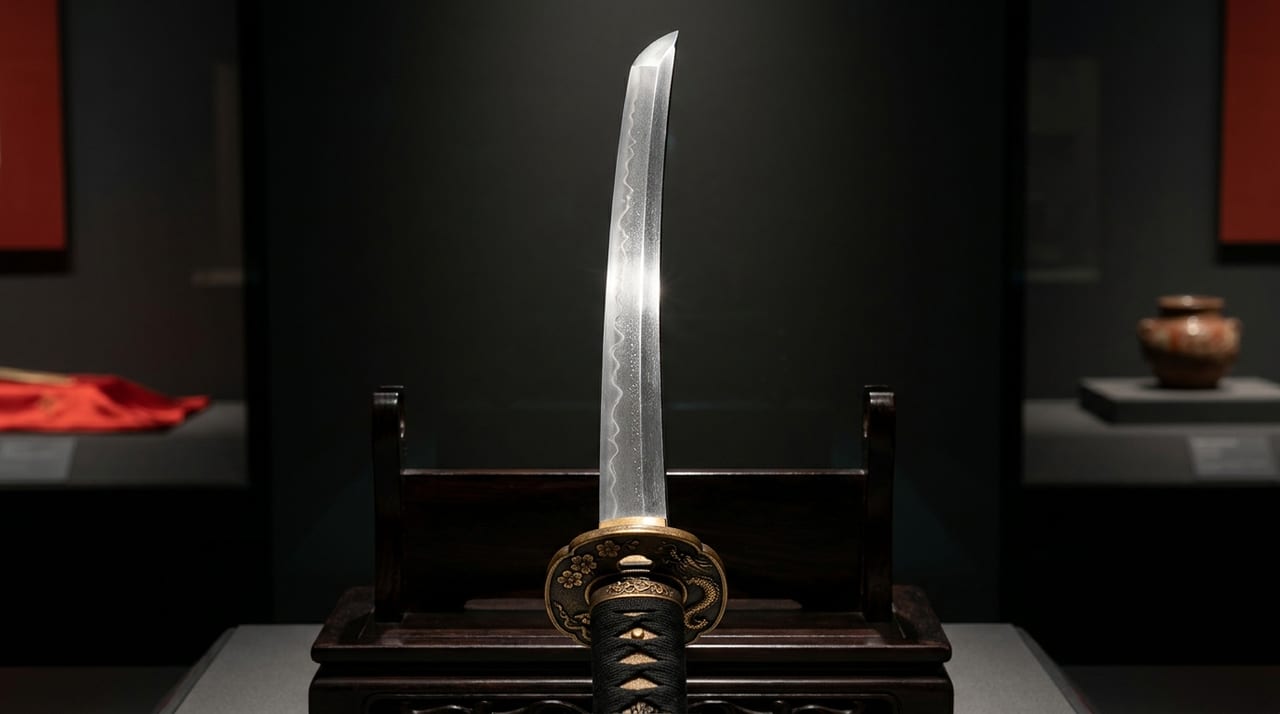 * Image is for illustrative purposes only.
Table of Contents
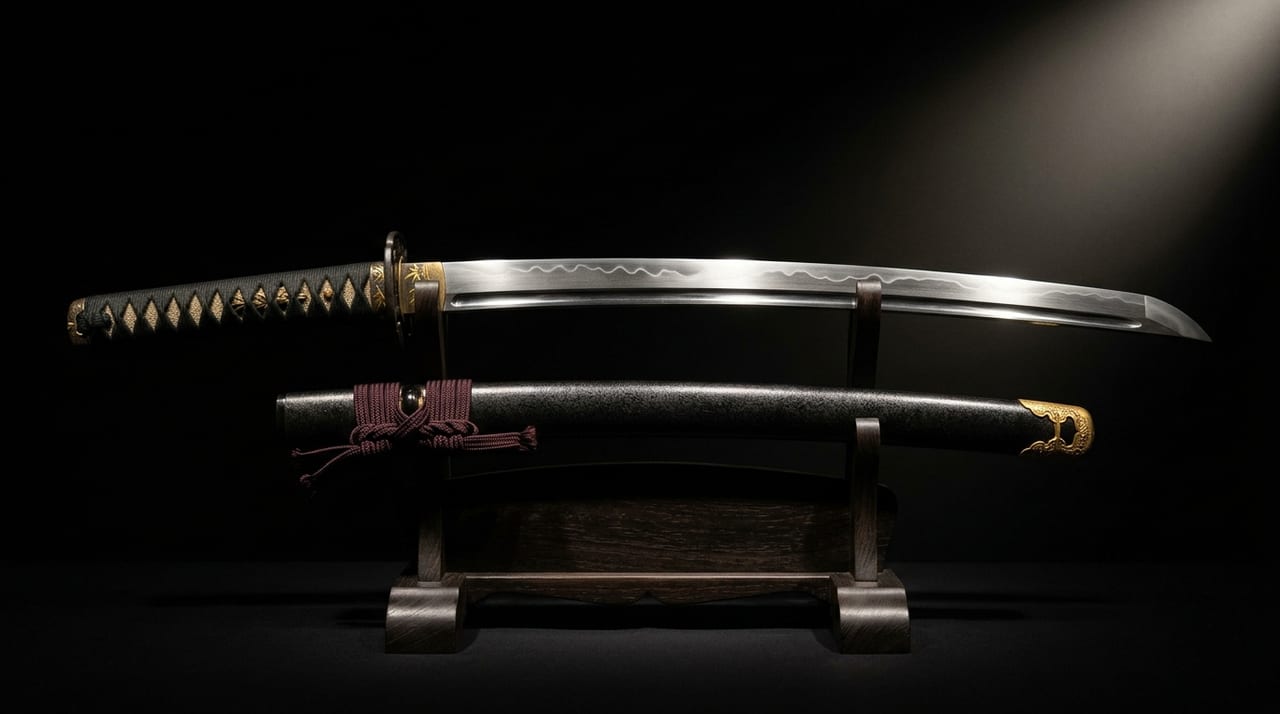
The hamon is the pattern of the tempered edge produced on the blade by yaki-ire (quenching). The eye tends to be drawn to large shapes such as chōji or gunome, but on closer inspection, more delicate expressions appear inside the hamon and in the bōshi (temper line in the point) at the kissaki (point). The Nagoya Japanese Sword Museum's commentary on the hamon includes terms such as uchinoke, hakikake, and nijūba. This article organizes what each term refers to and summarizes what to look for when appreciating a sword.
The Concept of "Hataraki" in the Hamon
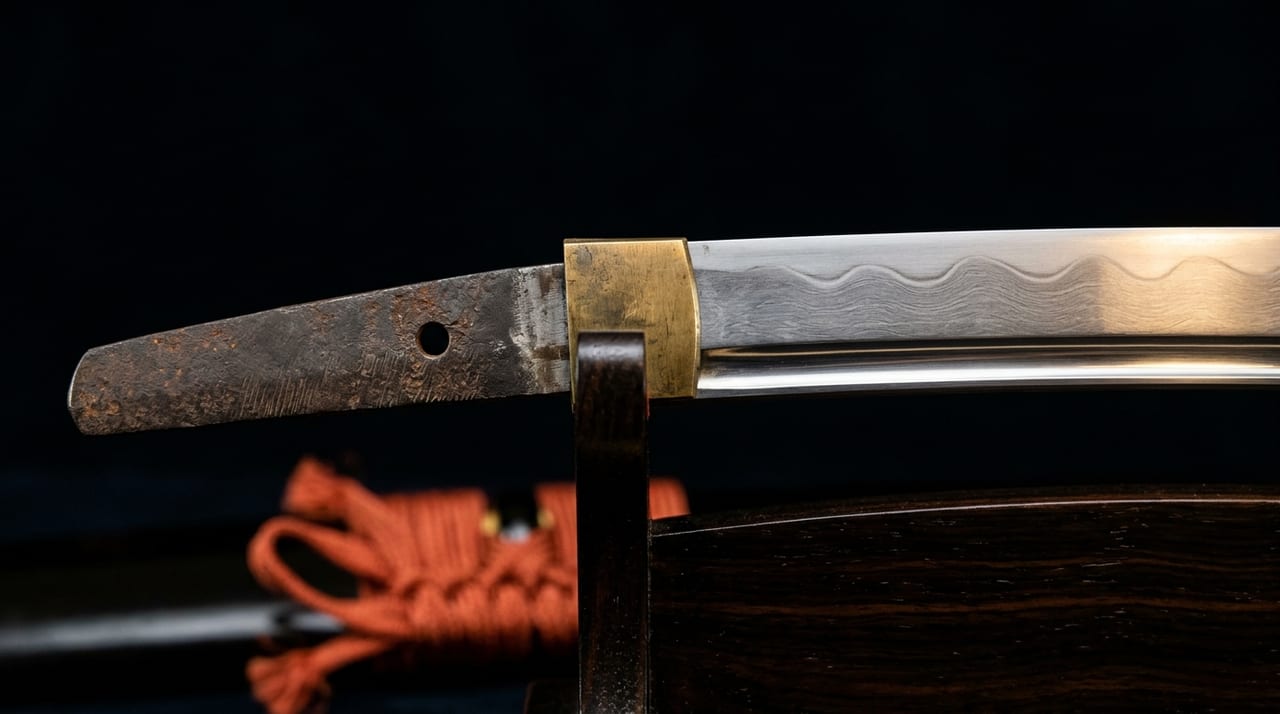
When examining the hamon, the fine details that appear within and around the blade — distinct from the overall outline known as the "shape" — are called "hataraki" (activities). Examples include the appearance of nie and nioi particles, fraying at the hamon edge, and lines extending into the jigane (steel of the blade surface).
Hataraki are the result of overlapping factors: the temperature and cooling conditions of the yaki-ire (quenching), the quality of the jigane, the method of tsuchioki (applying the clay coating). Some aspects can be intentionally aimed for by the tōkō (swordsmith), while others appear as a consequence of the yaki-ire. This is why each individual sword has a different expression even among blades of the same school. The formation of nie and nioi is covered in detail in the following articles.
- Nie and Nioi — The Science of Steel Behind the Hamon's Brilliance
- Tobiyaki, Yubashiri, Kinsuji, and Inazuma — The Mechanisms Behind Special Hamon Activities Produced by Quenching and How to Appreciate Them
Uchinoke — An Activity That Floats Like a Crescent Moon
According to the Nagoya Japanese Sword Museum's commentary, uchinoke is an activity in which part of the hamon takes on a crescent-moon shape and appears to float within the jigane. It can appear in two or three layers (Nagoya Japanese Sword Museum: hamon).
The same commentary states that the famous sword Mikazuki Munechika was named because this crescent-shaped uchinoke is visible in its hamon. It is a well-known example of a sword whose name derives from an activity in its hamon.
Regarding the relationship with schools, sword commentary sites explain that a hamon mixing hotsure, uchinoke, and kuichigaiba is said to be found frequently in Yamato works. However, this is merely one view found on commentary sites, and there are many exceptions for individual swords. Rather than making mechanical judgments based on school, the basic approach is to view what is in front of you as the landscape of that one particular sword.
Hakikake — A Swept-Looking Hamon Appearing in the Boshi
Hakikake is introduced in the Nagoya Japanese Sword Museum as "hakikake (hakikake bōshi)." Like the yakizume bōshi, it has no kaeri (return), and refers to a hamon near the kissaki that looks as though it has been swept with a broom. It should be noted that this is an activity of the bōshi and must be distinguished from activities appearing in the middle of the blade.
The same commentary notes that the Senjuin School and the Tegai School of Yamato Province are famous for this. The bōshi is the hamon of the kissaki and is also one of the most difficult aspects of the yaki-ire. The following article is a useful reference on how the bōshi is quenched.
Nijuba — A Landscape Where the Hamon Edge Folds in Layers
Nijūba is defined in the same commentary as "that in which the hamon edge folds over in layers." It notes that many also have the jihada (grain pattern of the steel)-side hamon broken up into dashed segments.
As to which eras and schools nijūba is most common in, sources are not in agreement. Some dictionaries describe it as arising from temperature changes during yaki-ire and being frequent in nie-deki swords, while other commentaries describe it as found in kotō (old swords) and more common in Yamashiro works. For this reason, this article does not make definitive statements linking nijūba to any particular school.
Notes on Learning the Terminology
The terminology of the hamon varies in usage depending on school, era, and commentator. The same appearance may be called by different terms, and similar terms may refer to different parts of the sword. Hakikake, for example, is classified as an activity of the bōshi rather than the middle of the blade. The best approach is to learn one dictionary definition, then read multiple commentaries and compare them, accepting any differences as they are — this makes it less likely to cause confusion when viewing actual swords later.
How to Appreciate
The fine hataraki are easy to miss when simply gazing at the blade with the naked eye. The following procedure is recommended.
- Fix a single light source and tilt the blade gradually to change how the light enters
- First confirm the overall shape of the hamon and whether it is nie-deki or nioi-deki
- Then shift attention to the fine details extending from the hamon edge toward the jigane
- For the bōshi at the kissaki, confirm last whether there is a kaeri and what shape it takes
Hataraki such as uchinoke and nijūba, in which the hamon appears to overlap in layers, can suddenly emerge when the angle of the light is right. It is important not to rush, but to view the same area repeatedly while changing the angle. When handling the sword, one should follow the basics: do not touch the blade with bare hands, and do not breathe on the edge.
Summary
Uchinoke is an activity that floats in a crescent-moon shape; hakikake is a hamon appearing in the bōshi that looks as though it has been swept; nijūba is a landscape in which the hamon edge folds over in layers. All three are definitions that can be confirmed in the Nagoya Japanese Sword Museum's commentary, and views on which schools and eras they are most common in differ from source to source. Knowing the terminology and then taking the time to look carefully at an actual sword deepens the enjoyment of hamon appreciation.
Those who have developed an interest in Japanese swords can browse swords currently listed in the online catalog (sword listings). Questions about items may be directed through the contact form.