What Is the Efu no Tachi — The Tachi Worn by Efu Officials, the Kenuki-gata Tachi, and Edo-Period Koshirae
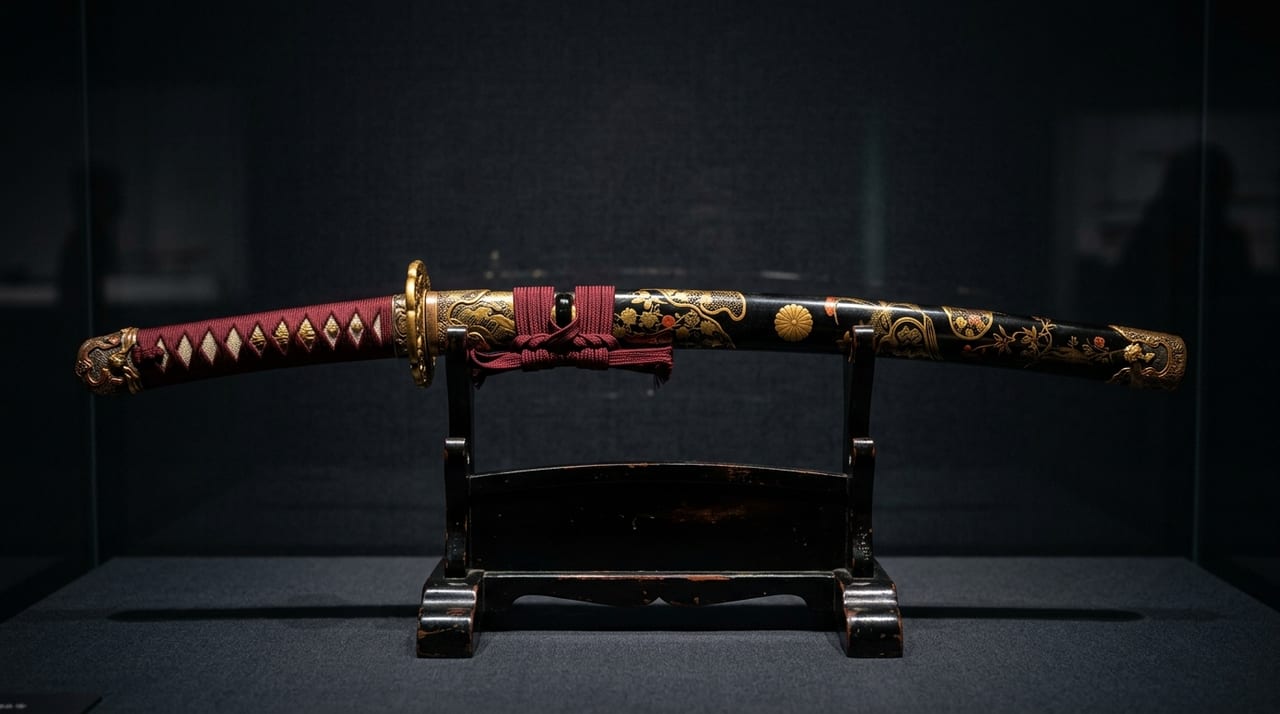 * Image is for illustrative purposes only.
Table of Contents
Among tachi koshirae, there are those that developed as practical weapons for actual combat and those intended to display rank and status at ceremonial occasions. Among these, the name "efu no tachi" is explained in dictionaries as the heijō tachi worn by military officials of the Rokuefu. The characterization is that what originally served a guard function later became a ceremonial kazari-tachi. This article organizes what kind of tachi the efu no tachi is, its relationship to the Kenuki-gata Tachi and kazari-tachi, the nature of Edo-period koshirae, and points of appreciation.
What Is the Efu no Tachi?
The efu refers to the government offices in charge of protecting the imperial court and the capital, and the tachi worn at the hip by military officials belonging to those offices is the efu no tachi. The entry in the Digital Daijisen lists alternative names such as the kenuki-gata no tachi, the hira-saya no tachi, and the kawa-o no tachi. The name derives from the efu officials who carried it.
However, there are few authoritative explanations that systematically describe the period of origin or the changes from the Heian through Edo eras. Some points remain where sources differ, and details should be read without taking definitive positions. This article confines itself to what can be confirmed in dictionaries and museum commentary.
- The basic definition in dictionaries is a heijō tachi worn by military officials of the Rokuefu
- It is said to have originally served a guard function and later became a ceremonial kazari-tachi
- Alternative names include the kenuki-gata no tachi, hira-saya no tachi, and kawa-o no tachi
Connection to the Kenuki-gata Tachi
Indispensable to any discussion of the efu no tachi is the Kenuki-gata Tachi. Its defining feature is kenuki-shaped openwork set at the center of the tsuka, and dictionaries list "kenuki-gata no tachi" as an alternative name for the efu no tachi.
The commentary on the kokuhō Kenuki-gata Tachi listed on Cultural Heritage Online states that it was modeled on the arms carried by guards protecting the imperial court. It also notes that surviving examples of this type of tachi made in the 12th century are extremely few, and that the purpose of the opening at the center of the tsuka is not known. Despite being a visually distinctive form, aspects of its significance remain unclear.
Differences from the Kazari-tachi and Hyogo-gusari no Tachi
Ceremonial tachi from the Heian period onward include, besides the efu no tachi, the kazari-tachi and the hyogo-gusari no tachi. General explanations sometimes describe the progression as follows: the Kenuki-gata Tachi, no longer used in actual combat, became the official tachi of the efu, and an elaborated version of its koshirae became the kazari-tachi. However, this is an explanation found in popular accounts rather than primary sources, and no definitive conclusion can be drawn.
The following articles provide an organized overview of types of tachi koshirae:
- Complete Guide to Types of Tachi: Form and Ceremonial Significance of the Itomaki-tachi, Kuro-urushi Tachi, Kazari-tachi, and Hyogo-gusari no Tachi
- Hyogo-gusari no Tachi
Reading these together makes it easier to grasp the full picture of where the efu no tachi sits within the lineage of ceremonial tachi.
Edo-Period Efu no Tachi Koshirae
The name "efu no tachi" does not refer only to tachi from before the medieval period. Koshirae called "efu no tachi koshirae" were also made and handed down during the Edo period.
Views on their nature differ depending on the source. Aomori Prefecture's page on a late-Edo-period efu no tachi koshirae owned by Kuroishi Shrine (a prefectural treasure) describes efu no tachi koshirae as "a heijō tachi koshirae intended primarily for practical use rather than for ceremonies or gifts," stating that the name derives from its use by efu officials (Aomori Prefecture: Kin-nashiji botan-mon chirashi makie efu tachi koshirae). On the other hand, explanatory sites on swords describe it as being used during the Edo period not only for ceremonial purposes but also as gifts and votive offerings.
Among the holdings of the Tokyo National Museum, "Tachi, mei: Munechika, with efu no tachi koshirae" (Azuchi-Momoyama period, 17th century) and "Tachi, mei: Muneyoshi, with hana-mon efu no tachi koshirae" (Edo period, 19th century) are introduced on Cultural Heritage Online. This suggests that efu no tachi koshirae were handed down together with their blades from the late medieval through early modern periods.
Points to Focus on When Appreciating
When examining efu no tachi koshirae, the following points are worth attention:
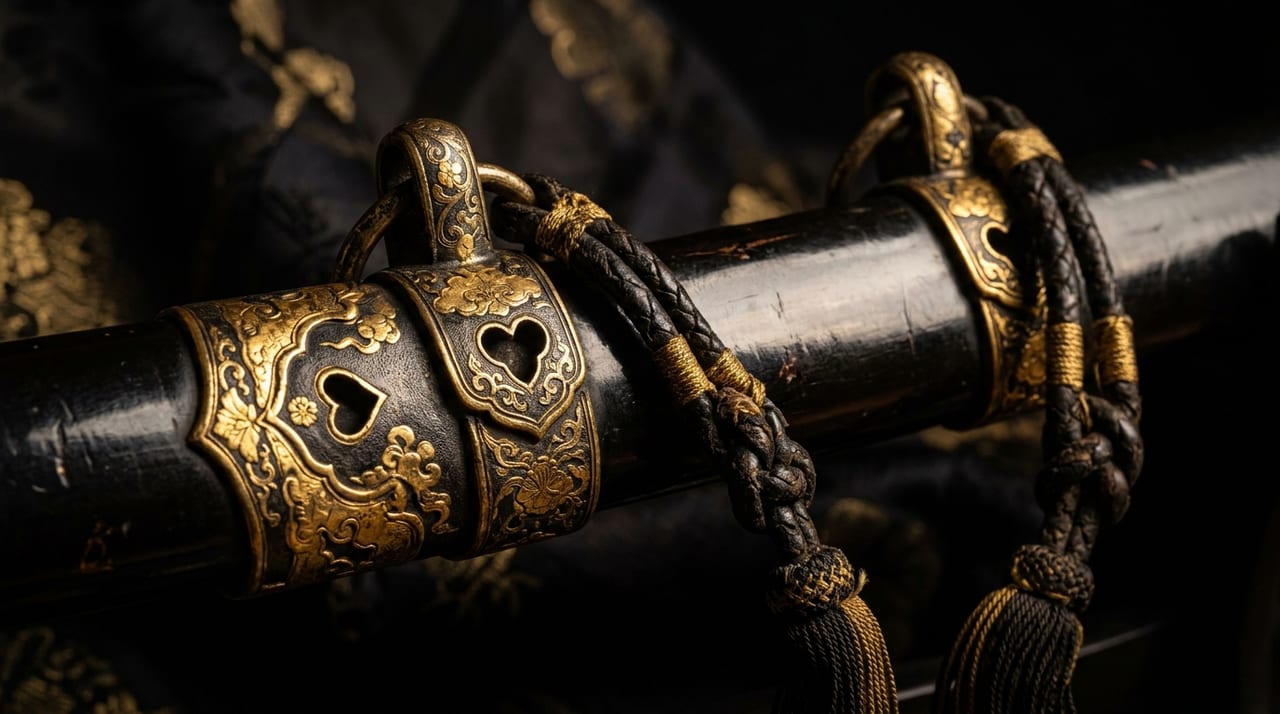
- The form of the tsuka and the presence or absence of kenuki-gata openwork
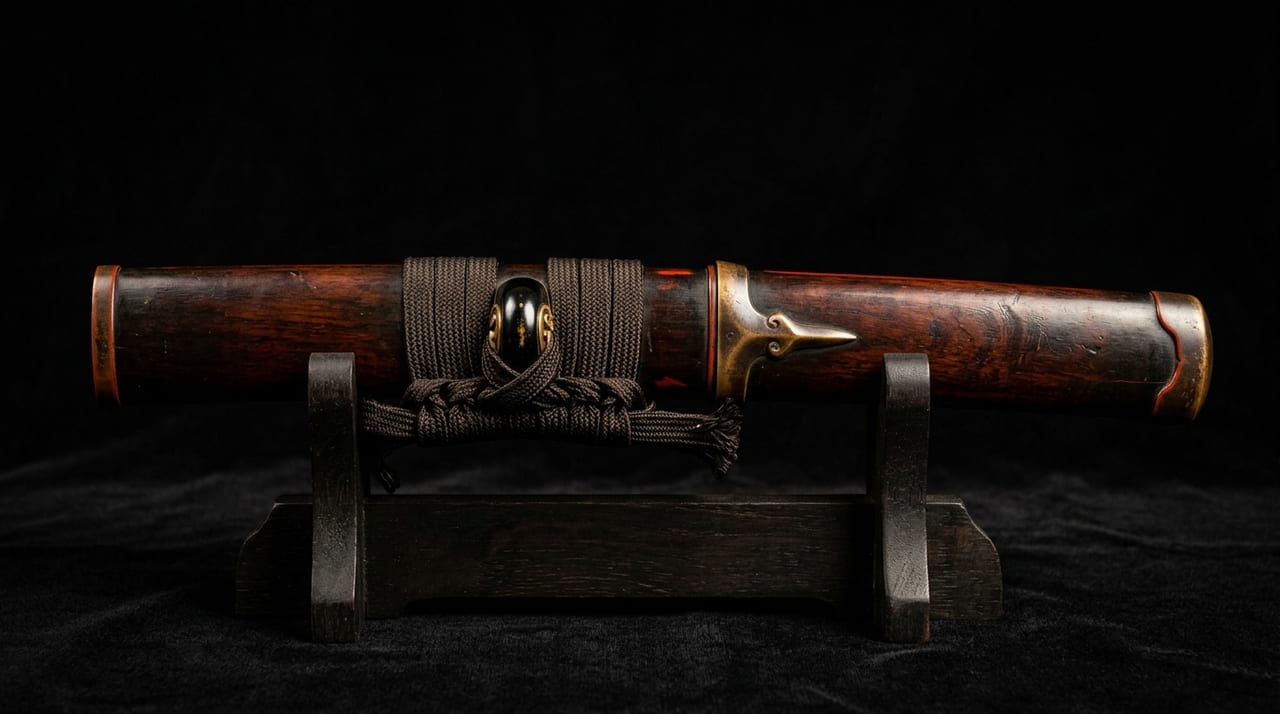
- The finish of the saya (whether a plain hira-saya or decorated with maki-e or similar)
- The composition of the cord and fittings for wearing at the hip
- The difference between the period of the accompanying blade and the period of the koshirae
It is not uncommon for the blade and koshirae to be from different periods. A blade and its koshirae may be made in different periods, with the koshirae added later. The fundamental approach to appreciating ceremonial tachi is to view the blade and koshirae separately and consider the period and function of each.
Summary
The efu no tachi derives from the heijō tachi worn by efu officials and is a name for tachi that later took on a stronger ceremonial character. While connections to the Kenuki-gata Tachi and kazari-tachi are discussed, views on its origins and uses differ from source to source. Separating what is certain from what is not is the most direct path to understanding this field.
Those who have developed an interest in tachi and koshirae can browse tachi currently listed for sale in the online catalog (sword listing). For inquiries about items, please contact us via the inquiry form.