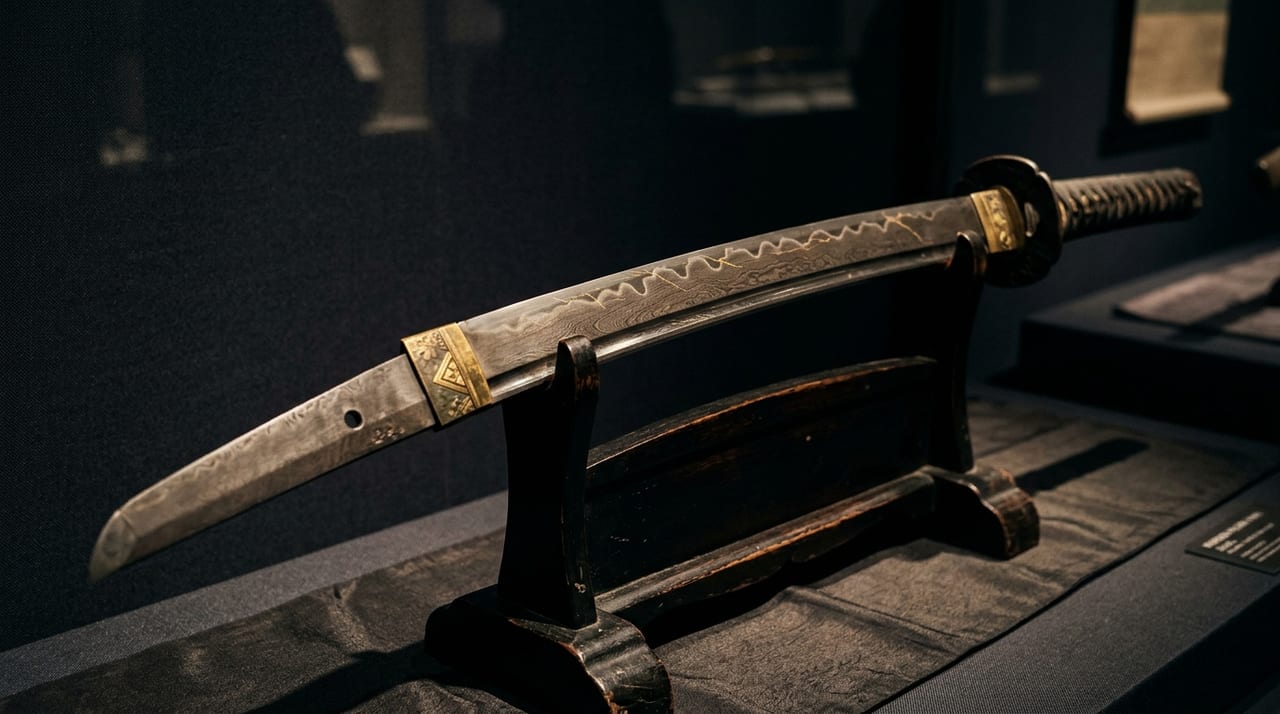
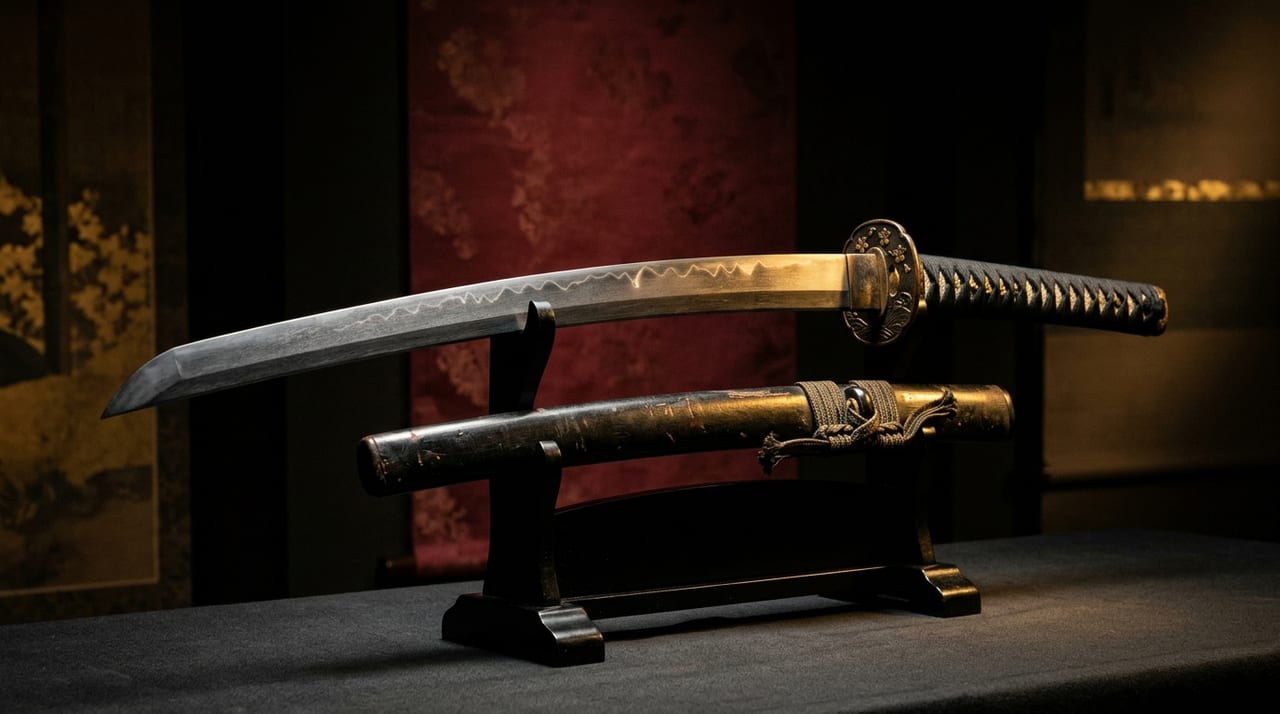
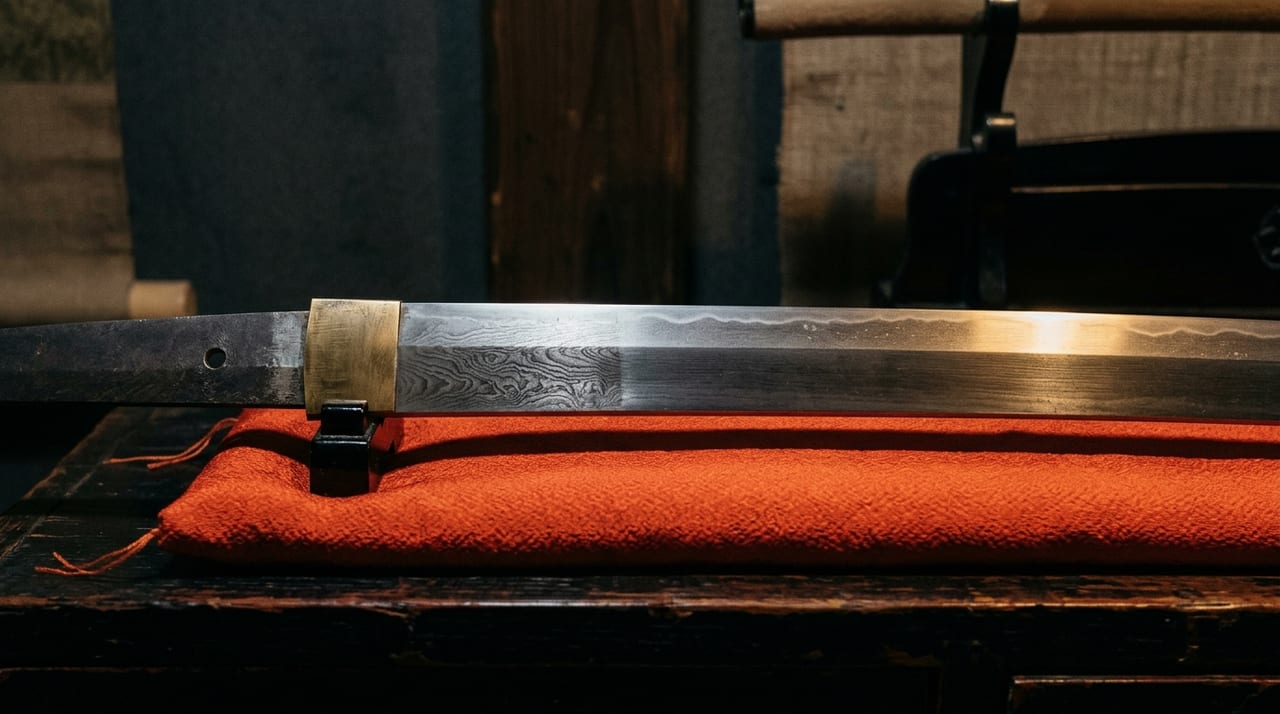
What Is Wakasa Fuyuhiro — The Swordsmith Collective That Continued in Obama and How to Read the "Fuyuhiro" Signature
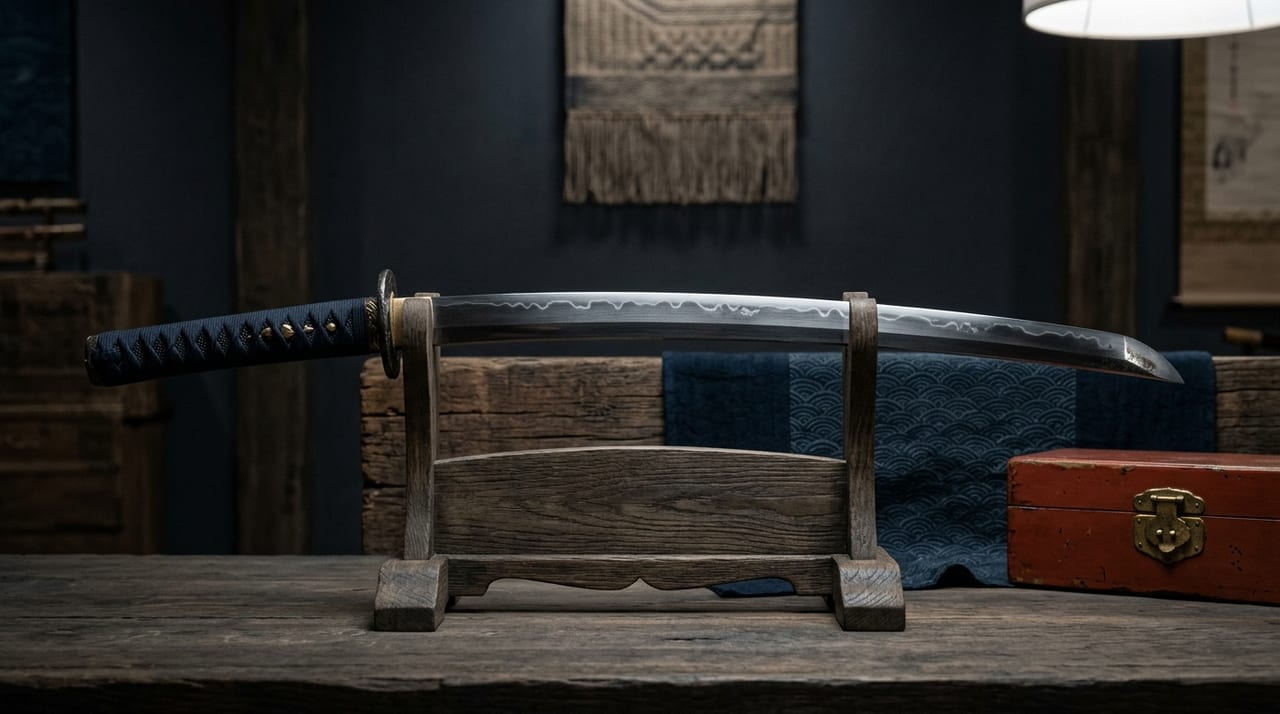 * Image is for illustrative purposes only.
Table of Contents
Obama, facing Wakasa Bay in Fukui Prefecture, is a port town that has long been connected to the capital by sea routes. In this town, from the Muromachi period through the Edo period, there lived tōkō who carved the mei "Fuyuhiro." Fuyuhiro is described not so much as the name of a single tōkō but as the name lineage of a swordsmith collective that continued in Obama — something akin to a trade name. Here, limiting ourselves to what has been confirmed, we summarize the origins of Wakasa Fuyuhiro and how to read the signature.
Fuyuhiro Is a Name Lineage, Not an Individual
According to the collection description of the Tsuruga City Museum, Fuyuhiro is considered the name lineage of a swordsmith collective who lived in Obama, Wakasa — something close to a trademark or brand name. The first generation is said to have been the son of Hiroji, a tōkō of Sagami Province, and is said to have moved to Obama in Wakasa around the mid-15th century (Tsuruga City Museum collection record). However, the timing of the first generation's relocation varies by source, and the number of generations and dates for the kotō-period Fuyuhiro have not been established.
In other words, even when a sword is called "a sword of Fuyuhiro," it was not necessarily made by the same individual. If a mei bears "Fuyuhiro," the work is viewed as belonging to the Fuyuhiro lineage of Obama, but which generation made it must be determined separately.
- The first generation is said to have been the son of Hiroji of Sōshū
- He is said to have moved to Obama around the mid-15th century
- After that, the same "Fuyuhiro" mei is said to have continued in the same place for successive generations
- The number of generations and dates differ depending on the source
A Style Incorporating Sōshū-den and Bizen-den
According to press coverage of a themed exhibition at the Wakasa History Museum, Fuyuhiro is introduced as a tōkō known throughout the country for incorporating the techniques of Sōshū-den (Sagami) and Bizen-den (Bizen). The swords of the Muromachi period are described as having a practical yet beautiful form with the sori tightening toward the tip, with an emphasis on cutting performance. They are said to have made swords not only for warriors but also for commoners, as well as spears for hunting. Source: Article in a regional media outlet for the Wakasa Bay area.
Sōshū-den is a tradition rooted in the Kantō region and Bizen-den in the San'yō region; both are major traditions of the nihontō. The characteristics of each are covered in the article on Gokaden.
The description of incorporating both traditions shows that, despite being a regional tōkō, Fuyuhiro learned techniques from leading production centers. It is also possible to infer that the character of this land — where people and information from east and west passed through by sea — provided the background, but this is speculation and has not been verified from primary sources.
Wakasa Fuyuhiro in the Shintō Period
Upon entering the Edo period, the Fuyuhiro name lineage continued into the shintō period. After the fourth-generation Fuyuhiro moved to Bitchū, the lineage that remained in Wakasa is said to have taken the name "Jakushū Fuyuhiro," and there was also a Fuyuhiro who called himself "Wakasa Daijō." The lineage split into the main Takahashi family Fuyuhiro and a branch line of Kanemura and Katō family Fuyuhiro, with members said to have been active through the late Edo period. Source: Explanatory article from a sword event.
The style of an early Edo-period piece bearing the mei "Jakushū-jū Fuyuhiro-saku," cited in the same description, is described as a bold, imposing form with wide mihaba and an elongated kissaki. The jigane shows a tightly packed ko-itame grain with fine ji-nie. The hamon is described as being in a notare style interspersed with gunome and ko-midare, with ko-ashi and ha present; the nioiguchi is slightly tight with ko-nie. It should be noted that this is a description of a single sword on display and does not apply to all shintō-period Fuyuhiro work.
For more on the practice of including official court titles such as "Daijō" in the mei, the following article gives a detailed account.
How to Read the Signature and Points to Note When Purchasing
The Tsuruga City Museum holds a Muromachi-period sword bearing the mei "Fuyuhiro-saku." It is recorded as shinogi-zukuri with an iori-mune, nagasa of 72.0 cm, and sori of 2.6 cm. As this shows, the Fuyuhiro mei may be cut as a simple two-character "Fuyuhiro" or in a form with the place of residence added, such as "Jakushū-jū Fuyuhiro-saku." The way to read place-of-residence signatures is covered in the following article.
When examining a Fuyuhiro sword, it is advisable to confirm the following in order.
- Whether the mei uses the traditional or simplified form of the character for "hiro" in "Fuyuhiro," and whether a place-of-residence note is added
- Whether the piece is Muromachi-period work or Edo-period (shintō-period) work
- How the form, jigane, and hamon relate to the characteristics of Sōshū-den and Bizen-den
- Whether the kanteisho classification and cultural property designations are being confused
It should be noted that no systematic list of tōkō from Wakasa other than Fuyuhiro could be confirmed. While Fuyuhiro can be seen as a representative of Wakasa swords, the material available to discuss tōkō from Wakasa as a whole remains limited. For this reason, learning about Fuyuhiro serves as an entry point for understanding regional tōkō beyond the framework of the Gokaden.
- Regional Tōkō Beyond the Gokaden — The Legacy of Lesser-Known Production Centers and Their Craftsmen
Those interested in the Fuyuhiro name lineage can browse swords currently listed in the TOUKENZA online catalog. Inquiries before purchasing can be sent via the contact form.