Swordsmiths Beyond the Five Traditions: The Hidden Regional Schools and Their Legacy
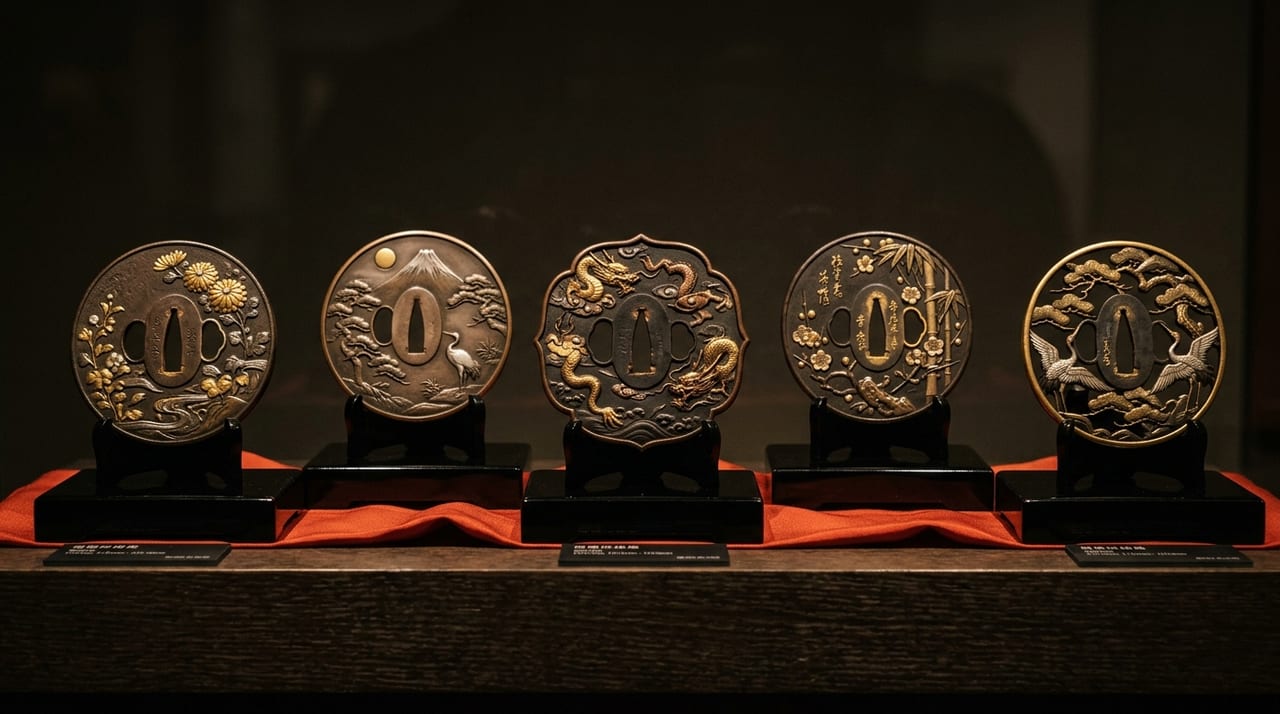 * Image is for illustrative purposes only.
Table of Contents
Limitations of the Five Schools-Centric Historiography
In Japanese sword history education, the "Five Schools (Yamashiro, Yamato, Bizen, Soshu, and Mino)" are treated as the central focus. These were undoubtedly major sword-forging cultural zones in Japanese sword culture and produced many master craftsmen. However, from another perspective, the framework of the Five Schools is a post-hoc classification systematized by sword connoisseurs in the Edo period and beyond, and earlier bladesmiths did not necessarily forge their blades with the intention of fitting into that framework.
Looking across all of Japan, there is the fact that sword-forging cultures took root in regions outside the Five Schools as well. Producing areas such as Satsuma, Echizen, Mutsu, and Sanuki cultivated distinctive styles under the geographical conditions, trade networks, and patronage of their respective domains. These "provincial bladesmiths" often remain insufficiently evaluated in research and collection, yet they are indispensable to any discussion of the regional diversity of Japanese sword culture.
Satsuma (Kagoshima)—An Independent Sword Culture of South Kyushu
Satsuma Domain (present-day Kagoshima Prefecture) was one of the regions that cultivated the most distinctive sword culture outside the Five Schools zone. The Shimazu clan protected bladesmiths generously from the medieval period onward, and a high-quality group of bladesmiths known as the "Satsuma superior craftsmen" was formed.
The technical characteristics of Satsuma swords lie in their emphasis on practical combat performance. The blade is thick in cross-section and built sturdily to withstand cutting impacts. The ground steel often shows wood-grain or flowing-wave patterns, and there are also works made with continental iron materials said to have been obtained through South China Sea trade. Hamon patterns are often curved in style, and it is noteworthy that while influenced by the Soshu school, they incorporated their own interpretations.
An outstanding bladesmith lineage that cannot be overlooked is the "Naminohira." Said to have descended to Satsuma in the late Heian period, a major lineage with Naminohira Yukiyasu as its founder continued unbroken from the Kamakura period through the end of the Edo period. The inheritance of a single signature spanning hundreds of years is rare throughout Japan and stands as testament to the continuity of Satsuma's bladesmith culture. In the late Edo period, Masakuni, protected by Shimazu Nariakira, was active, and the Satsuma sword tradition lived on until around the Seinan War.
Echizen (Fukui)—A Smithy Village Continuing from the Kamakura Period
Echizen (present-day Fukui Prefecture) was a producing area where bladesmiths settled from the late Heian period onward and established independent evaluation as "Echizen smiths." Geographically positioned at the crossroads of sea transport via Wakasa Bay and the Hokuriku Road, the environment rich in raw materials such as iron and charcoal supported the development of the smithing industry.
The bladesmith who made the name Echizen known throughout the nation was Nagasone Kotetsu. He transitioned from being an armor maker from Omi or Echizen and later began forging swords in Edo, becoming the pinnacle of the Edo sword world during the Kanbun and Enpō periods (late seventeenth century). His works were distinguished by abundant nie in the blade and exceptional hamon patterns, and they were treasured by many warriors including Kondo Isami. Genuine works inscribed "Kotetsu Nyūdō Okisato" are still highly regarded today, and he is remembered as a rare example of a provincial bladesmith who rose to the top of Edo from Echizen.
Echizen was also a producing area for armor makers, and it cannot be overlooked that it functioned as a hub for the collection of weapons industries as a whole, combining swords and armor, throughout the medieval and early modern periods.
Mutsu (Tohoku)—Sword Culture Blooming on the Frontier
Mutsu (present-day Tohoku region) was often regarded as a "frontier" distant from central culture, yet it steadily cultivated its own bladesmith culture.
The Date Domain (Sendai Domain) actively protected bladesmiths from the early Edo period, and records remain of multiple bladesmith groups active, including lineages called "Ōshū Masamune." Iron resources were also produced in the Sendai area, and the ability to self-supply raw materials helped establish local bladesmiths in the region.
In the Tsugaru and Akita regions, historical materials suggest the presence of bladesmiths who used "Nanban iron" obtained through northern trade as their material. Nanban iron contains few impurities and is said to be easy to forge, and the technical level of Tohoku bladesmiths who mastered its use was by no means low.
It should be noted that "Mutsu no Kami Yoshiyuki" is an official rank title used by a bladesmith of Tosa origin and is known as the beloved sword of Sakamoto Ryoma. Though the name contains "Mutsu," it is not a product of Tohoku, but it provides an excellent example of how the convention of official rank titles derived from place names made people acutely aware of the strong connection between regions and bladesmiths.
Sanuki (Kagawa) and Bingo (Eastern Hiroshima)—Blades Raised Alongside the Five Schools
Alongside Bizen, which towered as a giant of the Five Schools, neighboring Bingo and Sanuki also had noteworthy sword-forging cultures taking root.
Though few in number, Sanuki bladesmiths have left multiple examples of late-Kamakura to Northern and Southern Court period blades, and works have been identified that inherited Bizen school techniques while possessing distinctive ground steel expressions. The Fukuyama area of Bingo had a concentration of bladesmiths in the new sword period (early Edo), forming a group collectively called "Bingo ware." Whereas Bizen is characterized by straight hamon, Bingo ware tends to have slightly broader straight hamon with a tightened nioi mouth, showing that a distinctive aesthetic sensibility was cultivated despite the proximity.
Research on these Bizen-adjacent producing areas provides important material from the perspective of comparative sword studies, tracing how Five Schools techniques propagated and transformed in peripheral regions.
Modern Provincial Bladesmiths—Inheritors of Tradition
Even in the present day, there are not a few bladesmiths active in regions outside the Five Schools. Provincial bladesmiths exhibit the following characteristics.
- Centered on graduates of the Cultural Affairs Agency's "Traditional Art Sword Making Craftsman Technology Preservation Training Program," young bladesmiths are active in Hokkaido, Tohoku, Shikoku, and Kyushu regions, working toward both the transmission of regional sword culture and the creation of new works
- The distinctive character that is the obverse of low name recognition is their strength, and bladesmiths are now appearing who pursue region-specific ground steel expressions by using local tamahagane and iron sand as materials
- Through partnerships with regional art museums and local history museums and participation in sword appreciation events, they also play a role in broadening access to sword culture
- From a collector's perspective, works by provincial bladesmiths often exist at price points more accessible than those of Five Schools master craftsmen, making them a practical option for acquiring works of historical and artistic value
Conclusion—A New Horizon in Provincial Bladesmith Research
Research on provincial bladesmiths outside the Five Schools remains a frontier with great room for development within Japanese sword studies. As provincial historical materials, museum collections, and ancient documents become increasingly studied, the accomplishments of previously overlooked bladesmiths are gradually being revealed.
The Five Schools framework is useful as a standard for sword appraisal, but the full picture of Japanese swords cannot be told by it alone. The legacy of bladesmiths rooted in each locality is living evidence of the richness and diversity of Japanese sword culture.
| Producing Area | Legacy of Sword-Forging Culture |
|---|---|
| Satsuma | Practical combat-focused sword culture including the Naminohira school |
| Echizen | A smithy village that produced Nagasone Kotetsu |
| Mutsu | Frontier sword culture using Nanban iron |
| Sanuki | Late ancient blades inheriting Bizen school techniques |
| Bingo | A concentration of bladesmiths in the new sword period known as Bingo ware |
Deepening one's gaze toward regions opens the way to understanding Japanese swords in three dimensions.
The representative provincial bladesmith outside the Five Schools who built an independent tradition is the Satsuma Naminohira school. Standing at its apex is a signed tachi Sasanuki (Sasanuki, by Naminohira Yukiyasu, Important Cultural Property, held in the Kyoto National Museum), which is discussed in detail in another article regarding its form and provenance.