Beyond the Gokaden: The Character and Collecting Value of Regional Swords of the Kotō Era
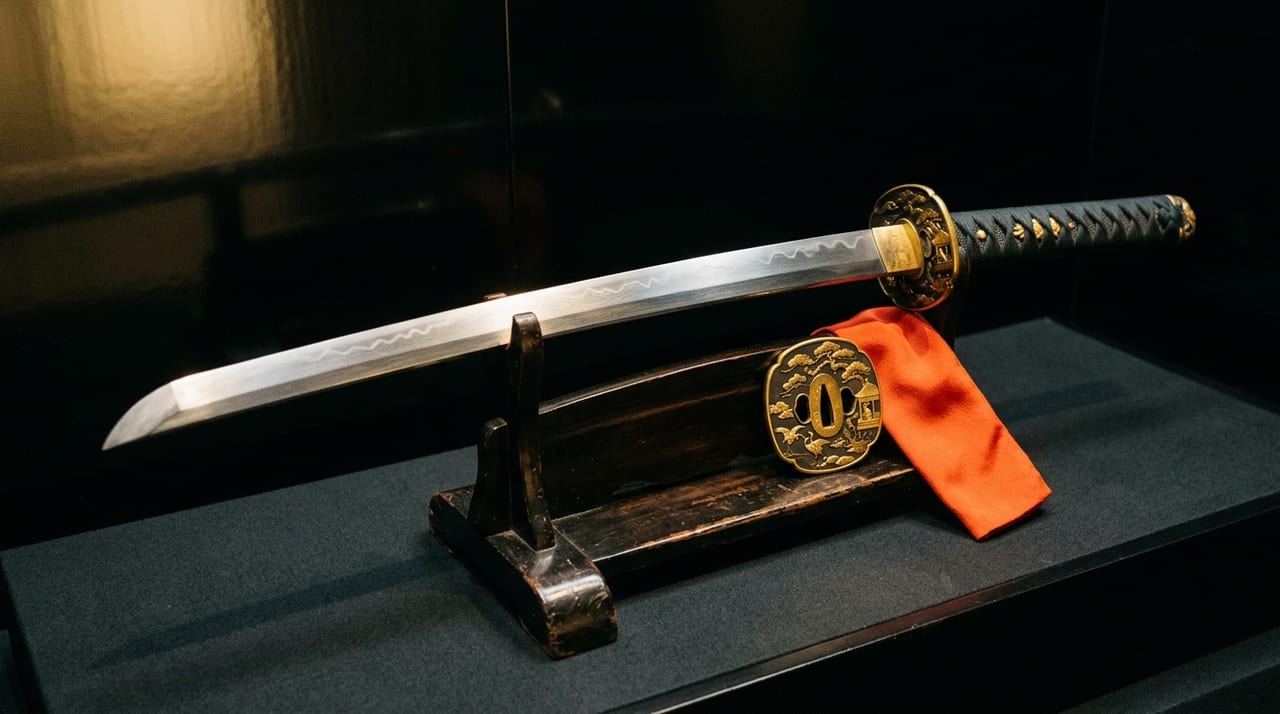 * Image is for illustrative purposes only.
Table of Contents
The Vast World of "Regional Swords"
In the history of Japanese swords, the Gokaden (five traditions)——Yamashiro, Yamato, Bizen, Soshu, and Mino——are certainly the central presence. However, when we survey the kotō era (from the late Heian period to before the Keichō era, roughly from the 10th through the end of the 16th century), we can see that a distinctive sword culture had blossomed across every region of the country. The works of the so-called "regional traditions"——from Bungo, Satsuma, Echizen, Oshu, and others——were far from mere offshoots of the Gokaden; each formed an independent cultural sphere with its own aesthetic, technique, and spirit.
This article surveys the characteristics of these regional swords by area, examines their relationship to material resources and kaji (smith) techniques, and explores their collecting value in the modern era.
Sword Culture in Kyushu: The Two Great Currents of Bungo and Satsuma
The two pillars of sword culture in Kyushu are Bungo (present-day Oita Prefecture) and Satsuma (present-day Kagoshima Prefecture).
At the heart of the Bungo Tradition are the tōkō (swordsmiths) represented by Bungo Yukihira, who was active in the late Heian period. Yukihira is considered one of the tōkō belonging to the earliest class of zaimei (signed) works, and his pieces combine an elegant hamon (temper line) that recalls the influence of Yamashiro-den with a distinctive jigane (steel of the blade surface) derived from Kyushu-produced iron sand. The hamon is based on a calm suguha or ko-midare, and while the jigane is predominantly itame, some examples include a slight masame component such as is seen in Yamato-den. Bungo was a region where a certain quantity of iron sand could be obtained in mountainous areas such as along the Kusu River, and it is thought that the quality of this raw material was one factor producing the refined and elegant jihada (grain pattern of the steel).
The Satsuma tradition has an even more pronounced character. The Naminohira school is considered one of Japan's longest-lived groups of tōkō (swordsmiths), with a history spanning well over a thousand years from the late Heian period through after the Meiji Restoration. With Satsuma as the stronghold of the Shimazu clan, the spirit of martial valor was strong, and swords were valued as practical weapons. As a result, the blades have a thick kasane (blade thickness) and large, full-sized tachi are frequently seen. The hamon is predominantly suguha or gentle notare, with little in the way of flamboyant irregular patterning. The jigane is said to have a distinctive toughness, being forged in an itame with a tendency toward masame, and it is said that the special geological environment of southern Satsuma is related to these properties of the steel.
Sword Culture in Hokuriku and Tohoku: The Solitary Eminence of Echizen and Oshu
In Echizen (present-day Reihoku area of Fukui Prefecture), records survive of tōkō (swordsmiths) active from the kotō era. In the Kamakura and Nanbokuchō periods, a well-ordered craftsmanship influenced by Yamato-den and Yamashiro-den is observed, with jigane of itame mixed with masame and a hamon of calm suguha or ko-midare being characteristic. Echizen had active cultural exchange with the Kinai region via Omi and Wakasa, and advanced sword-forging techniques were transmitted there relatively early. Later, from the Sengoku period onward, Echizen developed into a major production center through the migration of tōkō from Mino, but the kotō-era Echizen swords predating this period retain a purely regional character and can be said to have high documentary value.
Oshu (the Tohoku region) is one of the areas where surviving examples are extremely sparse, making it difficult to clarify the reality of the kotō era there. However, archaeological research has made it clear that Oshu had its own distinctive iron-smelting culture. In the late Heian period, when the Oshu Fujiwara clan flourished, it is thought that swords were produced in the cultural sphere centered on Hiraizumi, and certain works bearing the mei (signature) "Mutsu" or "Oshu" have been passed down. The jigane is generally rough itame, and is said to have a straightforward strength befitting a frontier region.
Regional Character Inscribed in Jigane and Hamon
Jigane and hamon are what best reveal the regional character of a sword. The characteristics of each regional tradition can be summarized as follows.
| Region | Hamon | Jigane | Characteristics |
|---|---|---|---|
| Bungo | Calm suguha or ko-midare | Predominantly itame (some examples contain a slight masame component) | Elegant hamon reminiscent of Yamashiro-den influence |
| Satsuma | Suguha or gentle notare (little flamboyant irregular patterning) | Itame with a tendency toward masame, distinctive toughness | Thick kasane, large tachi, spirit of martial valor |
| Echizen | Calm suguha, ko-midare | Itame mixed with masame | Well-ordered craftsmanship influenced by Yamato-den and Yamashiro-den |
| Oshu | Suguha preferred | Rough itame | Straightforward strength befitting a frontier region; surviving examples are sparse |
The differences in jigane derive fundamentally from the composition of the iron sand. Iron sand from the Chugoku Mountains (the boundary zone between San'in and Sanyo) has a low titanium oxide content and produces high-quality tamahagane that is easy to refine, and thus supported the masterworks of Bizen, Soshu, and Yamashiro. On the other hand, Kyushu-produced iron sand has a somewhat different chemical composition, and is thought to have led to the distinctive jihada (grain pattern of the steel) of Satsuma and Bungo. Tohoku-produced iron sand has variable composition, and it is also said that this is reflected in the rough itame surface of Oshu swords.
Regional tradition and aesthetic preference also have a great influence on the hamon. The flamboyant irregular hamon of chōji, yahazu, and the like found in Bizen-den are the crystallization of that aesthetic. In contrast, suguha was preferred in Satsuma and Oshu. This is thought to be the result of an intertwining of both the spirit of prioritizing practical utility and the characteristics of the raw materials and techniques.
Regional Conditions of Iron Sand, Charcoal Resources, and Sword-Forging Techniques
What fundamentally determines the quality of a Japanese sword is the quality and quantity of iron sand and charcoal. Many of the regions where outstanding swords were produced during the kotō era tend to coincide with places where the following three conditions were met.
- A source of high-quality iron sand
- Abundant forest resources (tree species suited for charcoal production, such as Japanese red pine and sawtooth oak)
- Hydraulic power from rivers
Bizen (along the Asahi River), Soshu (along the Sagami River), and Yamashiro (along the Uji and Katsura Rivers) are prime examples.
Even in the production areas of regional swords, distinctive smelting cultures developed. The Kusu and Hita areas of Bungo and the Osumi area of Satsuma had iron sand and timber resources, and local tatara (traditional smelting) was practiced. Echizen had a distribution route through Omi by which high-quality tamahagane could be obtained, compensating for the disadvantage in materials. Although Oshu was abundant in iron sand, it is thought that regional differences in quality arose because refining techniques lagged.
The Rarity of Regional Swords and Their Collecting Value in the Modern Era
The greatest characteristic of regional swords is the smallness of their absolute numbers. While the major production centers of the Gokaden have hundreds to thousands of surviving kotō, the works of regional traditions are often limited to roughly tens to hundreds of examples, and in the case of Oshu, the number of surviving zaimei (signed) kotō is extremely limited.
This rarity produces a kind of paradox in collecting. Regional swords tend to be valued lower in the general market compared to the masterworks of the Gokaden. This is a valuation based on differences in fame and name recognition, and does not necessarily accurately reflect artistic or historical value. Among collectors with a practiced eye for appraisal, high-quality regional swords are often highly valued as rare items with "room for discovery."
Outstanding examples of Naminohira swords and Bungo Yukihira have irreplaceable documentary value in the history of Kyushu swords, and verified zaimei (signed) Oshu works can also hold significance as primary sources for the study of ancient Tohoku history. As witnesses to regional history and the history of technology that transcend mere weapons, regional swords are urgently called upon for further research and preservation.
Closing
The world of Japanese swords during the kotō era was richly colored not only by the "trunk" of the Gokaden but by the countless "branches and leaves" spreading across every region of the country. The refined tranquility of Bungo, the robust strength of Satsuma, the well-ordered beauty of Echizen, the unadorned power of Oshu——in each regional sword, the nature, people, and history of that land are condensed. To view these swords is not only to appreciate the art of Japanese swords but also to decipher the forms of diverse civilizations that breathed life into the Japanese archipelago. Through the window of regional swords, the world of Japanese swords will come to be seen with greater depth and broader scope.
Among the zaimei (signed) works representative of kotō-era Satsuma, the tachi Sasanuki — jūyō bunkazai (Important Cultural Property), Kyoto National Museum collection by Naminohira Yukiyasu stands out. It is hoped that readers will view it alongside the lineage of the Naminohira school, which continued for approximately 900 years at the southernmost point of Japan.