From the Sword Abolishment Edict to Revival: The Japanese Sword Preservation Movement of the Meiji and Taishō Eras
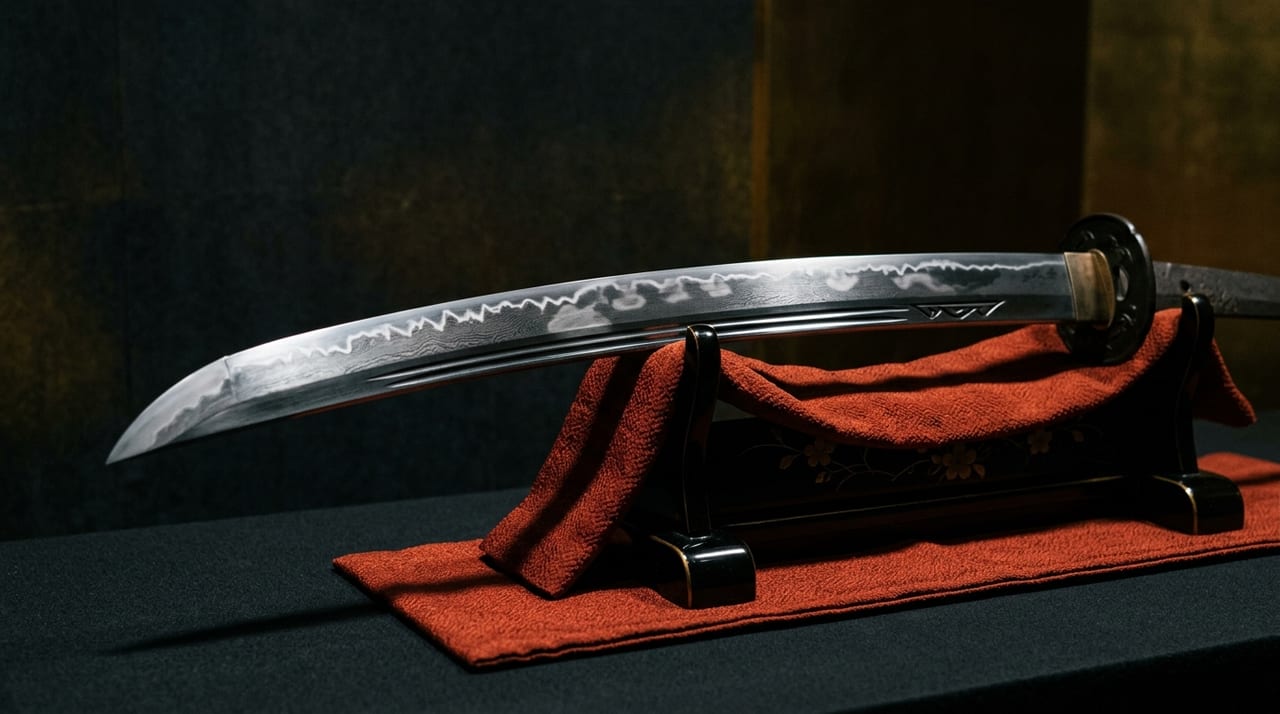 * Image is for illustrative purposes only.
Table of Contents
The Shock Brought by the Sword Abolishment Edict: A Turning Point for the Japanese Sword
On March 28 of Meiji 9 (1876), Grand Council of State Proclamation No. 38 — the so-called Sword Abolishment Edict (Haitōrei) — was promulgated. This ordinance, which forbade the samurai class from wearing swords, was more than a mere reform of dress regulations; it became a historic turning point that shook the very raison d'être of the Japanese sword. The sword, once a symbol of the privileges of the shizoku (former samurai) class, was overnight reduced to a "relic of the past."
The aftershock of the Sword Abolishment Edict (Haitōrei) was felt immediately in the market. Shizoku struggling with poverty parted with treasured family swords, and antique markets and pawnshops overflowed with blades. Many of the buyers were foreigners, and cases multiplied in which foreign advisors and diplomats purchased famous swords for a pittance and took them abroad. Under the industrial promotion (shokusan kōgyō) policy, demand for metal resources also rose, and instances of blades being melted down and repurposed as raw material were reported across the country. Works by master smiths handed down over hundreds of years were thus lost one after another.
Awakening to Cultural Heritage Protection: The Meiji Government's Response
Not all developments, however, were destructive. The Meiji government began recognizing the importance of cultural heritage at an early stage. The "Preservation of Ancient Artifacts and Relics" directive (Koki Kyūbutsu Hozonkata), issued in Meiji 4 (1871), was one of Japan's earliest attempts at a cultural property protection administration, ordering each prefecture to preserve ancient objects and artworks. It also arose as a reflection on the large-scale destruction of Buddhist art caused by the anti-Buddhist movement (haibutsu kishaku), which had become a serious social problem.
In Meiji 5 (1872), the first exposition was held at Yushima Seidō, and the exhibition and assessment of ancient artworks began. In Meiji 15 (1882), a museum opened in Ueno, Tokyo (now the Tokyo National Museum), which also took on the role of an institution for collecting and preserving famous swords. The museum was renamed the "Imperial Museum" in Meiji 22 (1889).
Ernest Fenollosa and Okakura Tenshin played an important role during this period. From around Meiji 17 (1884), the two investigated temples and shrines across the country and energetically promoted the protection of ancient art. Their activities led to a reassessment of Japanese art in general and created fertile ground for swords to be reconsidered as "works of art" as well.
The Origins of the Kokuhō and Jūyō Bunkazai Systems
In Meiji 30 (1897), the "Ancient Shrines and Temples Preservation Law" (Koshaji Hozonhō) was enacted. This landmark legislation marked the state's formal entry into cultural property protection and became the prototype of the system for designating and protecting especially valuable cultural properties as kokuhō (National Treasure). Swords also became subject to this system, and swords held by renowned shrines and temples came to receive the kokuhō (National Treasure) designation.
The kokuhō (National Treasure) designation of the Meiji era, however, differed from today's system; it was limited, targeting primarily cultural properties held by shrines and temples. For privately owned swords to be broadly covered by protection measures, it would be necessary to wait for the legal amendments of the Taishō and Shōwa eras. Even so, the significance of the state officially defining "swords worthy of protection" was considerable, and it was the moment when the legal basis for the Japanese sword's transition from a mere weapon to a "cultural heritage" was first established.
The Taishō Era: The Revival of Sword Research and Appraisal Culture
As Japan entered the Taishō era (1912–1926), social interest in swords took on a new character. As industrialization and urbanization advanced, a mood of nostalgia and reassessment of traditional culture rose, and the organized activities of sword enthusiasts became more vigorous.
It was also during this period that the classification systems by "school" (ryūgi) — such as Bizen, Sōshū, and Yamato — and by "era" — such as Kamakura, Nanbokuchō, Muromachi, and Edo — were refined and systematized, and a distinctive culture of "sword appreciation" (tōken shumi) merging scholarship and connoisseurship was formed.
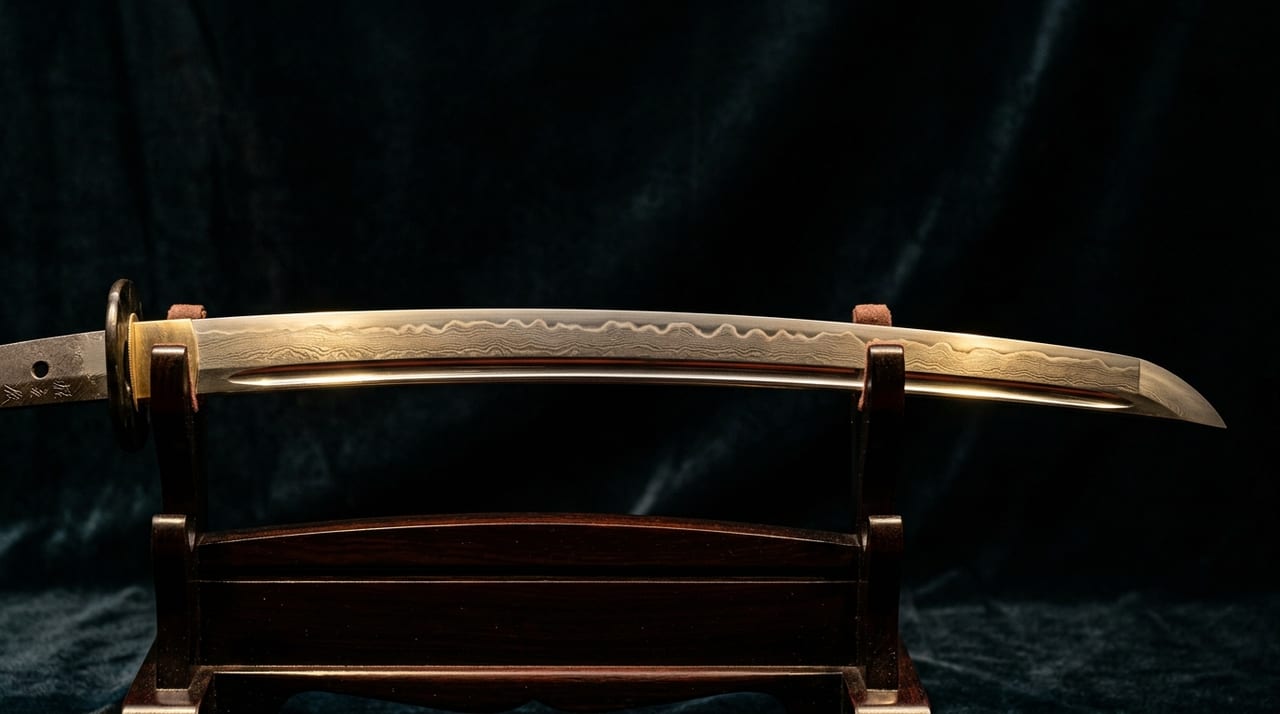
The culture of kantei (appraisal) also developed greatly in the Taishō era. While appraisers who continued the lineage of the Hon'ami family — known as authorities on sword appraisal since the Edo period — were active, new researchers and enthusiasts also honed their appraisal skills. In the practice of kantei, the following elements were analyzed comprehensively, and the skill of "reading" a sword was transmitted and developed as systematic knowledge.
- jigane (steel of the blade surface)
- hamon (temper line)
- nakago (tang)
- mei (signature)
Symbolic of the research achievements of the Taishō era is Hon'ami Kōson (1879–1955). Kōson, who was active as the foremost authority on sword appraisal in the Hon'ami lineage, compiled oshigata (rubbings) of swords together with detailed commentary in his work Kōzan Oshigata, thereby assembling the foundational materials of modern sword research. At the same time, men of letters and art critics centered on the Shirakaba-ha (White Birch Society) began discussing the Japanese sword in language such as "the sword is a moving sculpture" and "the hamon (temper line) connects to abstract painting," and swords came to be discussed in the context of modern art criticism, distinct from the traditional martial-class vocabulary of evaluation.
The Japanese Sword as a "Work of Art": The Completion of Modern Redefinition
The most important transformation achieved by the preservation movement from the Meiji through the Taishō era was the fundamental shift in the social positioning of the Japanese sword. The sword, which had functioned as a weapon and a symbol of martial authority, was redefined as a "work of art and craft."
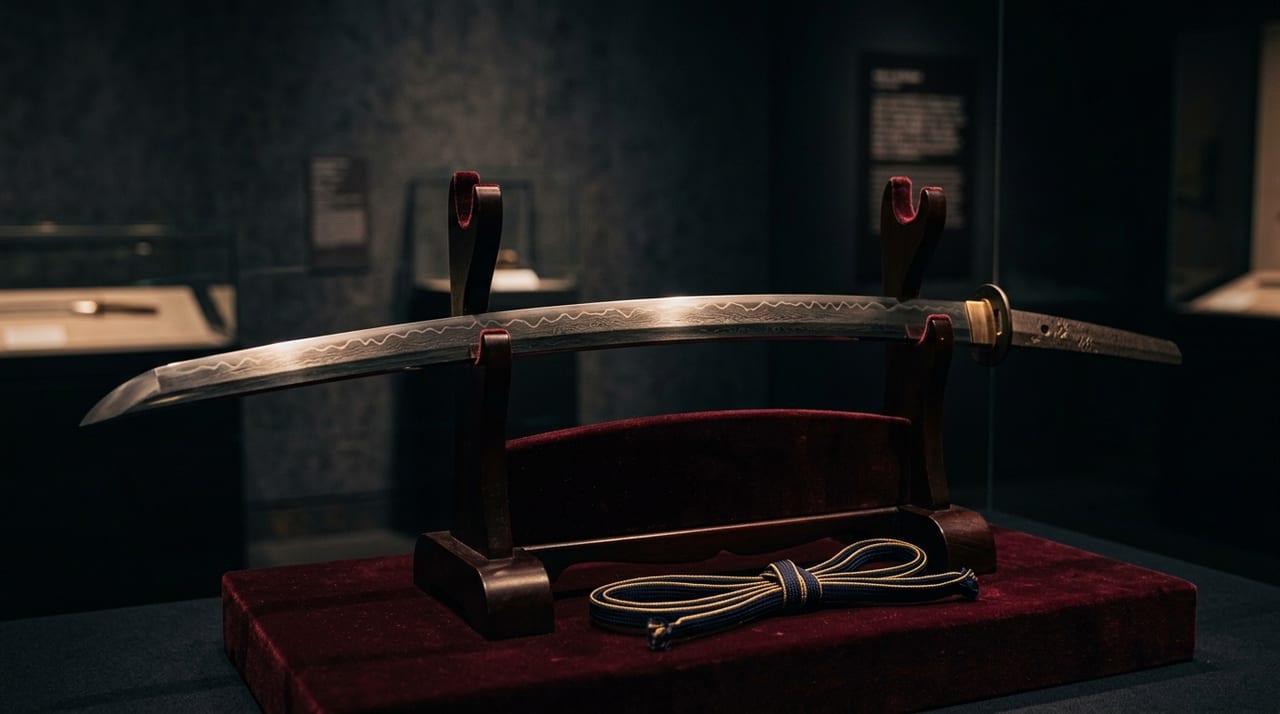
Symbolic of this shift is the change in how swords were displayed at expositions and exhibitions. Swords came to be evaluated not by the sharpness of the blade or practical combat function, but by "aesthetic elements" such as the texture of the jigane (steel of the blade surface), the beauty of the hamon (temper line), and the design of the koshirae (mounting). Even in the Imperial Museum's exhibitions, famous swords were placed in glass cases and introduced to the general public as works of art on a par with paintings and sculpture.
Domestically, the Domestic Industrial Expositions (Naikoku Kangyō Hakurankai) held from Meiji 10 (1877) through Meiji 36 (1903) — the 1st through 5th editions — promoted the transformation of swords into "works of art." A sword section was established at each edition, and submitted works were reviewed and awarded prizes, thereby establishing a system in which the quality of craftsmanship was publicly evaluated. Furthermore, during the same period, the Japanese government exhibited Japanese swords at the following World Expositions, impressing art lovers and researchers in Europe and America with swords as "the pinnacle of Eastern art and craft."
- Vienna World Exposition, 1873
- Paris World Exposition, 1878
- Chicago World Exposition, 1893
- Paris World Exposition, 1900
Half a century after the Sword Abolishment Edict (Haitōrei), by the end of the Taishō era, the Japanese sword had largely lost its practical utility as a weapon while establishing a new identity as a "crystallization of beauty" and "the ultimate in craftsmanship." This modern redefinition became the spiritual foundation of the sword protection legislation and cultural property system from the Shōwa era onward, laying the cornerstone of the sword preservation culture that continues to the present day.