Meiji Sword Reform — The Sword Abolishment Edict and Smiths' Hardship
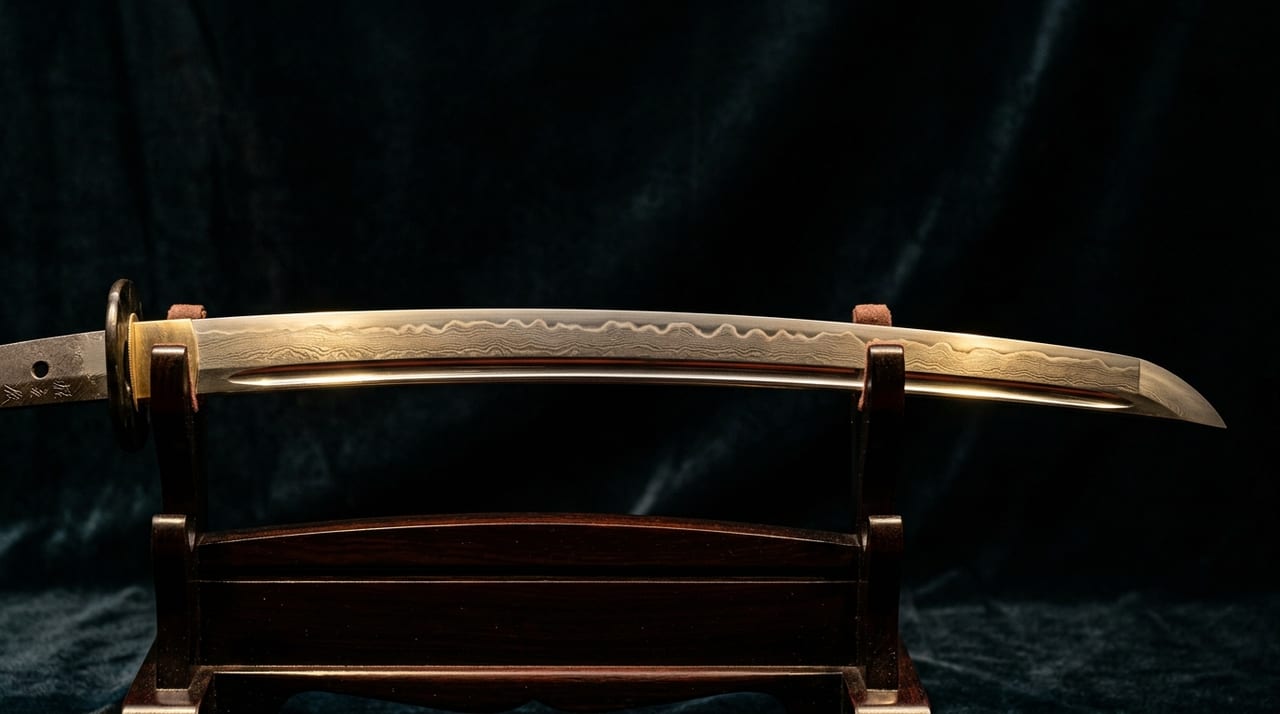 * Image is for illustrative purposes only.
Table of Contents
Haitorei (Edict of Abolishing Swords) - The Greatest Turning Point in Japanese Sword History
The Haitorei (Edict of Abolishing Swords) promulgated in 1876 (Meiji 9) marked the greatest turning point in the history of Japanese swords. This edict caused swords, which had existed at the center of Japanese society for more than a thousand years, to fall overnight into disrepute as "outdated dangerous weapons." Except when wearing formal dress, and for military personnel and police officers, the wearing of swords was completely prohibited for the general public. Since wearing a sword had been a privilege of the samurai during the Edo period and a symbol of their status, this prohibition sent shockwaves through every corner of society.
The Haitorei was far more than a simple weapons regulation. It symbolized the end of the samurai class itself. The sword, which had been revered as the "soul of the samurai" throughout the Edo period, was stripped of its social meaning, and the hardship struck every craftsperson involved in sword-making—from swordsmiths to polishers to scabbard makers.
The Collapse of Swordsmiths' Livelihoods and the Chain of Closures
The blow dealt to swordsmiths by the Haitorei was severe. Swordsmiths who had made their living as retainers of feudal lords or by serving the warrior class as their primary customers suddenly lost their means of livelihood. Many were forced into closure, and some reluctantly turned to manufacturing kitchen knives, farm tools, and carpentry implements.
The exceptional skills honed over centuries faced the crisis of disappearing along with the craftspeople who possessed them.
- The handling of tamahagane (precious sword steel)
- The techniques of fold-forging
- The sensibility of soil-application that creates hamon (blade patterns)
Without successors and with oral techniques passed from master to apprentice facing the brink of extinction, this was an era when the very continuity of craftsmanship hung by a thread. This discontinuation of techniques was not merely the decline of one craft—it was an event that shook the very foundations of forging culture throughout Japan.
Salvation through Getsuyama Sadaichi and the Imperial Technicians System
In this desperate situation, the institution that became the lifeline of sword culture was the Imperial Technicians System. From the perspective of protecting traditional crafts, the Meiji government designated and supported excellent craftspeople as "Imperial Technicians" (Teishitsu Gigeiin). Under this system, the outstanding swordsmith Getsuyama Sadaichi rose to prominence and developed activities that positioned Japanese swords as works of art and craftsmanship rather than mere weapons. The Imperial Technicians included not only swordsmiths but also practitioners of other traditional crafts such as ceramics, lacquerware, and metalwork, reflecting the Meiji government's determination to preserve Japanese traditional techniques as a whole.
Through the work of Getsuyama Sadaichi, the path opened for swords to be socially recognized as "Japanese traditional crafts." His works were exhibited at domestic and international exhibitions, widely demonstrating the artistic value of Japanese swords. Without his activities, it is highly likely that the traditional techniques of Japanese sword-making would have been completely lost during the Meiji period.
The Role of the Restoration Sword Movement
The restoration sword movement, which had already begun before the Haitorei, also became an important foundation for overcoming the difficulties of the Meiji era. This movement, which originated with the late Edo-period swordsmith Suishinshi Masahide, sought to research and restore the sword-making techniques of ancient and medieval times. The styles they sought to restore are said to be those seen in the Kamakura and Nanboku-Cho periods—powerful and archaically elegant.
The Meiji-era swordsmiths inherited this tradition and used old celebrated swords as research subjects, systematically recording the traditional techniques that were in danger of being lost. Without this intellectual accumulation, there would have been no guidepost for later Showa-era swordsmiths to follow when reviving traditional techniques. The restoration sword movement played the role of transmitting the "life record" of Japanese swords to the future.
The Post-War Second Crisis and Establishment of Legal Status
Approximately eighty years after the Haitorei, post-war Japan faced a second crisis: sword confiscation by the GHQ. The occupation forces viewed Japanese swords as dangerous weapons, and many were confiscated and destroyed. However, as a result of persistent petitions by cultural figures and sword enthusiasts, in 1958 (Showa 33) the "Firearms and Bladed Weapons Control Law" was enacted, providing legal grounds for the manufacture and possession of Japanese swords as works of art.
This establishment of legal status became the foundation of contemporary Japanese sword culture. A system in which making a sword requires production approval for each sword (Firearms and Bladed Weapons Control Law (e-Gov Law Search), Article 18-2) and only registered swords can be legally possessed eliminates inferior imitations while protecting authentic tradition—creating a mechanism without parallel in the world.
Strategies of Swordsmiths Who Survived the Meiji Period
Amid the storm of closures, swordsmiths seeking paths to survival each made the following choices:
- Converting to the production of regulation swords for the police and military
- Creating works of craft for museums and art exhibitions
- Specializing in the production of votive swords for shrines and temples
What was common among them was the direction of redefining the sword from a "weapon" to a "work of art and cultural heritage."
This redefinition itself laid the foundation for contemporary sword culture. The paradox of swords, obsolete as weapons, being reborn as works of art paradoxically evolved sword culture into something deeper and more universal.
The Role of Modern Sword Collecting and Certificates of Authenticity
The trend begun by Meiji-era swordsmiths redefining swords as "works of art and cultural heritage" connects directly to how swords are collected and authenticated today. Swords that lost their practical utility as weapons through the Haitorei subsequently became objects evaluated from an artistic perspective—the quality of craftsmanship, the beauty of hamon, the landscape of jihada. It was because of this shift in evaluation criteria that the practice of authentication, which developed later, acquired meaning.
Today, when collecting and possessing Japanese swords, the authenticity of the blade, the date of creation, and the identification of the maker are matters of critical importance. Just as the Imperial Technicians System designated swordsmiths like Getsuyama Sadaichi as "bearers of techniques to be preserved," the modern authentication system also functions as a mechanism for correctly transmitting swords to future generations. A certificate of authenticity is not merely a piece of paper guaranteeing a sword's value, but rather an activity that stands as a continuation of the thought beginning in the Meiji period to "protect swords as cultural heritage."
For those considering purchasing and possessing a sword, understanding this historical background helps illuminate how the blade before them has been transmitted to the present through periods of transformation. The accumulation of techniques and aesthetic sensibility that endured through the tumultuous Meiji era lives on in each and every sword of the present day.
Beyond a History of Hardship - The Weight of Swords Passed Down to the Present Day
Japanese swords that survived the crisis of the Haitorei, lived through war and sword confiscation, and have been transmitted to the present day are far more than works of art. They are the crystallization of Japanese culture, preserved through the determination of countless swordsmiths, polishers, and owners. Haitorei, war, sword confiscation—the Japanese swords that have overcome three crises of extinction carry a cultural vitality that transcends the mere beauty of steel. When we hold a Japanese sword today, we can once again sense the weight of that history.