Reading Steel — A Guide to Jihada Patterns and Forging Schools
 * Image is for illustrative purposes only.
Table of Contents
Jigane — The Expression of Steel That Holds the Swordsmith's Skill
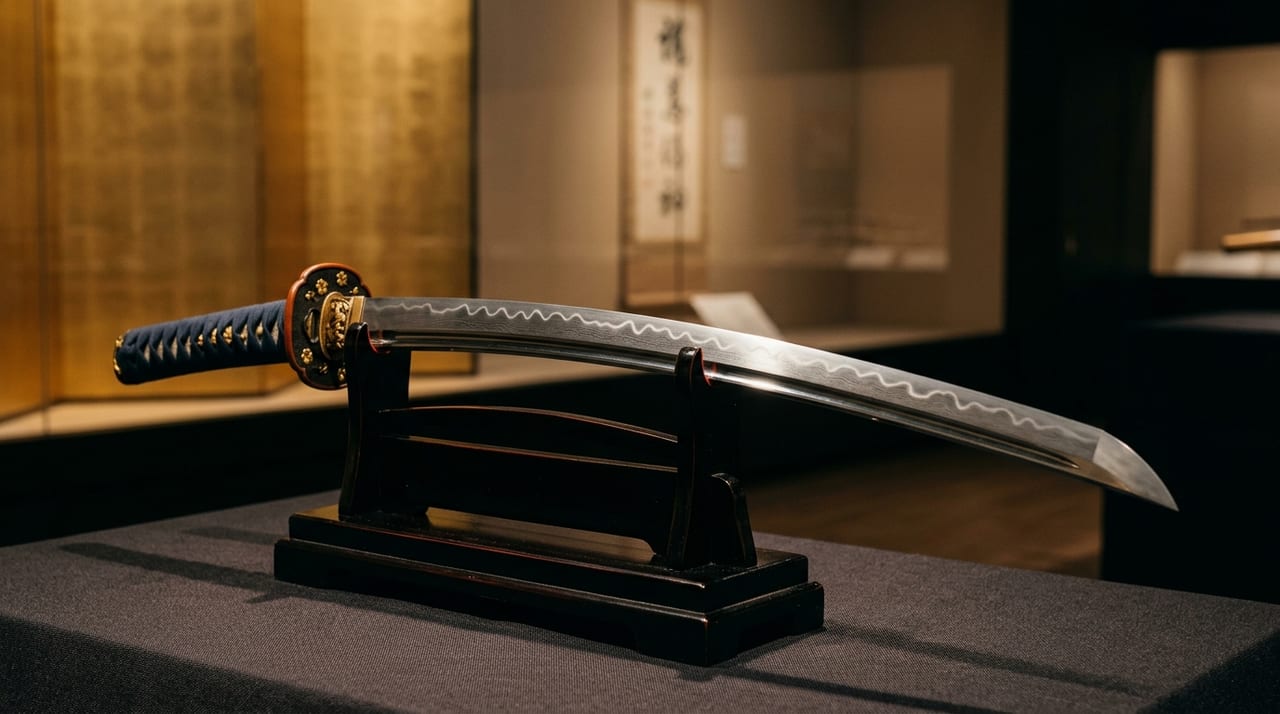
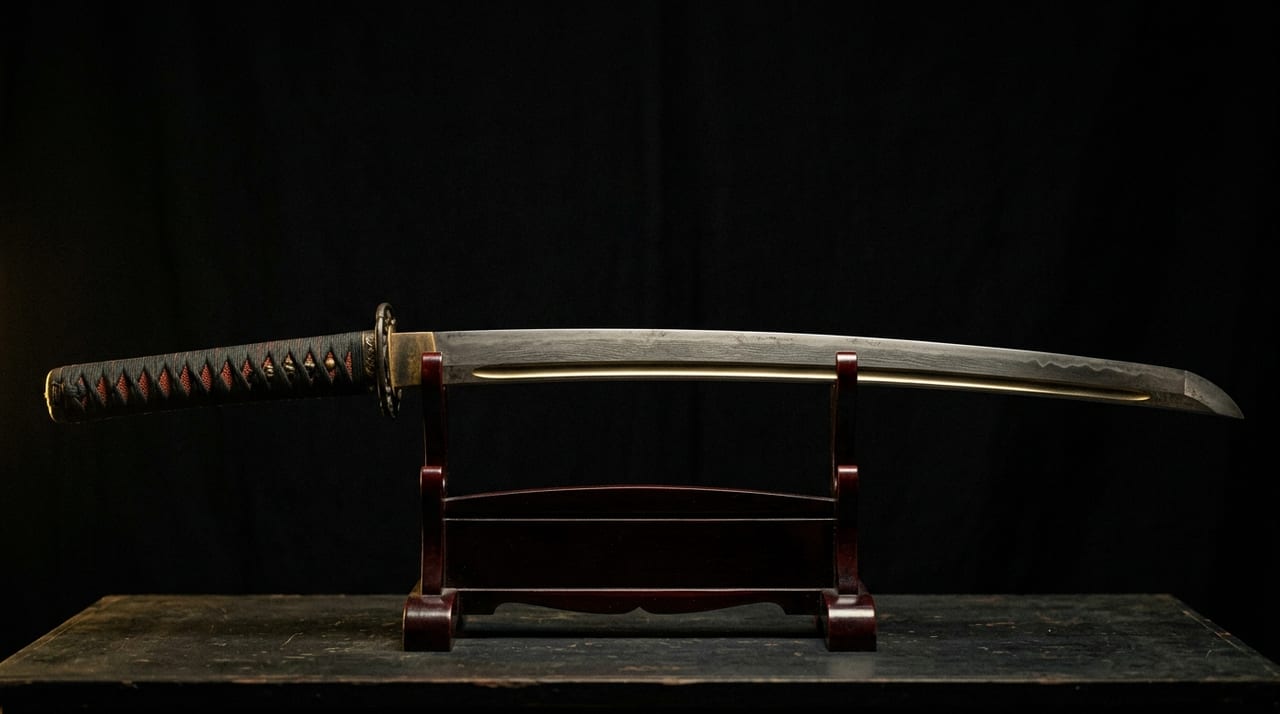
Jigane (地鉄) refers to the texture and forging patterns of the steel in the blade. Along with the hamon, it is one of the most important aspects to observe when appreciating Japanese swords and serves as a mirror reflecting the true mastery of the swordsmith's forging technique. Even blades bearing the same signature will vary greatly in value if their jigane differs.
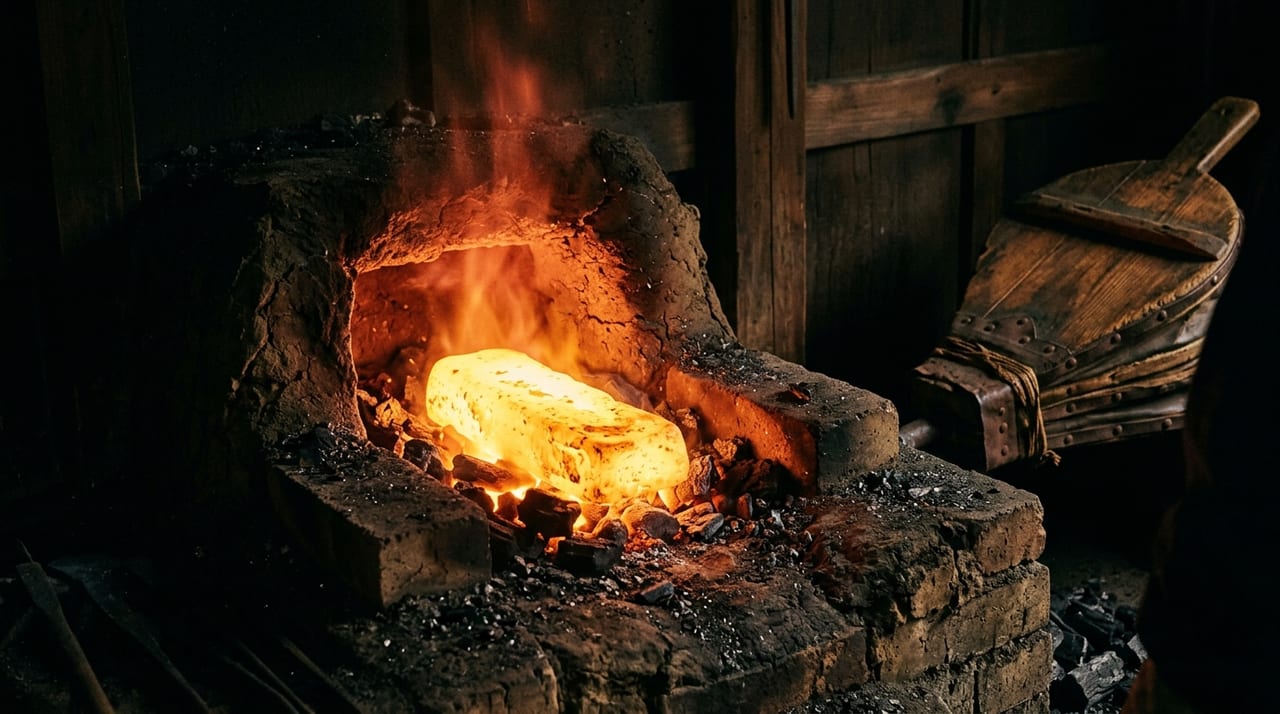
Jigane is created through repeatedly folding and forging tamahagane. The number of folds, temperature control, and the strength and rhythm of the forging all accumulate to manifest themselves in the expression of the jigane. Experienced appraisers can determine a blade's school of forging, its era, and sometimes even identify the swordsmith simply by examining the jigane before looking at the hamon. Learning to read jigane is a sure step toward approaching the true beauty of Japanese swords.
Two essential terms in discussing jigane are jinie (地沸) and chikei (地景). Jinie refers to fine, particle-like brilliance that floats within the steel surface, which represents the steel's crystalline structure appearing on the surface of the skin. Chikei are dark, gleaming linear markings that run through the jigane like lightning, said to appear along forging seams, giving the jigane three-dimensionality and depth. Jigane rich in jinie and chikei tends to be highly valued in appreciation. Additionally, utsuri (映り) — portions of the jigane that float up hazily in white like mist — is also an important point of focus when appreciating jigane.
Itame-hada (板目肌) — The Most Widely Seen Varied Grain
Itame-hada is characterized by irregular, varied patterns resembling the growth rings that appear when wood is split vertically. It is the most widely seen jigane in Japanese swords, appearing in numerous schools including the Bizen, Yamashiro, and Soshu traditions. Because it forms naturally during the swordsmith's repeated folding and forging of the blade, it strongly reflects the individual character of each craftsman.
Within itame-hada there are subtle differences. Coarse itame and fine itame create very different impressions, and finer itame achieved through denser forging is considered technically more difficult. "Itame mixed with mokume" — where mokume patterns mingle within the itame — is highly valued as a distinctive charm characteristic of Bizen-tradition blades.
Common expressions used when appreciating itame-hada include "the skin is packed" and "the skin stands." "Packed skin" refers to a state where forging density is high and the grain appears fine and tightly compressed, used as a favorable expression indicating high forging skill. Conversely, when the grain is coarse and surface irregularities are prominent, it is called "standing skin" or "rough skin," generally considered to indicate slightly inferior forging precision. When observing itame-hada, paying attention to such tightness of grain allows one to read the swordsmith's skill more deeply.
Mokume-hada (杢目肌) — The Warmth That Dwells in the Bizen Tradition
Mokume-hada is characterized by rounded patterns resembling wood knots, and is a variation of itame-hada. It appears especially frequently in Bizen-tradition blades, and its distinctive warmth and roundness are beloved by many appreciators. It is deliberately formed through forging techniques passed down through generations by Bizen master smiths, and reproducing it requires deep experience and intuition. When holding a blade with mokume-hada, one can feel the long history of Bizen forging breathing within its rounded patterns.
Mokume-hada most often appears partially as part of itame-hada, and examples where the entire blade is composed solely of mokume are rare. By observing mokume patterns scattered throughout the flow of itame, one can more concretely imagine how the jigane was forged.
Masame-hada (柾目肌) — The Dignified Purity of the Yamato Tradition
Masame-hada is a linear grain resembling wood grain arranged in perfectly parallel straight lines, and is the defining characteristic of the Yamato tradition. The orderly arranged steel lines convey an impression of purity and clarity, calming the observer's spirit. Creating masame-hada requires precise technique with strict control over the direction of folding and forging, and cannot be achieved without advanced skill.
The masame-hada seen in blades of the five schools of the Yamato tradition (Senjuin, Tegaki, Hoshoe, Taima, and Shikake) each possesses subtly different expressions. When viewing a masame-hada blade, one can feel a solemn beauty, as if each strike of the hammer in the forging workshop had been inscribed orderly into the blade.
It should be noted that masame-like patterns sometimes appear partially in blades from traditions other than Yamato. In particular, the shinogi-ji (稜線部分), or ridgeline portion of the blade, often exhibits linear grain close to masame due to the structural nature of the steel-forging process, regardless of tradition. Comparing the grain of the flat area (hiraji) with that of the ridgeline is also a practical point of focus in appreciating jigane.
Ko-itame-hada and Nashiji-hada — The Pinnacle of Precise Forging
Ko-itame-hada consists of extremely fine itame, exemplified by Hizen Tadayoshi, demonstrating meticulous forging. The sight of small, tightly-packed particle-like grain arranged in order seems to convey the spiritual concentration of the swordsmith. Further refined to the extreme, nashiji-hada possesses a delicate texture reminiscent of the flesh of a pear, and is known as representative of the finest jigane of the old sword period, as seen in works of Awataguchi Yoshimitsu.
These finely-detailed grain patterns are born as the result of the swordsmith folding tamahagane hundreds of times, packing steel particles to their limit. Their high density manifests as a delicate luster that sparkles as light strikes it.
Because ko-itame-hada and nashiji-hada have increasingly fine grain that reflects light more uniformly, they may appear from a distance to be nearly unmarked, smooth steel. Only upon close examination can one confirm their delicate grain structure.
Ayasugi-hada (綾杉肌) — The Pattern Only Gassan Smiths Can Create
Ayasugi-hada is an extremely distinctive grain featuring continuous V-shaped wave patterns reminiscent of cedar leaves, and is virtually the exclusive trademark of Gassan forging. Reproduction by other schools is extremely difficult, and the presence of ayasugi-hada is a reliable indicator for identifying Gassan blades.
The forging technique that produces this unique jigane has been strictly guarded as secret oral tradition by the Gassan family. Even today, only the swordsmith masters of the Gassan school legitimately preserve this jigane, and its rarity contributes to the high valuation of Gassan blades.
Practical Appreciation of Jigane — Manipulating Light and Angle
To appreciate jigane, use a single fluorescent light as your light source and carefully observe the grain patterns that emerge through light reflection as you tilt the blade. Even a slight change in the angle of the light source creates dramatic shifts in the expression of the grain. Fine jigane is described as "packed," evidence of forging density and beauty.
Appreciation should be undertaken from multiple angles, not just one direction, allowing three-dimensional understanding of the depth of the swordsmith's forging technique. When the eye becomes attuned to the details of jigane, the individuality of the blade that was not visible in the hamon alone emerges clearly, and the joy of appreciation expands greatly.
Pay attention also to the relationship between jigane and hamon. The superior the quality of the jigane, the more sharply defined the boundary line between it and the hamon (called the "nioiguchi") becomes. The fullness of the jigane brings out the beauty of the hamon to its maximum. The ability to read jigane does not come overnight, but is reliably developed through repeated contact with masterwork blades.
Handling and Etiquette
Touching the blade directly with bare hands should be avoided, as the oils from fingerprints can cause rust. When appreciating, follow the instructions of the owner or sword dealer, and observe basic etiquette such as not directing the edge toward others and not breathing on the blade. Such proper conduct not only protects the sword itself but also brings calm focus to the observation of jigane.
Nioi-deki and Nie-deki
When observing the boundary between the hamon and jigane, note also the difference between nioi-deki (匂出来) and nie-deki (沸出来). Nioi-deki involves extremely fine particles forming the nioiguchi in a haze-like manner, with the boundary line appearing soft and misty. Nie-deki features larger particles that appear to shine individually, with sparkling grain clearly visible along the boundary line. The packing density of jigane and the quality of the nioiguchi are closely related, and observing both together allows one to read more accurately the overall completion of the forging of that blade.
Changes Over Time
Over long years, blades may show softening of jigane expression through repeated polishing, with grain appearing more gentle than originally. This state is called "fatigue," and when appreciating old-era blades, one must read the jigane with such aging changes in mind.
Quick Reference Table of Major Jigane Types
| Type of Jigane | Representative Schools/Smiths | Characteristics |
|---|---|---|
| Itame-hada | Bizen, Yamashiro, Soshu traditions, etc. | Irregular, varied grain resembling wood grain |
| Mokume-hada | Bizen tradition | Rounded patterns resembling wood knots |
| Masame-hada | Yamato tradition | Linear grain arranged in parallel straight lines |
| Ko-itame-hada | Hizen Tadayoshi, etc. | Extremely fine and orderly itame |
| Nashiji-hada | Awataguchi Yoshimitsu, etc. | Delicate texture resembling pear flesh |
| Ayasugi-hada | Gassan forging | Continuous V-shaped wave patterns resembling cedar leaves |