The Warrior and the Sword — The Role of the Nihontō in Samurai Culture
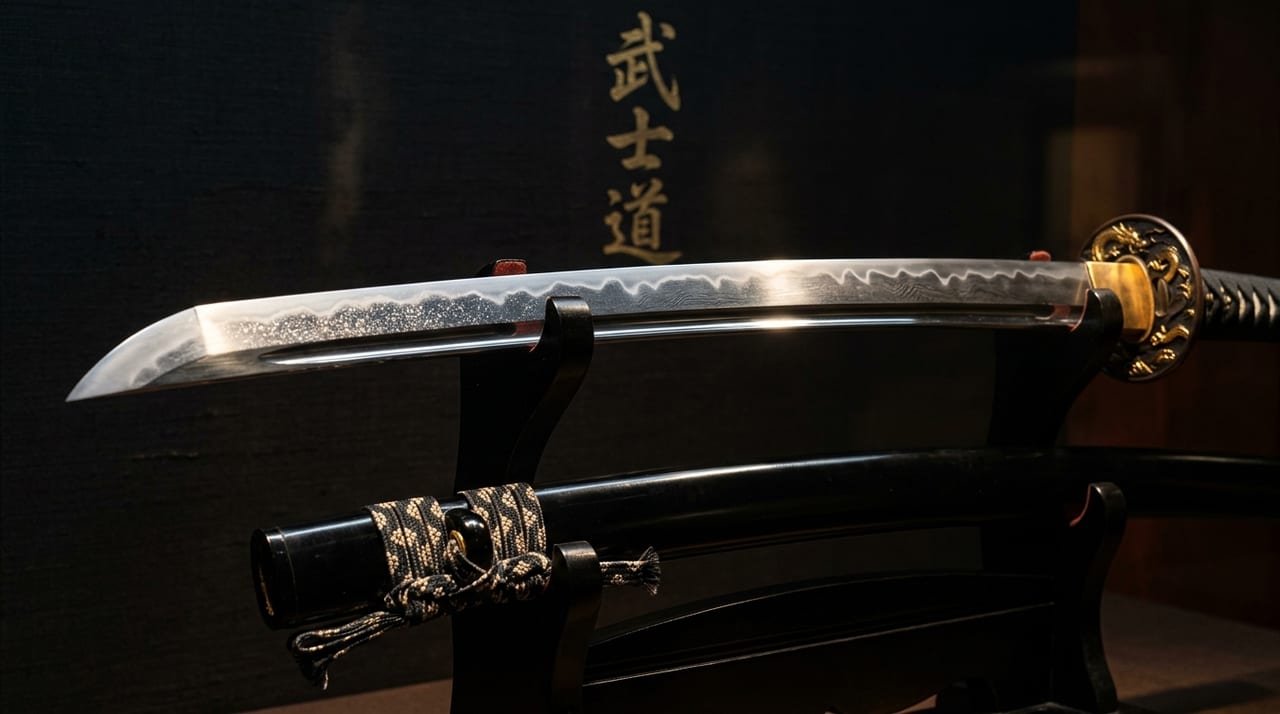 * Image is for illustrative purposes only.
Table of Contents
"The Soul of the Warrior" — The Sword and Samurai Identity
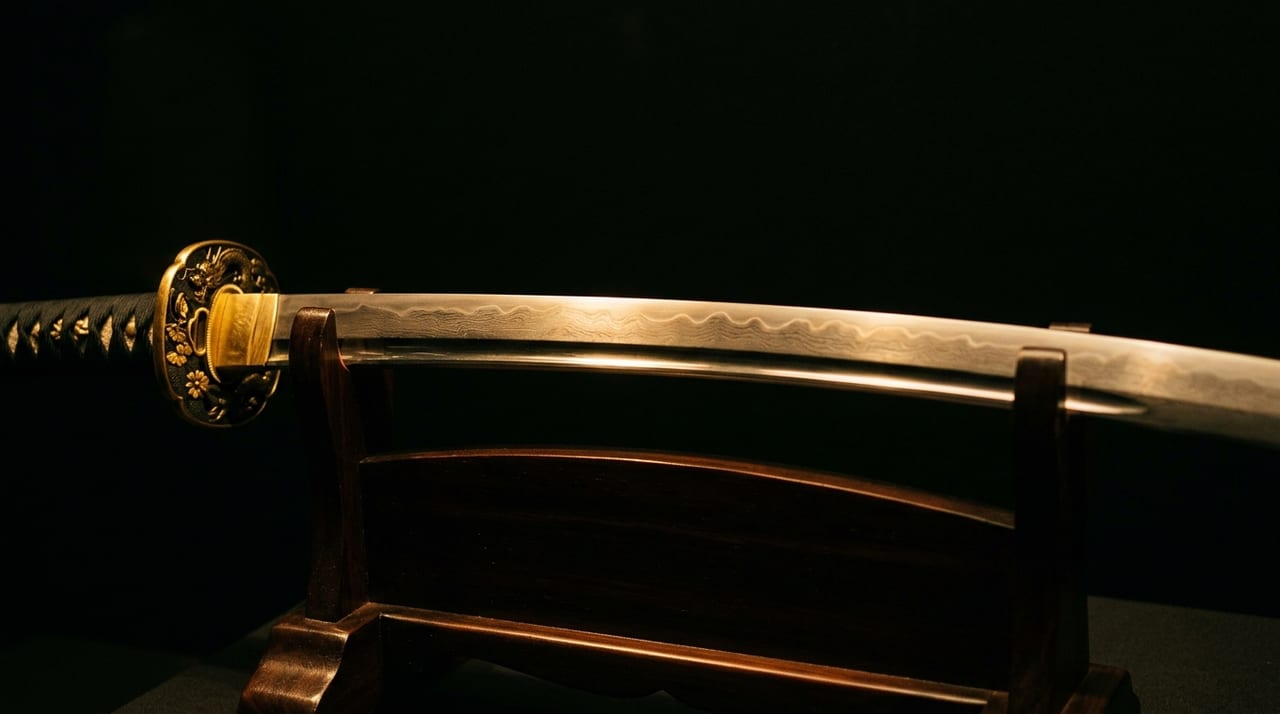
Called "the soul of the warrior," the nihontō was the very essence of the samurai class. The transformation of the sword — transcending its function as a mere weapon to become a symbol of spiritual identity and social standing — illuminates the deepest layers of Japanese culture. This change did not happen overnight; it came about gradually and inevitably through centuries of accumulated history.
Why did the sword, among all weapons, come to hold such profound symbolic meaning? It is because the sword was a tool that embodied, as one, the wielder's skill, spirit, and aesthetic sensibility. The nature of fighting differs by weapon.
| Weapon | Characteristic |
|---|---|
| Bow and arrow | A tool for fighting at a distance |
| Spear | Suited for group combat |
| Sword | Appears on the battlefield of single combat, where wielder and enemy face each other directly |
The stark reality that the superiority of a sword was directly linked to the superiority of a warrior's life elevated the sword to something special.
From the Kofun Period to the Sengoku Period — Evolution as a Practical Weapon
The history of the sword in Japan dates back to the Kofun period. The straight sword (chokutō) introduced from the continent was repeatedly refined after the 7th century to suit Japanese fighting styles, eventually evolving into a sword with sori (curvature). This curvature is the ideal shape for the downward slashing motion from horseback. In this way, the form known as tachi was established. For the evolution of jōkotō, see also "What is jōkotō?"
After the Heian period, the sword developed as follows.
- Heian period: Mounted warriors hung a tachi from their waist and rode into battle.
- Kamakura period: The technical framework of the warrior class was systematized, and a culture of sword appreciation began to emerge.
- Nanbokuchō and Muromachi periods: Practical improvements continued amid the turbulent era, and as infantry combat became widespread, the more manageable uchigatana rose to prominence.
- Sengoku period: Tōkō (swordsmiths) crafted swords with battlefield practicality as their highest priority, yet the pursuit of beauty never ceased.
The Edo Period — The Requirement to Carry Two Swords and the Establishment of "The Soul of the Warrior"
With the arrival of the Edo period, the social structure changed dramatically. Warriors were legally required to carry two swords at all times — a long sword and a wakizashi — and this became the most visible proof of being a samurai. The sword was transformed from a mere weapon into a symbol embodying samurai status itself.
Warriors came to express their aesthetic sensibility and social standing through the mei of the sword, the style of the hamon (temper line), and the design of the koshirae (mounting). Possessing a famous sword was proof of knowledge and refinement, while wearing an inferior sword meant having one's character as a warrior called into question. As the saying "a warrior becomes a person through the sword" suggests, the sword became the most eloquent evidence of who a warrior truly was.
The Transformation of the Sword into a Work of Art in an Age of Peace
As the Edo period advanced as an era of stable peace, opportunities for actual combat were rapidly lost. The sword underwent a major shift in character, from practical weapon to work of art and craft. The study of famous swords was systematized, and a revivalist sword movement to restore the techniques of ancient works became active. For regional sword-forging culture of the Edo period, see also "The Muromachi Period and the Establishment of the Gokaden"
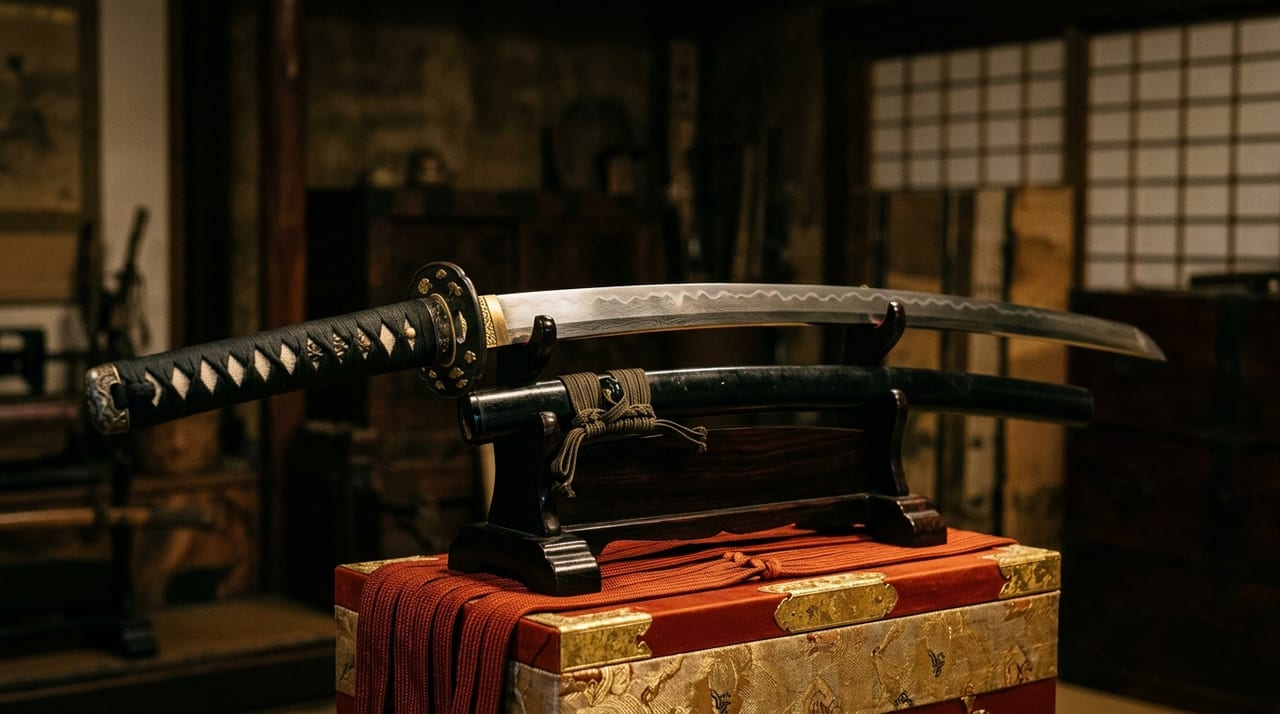
The design of koshirae (mounting) transcended the mere pursuit of practicality and was elevated to an art reflecting the aesthetic sensibility and refinement of the daimyo. Tōsōgu (sword fittings) such as tsuba (hand guard), kozuka, kōgai, and menuki developed as an independent artistic discipline on par with the blade itself, with groups of specialized craftsmen vying with one another in their skills. Everything surrounding the sword was drawn into the world of beauty.
"Kenzen Ichinyo" — Swordsmanship as a Path of Spiritual Cultivation
After the Edo period, swordsmanship was elevated from a mere combat technique to a path of human development. Sword-training halls opened throughout the country, and not only warriors but also townspeople came to study the sword. The philosophy of "kenzen ichinyo" teaches that the way of the sword and Zen practice are essentially the same. To face the sword is to face one's own mind.
Sword training, which demands total concentration in an instant and the integration of the entire body, functioned — just like Zen meditation — as a practice for looking into the nature of the self. The sequence of movements in iai-dō — drawing, cutting, and sheathing — is also a practical meditation that severs the mind's confusion and leads to stillness. The sword had become a spiritual symbol that had completely transcended the physical weapon.
Beyond the Restoration — Japanese Beauty Recognized by the World
Even after enduring the greatest trial of the Sword Abolishment Edict (Haitōrei), the nihontō did not disappear. As its value as a work of art became widely recognized, interest in swords grew rapidly both at home and abroad. Even now in 2026, museums and private collectors around the world hold nihontō in their collections, making them objects of appreciation and study. The nihontō continues to speak to the world not merely as a historical legacy, but as the finest cultural expression in which Japan's spirituality, technical mastery, and aesthetic sensibility are concentrated. For laws regarding the possession of nihontō, see also "The Complete Legal Guide to Japanese Swords"
The reason the nihontō continues to captivate people throughout the world is that it embodies not merely a product of history, but the ultimate heights that human technique and spirit can reach. The beauty that resides in a blade forged by folding and working tamahagane possesses a unique brilliance unlike that of any other country's works of art. The sword, to which warriors entrusted their lives and into which tōkō (swordsmiths) poured their souls, continues to move the hearts of those who behold it across the ages. Perhaps it is because the sword has been a witness to history — one that has continued to confront the essential questions of humanity.