Swords of the Muromachi Era: From Tachi to Uchigatana in an Age of War and Beauty
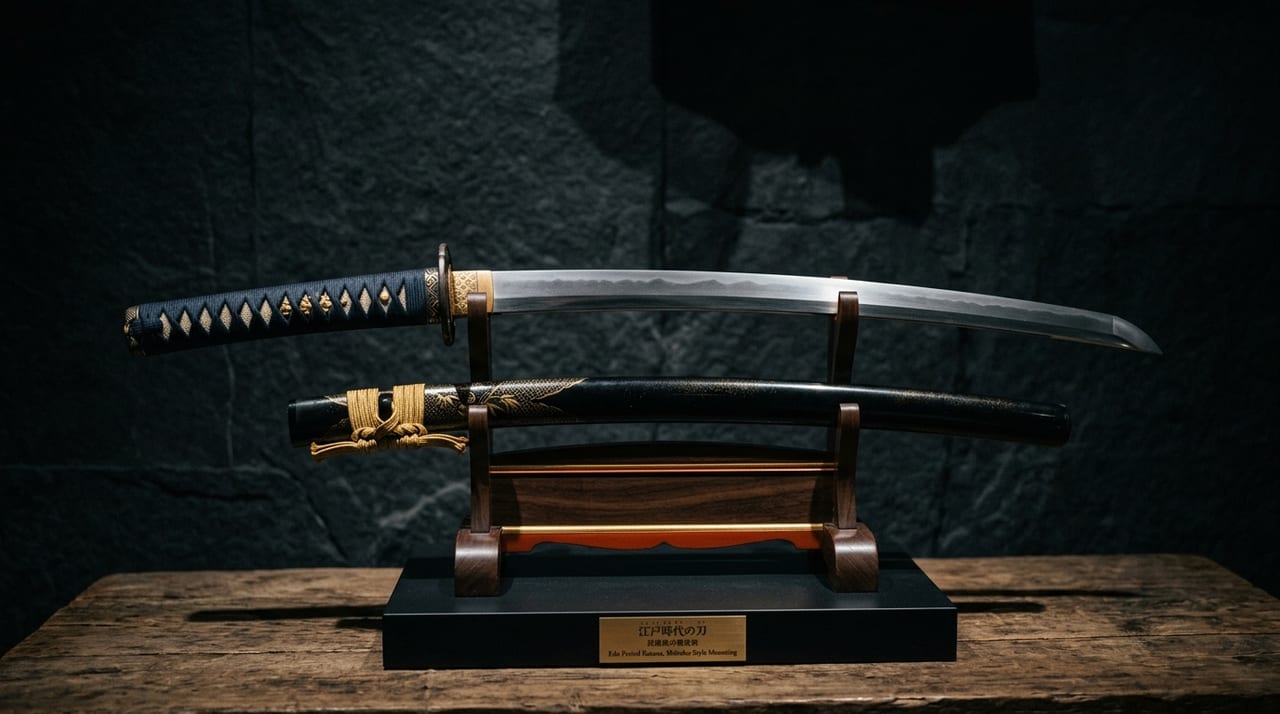 * Image is for illustrative purposes only.
Table of Contents
The Tachi's Dominance in Early Muromachi Samurai Society
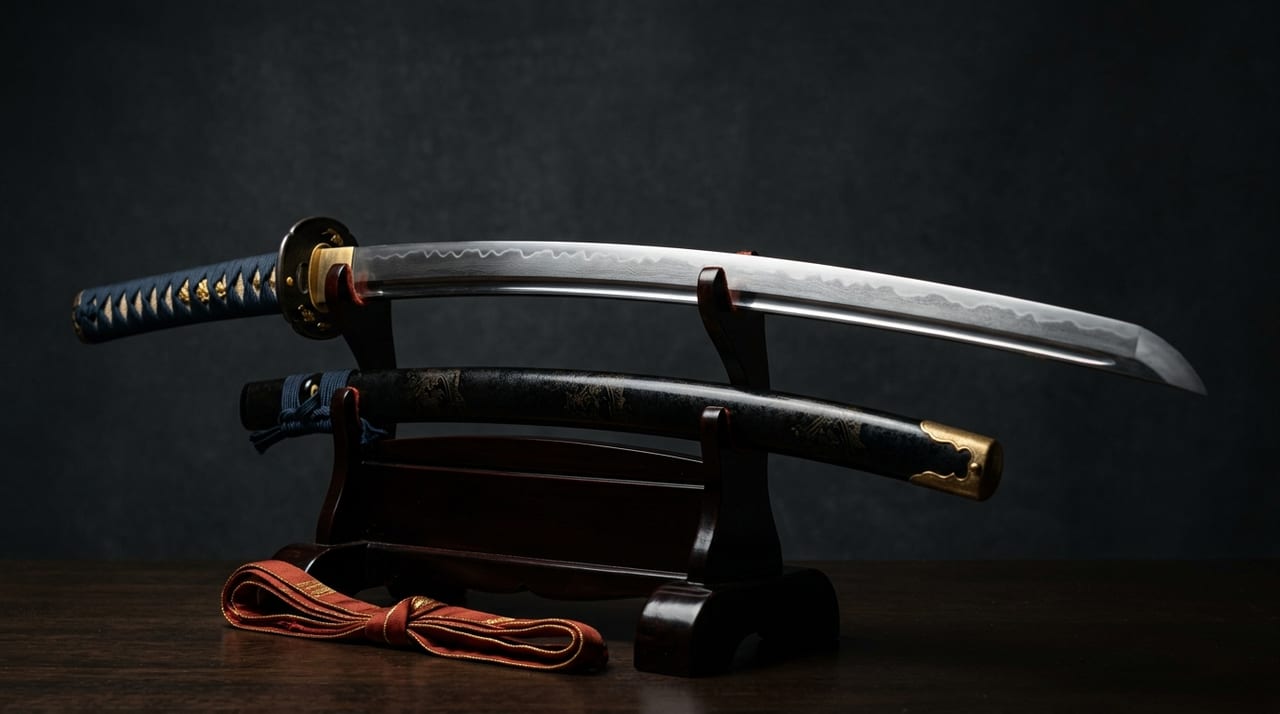
When the Muromachi Shogunate was established in the mid-14th century, the tachi remained the principal sword in samurai society. The tachi, worn suspended from the waist with the blade edge pointing downward, was both a weapon designed for mounted combat since the Kamakura period and a formal dress worn to display samurai status. The koshirae was carefully adorned with metal fittings and lacquer, functioning as a tool for forging political bonds through gift-giving and donations to shrines.
Swordsmiths of the Yamashiro tradition, centered in Yamashiro Province (present-day Kyoto Prefecture), received patronage from the shogun's household and powerful daimyo, crafting high-quality tachi. The Nobukuni school, inheriting the traditions of Sanjo and Awataguji, flourished in the early Muromachi period, with records of deliveries to the shogunate and court nobility preserved in historical documents. The Osafune school of Bizen Province (present-day Okayama Prefecture) produced outstanding swordsmiths such as Moriemitsu, Yasumitsu, and Norimichi, leaving numerous works that exemplified the transition from tachi to uchigatana.
The Onin War—The Decade That Transformed Sword Demand
The Onin War, which erupted in 1467 (the first year of Onin), was one of the most pivotal turning points in Japanese history. For ten years, the Eastern Forces led by Hosokawa Katsumoto and the Western Forces led by Yamana Sozen clashed in an internal war centered in Kyoto, fundamentally shaking the structure of samurai society.
The impact of this warfare on sword culture was profound. As the primary form of combat shifted from mounted warfare to infantry combat by foot soldiers (kachi), the tachi became less practical for close-quarters combat in urban areas and narrow terrain. The differences between tachi and uchigatana are as follows.
| Tachi | Uchigatana | |
|---|---|---|
| Wearing method | Suspended from the waist with blade edge pointing downward | Worn in the waistband with blade edge pointing upward |
| Assumed combat | Mounted warfare designed for a single strike on horseback | Infantry combat by foot soldiers and close-quarters combat in urban areas |
| Character | Formal dress displaying samurai status | Practical combat blade excelling at swift drawing and cutting |
The quantitative change in demand cannot be overlooked. With the Onin War serving as a catalyst, the Sengoku period began in earnest, and as regional warlords throughout the country sought to strengthen their military equipment, sword demand increased dramatically. Production centers with high efficiency, such as Osafune in Bizen and Seki in Mino Province (present-day Gifu Prefecture), developed rapidly. Swordsmiths of the Mino tradition, such as Magoroku Kanemoto and Kanesada, mass-produced practical uchigatana, distributing them throughout the country as wazamono (masterwork blades). The hamon of Magoroku Kanemoto, called sanbon sugi, is highly valued today for its keenness and beauty.
Ashikaga Yoshimasa's Higashiyama Culture—The Crystallization of Beauty Born in an Age of Conflict
Ironically, amid the Onin War, Ashikaga Yoshimasa, the eighth shogun of the Ashikaga line, established a villa in Higashiyama (present-day Higashiyama Ward, Kyoto), nurturing the Higashiyama culture that shines in Japanese cultural history. Though Yoshimasa is said to have been politically ineffectual, he possessed outstanding connoisseurship in the collection and appreciation of artworks, forming a major collection known as the Higashiyama Collection.
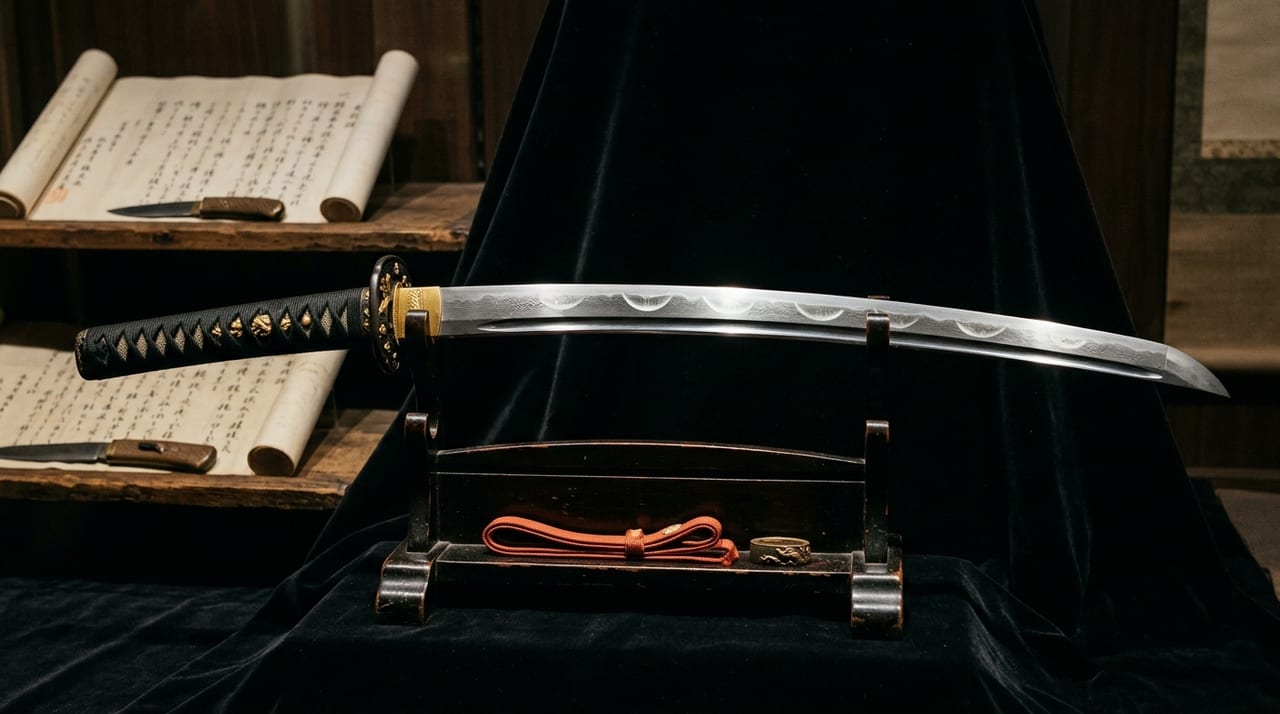
This collection included celebrated swords and tanto alongside Chinese ceramics and paintings. Swords treasured by the shogun's household as meibutsu (celebrated objects) were imbued with artistic and spiritual value beyond mere weapons, and a culture of authentication and appraisal developed. It was also during this period that the orikami—what would be called an appraisal certificate in modern times—began to carry authority.
The fact that renowned swords from antiquity such as Mikazuki Munechika and Onimaru Kunitsuna came to the shogun's household and were treasured as Tenka Gosentsu (Five Swords Under Heaven) reflects an evaluative system established during the Muromachi period. These swords were no longer weapons but were treated as national treasures.
Chanoyu and Noh—Cultural Spaces Where Swords Intersected
Another characteristic of Higashiyama culture was the fusion of chanoyu (tea ceremony) and sword culture. The spirit of wabi tea established by Murata Juko (1423–1502) emphasized the aesthetic of wabi and sabi, finding spiritual value in everyday implements. This aesthetic sensibility extended to sword appreciation.
The display of swords as alcove decorations at tea gatherings became a refined accomplishment of the samurai class, and the design of sword koshirae and tsuba came to resonate with tea aesthetics. A warrior's choice of wakizashi when attending a tea gathering was an act that combined courtesy to the host with self-expression, and swords became both martial implements and mediators of aesthetic dialogue.
The connection to Noh theater was equally profound. Noh, which Kan'ami and Zeami developed to maturity under the patronage of the third shogun, Ashikaga Yoshimitsu, continued to flourish in Yoshimasa's era, with plays featuring swords such as Funabenkel and Rashomon handed down through generations. In spaces devoted to beauty, the sword always held a commanding presence.
Daimyo and Swordsmiths: The Political Economy of the Hosokawa and Hatakeyama Clans and Their Craftsmen
The powerful daimyo who instigated the Onin War, the Hosokawa and Hatakeyama families, also played important roles in sword culture. Records of the Hosokawa family's commissions to Bizen swordsmiths are preserved in historical documents, and the smiths of Bizen Osafune produced tachi and uchigatana in response to the demands of powerful daimyo, maintaining an economically stable production system.
Swordsmiths of Mino Province developed their craft through relationships with shugo daimyo such as the Saito family, leading to the later prosperity of Kanemoto and Kanesada. The relationship between daimyo and swordsmiths went beyond that of patron and craftsman, involving complex social connections of economic protection and political patronage. Employing master craftsmen demonstrated a daimyo's cultural authority, and sword production was positioned precisely at the intersection of politics and culture.
The Age of the Uchigatana—The Legacy of Transformation Left by Muromachi
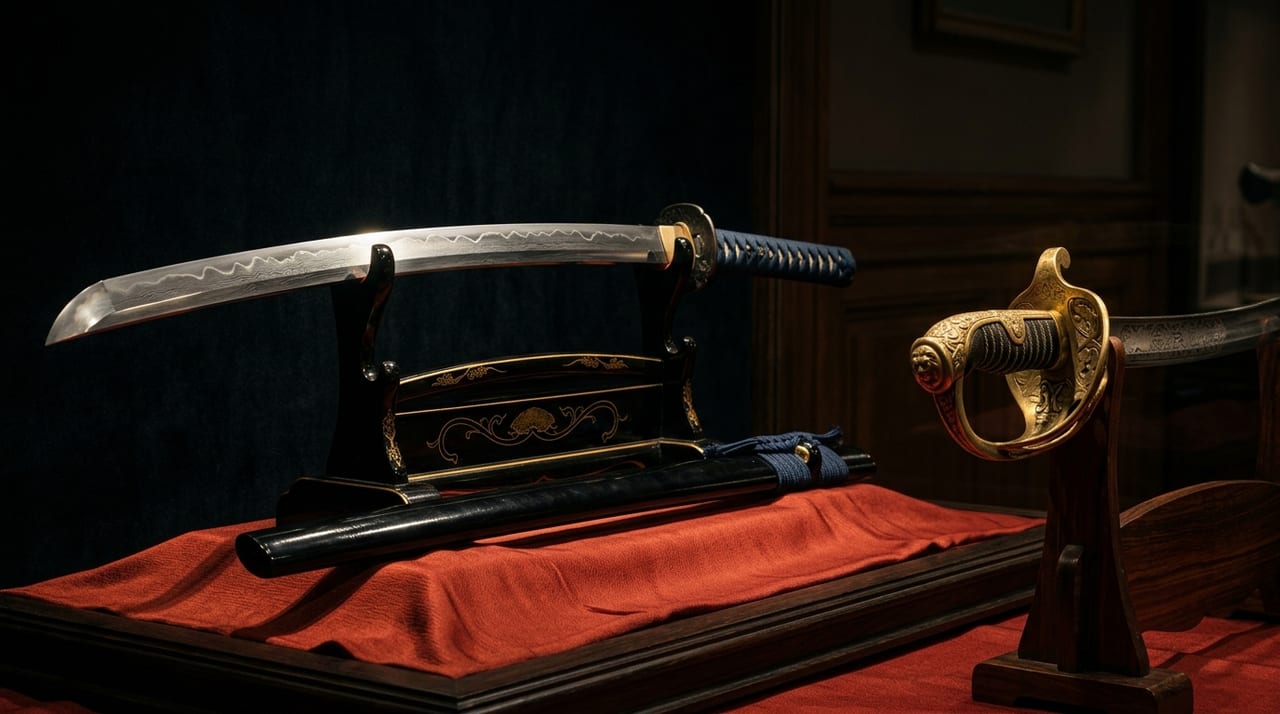
Toward the end of the Muromachi period, the uchigatana became established as the standard sword in samurai society, while the tachi retreated to ceremonial and formal wear. The pairing of uchigatana and wakizashi as the daisho became a marker of samurai status, laying the foundation for the concept of the samurai's soul in the Edo period.
The transformation of sword culture in the Muromachi period was far more than a change in weapon form. The cultural endeavors of shoguns and daimyo who sought beauty even amid warfare, the technical innovations of swordsmiths, and the deep connections to the arts of chanoyu and Noh—these intertwined in complex ways, elevating the cultural status of the Japanese sword from weapon to fine craft. The trajectory of this dynamic transformation is the very essence of Muromachi sword culture.