A Comparison of Yari, Naginata, and Unusual Sword Forms: Types Including Suguyari, Katakamayari, Jūmonjiyari, Warabite-tō, and Ken, and Their Place in Sword Culture
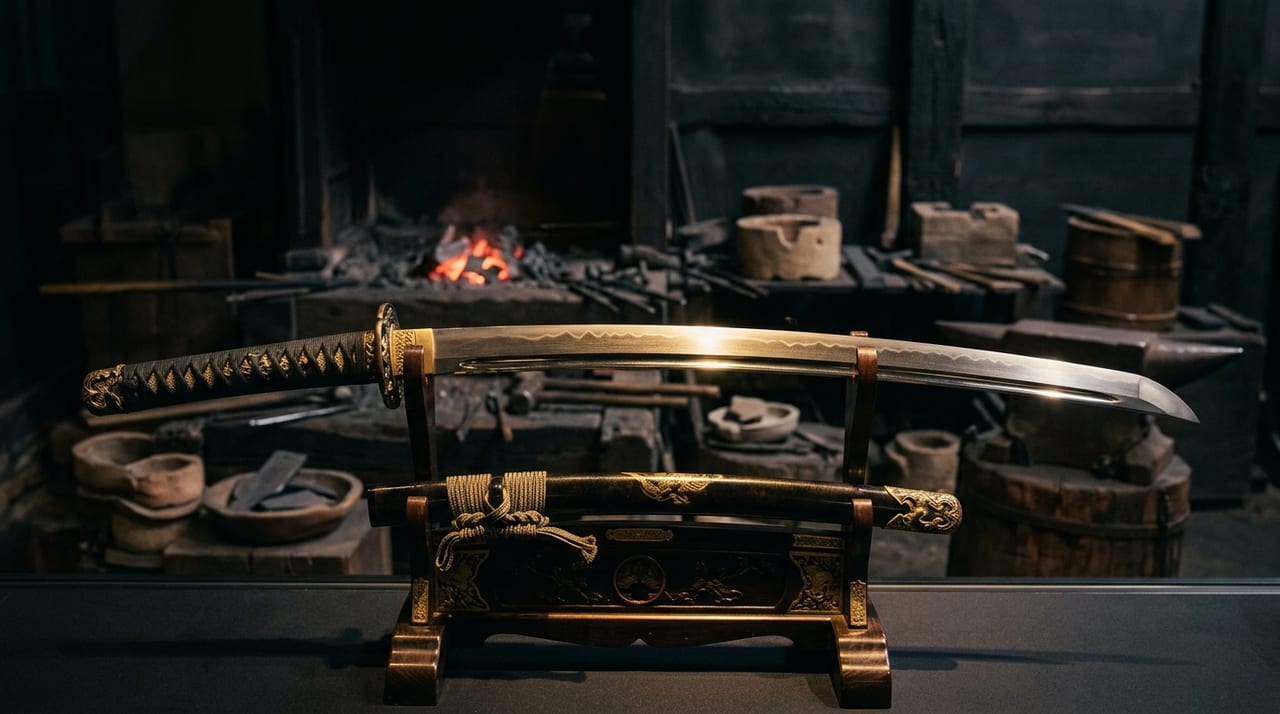 * Image is for illustrative purposes only.
Table of Contents
What Is a Tōken? — The Broad Definition of "Tōken-rui"
When most people hear the word "tōken" (sword), they think of the uchigatana — the sword commonly known as the nihontō. However, both under Japanese sword regulations and in the history of martial arts, the category of tōken-rui encompasses a much broader range. Naginata, yari (spear), ken (sword), tantō, and tachi — all of these are classified as tōken-rui, and each has its own methods of manufacture, uses, and cultural background.
This article shines a light on the naginata, yari, and unusually shaped blades that tend to be overshadowed by the uchigatana, and explores the diverse breadth of Japanese sword culture.
The Structure of the Naginata and Its Historical Changes
The naginata is a weapon in which a large, curved blade is mounted at the tip of a long shaft (nagae). The structure of the habaki and nakago (tang) that separate the blade from the handle is based on the same forging techniques as the nihontō. The blade length is generally 30 to 60 cm, and the total length including the handle often reaches 150 to 200 cm.
From the late Heian period through the Kamakura period, the naginata spread widely as the primary weapon of infantry fighting mounted warriors. Its shape, optimized for sweeping away a horse's legs and pulling down a rider, is based on horizontal and diagonal sweeping motions, as the etymology of "nagu" (to sweep) suggests. The naginata of this period was also called the "ōnaginata," and featured a blade that was longer and more imposing than those of later eras.
From the Muromachi period onward, the yari came to play a dominant role on the battlefield, and the naginata's use shifted to rear-guard protection and castle defense. In that process, the blade became smaller and more refined, and a form called the "konaginata" spread. By the Edo period, it had established its status as a personal-defense weapon and bridal possession for women of the warrior class, and "naginatajutsu" as a martial art was systematized by various schools.
Yari — The Beauty of the Straight Line and Battlefield Utility
The yari is a long-handled weapon like the naginata, but is characterized by a straight spearhead with no sori (curvature). Japanese yari are broadly classified into three types: "suguyari," "katakamayari," and "jūmonjiyari."
| Type | Features |
|---|---|
| Suguyari (straight spear) | The most basic form, specialized for thrusting attacks |
| Katakamayari (one-sided sickle spear) | Has a sickle-shaped branch blade on one side of the spearhead, enabling cutting and hooking with pulling motions |
| Jūmonjiyari (cross-spear) | Equipped with sickle blades on both sides, boasting high versatility that combined offense and defense |
The following are known as celebrated users.
- Sanada Yukimura (Ōchidori jūmonjiyari)
- Mori Nagayoshi (Ningen Mukotsu)
- Kani Saizō
During the Sengoku period, the yaribusuma (spear hedge) by ashigaru (foot soldiers) — a massed-battle tactic of thrusting spears in dense formation — became important enough to decide the outcome of battles. The collective deployment of long yari (sangenyari, approximately 5.4 meters) adopted by Oda Nobunaga at the Battle of Nagashino (1575) is a historical example that fundamentally transformed the conventional cavalry-centered tactics.
The production of yari directly inherits the skills of tōshō (swordsmiths), and spearheads crafted by master craftsmen are still highly regarded today as works of art. Multiple yari have been designated as kokuhō (National Treasures) or jūyō bunkazai (Important Cultural Properties), and are recognized as having cultural property value equal to that of nihontō.
The Lineage of Unusual Sword Forms — Warabite-tō, Ken, and Other Special Forms
The term "igyōtō" (unusual sword form) is sometimes used as a collective term for special bladed weapons that fall outside the mainstream forms of uchigatana, naginata, and yari. Representative examples are given below.
Warabite-tō is a sword with a distinctive shape in which the upper end of the nakago (tang) curls inward like a bracken shoot, and is found primarily in the Tohoku and Hokkaido regions. It is deeply connected to the Emishi culture of the 7th through 9th centuries and underwent a unique development distinct from the straight-sword culture of Honshu. Some scholars hold it as one of the origins of the curved nihontō, and it occupies an important position in the history of swords.
Ken is a double-edged straight sword and was the mainstream bladed weapon before the Nara period. As of 2026, it is often found as a sacred object (shintai) or ritual implement at shrines, and carries mythological symbolism exemplified by Kusanagi-no-Tsurugi. There are few combat-oriented kenjutsu schools, but some, such as Shintō Musō-ryū jōjutsu, transmit the handling of the ken.
Nihonken is a term sometimes used in a modern context to refer to the double-edged sword described above. Additionally, classifications based on use — such as "suken" (a sword with extremely simplified fittings) and "daishō" (the combination of an uchigatana and a wakizashi) — also demonstrate the diversity of sword culture.
Naginata — as a modern martial art, "naginata" has been organized into a form that, while inheriting the combat techniques of the historical naginata, uses bamboo "shinai" or wooden "ki-naginata" for safe competition and demonstration. Modern naginata has three divisions — "dan examination," "match," and "performance" — and is overseen by the All Japan Naginata Federation.
Naginata and the Sword — Technical Intersection and Mutual Influence
Naginatajutsu and kenjutsu have mutually influenced each other's techniques over a long history. Particularly noteworthy is the training system of "naginata against sword," in which many kenjutsu schools have kata (forms) designed for facing a naginata opponent.
In schools of the Shinkage-ryū and Ittō-ryū lineages, understanding the ma'ai (effective fighting distance) of the naginata was considered an essential challenge for swordsmen. The advantages of the naginata lie in its "long ma'ai" and "wide range of motion of the blade," and the relationship in which the sword gains advantage at close range while the naginata is superior at long distance shaped the technical systems.
A technique unique to naginatajutsu is "ishizuki uchi" — a strike using the ishizuki (butt cap) at the end of the handle — which provides multidirectional attack options not found in sword techniques. Multiple schools, including Kashima Shin-ryū and Tennen Rishin-ryū, studied both naginatajutsu and kenjutsu and placed emphasis on comprehensive mastery of the martial arts.
Naginata Culture as a Women's Martial Art
Throughout the Edo period, the naginata was established as a compulsory martial art for women of the warrior class. Behind this were both practical and cultural reasons.
On the practical side, the naginata's long ma'ai was considered more effective than the sword as a self-defense weapon for women guarding their residences while husbands and fathers were away on duty or campaign. The recognition spread that even when physically inferior to men, one could counter them through the advantage of ma'ai.
Culturally, naginata practice was positioned as part of "women's education" that cultivated propriety, deportment, and spiritual discipline, and became an accomplishment for daughters of warrior families. The custom of bringing a naginata as part of one's bridal trousseau was also widely observed.
After the Meiji period, naginatajutsu was reorganized as "naginata" during the development of modern martial arts. In 1955, the All Japan Naginata Federation was established, and it has maintained and expanded its competitive population as a martial art centered on women. As of 2026, naginata is included among the elective martial arts subjects at junior high and high schools, and the competitive naginata population remains stable in size, centered on the membership of the All Japan Naginata Federation.
"Naginata" has also spread internationally; the International Naginata Federation has been established, and competitive organizations are active in multiple countries.
The Place of Unusual Sword Forms in Modern Art and Martial Arts
As of 2026, the naginata, yari, and unusual sword forms continue to live on in three contexts: martial arts practice, fine crafts, and cultural symbols.
From a craft and art perspective, there are many cases of contemporary tōshō (swordsmiths) undertaking the production of naginata and yari. Naginata and yari are included among the items that can be registered as art swords by the Agency for Cultural Affairs, and works left by mukansa tōshō and Living National Treasure-class craftsmen are housed in art museums and museums. The appraisal criteria based on the three elements of hamon (temper line), jigane (steel of the blade surface), and sugata (form) are shared with the uchigatana, and aesthetic appreciation of masterwork naginata and yari occupies an important part of sword appreciation culture.
From a martial arts perspective, the training population for naginatajutsu and sōjutsu has been gradually increasing along with the revival of koryū (classical martial arts). Groups that inherit classical schools such as Tendō-ryū naginatajutsu and Fūden-ryū naginatajutsu continue with demonstrations and practice, working to preserve practical techniques.
As a cultural symbol, the naginata frequently appears in modern films, manga, and games as an image representing "women's strength and warrior-class pride." The fact that depictions of the naginata in historical dramas are becoming closer to historical fact also indicates the growing social interest in sword culture.
Even now that the uchigatana has become synonymous with "nihontō," the naginata, yari, and unusual sword forms continue to support Japanese blade culture as its rich periphery. Deciphering the technique, beauty, and history engraved in each blade is a sure path toward deepening understanding of the essential diversity of Japanese sword culture.