The Artisans Who Revive the Blade — The Skills of the Togishi and a Vanishing Tradition
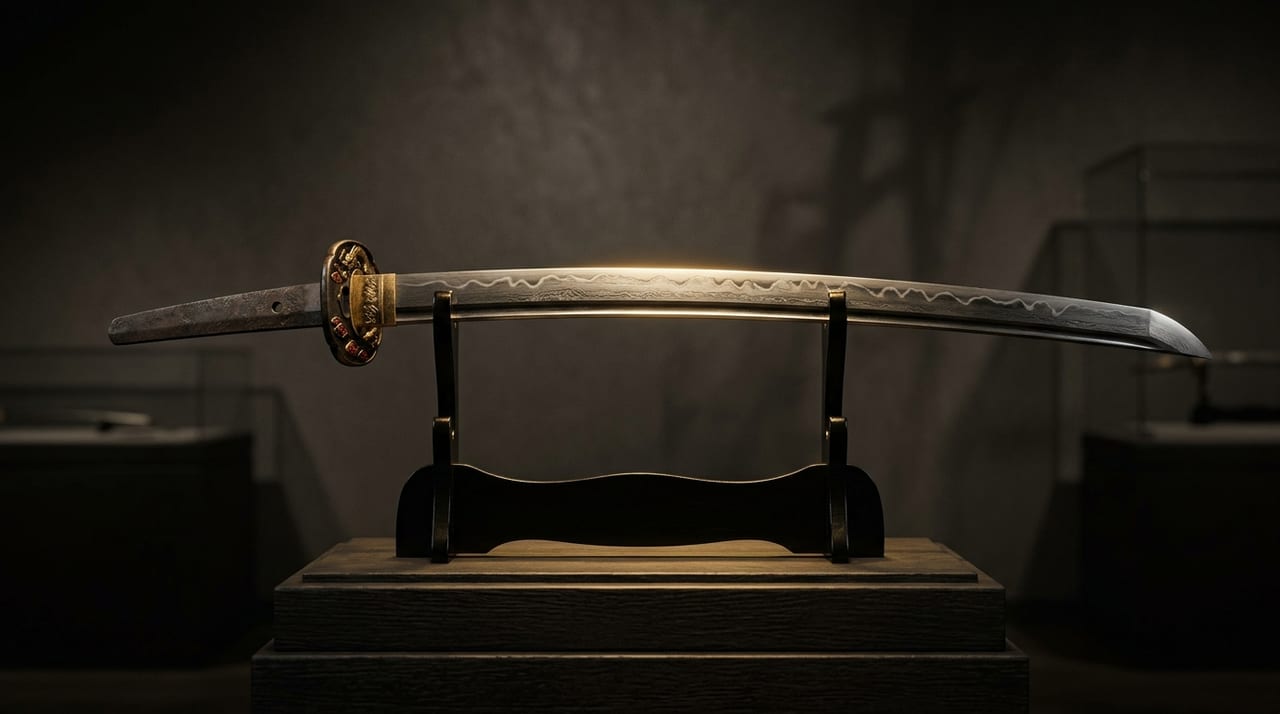 * Image is for illustrative purposes only.
Table of Contents
Togishi: The Craftsman Who Polishes the Soul of the Sword
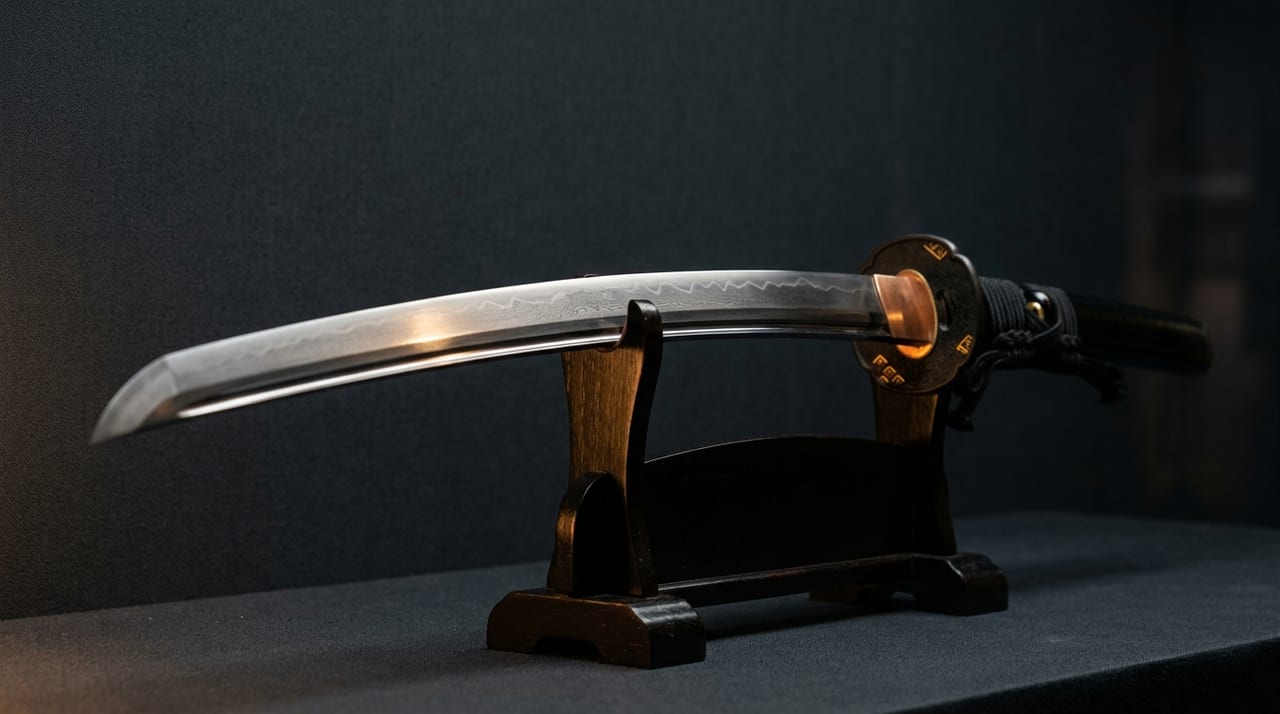
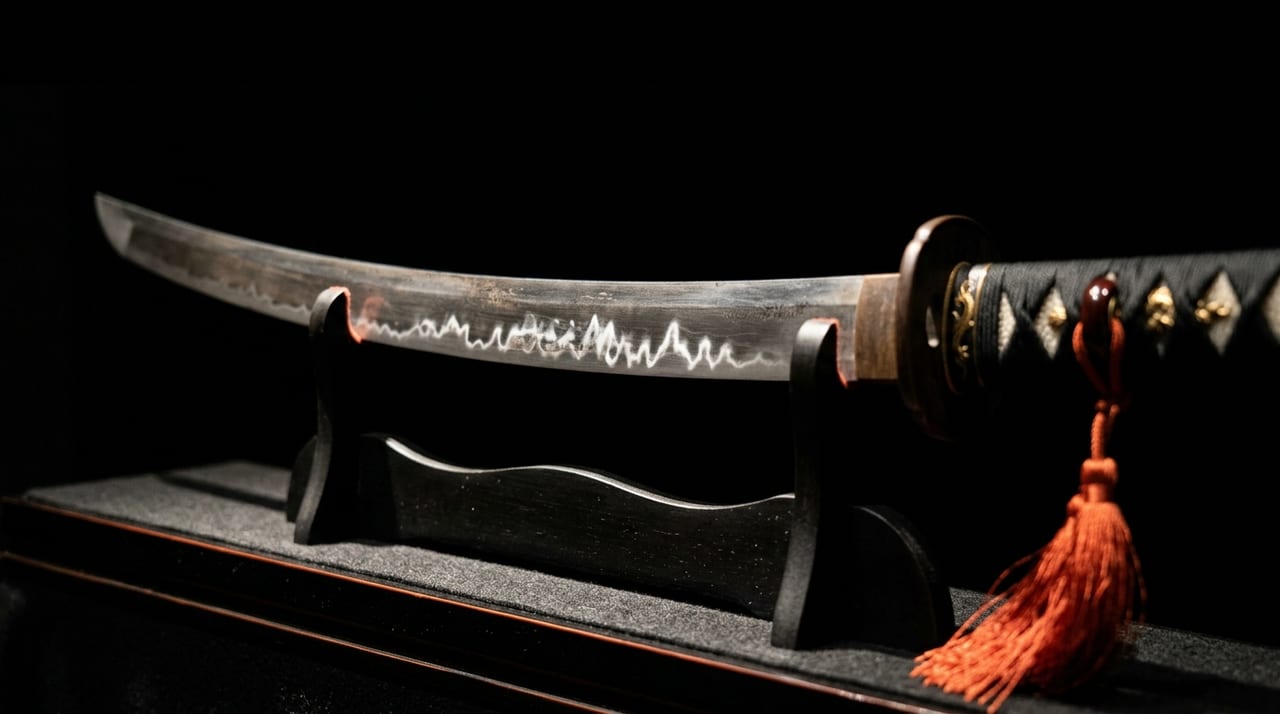
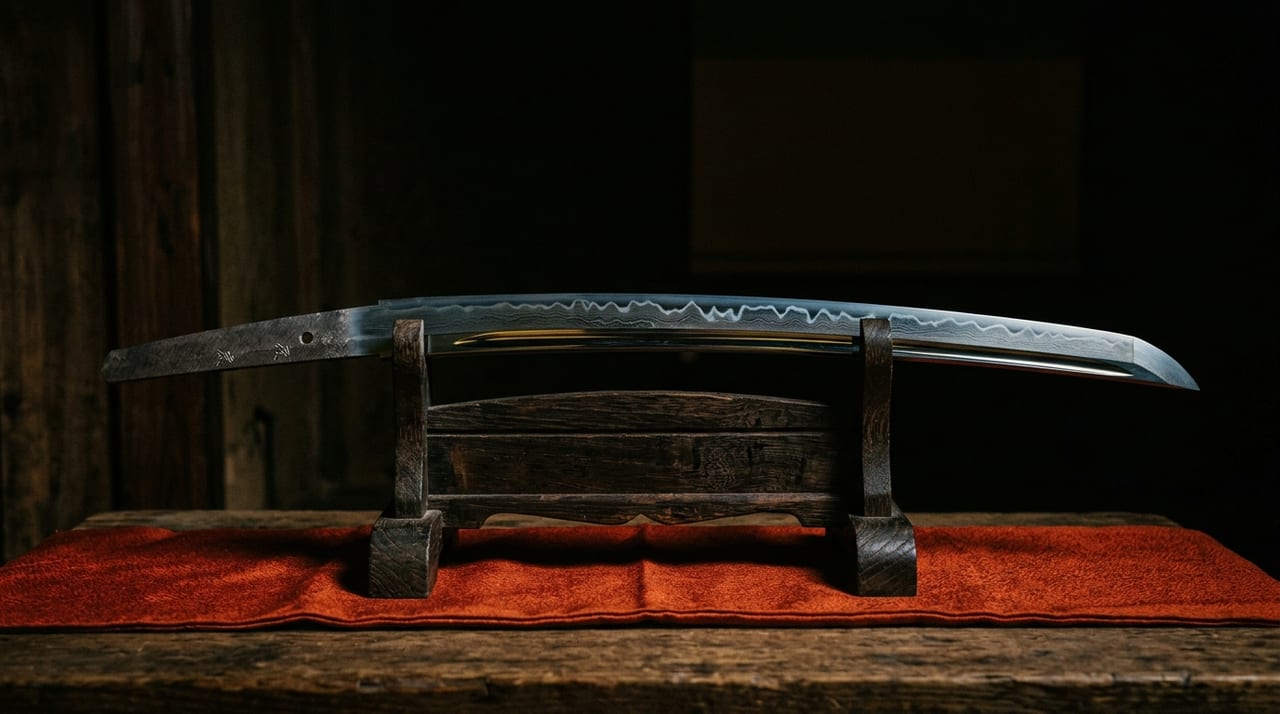
A Japanese sword, at the stage when it has been forged by a kaji (smith), has not yet taken on its true form. It is the job of the togishi (polisher) to draw out the beauty of the hamon (temper line) and the character of the jigane (steel of the blade surface) from the rough, black-rust-covered blank. The togishi is not a mere "polishing craftsman." They are the essential figure who ultimately determines the beauty and function of the sword — the key to its appreciation.
The polishing technique that has continued since the Kamakura period is built upon a deep understanding of natural whetstones and an accumulation of delicate work performed by fingertip feel alone. It takes a skilled togishi anywhere from several days to, in some cases, several weeks to complete a single sword. Most of that time is a silent labor of dialogue between whetstone and blade — an endless repetition of minute adjustments in hand pressure and angle.
The Seven-Stage Polishing Process — From Coarse Stone to Finish
The polishing process is broadly divided into seven stages.
- Stage 1: Arato (coarse stone) The blade is ground with the coarsest whetstone, removing the forging irregularities left by the kaji. The sword's sugata — the shape of its sori (curvature), width, and thickness — is determined at this stage. Because the arato leaves deep scratches, they must be carefully removed in the subsequent stages.
- Stage 2: Nakato (medium stone) The coarse scratches from the arato are removed, and the entire blade is brought to a uniform finish. At this stage the shape of the blade becomes more clearly defined.
- Stage 3: Konakato (fine medium stone) The surface is smoothed with an even finer whetstone. This is patient work, eliminating the scratches from the previous stage one by one.
- Stage 4: Uchigumori-to (interior clouding stone) This is the core of the polishing process. The uchigumori-to is a natural whetstone quarried in the area around Kameoka, Kyoto, and it is through this stage that the hamon (temper line) first begins to appear clearly. At this stage the togishi assesses the texture of the jigane (steel of the blade surface) and the shape of the hamon, then determines the finishing approach for the stages to follow.
- Stage 5: Hazuya (blade gloss) A small piece of uchigumori-to wrapped in Japanese paper is wound around the fingertip to form a "hazuya finger," which is used to carefully polish the cutting-edge area near the hamachi (blade notch). This sharpens the outline of the hamon and brings out the complex scenery within the hardened edge — nie (granular brilliance) and nioi (misty diffusion) — into relief.
- Stage 6: Jizuya (body gloss) This stage polishes the "ji" (body) portion of the blade other than the hamon. Polishing powder wrapped in Japanese paper is used to polish the jihada (grain pattern of the steel), bringing out the hadame (grain texture) of the jigane — patterns such as itame, masame, and mokume. The jizuya gives the blade a distinctive misty quality and creates contrast with the hamon.
- Stage 7: Nugui (wiping and finishing) The final stage, in which the entire blade is treated using chōji oil and similar materials. This is where the togishi's individual character and skill are most plainly revealed.
Jizuya and Hazuya — The Essence of the Finishing Technique
Of particular importance in modern polishing finish techniques is the discerning use of jizuya and hazuya.
Jizuya is a technique for drawing out to the fullest the workings of the jigane — for example, utsuri, a misty shadow that appears parallel to the hamon. To show beautifully the "chōji utsuri" seen in many Bizen-school swords or the "chikei" seen in Sōshū-school swords, the togishi must make subtle adjustments to the pressure and angle of the jizuya.
Hazuya is, as its name suggests, a technique for making the hamon stand out, and the way the whetstone is applied can dramatically change how the hamon appears. Over-polishing can make the original hamon appear altered, while under-polishing results in a dull finish. The judgment of this balance is precisely where the togishi's skill is put on display. Truly excellent polishing is also called "the beauty of subtraction" — the act of removing what is unnecessary and "discovering" the sword's original form.
The Lineage of the Honami Family and the Togishi Apprenticeship System
In the past, a family known as the Honami family hereditarily undertook the polishing and appraisal of swords from the Muromachi period through the Edo period, wielding immense authority as official togishi to the shogunate. Honami Kōetsu (1558–1637) was a member of that family, and is known not only as a sword appraiser but as a great artist who spanned the whole of Japanese culture, including calligraphy, ceramics, and maki-e lacquerwork. The origami (appraisal certificate) — sword appraisal documents — left behind by the Honami family continue to function as important documents in sword evaluation to this day.
There is no official licensing system for becoming a togishi in the modern era, but as a de facto qualification there is the Agency for Cultural Affairs' designation as a holder of selected preservation techniques. This is a system aimed at protecting intangible cultural properties, and togishi who receive the designation are supported by the state as successors to these techniques.
The path of training still centers on the apprenticeship system of entering a master's service. One trains under a master for at least five years, and typically more than ten. During training, one learns by watching the master's work, begins practicing on old swords, and is gradually entrusted with more important tasks. During the long years before becoming independent, income is almost nonexistent, and life as an apprentice is difficult.
Polishing and Appreciation — The Togishi's Effect on Hamon and Jigane
Even the same sword can show a completely different character depending on the togishi. This is because polishing is not mere "burnishing" but an act of expression that determines the optical properties of the sword.
The hamon is visible because the difference in metallic structure produced in the blade by heat treatment — the boundary between martensite (the hardened edge) and pearlite (the jigane) — reflects light. The togishi adjusts this boundary through the angle and pressure of the whetstone, drawing out to the fullest the texture of the hamon — such as "ko-nie deki" and "nioi deki."
The "skin" of the jigane is also something the togishi polishes into visibility. The fibrous structure born from the kaji's repeated folding and forging of the steel — itame, masame, o-itame, and so on — can either stand out or disappear depending on how the togishi uses the whetstone. In sword appraisal as well, the condition of the togi (polishing) is a major factor in evaluation.
The Modern Shortage of Togishi and the Crisis of Tradition
The number of togishi across Japan is currently very small, and among them, those who can make a living from the craft exclusively are even more limited. Behind the decline in young practitioners lie the following three interlocking problems.
- Long training period
- Low income
- Depletion of natural whetstone sources
Particularly serious is the depletion of natural whetstones. The whetstone quarries in Kameoka, Kyoto — the principal source of the uchigumori-to essential for polishing — are approaching the near-limit of extractable high-quality stone. Development of synthetic whetstones as an alternative is advancing, but many voices say that the subtle polishing feel unique to natural stone cannot be reproduced.
On the other hand, the conservation and restoration work on swords designated as jūyō bunkazai (Important Cultural Property) or kokuhō (National Treasure) is work that only togishi can do, and demand is certainly present. The Agency for Cultural Affairs and regional sword preservation organizations have begun establishing subsidy systems for training successors, but the situation is that a fundamental solution has yet to be reached.
As of 2026, the techniques of the togishi are attracting international attention as an intangible cultural heritage that, once lost, cannot be reproduced. Without the existence of the craftsmen who polish out the soul of the sword created by the kaji, there can be no continuity of Japanese sword culture. It is now, in the face of this quiet crisis, that social attention is needed.