Rebirth from the Ashes: The Crisis and Revival of the Japanese Sword After World War II
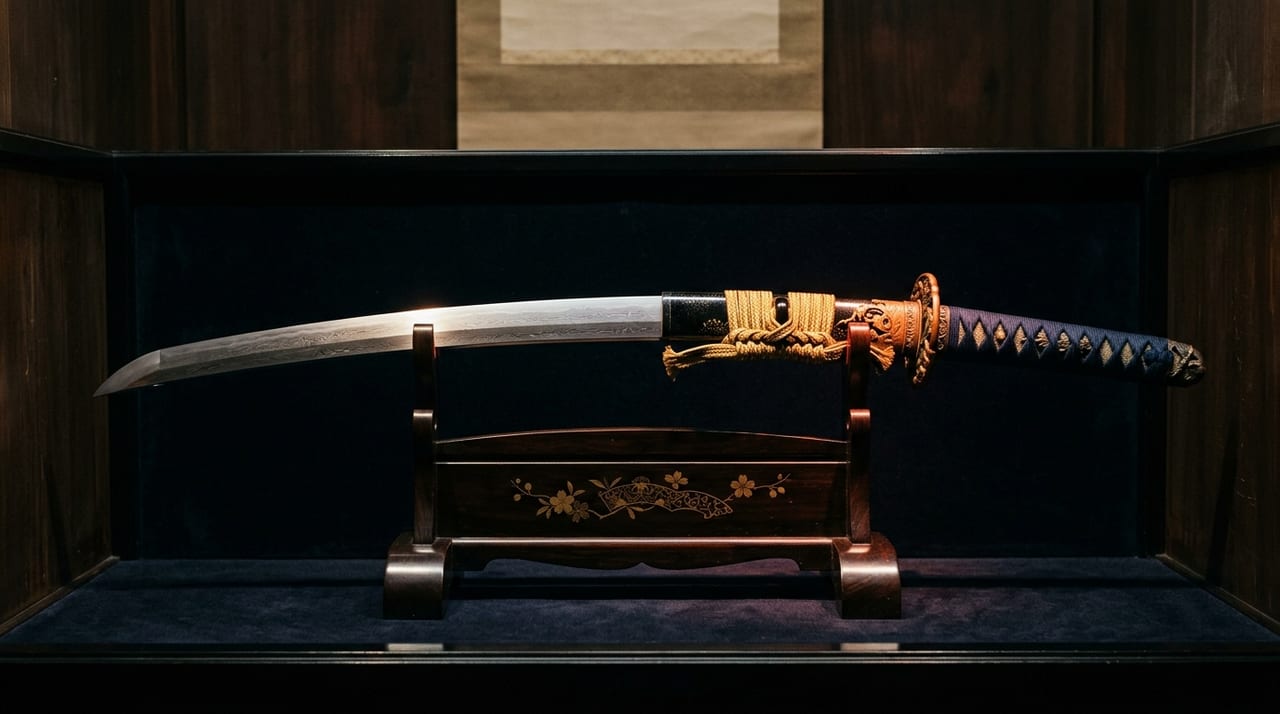 * Image is for illustrative purposes only.
Table of Contents
The Impact of Defeat—The Moment Japanese Swords Faced Existential Crisis
In August 1945, as Japan faced defeat, Japanese swords entered a time of existential crisis. In September of that year, the Supreme Commander for the Allied Powers (GHQ/SCAP) issued SCAPIN No. 550, a "Memorandum Concerning the Surrender, Disposal, and Prohibition of Weapons," ordering the surrender of all swords and blades along with firearms and explosives. The order was severe, targeting not only military swords and combat blades, but also swords and blades of artistic value that had been passed down since ancient times.
Confiscation operations unfolded across the country, with hundreds of thousands of swords seized and destroyed. Many famous blades were carried away to America as war trophies and their locations became unknown. Swordsmiths lost their livelihoods, and sword forging itself was effectively prohibited. The lineage of Japanese swordcraft, which had been transmitted for over a thousand years, stood on the brink of being severed.
A Claim as Cultural Property—The Solidarity of Preservation Movements
What confronted this crisis was the solidarity of sword enthusiasts, researchers, and swordsmiths. They continuously appealed to GHQ authorities that Japanese swords were not merely "weapons," but fine arts and crafts of which Japan could be proud before the world. The basis of their argument was as follows:
- A unique iron-making technique using tamahagane
- The artistry of hamon
- Refined value as a comprehensive craft including polishing and finishing
In 1948, as the result of these efforts, the Society for Preservation of Japanese Art Swords (NBTHK) was established. The organization positioned Japanese swords not as "weapons" but as "artworks," and sought to establish their social status as cultural property by building systems for examination, certification, and preservation. Within GHQ there were those who understood Japanese culture, and through negotiation, the direction of protection gradually became clear for antique artworks and art swords.
The "examination system" that NBTHK continues today was born from the struggles of that era. The gradual certification consists of four levels:
- Preserved Sword
- Specially Preserved Sword
- Important Sword
- Specially Important Sword
1953 and 1958—Two Stages Toward Establishing Legal Status
In 1952, after the occupation ended, Japan regained sovereignty. The following year, 1953 (Showa 28), the GHQ ban on sword forging was lifted, and approval for the manufacture of art swords by the Cultural Properties Protection Committee resumed. It was from this year that swordsmiths finally had an open path to resume forging.
Further, in 1958 (Showa 33), the Firearms and Swords Control Law was enacted, clarifying the legal status of Japanese swords. Swords deemed to have "value as artworks" were formally permitted for lawful possession and distribution, contingent on registration with the prefectural Public Safety Commission. This framework continues to this day and has become the institutional foundation for Japanese swords to survive as a "living craft."
Master Swordsmiths of the Showa Era—The Path to Technical Restoration
Parallel with legal reforms, the technical restoration of swordsmiths began. Yet the path was not smooth. Forges were largely destroyed or burned, and the production system for tamahagane, the raw material, was in ruins. Master swordsmiths possessing ancient techniques were aging, and the transmission of knowledge to younger generations was in danger of breaking off.
A master swordsmith representative of this era was Miyairi Yukihira (1913–1977). Based in Sakaki, Nagano Prefecture, he devoted his life to researching the techniques of old swords (swords of the Kamakura and Muromachi periods). His style is said to be a bold and solid Sōshū-den. He thoroughly investigated every step from the selection of tamahagane through forging, quenching, and finishing, pursuing quality over quantity. In 1963 he became the second swordsmith to be recognized as a holder of an Important Intangible Cultural Property (Living National Treasure) (Tokyo National Research Institute for Cultural Properties, "Miyairi Yukihira").
Contemporary with him, the following master swordsmiths were also designated Living National Treasures and brought the ancient techniques back to life in the modern age:
- Sumitani Masamine—Designated a Living National Treasure (1981), he revived the meticulous beauty of the Bizen style in the modern age.
- Gassan Sadaichi—Inheriting and developing techniques characterized by the distinctive ayasugihada grain, he became a Living National Treasure (designated 1971) (Tokyo National Research Institute for Cultural Properties, obituary record).
Through the activities of these master swordsmiths of the Showa era, the lineage of Japanese sword technique—from old swords through shinkatana and shinshinkatana—barely managed to survive to the present day.
The Revival of Tamahagane—Reconstructing the Raw Material Supply System
Inseparable from the restoration of technique was the issue of tamahagane. The quality of Japanese swords depends on the steel material itself, but tatara smelting (the traditional method of iron sand refining) had nearly completely ceased after the war.
The Society for Preservation of Japanese Art Swords tackled this problem head-on and in 1977 resumed operations of the Nihontō Hozonkai Tatara in the Okuizumo region of Shimane Prefecture. This undertaking, which secures a stable supply of tamahagane for use by modern swordsmiths, serves as the foundation supporting the sustainability of sword-forging techniques and continues to this day.
Transmission to the Present—Until Japanese Swords Were Recognized by the World
The Japanese sword culture that revived after the trials of the postwar period is highly regarded both domestically and internationally today. Today's active swordsmiths each create works that uphold ancient techniques while also engaging with modern aesthetics. The NBTHK examination system has gained international trust and has become a standard for quality assurance for overseas collectors and researchers alike.
More than eighty years have passed since the GHQ confiscation order. Japanese swords have undergone a redefinition—from their crisis, they emerged as fine arts, crafts, and cultural property. The techniques that Miyairi Yukihira and other master swordsmiths of the Showa era guarded and transmitted at great sacrifice have been passed to the hands of contemporary swordsmiths and continue to live on in the flames of the forge even now.