2026 Edition: A Beginner's Guide to Japanese Sword Collecting — What You Need to Know Before Acquiring Your First Sword
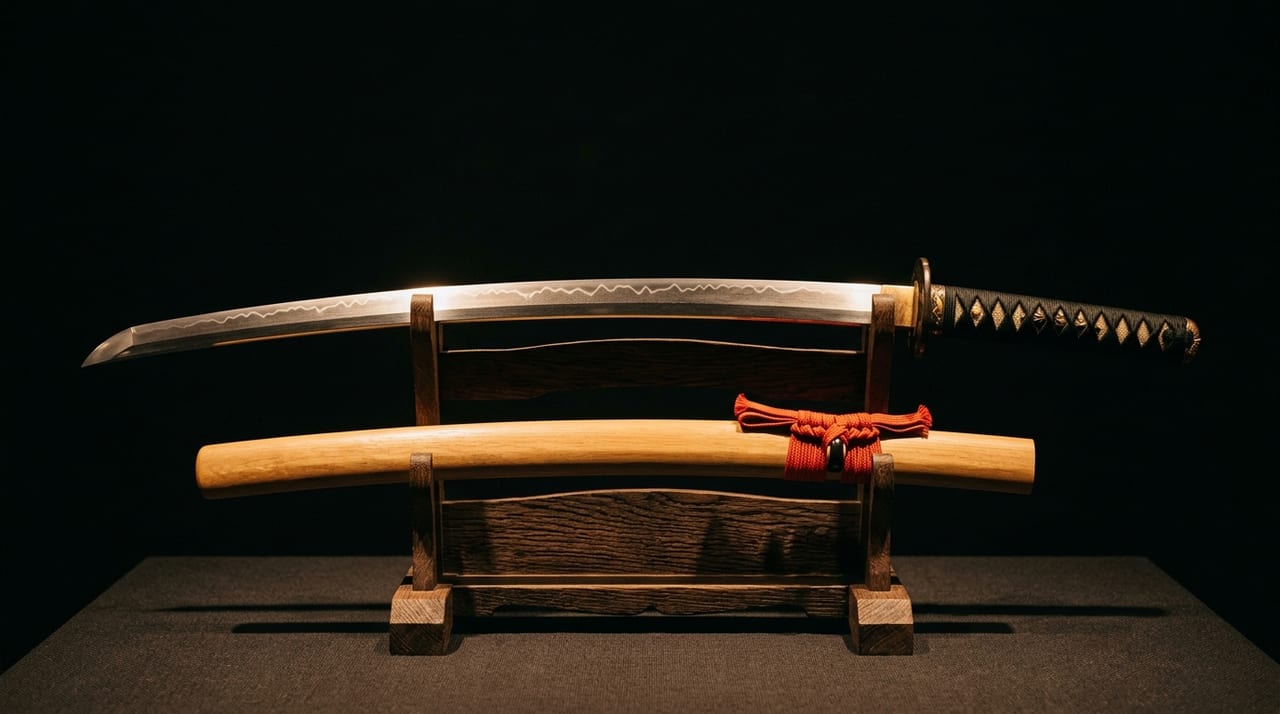 * Image is for illustrative purposes only.
Table of Contents
Introduction: What You Should Know Before Starting a Japanese Sword Collection
Japanese swords are not mere weapons; they are the crystallization of Japanese kaji techniques and aesthetic sensibility refined over more than a thousand years. In 2026, interest in their artistic and cultural value has risen to unprecedented heights both in Japan and abroad, and new collectors — including younger generations — are rapidly growing in number. However, the desire to own one does not translate directly into purchase; there are three significant barriers: law, appraisal, and storage. This article provides a systematic explanation of the practical knowledge beginners need to acquire their first sword safely and correctly, and to enjoy it for years to come.
Legal Procedures: What You Must Confirm Before Purchasing
Possessing a Japanese sword requires registration with the relevant prefecture under the Act for Controlling the Possession of Firearms or Swords and Other Such Weapons (Jūtōhō). Any sword in legitimate circulation will have a registration certificate issued by the prefectural Board of Education. A sword without a registration certificate may be unregistered, and an unregistered sword may not in principle be possessed (Act for Controlling the Possession of Firearms or Swords and Other Such Weapons (e-Gov Legal Search), Article 3, Paragraph 1). Even for a registered sword, the rule is that any transfer must be made together with the registration certificate (same Act, Article 18, Paragraph 2). If you purchase a sword without a registration certificate, the procedures for returning or disposing of it become extremely complicated, so confirming this before purchase is the top priority.
Within 20 days of purchase (transfer of ownership), the new owner has a legal obligation to submit a notification of change of ownership to the Board of Education of the prefecture where the sword is registered (Firearms and Swords Control Act (Jūtōhō), Article 17). The procedure is completed by mailing the documents or submitting them in person at the office, but exceeding the deadline subjects you to penalties, so compliance is absolutely required. The forms required for the notification are available from each prefectural Board of Education's website.
When bringing a sword in from abroad, customs declaration and an import permit are required in addition to the separate procedure for obtaining a registration certificate. Purchasing from a legitimate domestic dealer is the option that minimizes complications, and is the safest choice for beginners.
Pre-purchase confirmation checklist
- Whether the registration certificate is attached to the actual sword (the blade length, sori, and number of mekugi holes match the certificate)
- Whether the issuer of the registration certificate is a prefectural Board of Education (as a guard against forgeries)
- Preparation of the documents required to submit a notification of change of ownership within 20 days of purchase
Practical Buying Guide by Budget: Current Market Prices
Japanese sword prices range broadly from tens of thousands to tens of millions of yen and beyond; setting an appropriate budget will define your collecting life. The following practical benchmarks are based on 2026 market prices.
Up to 300,000 yen: Entry level This range is centered on new works by gendaitō tōkō (tōshō active today) and previously polished swords in good condition. It is ideal for checking blade condition and practicing maintenance, making it an accessible range for a first sword. However, mumei swords and swords of unclear provenance tend to be mixed in, making the choice of a trustworthy dealer all the more important. Do not choose a sword of unknown origin simply because it is inexpensive.
300,000–1,000,000 yen: Intermediate level This is the range where Hozon Tōken (swords that have passed NBTHK examination) and high-end works by well-known gendaitō tōkō come seriously into view. More items come with a kanteisho, and their value as assets becomes more apparent. Mumei swords by regional kaji of the Edo period in good condition also appear in this range, increasing the chances of finding a bargain.
1,000,000 yen and above: Advanced level This range centers on certified Jūyō Tōken and Tokubetsu Hozon Tōken, and works by master tōkō of the Muromachi through Edo periods. Fine pieces of the Gokaden traditions such as Bizen-den, Sō-den, and Yamato-den become genuinely available, but expert advice is indispensable for purchasing. As the risks of authenticity appraisal and condition assessment increase, it is advisable to venture into this range only after gaining experience.
Beginners are strongly advised to start with a single sword in the 300,000–500,000 yen range with a kanteisho. This range offers the best balance of quality and price, and makes it easiest to find the sword that will serve as the foundation of your collecting life.
How to Read a Kanteisho: Identifying a Reliable Certificate
The most authoritative body for Japanese sword evaluation is the NBTHK (Society for the Preservation of Japanese Art Swords). The association's examination ranks swords in four grades: Hozon Tōken, Tokubetsu Hozon Tōken, Jūyō Tōken, and Tokubetsu Jūyō Tōken. These standards make a comprehensive judgment of the quality of the hamon, jigane, overall shape, and bōshi, and constitute the aesthetic evaluation system for Japanese swords itself.
The kanteisho (examination certificate) always contains the following information.
- Type: tachi, katana, wakizashi, tantō, etc.
- Mei: the tōkō's mei, or the notation "mumei"
- Period and province: the estimated period and province of production
- Nagasa and sori: precise measured values in centimeters
- Examination date and certificate number
When purchasing, always verify that the certificate number and the actual sword (especially the nagasa, sori, and number of mekugi holes) match exactly. While forgery of certificates or their misuse on a different sword is extremely rare, it has been reported, and this verification is an iron rule. It is also effective to have the kanteisho examined by multiple dealers and ask for their opinions.
Private appraisal bodies other than the NBTHK do exist, but the NBTHK has an overwhelmingly superior position in terms of market reputation and reliability. By prioritizing swords with an NBTHK certificate, beginners can substantially reduce the risk of acquiring fakes. Furthermore, there is an independent appraisal system not only for the blade but also for tōsōgu (tsuba, menuki, kozuka, etc.), and a sword complete with a matching koshirae has even greater cultural heritage value.
Storing and Maintaining Your Sword: Practical Methods for Long-Term Preservation
Japanese swords deteriorate rapidly without proper care. Rust, warping, and chipping can mostly be prevented through storage conditions.
Storage in a sword bag and sword box Always place the sword in a dedicated sword bag and store it in a sword box or on a sword stand. Never lean it bare against a surface. The saya must equally be protected from moisture and impact.
The importance of humidity control The greatest enemy is moisture. Ideally, maintain a target relative humidity of 40–60%. During the rainy season, the use of dehumidifiers and air-conditioning management is especially important; placing silica gel inside the sword box is a common method. However, excessive dryness can also cause cracks in the wood of the tsuka and saya, so caution is needed. It is advisable to keep a hygrometer on hand and monitor conditions regularly.
Regular maintenance practice Roughly once every three to six months, carefully wipe off the old oil with a soft cloth and apply a thin coat of new chōji oil (or dedicated sword oil). A maintenance kit (uchiko powder, oil, wiping paper, and a mekugi remover) can be purchased as a set at a sword specialty store; for the first time, it is a good idea to have the staff show you how to use them. Regular maintenance trains the eye of the collector and deepens one's relationship with the sword.
Choosing a storage location Avoid direct sunlight and locations that are hot and humid; the basic rule is to store the sword in its saya, horizontally or with the edge facing upward. Storing the sword in a lockable place out of children's reach is essential from both a legal and safety standpoint.
How to Choose a Trustworthy Dealer: Building a Long-Term Relationship
The first obstacle beginners face is "where to buy." Use the following criteria to evaluate dealers.
- Member shops of the Zenkoku Tōken Shōgyō Kyōdō Kumiai (National Sword Dealers Cooperative): Member dealers meet industry standards and also serve as a point of contact for disputes. You can search for member shops on the cooperative's official website.
- Online auctions: Swords with registration certificates do appear, but condition verification is difficult and they are not recommended for beginners. Prioritize purchasing at a physical store where you can handle the actual sword.
- Sword fairs and antique markets: Markets held throughout the country offer a wide selection, but negotiating prices and judging authenticity requires knowledge. It is wise to begin by attending as an observer for learning purposes; they are also effective venues for finding dealers you can build a rapport with.
It is important to compare multiple dealers and choose one who explains the registration certificate and kanteisho thoroughly. Keep your distance from dealers who do not answer questions honestly, and finding a dealer with whom you can build a long-term relationship of trust is the key to a rewarding collecting life.
Conclusion: Take Your Time, Do It Right, Enjoy It for Life
A Japanese sword collection is not completed in a few years. Acquiring a foundation in law, appraisal, and storage before you obtain your first sword is the best investment you can make for enjoying this hobby safely for a lifetime. Rather than rushing to buy an inexpensive sword of unknown provenance, choosing a single sword with a kanteisho from a trustworthy dealer establishes a solid foundation as the starting point of your collection.
Attending appreciation events and introductory lectures organized by the regional chapters of the NBTHK is also highly beneficial for deepening your knowledge. Through interactions with experienced collectors who engage with these iron artworks that have stood for one hundred or two hundred years, build your discerning eye little by little. A sword is not merely an object of collection; it is a precious window through which you can take Japan's history and culture directly into your hands and learn from it.