An Introduction to Japanese Sword Collecting — Budget Planning and Purchase Steps for Choosing Your First Sword
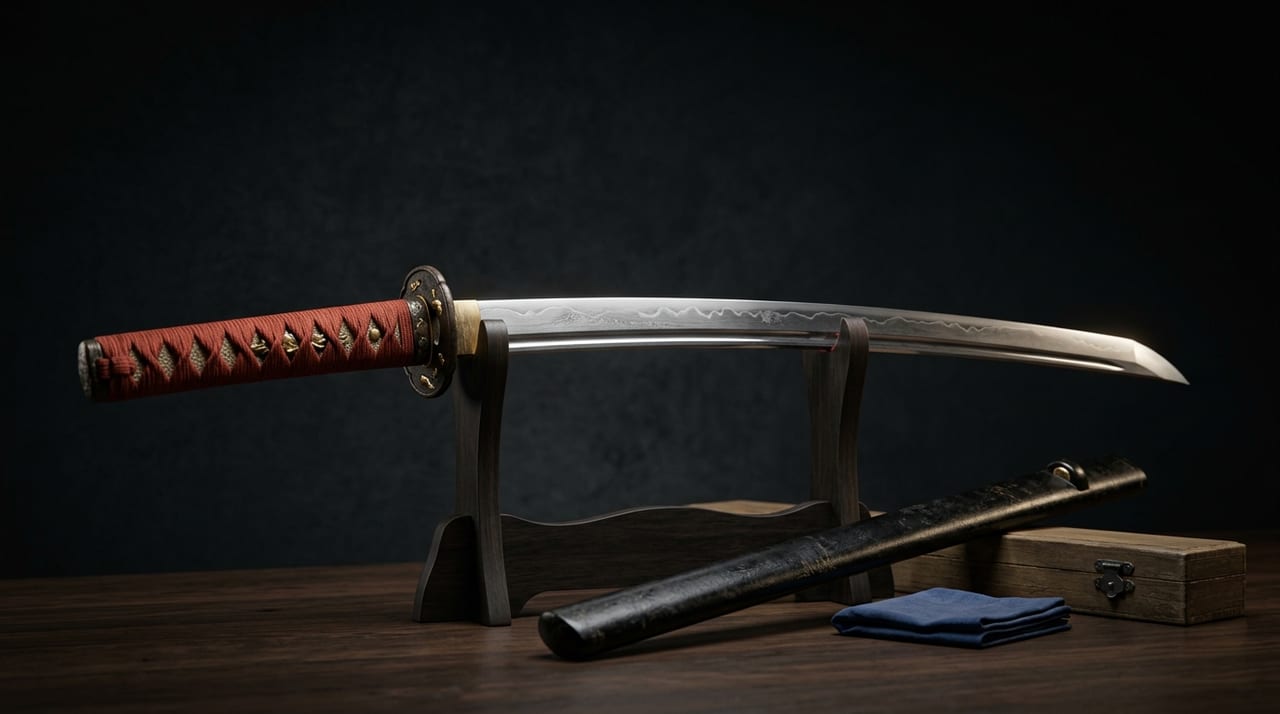 * Image is for illustrative purposes only.
Table of Contents
Before You Begin Collecting Japanese Swords
Japanese swords offer a rich and profound world of appreciation as works of sword art, yet for those considering their first purchase, it is easy to be bewildered by the feeling that "the price range is too wide to know what criteria to use." This article organizes the steps to acquiring your first sword from the perspectives of budget, sword type, purchasing venue, and legal procedures.
Understanding Budget Guidelines
The market price of Japanese swords ranges widely from tens of thousands to tens of millions of yen depending on sword type, period, mei, condition, and whether a kanteisho is included. The first thing a beginner should be aware of is "which price range is realistic."
General guidelines for entry-level price ranges are as follows.
| Sword Type | Approximate Price Range |
|---|---|
| Wakizashi / tantō (good condition, with kanteisho) | From around 100,000 yen |
| Uchigatana (the standard "sword," varies by condition and mei) | 200,000 yen – 1,000,000 yen and above |
| Shintō-period (Edo period) mumei pieces (with Hozon Tōken certificate) | 300,000–600,000 yen range |
Because kotō (swords from before the Muromachi period) are difficult to authenticate by mei and period, it is safer for a first sword to choose a piece from the shintō or shinshintō period with a clear attribution to a specific tōkō.
The budget must also account for associated costs beyond the purchase price of the sword itself, such as the following.
- Maintenance costs for shirasaya and koshirae
- Storage sword box
- Maintenance tools (uchiko, chōji oil, wiping paper)
It is advisable to budget an additional 20,000–50,000 yen for these initial investments.
Choosing a Sword Type — Tantō, Wakizashi, and Uchigatana
For a beginner's first sword type, wakizashi (nagasa of 30 cm to under 60 cm) and tantō are the easiest to handle. Because they are smaller in size, the difficulty of storage and maintenance is lower, and they take up less display space. The price range is also often lower than uchigatana.
On the other hand, uchigatana (nagasa of 60 cm or more) is the iconic Japanese sword, and many beginners insist on starting their collection with an uchigatana as its "centerpiece." For those who choose uchigatana, it is recommended to secure a sufficient budget and aim for a piece with at least a Tokubetsu Hozon Tōken certificate.
Tachi (nagasa of 60 cm or more, with deep sori, worn with the blade facing downward) tend to be from older periods and command higher prices, making them more suitable for purchase once a certain level of connoisseurship has been developed, rather than in the beginner stage.
How to Choose a Purchasing Venue
There are four main venues for purchasing Japanese swords.
- Sword dealers (specialty shops)
- Sword auctions and direct sales events
- Online marketplaces
- Private transactions between individuals
Consulting a reputable sword dealer is most strongly recommended for beginners. Established sword dealers have deep knowledge of the provenance of their items and the authenticity of kanteisho, and after-sales support can also be expected (advice on maintenance, referrals for re-polishing, etc.). Specialist sword fairs and appraisal events are also excellent opportunities to compare multiple pieces while examining the actual items.
Online marketplaces offer a wide selection, but purchasing without inspecting the actual item carries risk. Since it is difficult to accurately assess condition, habaki rust, and polishing status from photographs alone, it is desirable to inspect high-priced items in person whenever possible.
Legal Procedures — Verifying the Registration Certificate and Transferring Ownership
Japanese swords are subject to the Firearms and Swords Registration System, and a "registration certificate" issued by the prefectural Board of Education is required for legal possession. When purchasing, always confirm that a registration certificate is present and verify that the nagasa, sori, and other details on the certificate match the sword.
When a sale is completed, an "ownership transfer" procedure is required because ownership changes (filing with the prefectural Board of Education). The procedure is relatively straightforward, but failing to complete it within the deadline may constitute a legal violation, so it is advisable to begin the process immediately after purchase.
Purchasing swords without a registration certificate (unregistered swords) carries legal risk, so beginners should make it a firm principle to always choose pieces that come with a registration certificate.
Common Mistakes and How to Avoid Them
Mistakes that beginner collectors tend to make include the following.
- "Overlooking discrepancies between the registration certificate and the blade": If the nagasa and sori recorded on the registration certificate do not match the actual piece, there is a possibility that a certificate from a different sword is being used, and if this is discovered after purchase the legal resolution becomes complicated. Make it a habit to always verify by actual measurement.
- "Overconfidence in polishing condition": Even if an item looks beautiful to the eye, it may have undergone "keshi-togi" (rough polishing that averages out the hamon), which is difficult for the untrained eye to detect, and the original hamon may have been impaired. Choosing pieces that have received NBTHK appraisal can greatly reduce this risk.
- "Choosing based on price alone": In the lower price range, items in poor condition, unregistered swords, and pieces with forged mei tend to be mixed in. It is precisely during the beginner stage that choosing to purchase a certified piece from a reputable sword dealer leads to long-term cost savings.
Conclusion — Cherish Your First Sword
The most important thing in the beginner stage of Japanese sword collecting is "to know the limits of your own connoisseurship and to seek help from trusted experts." Taking the time to carefully choose your first sword after organizing your budget, sword type, purchasing venue, and legal procedures becomes the starting point for building a rich, long-term collection. Rather than rushing to increase quantity over quality, the attitude of deeply engaging with one fine sword is what teaches you the true essence of sword appreciation.