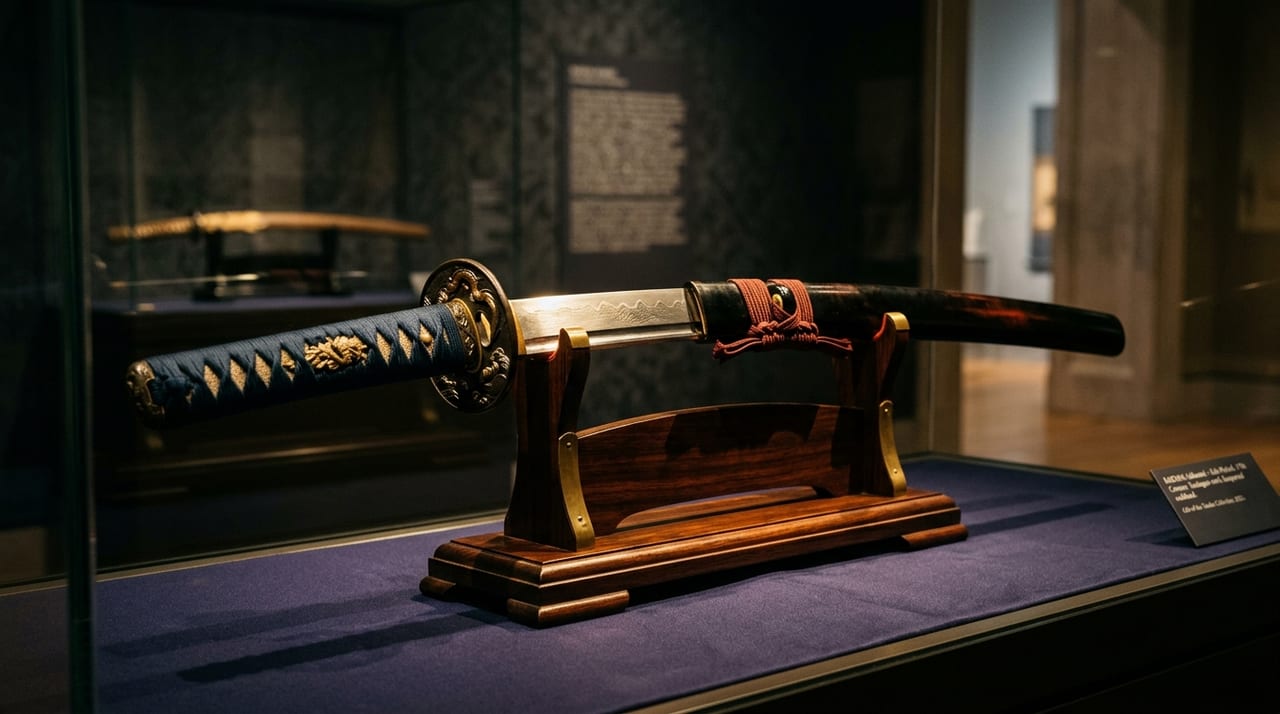
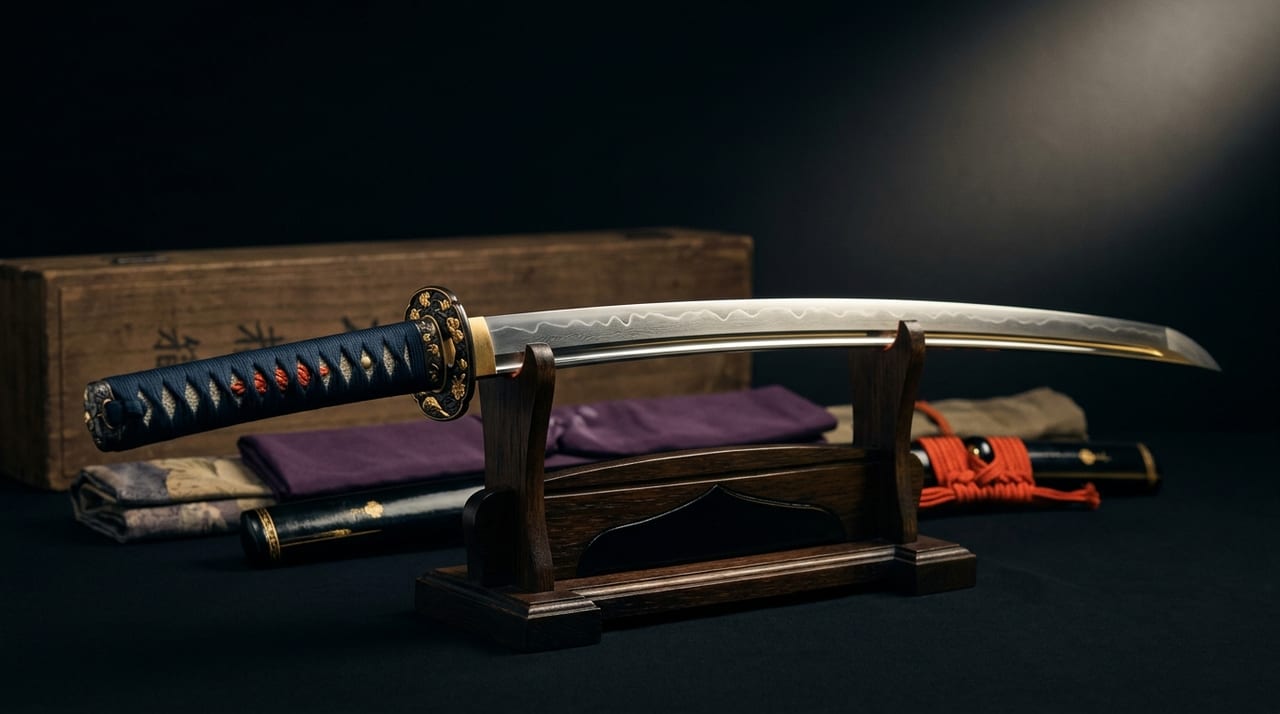
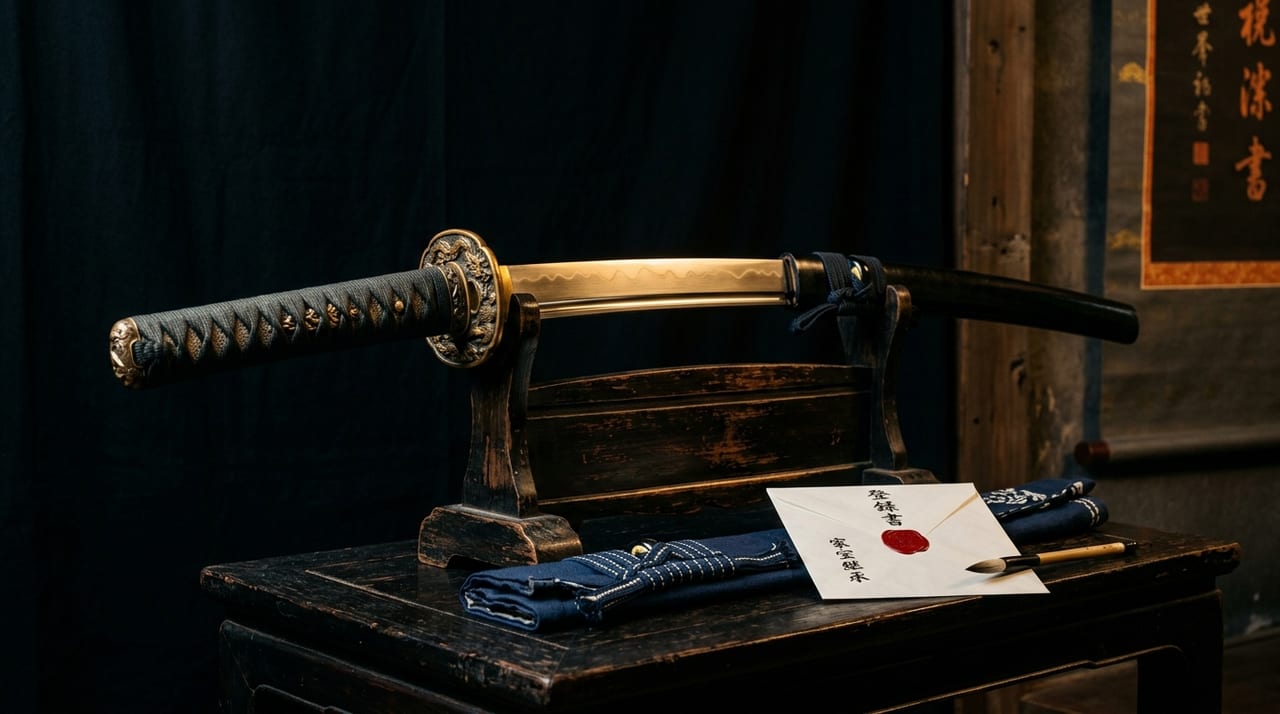
Japanese Sword Appraisal and Sale Practice — Steps and Market Reading When Parting with Inherited Items or a Collection
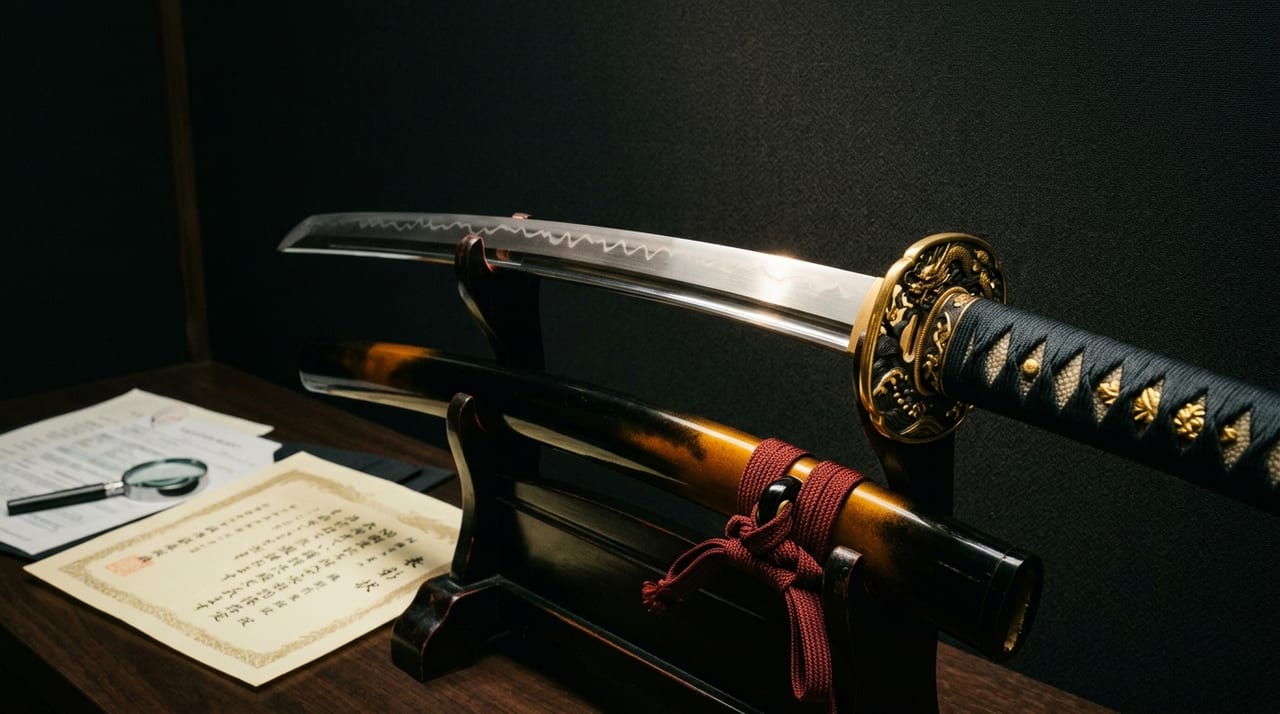 * Image is for illustrative purposes only.
Table of Contents
What You Should Know Before Selling a Japanese Sword
A Japanese sword has appeared among a relative's belongings, you wish to organize a long-held collection, or you have a need to convert assets into cash — the reasons for parting with a Japanese sword vary widely. However, unlike ordinary household possessions, Japanese swords are special articles requiring a registration certificate under the Act for Controlling the Possession of Firearms or Swords and Other Such Weapons (Jūtōhō). Confirming whether a registration certificate exists is the first step before any sale.
A sword with a registration certificate can be legally owned and traded. If there is no registration certificate, or if the details on the certificate do not match the sword's characteristics, it is necessary to consult a sword dealer or the prefectural Board of Education. Since trading without a registration certificate constitutes a legal violation, checking the status of the certificate is essential.
Types of Appraisers and Their Characteristics
Venues for Japanese sword appraisal and sale can broadly be divided into the following three categories.
- Specialist sword dealers (katana shops): Dealers with specialist knowledge of Japanese swords from whom a fair appraisal can be expected. It is important to choose reliable dealers, such as member dealers of NBTHK (Society for the Preservation of Japanese Art Swords). Dealers who exhibit at sword fairs across the country are also included here.
- Antique and fine art dealers: These may handle swords, but their specialist knowledge is often inferior to that of specialist sword dealers. If they are unable to properly evaluate the value of a sword, there is a possibility that the appraisal will come in below market value.
- Auctions: Since sword collectors participate in auctions held by fine art auction companies, rare swords may fetch high prices. Note that the Osaka Bijutsu Kurabu and the Tokyo Bijutsu Kurabu are organizations whose main business is inter-dealer bidding events and exchange fairs among art dealers, and they differ from public auctions aimed at general collectors. However, fees apply, and it may take time to complete a sale.
Main Factors Affecting Price
The selling price of a Japanese sword is affected by a combination of the following factors.
- Presence or absence of a kanteisho (appraisal certificate): The presence of a kanteisho from NBTHK, the Hon'ami family, or similar — at grades such as Hozon Tōken, Tokubetsu Hozon Tōken, or Jūyō Tōken — provides objective assurance of authenticity and quality, which may significantly raise the price. Swords without a kanteisho are treated as unappraised pieces, and even at the same quality level, their prices tend to be lower.
- Condition of the sword: The presence or absence of rust, hakobore (edge chips), hagire (edge cracks), and suriage affects the price. In particular, hagire is considered a fatal flaw that is difficult to repair, and the value drops substantially. The condition of the polish (good condition or in need of re-polishing) is also important.
- Period and tōkō (swordsmith): Works by master smiths of the kotō period, especially fine pieces from the Kamakura through Nanbokuchō periods, tend to fetch high prices. Shintō and shinshintō of the Edo period also vary greatly in price depending on the tōkō. Shōwa-period guntō (mass-produced pieces) are generally lower in price.
- Completeness of accompanying items: Having a full set of shirasaya (plain storage scabbard), koshirae (mounting), sword box, and registration certificate makes a favorable impression. The condition of the koshirae — period koshirae in particular can have value as standalone pieces — is also taken into consideration.
The Importance of Multiple Appraisals and Comparative Estimates
Appraisals of Japanese swords can vary widely depending on the dealer. It is strongly recommended not to decide on the basis of one dealer alone, but to request appraisals from multiple specialist dealers and compare them. Dealers specializing exclusively in swords are more likely to offer a fair price than large chain second-hand goods dealers.
In addition, appraisals are free as a rule (some auction companies charge a consignment fee). Caution is advised with any dealer who states that an appraisal incurs a fee.
Preparation Before Sale — Organizing Documents and Cleaning
As preparation to be done before a sale, the first step is to make a copy of the registration certificate. Next, if there are documents from when the sword was purchased, previous kanteisho, or materials relating to its provenance, organizing these will serve as useful reference during the appraisal.
However, it is better not to carry out maintenance on the sword itself — polishing or rust removal — on your own. Polishing by a non-specialist damages the hamon (temper line) and jigane (steel of the blade surface), and actually lowers the value. Routine maintenance with uchiko (polishing powder) is fine, but polishing should be left to a specialist — a togishi (polisher).
Online Marketplaces and Direct Sales
In recent years, online marketplaces dedicated to Japanese swords have developed, and opportunities for direct transactions between collectors have increased. However, in private transactions, problems relating to authenticity and the difficulty of judging a fair price are concerns, so for a first-time sale it is safer to go through a specialist dealer.
Gathering together the registration certificate, kanteisho, condition, and provenance documents, then requesting appraisals from multiple specialist dealers — taking this simple sequence of steps is the surest path to selling at a fair price.
Post-Sale Procedures — Transfer of Registration and Handling of the Certificate
After selling a sword, the transfer of the registration certificate to the new holder (dealer or private individual) is carried out by the buyer. The seller is generally not required to handle the transfer procedures on their behalf. However, it is recommended to keep a record of the sale (transaction details, receipts, etc.).
If disposal is chosen, notification to a police station is required. No fee applies. Simply discarding the sword is illegal, so even when disposing of it, the appropriate notification is mandatory.
When selling a sword received as an inherited item, some dealers may request the presentation of documents proving heirship (family register extracts, etc.). Confirming this in advance will allow the procedures to proceed smoothly. Given the rarity and cultural value of Japanese swords, selling through proper procedures and specialist knowledge yields the best outcome for both seller and buyer.