Tsuba Market and Pricing: A Guide to Buying Sword Guards at Antique Markets, Auctions, and Dealers
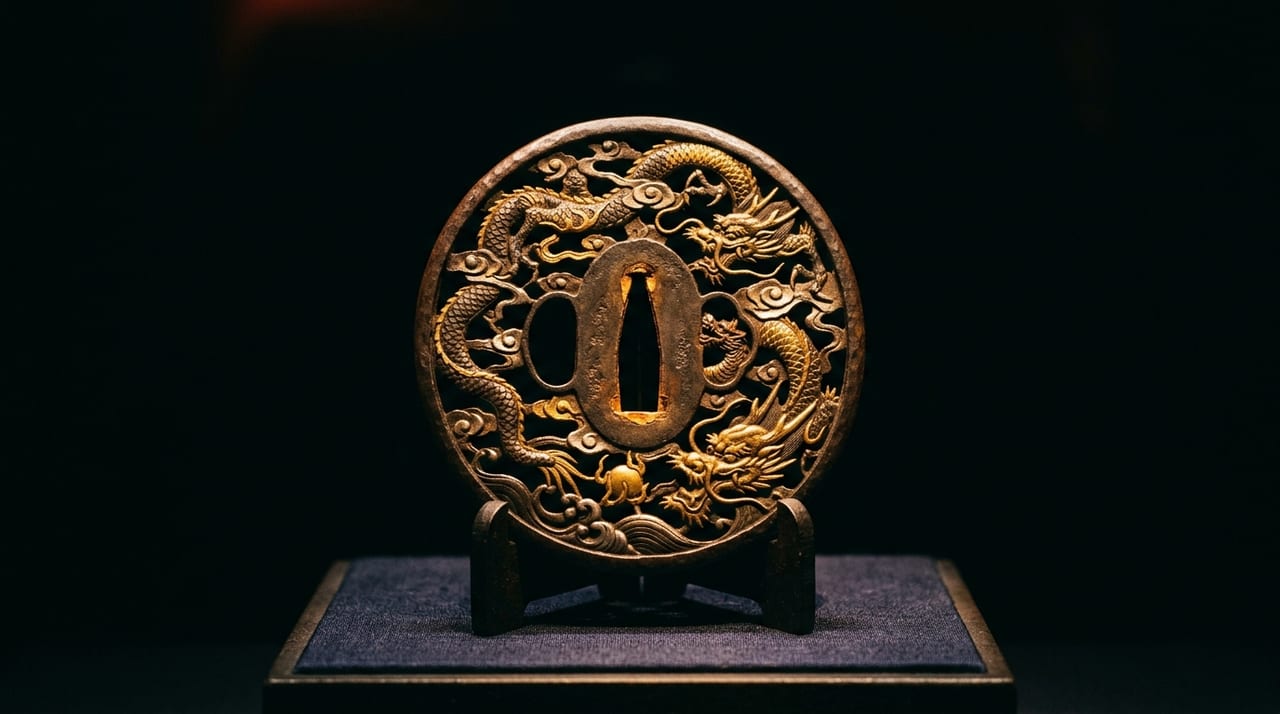 * Image is for illustrative purposes only.
Table of Contents
An Entrance to Tsuba Collecting—First, Cultivate a Market Sense
Tsuba are relatively easy to acquire compared to the Japanese sword blade itself and are one of the most accessible tōsōgu (sword fittings). During the Edo period, a sword-fitting collection culture spread from daimyo and hatamoto (samurai retainers) to merchants, and even today tsuba are regularly offered at antique markets, sword fairs, and specialist auctions.
The price range is extremely wide. From mass-produced items from the Edo period that can be acquired for several thousand yen to masterpieces by the Goto school or Higo metalworkers that reach hundreds of thousands to over a million yen. Additionally, in overseas markets (primarily Europe and North America), there is a tendency for tsuba and sword fittings to be more popular than Japanese sword blades themselves, and international demand can sometimes influence domestic prices.
Main Factors Determining Price
The value and price of tsuba are determined by the following factors.
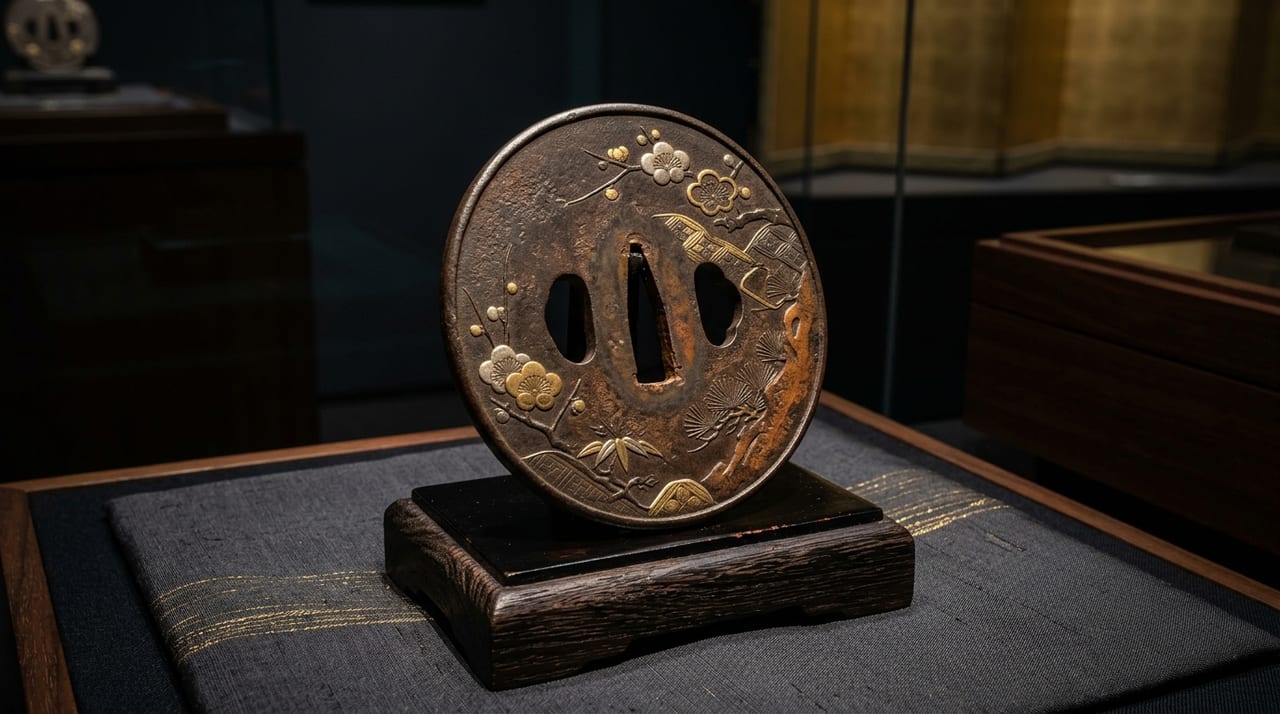
- Materials: Iron tsuba have a rustic beauty and can be acquired relatively affordably depending on their condition. Metalwork tsuba using shakudo (red copper alloy), shibuichi (copper-silver alloy), gold, or silver gain value from the materials alone.
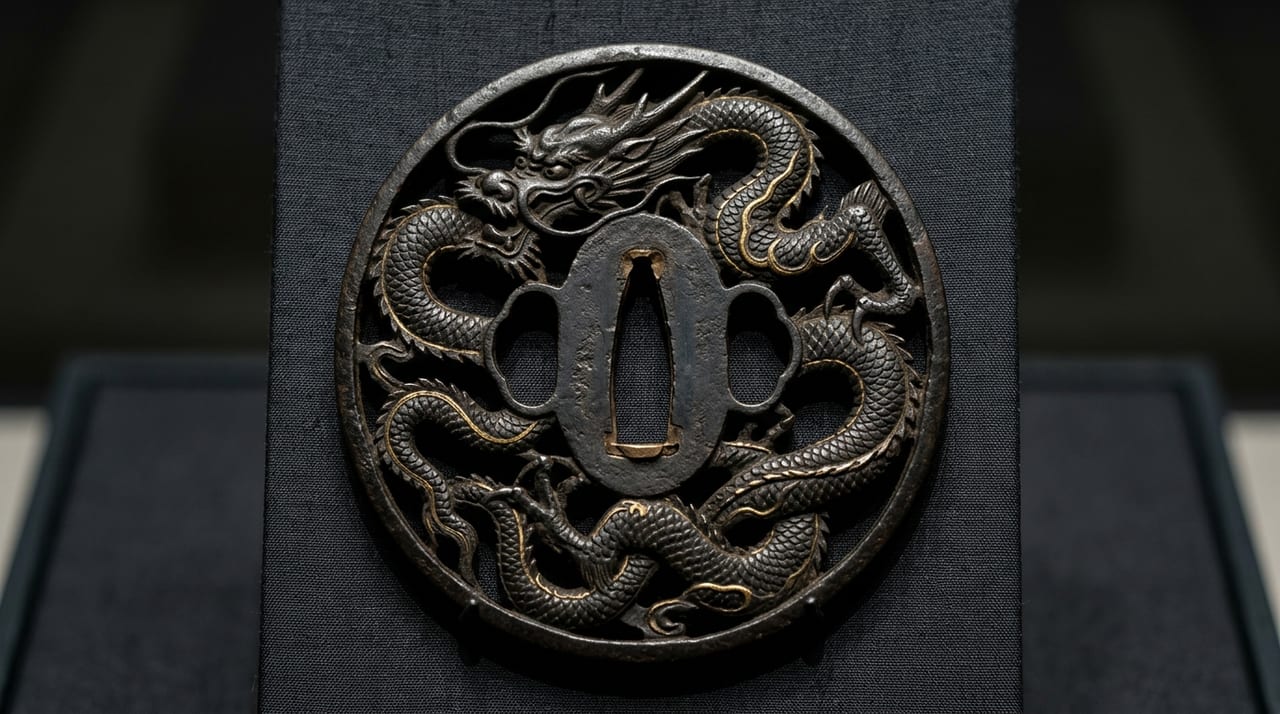
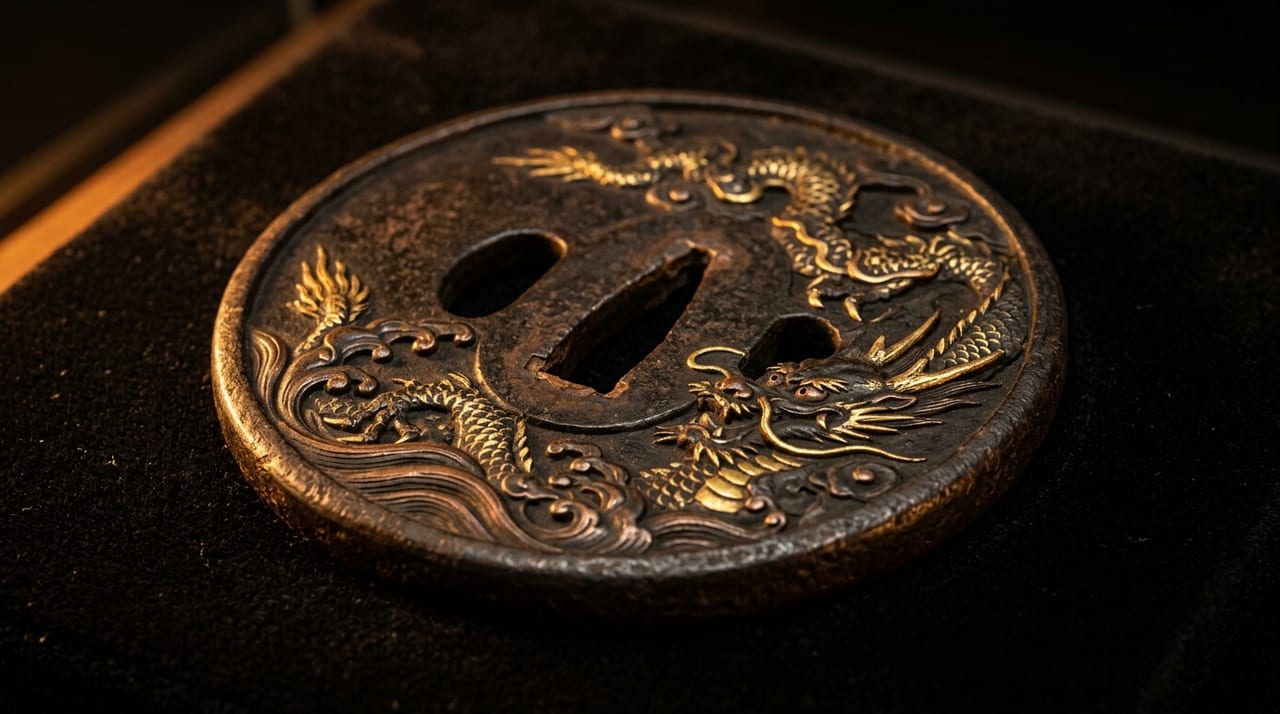
- Technique and Design: The difficulty level and completion quality of techniques applied—such as sukashi (openwork), takabori (high relief), zougan (inlay), and nanako-uchi (fish-roe pattern)—directly affect the price. The theme of the design (seasonal flowers and birds, famous scenes, family crests, etc.) and the quality of the execution are also subjects of evaluation.
- Artist and School: Pieces bearing the signature of renowned schools and makers—such as the Goto school, Higo metalworkers (Hayashi, Nishigaki, Hirata, Shimizu), Nara metalworkers (Sugiura Jōi, Nara Toshinaga, etc.), and the Umetada school—command high prices. However, since the authenticity of the signature is a crucial point of contention, the presence or absence of an authentication certificate greatly affects the price.
- Condition: For iron tsuba, the balance between the degree of surface rust and the "flavor of the base metal" is evaluated. Excessively polished tsuba may actually decrease in value. For metalwork tsuba, the wear of gold and silver and the preservation of the color of the shakudo are important.
- Presence of Authentication Certificate: The presence of an authentication certificate from the Nippon Bijutsu Touken Hozon Kyoukai (NBTHK)—such as for Hozon Tōsōgu or Tokubetsu Hozon Tōsōgu—ensures authenticity and quality, raising the price. Renowned pieces with authentication certificates may also be offered at international auctions.
Types and Characteristics of Purchase Venues
- Sword Fairs and Antique Markets: At sword fairs and antique markets held throughout the country, many tsuba sold directly by dealers are on display. There are opportunities to view and touch pieces (with permission), and price negotiation is sometimes possible. However, counterfeits and later reproductions may be mixed in, so a discerning eye is necessary.
- Specialist Sword Dealers: Sword dealers who are members of the Nippon Bijutsu Touken Hozon Kyoukai are obligated to explain authenticity and provide after-sales support. Prices are somewhat higher, but there is peace of mind.
- Auctions: Tsuba are also offered at domestic art auction houses. It is standard practice to attend preview viewings where you can see the actual pieces before bidding. When interest is concentrated, prices may unexpectedly exceed estimates.
Caution Against Counterfeits and Later Reproductions
Counterfeits (forged signatures and later reproductions of master-maker tsuba) circulate in the tsuba market to a certain degree. Particular caution is necessary with signed pieces from renowned schools. Judgment must be made by examining multiple factors—the style of the signature characters, the file marks, the texture of the base metal, the finish of the inlays, etc.—but it is difficult for beginners to judge independently.
As a minimum precaution, one should avoid purchasing renowned signed tsuba at high prices without an authentication certificate. Repeatedly viewing authentic masterpieces at trustworthy dealers and museums to "cultivate an eye" becomes the foundation for long-term collection building.
Practical Advice for Beginner Collectors
When beginning to collect tsuba, it is recommended to start with mass-produced items from the Edo period or unsigned tsuba of unknown maker within several tens of thousands of yen. Since prices are low, even if one makes a mistake in authentication, the loss is small, and by repeatedly handling actual pieces, one develops an understanding of materials, techniques, and condition.
In the next stage, one accumulates opportunities to view actual pieces at sword appreciation meetings and sword dealers' shops, deepening knowledge while consulting specialist references (particularly illustrated catalogs such as "The Beauty of Tsuba" and "Encyclopedia of Sword Fittings"). Tsuba are a field favored by many enthusiasts as an accessible entry point to sword fitting collection compared to collecting sword blades themselves.
Storage and Maintenance of Tsuba—Practical Matters for Maintaining Your Collection
Storage after purchasing tsuba is also important. Iron tsuba are vulnerable to moisture, and as rust progresses, the flavor of the base metal is lost. As a basic management method, one can store them wrapped in paulownia boxes or cloth in a place with low humidity, and apply a thin coat of white clove oil (shirochoji-yu) or rust-prevention oil specifically for iron tsuba several times a year to prevent corrosion. For metalwork tsuba, it is standard practice to avoid cleaning with strong chemicals and limit care to gentle dry-wiping with a soft cloth.
For restoration of tsuba in poor condition (excessive rust, damage, etc.), it is recommended to consult with craftspeople specializing in sword fittings (metalworkers and polishers). Amateur polishing or repair risks damaging the base metal and reducing value. Engaging with tsuba over the long term while maintaining basic storage and care practices becomes one of the delights of being a tsuba collector. Information exchange with enthusiasts overseas and the use of online communities are also effective means of deepening one's knowledge.
While the tsuba market may appear daunting, with foundational knowledge it is one of the most diverse entry points within sword collecting. Like sword blades themselves, tsuba are small works of art that contain the maker's individuality, the aesthetic sensibility of the era, and the story of the materials.