The Lineage of Higonokami: The Full Picture of the Everyday Sword Culture and Production Techniques Embodied by the Folding Blade
 * Image is for illustrative purposes only.
Table of Contents
What Is Higonokami?
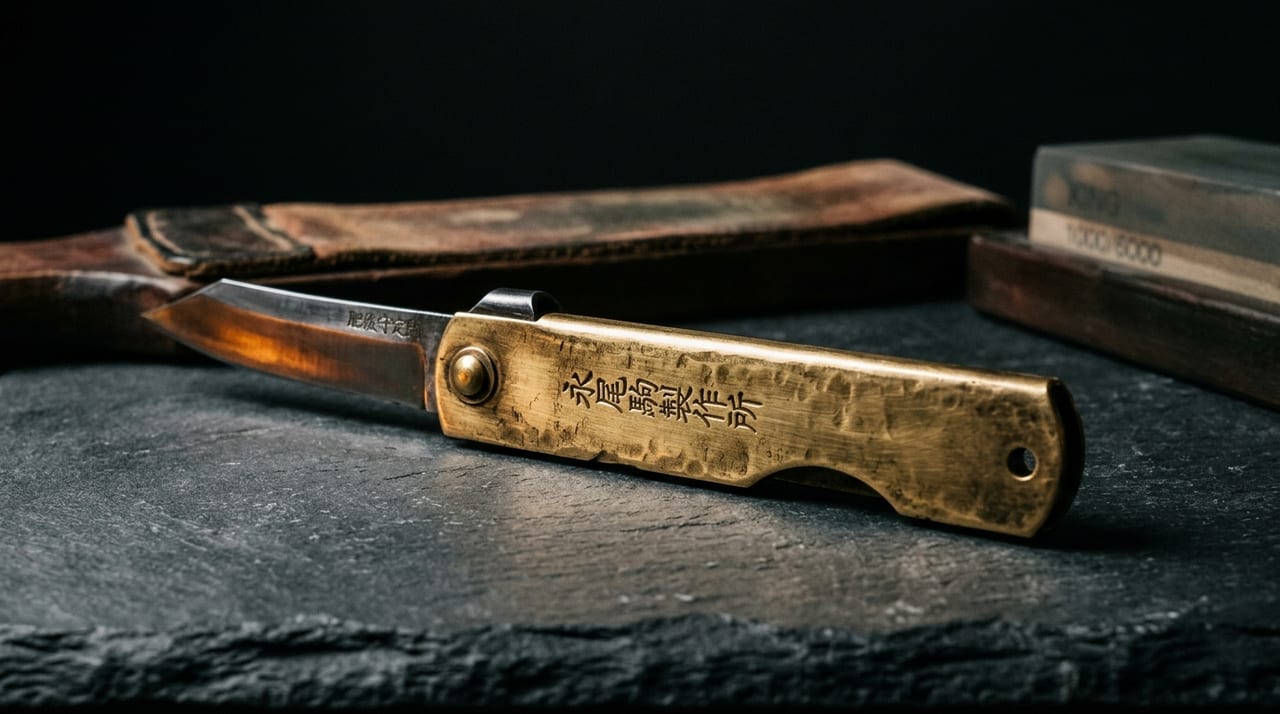
"Higonokami" is a type of small Japanese folding knife in which the blade and body (tsuka (hilt)) fold together for storage; more precisely, it is called a Higonokami-gata kogatana. It is a folding blade with a mechanism for stowing the blade into the tsuka (hilt), and has primarily been used for everyday crafts, sharpening writing implements, and assisting with agricultural tasks.
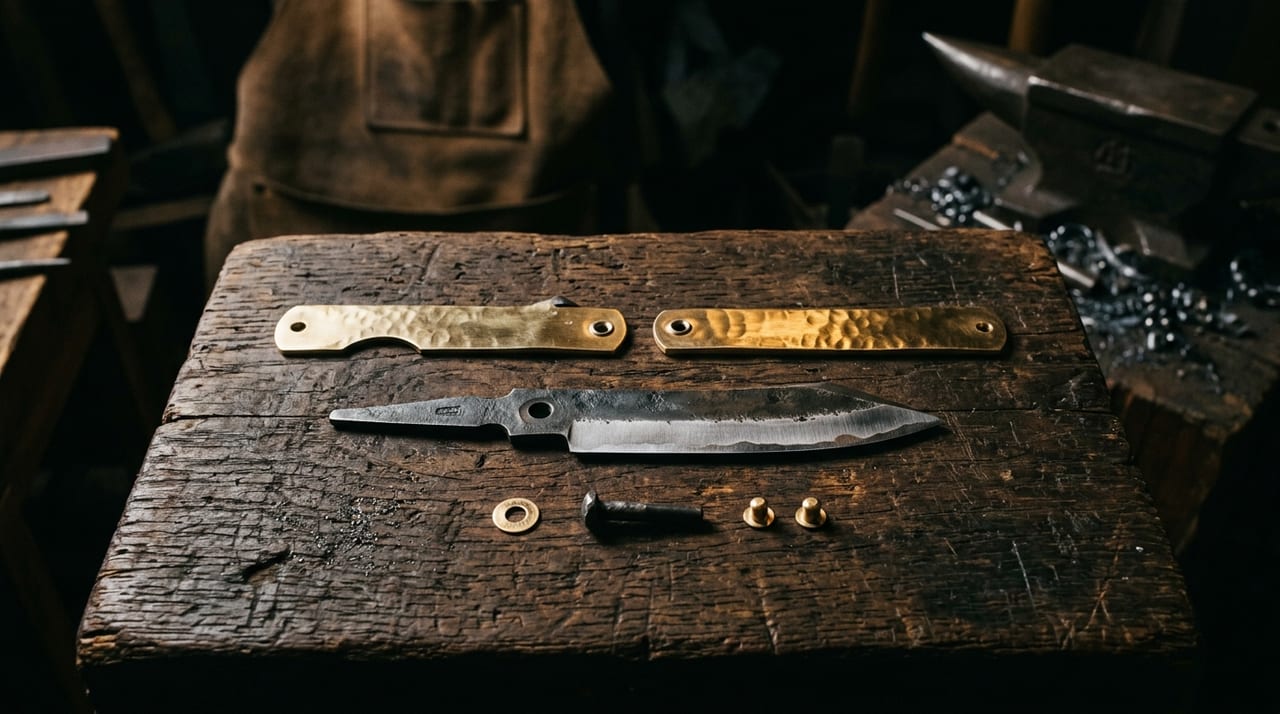
The origin of the name has several theories, but it is said to have begun with the practice of carving the mei (signature) "Higonokami" into folding knives made in the Miki area of Hyogo Prefecture (Harima Province, present-day Miki City) during the Meiji era. The following theories exist regarding the origin of the name "Higonokami":
- A theory that it was given authority by using an official title (the guardian official of Higo Province)
- A theory, according to the manufacturer's explanation, that it derives from the fact that many of their trading partners were in southern Kyushu (Kumamoto)
Today, "Higonokami" is a registered trademark, and authentic products are manufactured exclusively by Nagao Kanekoma Seisakusho Co., Ltd. in Miki City.
Historical Background of Folding Blades
In the Edo period, commoners were in principle not permitted to carry two swords — a long sword and a short sword. However, bladed tools were indispensable in daily life, and small knives were needed for a variety of tasks such as agricultural work, carpentry, writing, and cooking.
It was in response to this demand that small folding blades such as the Higonokami developed. Under current law, Article 22 of the Firearms and Swords Control Act (Jūtōhō) prohibits carrying any blade with a blade length exceeding 6 cm, except for work or other legitimate reasons. The proviso to the same article and Article 43 of the Act's Enforcement Order exempt folding knives with a blade length of 8 cm or less whose blade width is 1.5 cm or less and thickness is 0.25 cm or less and that have no device to lock the open blade, but whether any given knife qualifies depends on its individual measurements. Furthermore, carrying a concealed blade without legitimate reason may constitute a violation of Article 1, Item 2 of the Minor Offenses Act, so it is fundamental not to carry one without purpose (Act for Controlling the Possession of Firearms or Swords and Other Such Weapons (Jūtōhō) (e-Gov Law Search), Enforcement Order of the same Act (e-Gov Law Search), Minor Offenses Act (e-Gov Law Search)).
During the Meiji and Taishō eras, the Higonokami also became popular as a stationery item for children. There was a time when elementary school students routinely carried one as a tool for sharpening pencils, and it was established as one of the school stationery items through the early Shōwa era.
Blade Culture of the Production Center: Miki City
Miki City in Hyogo Prefecture, known as the production center of Higonokami, is a major blade-producing region known throughout Japan as a "hardware town." The history of kaji (smith) work in Miki is long, said to have begun after Toyotomi Hideyoshi's siege of Miki Castle (the 6th to the 8th year of Tenshō (1578–1580)), when craftsmen were gathered from across the country for reconstruction.
The blade industry of Miki spans a broad range including carpentry tools, agricultural implements, and kitchenware, and the folding knife became established among them as a familiar product for the general public. The manufacture of Higonokami is carried out almost entirely by hand, from the forging of the blade to assembly, togi (polishing), and finishing.
Today, Nagao Koma Seisakusho, which manufactures the authentic "Higonokami," continues production using traditional methods while protecting the Miki City trademark. Products come in blade-length variations such as "large," "medium," and "small," and are characterized by their affordable price range of several hundred to several thousand yen.
Structure and Materials of Higonokami
The defining feature of Higonokami is its folding structure with no stopper. While most Western folding knives have a locking mechanism, Higonokami uses a "sandwiching" method in which the blade is held in place solely by the friction of being wedged into the tsuka (hilt).
| Item | Content |
|---|---|
| Tsuka (hilt) structure | Brass (yellow copper) is standard, forming a shape in which the blade is sandwiched between two metal plates. Inexpensive models may use iron plates instead. The tsuka (hilt) shape is simple with minimal ornamentation, a design focused on practicality. |
| Blade material | Carbon steel (high-carbon steel) is most commonly used. While carbon steel is prone to rust, it sharpens easily on a whetstone and can hold a keen edge for a long time. Stainless-steel budget versions also exist, but carbon steel is the mainstream material for traditional Higonokami made by craftsmen by hand. |
| Togi (polishing) and maintenance | Higonokami can be sharpened on either natural or synthetic whetstones. Because the blade is short and easy to handle, it is considered ideal as an introduction to knife sharpening. Regular oil application (to the pivot area of the tsuka (hilt) and the base of the blade) makes it last longer. |
The Place of Higonokami in the Modern Era
Modern Higonokami is being reevaluated in the context of "EDC (Every Day Carry)" culture. Its simple structure without a locking mechanism and its lightweight, compact body are being reconsidered as tools for everyday carry.
It also enjoys strong support from outdoor enthusiasts, with its practicality for camping and mountain activities drawing attention.
- Featherstick (shaving wood for kindling)
- Cutting food ingredients
- Cutting rope
Among writers, authors, and artists, there are also many cases of it being favored as a "small knife for writing tasks." As a blade suited to the fine work that accompanies desk work, it is in demand among creative professionals for the following uses:
- Adjusting fountain pen nibs
- Cutting paper
- Working leather
Overseas, it is recognized by the name "Higonokami," and exports as a Japanese traditional craft item are carried out to Europe, the Americas, and Asia.
Spiritual Continuity with Nihonto
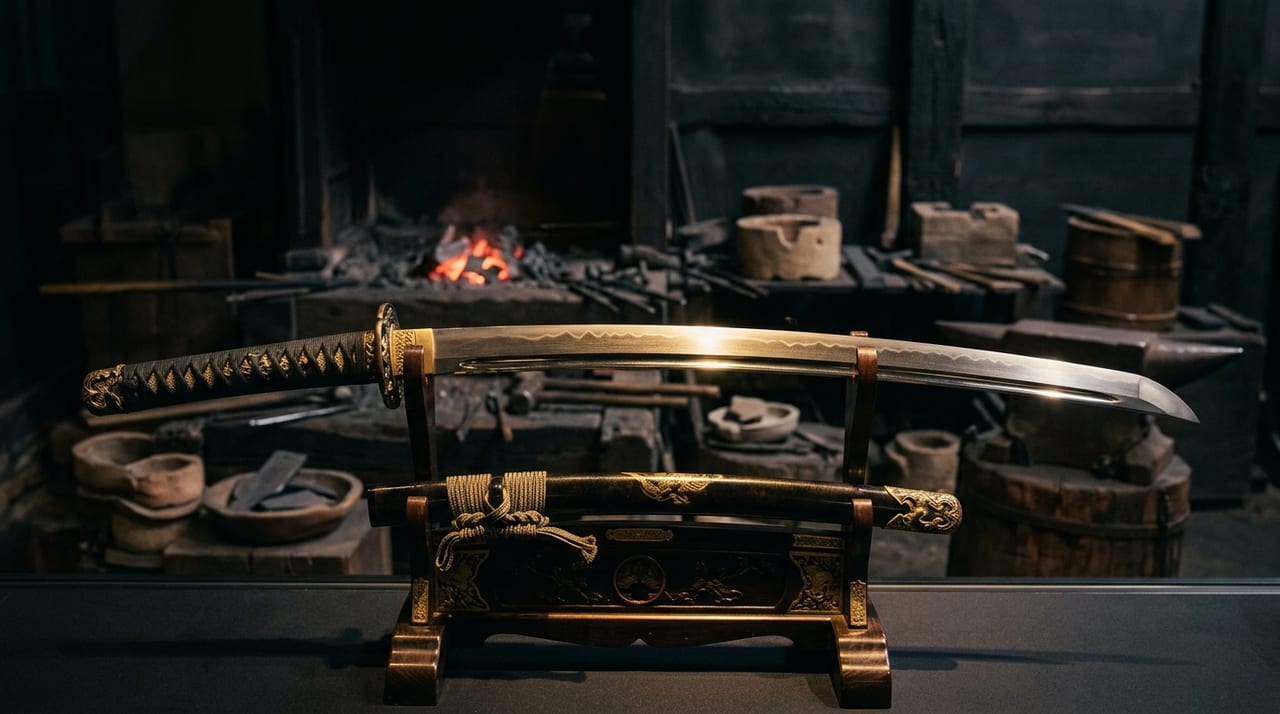
Higonokami is a completely different tool from a long sword or wakizashi, yet it embodies the continuity of Japanese kaji (smith) culture. Forging carbon steel to form a blade, then honing it on a whetstone to maintain its sharpness — this basic process is essentially the same as that of nihonto kaji.
When the kaji craftsmen of Miki make Higonokami, they shape the steel through traditional forging using charcoal (or modern methods using a gas furnace) and apply yaki-ire (quenching), the lifeblood of any blade. The principle by which temperature control and cooling rate during yaki-ire (quenching) determine the hardness and toughness of the blade is the same as for nihonto.
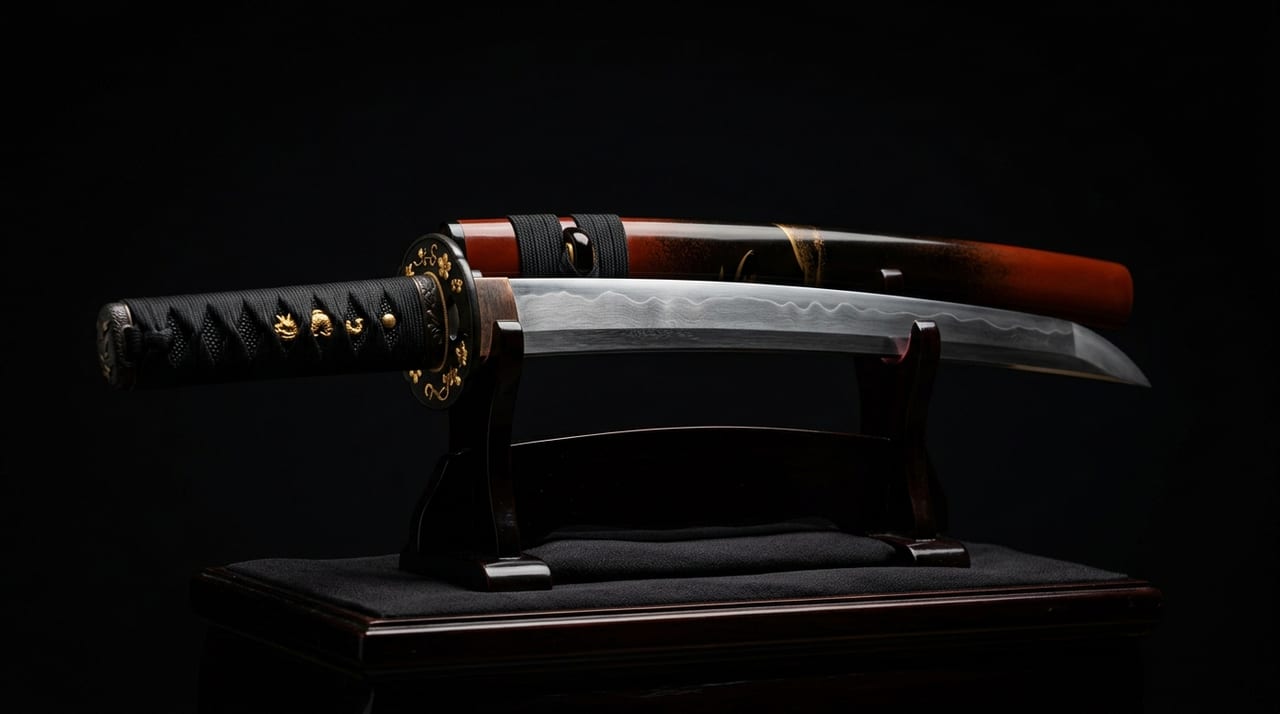
The small folding blade that supported the daily lives of ordinary people, and the long sword that embodied the soul of the warrior. The two differ completely in scale and purpose, yet they stand on a shared foundation of kaji (smith) technique. When one holds a Higonokami, one can find within that small blade a microcosm of Japan's blade culture.
Conclusion
Higonokami tends to be overlooked when discussing Japan's sword culture, yet it is an important tool that has borne a part of the blade culture intimately connected to the lives of ordinary people. In the link between the traditional craftsmanship that Miki City's craftsmen continue to preserve and modern EDC and craft culture, Higonokami is once again growing in presence.
Engaging with Japan's blade culture through Higonokami — a different approach from appreciating renowned blades and masterworks — would serve as one gateway to deepening an understanding of sword culture.