Katchū-dōshi: Structure and Function — A Medieval Specialized tantō Targeting Gaps in Armor
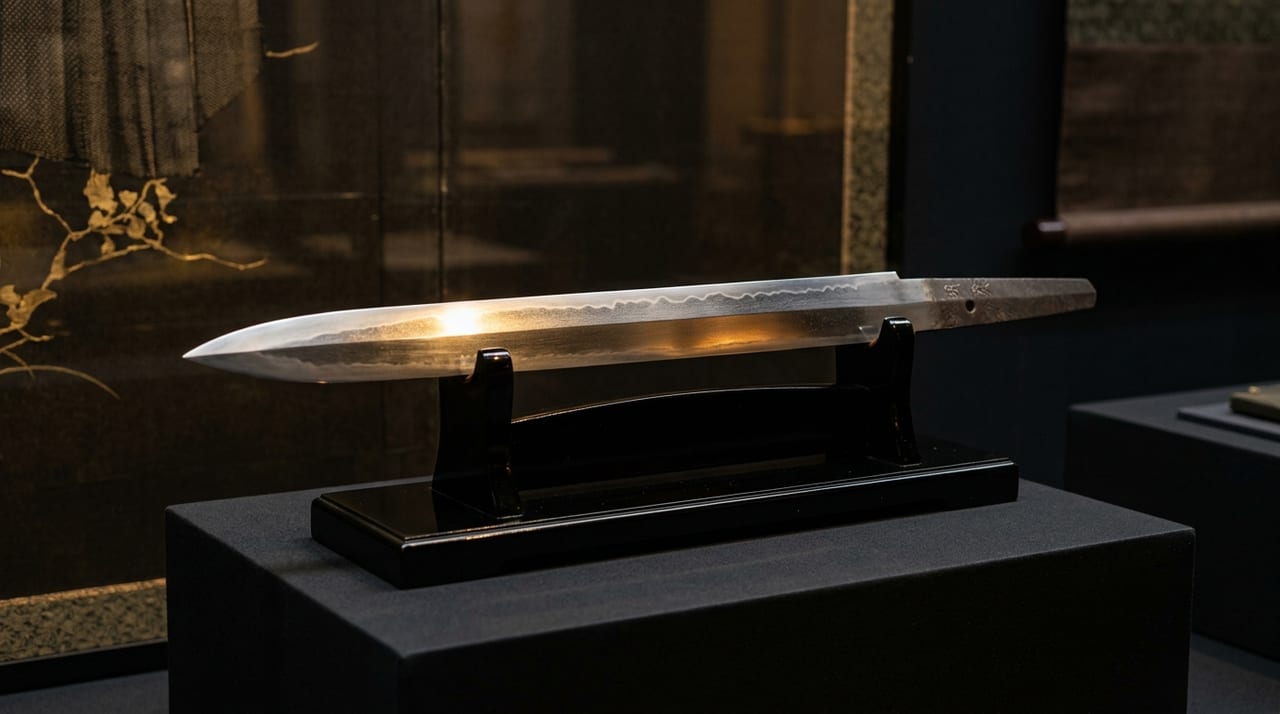 * Image is for illustrative purposes only.
Table of Contents
What Is a Katchū-dōshi?
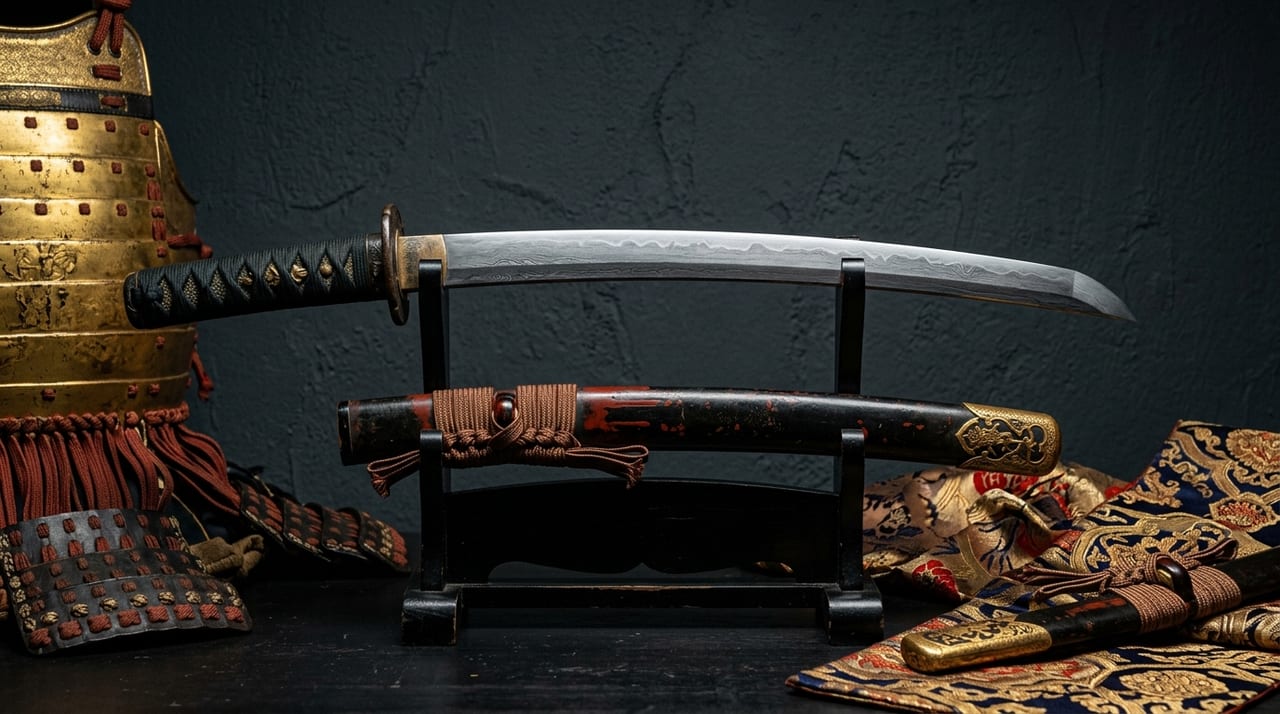
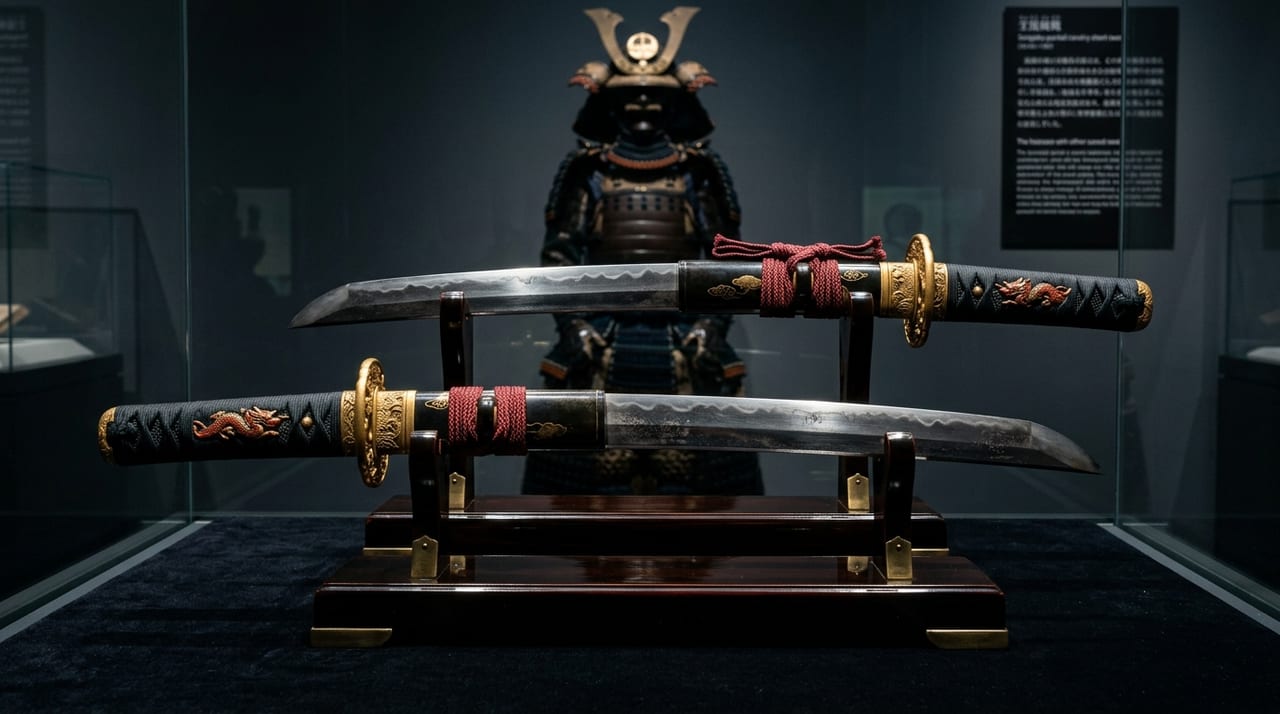
The katchū-dōshi — literally "that which passes through katchū (armor)" — is a form of medieval Japanese tantō designed specifically to penetrate armor. In close-quarters combat from the Nanbokuchō through the Muromachi period, situations frequently arose in which simply striking an opponent from outside the armor was not enough to bring them down. What emerged from this was a technique of inserting a short blade into lightly defended areas such as the joints of the armor, the sides and armpits, and the gaps of the menpo (face guard) to subdue the opponent — and the katchū-dōshi was the blade form developed to match that technique.
In medieval battles, after exchanges with naginata and long blades, there were inevitable transitions to kumiuchi (grappling). At that point, large weapons became a hindrance. The katchū-dōshi — small yet possessing high thrusting power — was indispensable as the decisive weapon in close-quarters combat.
Differences from the Yoroi-dōshi
It is often confused with the yoroi-dōshi, but the katchū-dōshi and the yoroi-dōshi are sometimes used to describe slightly different concepts.
The yoroi-dōshi is most often depicted as a thrusting implement for delivering the coup de grâce to a downed opponent in hand-to-hand combat between warriors in full armor (ōyoroi, dōmaru, haramaki), and is characterized by an extremely narrow, rigid blade. Its cross-sectional shape is close to triangular or hishigata (diamond-shaped), and the fundamental design is to insert it into gaps rather than to pierce through iron armor plates.
The katchū-dōshi, on the other hand, has a form adapted for thrusting into the narrow gaps where multiple protective components intersect — such as the joints of the hanging guards between the upper-body armor (dōmaru, haramaki, etc.) and the lower-body components (kusazuri, haidate, etc.). It tends to be somewhat wider and shorter, and the kissaki is typically a small or ko-kissaki ground to a sharp point.
In present-day sword appraisal practice, it is more common to classify tantō based on objective characteristics such as sugata (overall form), kasane, and kissaki shape rather than on the designations yoroi-dōshi or katchū-dōshi themselves. Even in kanteisho issued by the NBTHK and similar bodies, the term "katchū-dōshi" is rarely specified as a standalone stylistic category; instead, descriptions of nagasa, construction, and taihai (overall configuration) serve as materials from which viewers and owners judge a piece to be a combat-oriented tantō. Therefore, when purchasing or appreciating such a blade, it is important not to rely on the name alone but to examine the actual form of the blade itself.
Distinctive Design Features of the Blade
The blade of a katchū-dōshi has several features that differ from those of ordinary tantō or wakizashi.
Short nagasa: The nagasa is generally less than one shaku (approximately 30 cm), and many examples measure around 8 to 9 sun (24–27 cm). A blade that is too long reduces maneuverability when operating in a confined gap.
Special construction: Most have a hira-zukuri form or a thinned shinogi-zukuri. Increasing the kasane is a design measure ensuring that even when the blade edge strikes the rim of the armor it does not break.
Kissaki form: Most have an extremely small kissaki or a ko-kissaki, maximizing thrusting power through an acute angle. At the same time, the choice of steel in the kissaki section was also important to prevent it from snapping cleanly off.
Minimal sori: Katchū-dōshi have extremely little sori or are nearly without sori. Sori makes a perpendicular thrust into a narrow gap difficult.
Thick kasane: Compared to ordinary tantō, many examples increase the thickness on the mune side, designed to withstand the lateral forces on the blade tip during thrusting.
Materials and Forging
Materials used in katchū-dōshi were chosen to achieve both thrusting power and toughness. The common construction was to combine kawagane taken from tamahagane and worked out thin with shingane of adjusted carbon content, with the tip section hardened by yaki-ire (quenching) while the root (near the nakago) was designed to ensure toughness.
The yakiba was often subjected to yaki-ire uniformly from the hamachi to the kissaki, and hamon of suguha or small-midare was predominant. Elaborate chōji-midare or gunome prioritize decorative appeal over practicality, and do not suit the purpose of a katchū-dōshi.
Usage in Combat
The combat use of the katchū-dōshi can be inferred from kumiuchi techniques recorded in modern martial arts and museum documents. The basic procedure is as follows:
- Achieve close contact with the opponent in kumiuchi (mounted or on foot)
- Position the katchū-dōshi to insert it into a gap in the opponent's armor (especially the sides, armpits, and area around the neck)
- Drive the blade in perpendicularly, sliding the kasane along the rim of the armor to reach the skin and muscle
- Deliver the coup de grâce, or restrain and capture after immobilizing the opponent
The use of the katchū-dōshi, closely combined with techniques from jūjutsu and kumiuchi, is partially documented as "methods of the tantō" in the transmission texts of later martial arts schools such as the Kitō-ryū and Yagyū-ryū.
Surviving Katchū-dōshi Artifacts
Multiple tantō classified as katchū-dōshi survive in museum collections and private collections, but the name "katchū-dōshi" is most often a convenient label applied by later researchers and collectors, and cases of a tōkō intentionally inscribing such a mei at the time of manufacture are few. Classification is almost always made through a comprehensive assessment of blade dimensions, construction, and koshirae form.
Domestic institutions such as the Japanese Sword Museum, the Tokyo National Museum, and the Kyoto National Museum display combat-oriented tantō from the Muromachi period, providing opportunities to see artifacts with the formal characteristics of the katchū-dōshi in person.
In the appreciation of Japanese swords, these utility-focused tantō represent an extreme of "function over decoration," and may be called the crystallization of a warrior's combat aesthetic in which life itself was at stake. The katchū-dōshi exemplifies the category of sword that demonstrates Japanese swords were not merely art objects but precision engineering products designed to protect and take lives.
Practical Ingenuity in Koshirae and Carrying
Because the katchū-dōshi was used at the extremely close range of kumiuchi, practicality was also prioritized in its koshirae. The saya and tsuka were free of excessive ornamentation, with a firm koiguchi for rapid drawing, and a simple construction was common; dimensions were also chosen that would not impede movement when the blade was carried thrust through the obi (sash) or at the hip. Unlike decorative wakizashi and tantō fitted with elaborate maki-e lacquerwork and ornate fittings, the fact that koshirae prioritizing battlefield responsiveness above all else were attached is also an element that cannot be overlooked in understanding the katchū-dōshi as a category of tantō.
Notes on Collecting and Appreciation
When collecting or appreciating tantō classified as katchū-dōshi, it is advisable, as noted above, to bear in mind that the designation "katchū-dōshi" is itself a later convenience classification, and to make a comprehensive assessment of the blade's deki (quality of workmanship) and condition, as well as the contents of kanteisho issued by the NBTHK and other appraisal bodies. For preservation, as with other Japanese swords, the basics are to avoid direct sunlight and high humidity, to store in a shirasaya, and to perform regular maintenance with uchiko and chōji oil. In addition, since few individual pieces retain a mei on the nakago and mumei examples are common, one should not judge value or authenticity by the presence or absence of a mei alone; examining the overall construction of the blade carefully together with its kanteisho is the surest path to correctly appreciating the katchū-dōshi as a combat-oriented tantō.