Bajōzashi — The Structure, Purpose, and Formal Characteristics of the Specialized Short Sword Worn at the Hip by Mounted Warriors
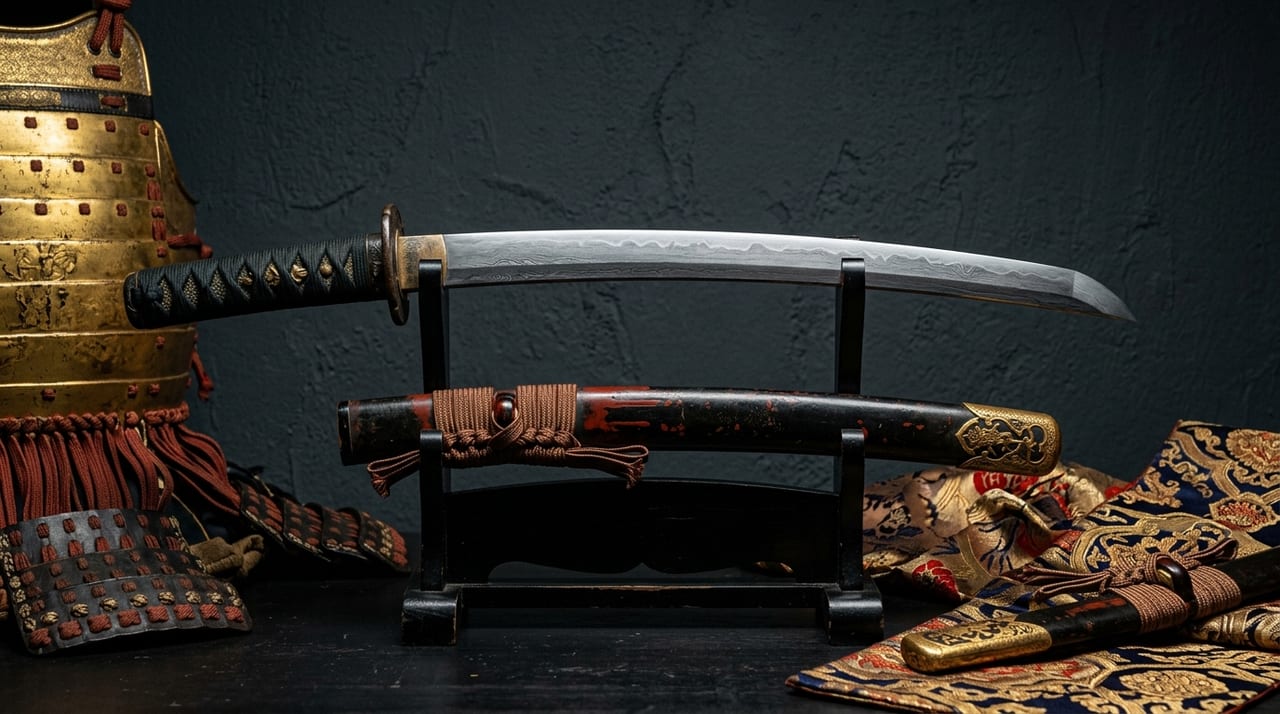 * Image is for illustrative purposes only.
Table of Contents
What Is Bajōzashi? — The Personal-Defense Sword of the Mounted Warrior
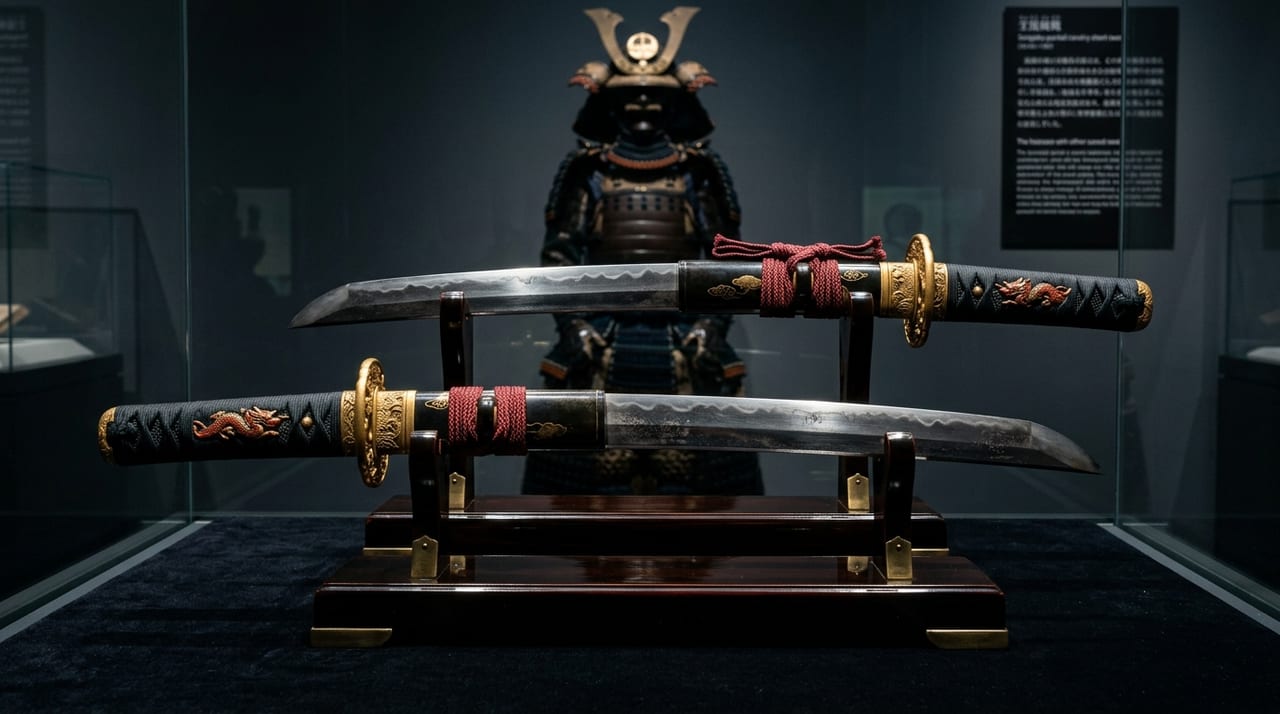
Bajōzashi is a form of tantō or wakizashi produced and used primarily for mounted combat. It is a sword with specialized blade length, sori, and weight balance to allow a warrior on horseback to draw instantly while holding the reins with both hands, embodying a distinct design philosophy different from ordinary tantō or wakizashi.
Two situations were anticipated for close combat on horseback: delivering a cut without dismounting ("mounted strike"), and self-defense after converting to infantry combat following a fall from the horse. The bajōzashi was designed to handle both situations, and became established as standard equipment for warriors who prioritized mobility, particularly from the late Kamakura period through the Nanbokuchō period.
Tachi and Uchigatana — The Basics of Carrying Swords on Horseback
To understand bajōzashi, one must first grasp the difference in carrying methods between the tachi and the uchigatana.
- Tachi: Carried by the "haitō" method — suspended from the hip belt with the blade facing downward. This method is suited to drawing while mounted and was the standard equipment of mounted warriors from the late Heian period through the Kamakura period. Tachi blades frequently employ a shape called koshi-zori, where the apex of the sori falls near the hilt end, which facilitates linking the drawing motion to the downward swing while mounted.
- Uchigatana: Worn thrust through the hip belt with the blade facing upward; excels at a swift draw (iai) primarily in infantry combat. It was considered ill-suited for mounted use, as the tip of the saya could strike the horse's flank and startle the animal.
Bajōzashi derived from this tachi-carrying tradition and, in a more compact size than the tachi, served for self-defense while mounted.
Metezashi and Yundezashi — Left and Right Carrying Positions
Specialized terms also exist for the left and right positions at which a warrior carries a sword on horseback.
- Metezashi: The method of wearing a sword on the mete (right-hand) side — that is, on the right hip. The arrangement is the reverse of the ordinary left-side carry; while it has the advantage of allowing an immediate draw with the right hand, historical records on it are limited.
- Yundezashi: The general method of wearing on the yunde (left-hand) side — the usual left hip. When a mounted warrior shoots a bow with the right hand, the sword on the left hip does not interfere with arm movement.
Formal Characteristics — Blade and Sori Design
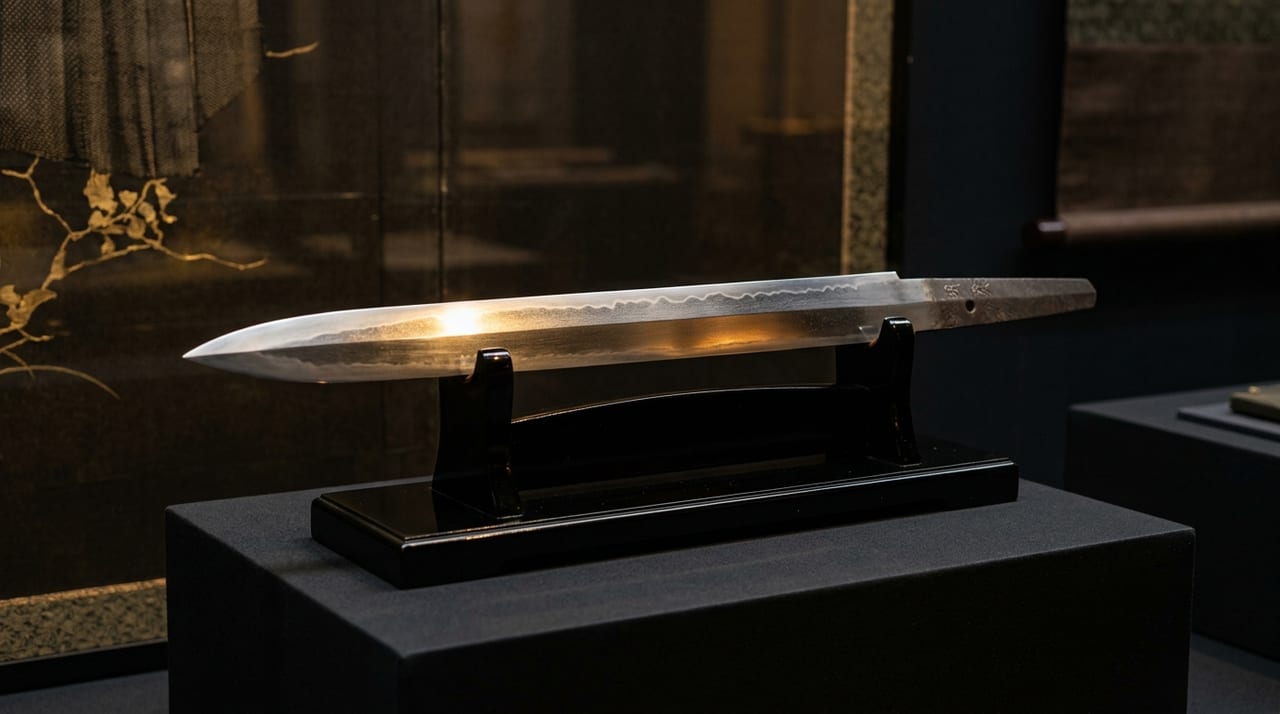
The blade length of bajōzashi falls broadly in the range of 30–60 cm — slightly longer than a tantō (under one shaku) and tending toward the shorter end of the wakizashi range (under two shaku). The most prominent formal characteristic is the pronounced koshi-zori. While ordinary uchigatana and tachi have the apex of their sori near the center of the blade, bajōzashi frequently feature the koshi-zori type where the maximum sori point is placed near the habaki, making it easier to link the drawing motion from horseback with the downward swing.
The blade thickness (kasane) is relatively thick, giving high lateral rigidity. This is a design intended to withstand the impact of falls and grappling, reflecting a practical orientation in contrast to slender, finely polished ceremonial swords. The mihaba is narrow, giving an overall slender impression, yet the weight tends to be slightly heavier than blades of equivalent length.
Koshirae Characteristics — Optimization for Mounted Use
The koshirae of bajōzashi shows many design innovations specifically tailored for mounted use. Regarding the carrying method: while an ordinary wakizashi is thrust through the belt and fixed at the hip, bajōzashi was sometimes carried using the haitō method — suspended from the hip belt — or attached to the saddle. This allowed swift access to the tsuka even while handling the reins.
- Tsuka: Frequently set short, optimized for a one-handed draw and downward swing.
- Tsuba: Relatively small, designed with consideration for avoiding snagging during swinging motions on horseback.
- Koiguchi of the saya: Sometimes made looser, in a design that prioritizes a swift draw.
Development of Bajōzashi in the Kamakura and Nanbokuchō Periods
Bajōzashi held its greatest cultural and practical significance from the late Kamakura period through the Nanbokuchō period (14th century). During this period, the fighting style of warriors was shifting from massed cavalry archery to close-range cutting combat, transitioning from reliance on the tachi alone to a system of employing multiple types of swords.
In this transitional period, bajōzashi functioned as a reserve weapon for emergency situations when the tachi could no longer be used, as well as a finishing weapon after grappling. Military tales of the Nanbokuchō period frequently contain the expression "with the short blade (kogatana) thrust at the hip," and in many cases this is thought to refer to a tantō of the bajōzashi type.
Transformation after the Muromachi Period — From Personal-Defense Weapon to Formal-Dress Sword
As the Sengoku period began, infantry combat led by ashigaru became the norm, and the specific formal advantages of bajōzashi declined in relative importance. However, it continued to be prized as equipment for mounted warriors of the general and daimyo class, and a "formal-dress type bajōzashi" with more sumptuous koshirae emerged.
As the Edo period began, opportunities for real combat disappeared, yet bajōzashi was placed within a unified aesthetic of mounted attire and survived as a decorative sword in warrior-class ceremonial settings. Most bajōzashi surviving today are of this Edo-period formal-dress style, and many are preserved in museums and private collections with their complete tōsōgu.