Mete-zashi — The Sengoku-Period Specialized Tantō Wielded with One Right Hand and the Self-Defense Equipment of Mounted Warriors
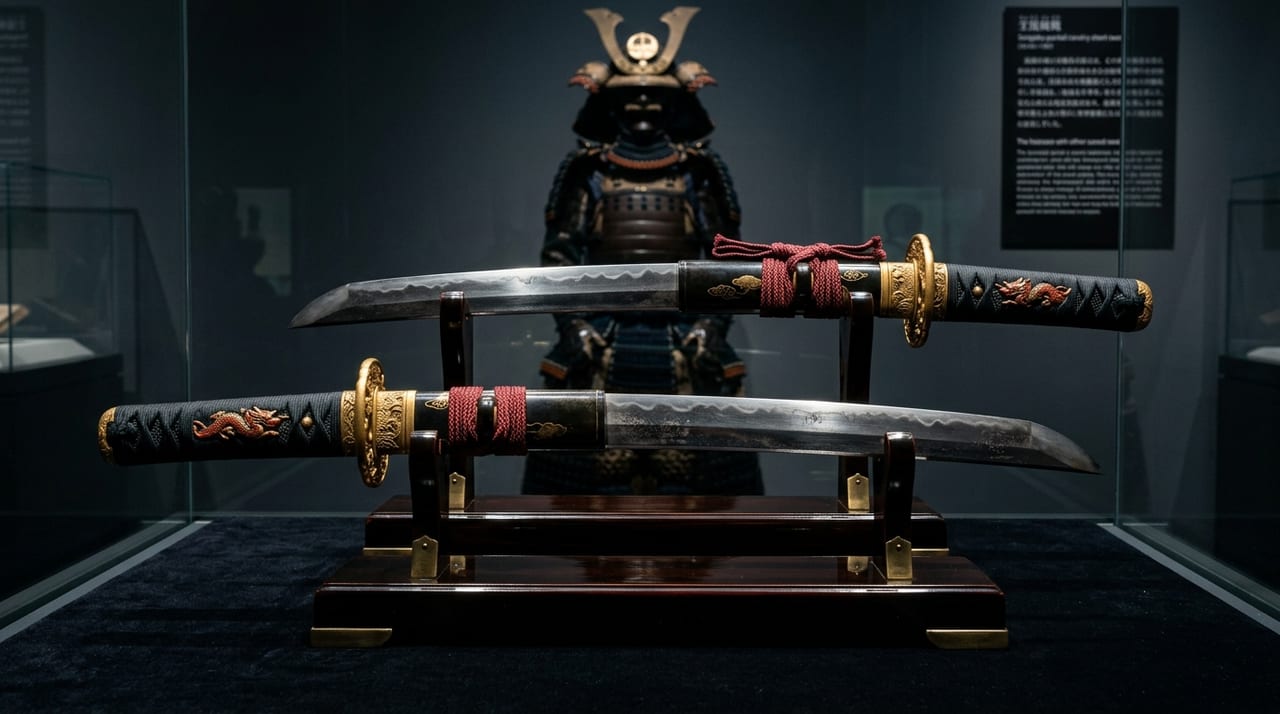 * Image is for illustrative purposes only.
Table of Contents
What Is Mete-zashi?
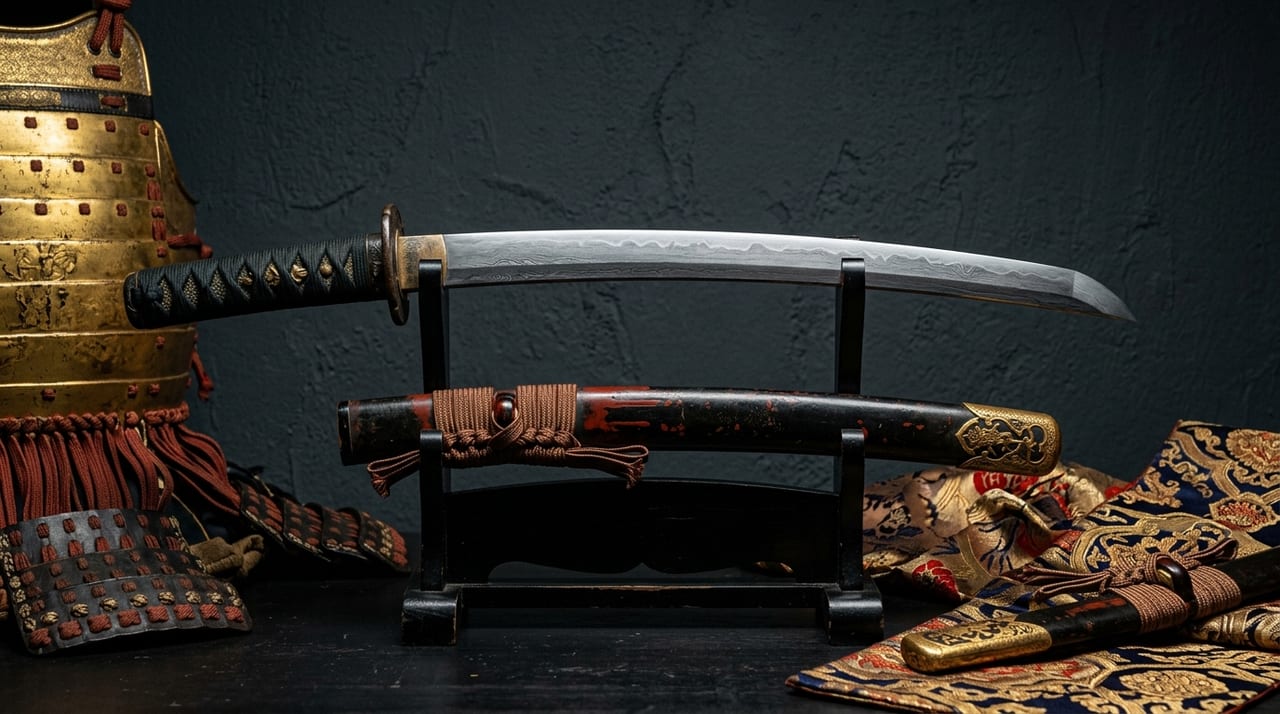
"Mete-zashi" is a tantō or wakizashi worn on the right hip (the mete side) by a mounted warrior. "Mete" is a general term in equestrianism and martial arts referring to the right hand (right side), established as the name for the hand that holds the reins. It is used as the counterpart of yunde (left hand).
Mounted warriors generally carried the following weapons on horseback.
- Bow and arrows: primary long-range offensive weapons
- Tachi: the main sword worn edge-down from the left hip
- Yunde-zashi: a tantō worn on the left hip (saya on the left-hand side)
- Mete-zashi: a tantō worn on the right hip (saya on the right-hand side)
This equipment of wearing a tantō on each hip functioned as a means of self-defense and delivering a finishing blow when unhorsed in battle, as well as a nimble close-combat supplementary weapon on horseback.
The words "mete" and "yunde" themselves derive from the etiquette of mounted archery known as kyūba no michi. The division of roles on horseback — the right hand that grips the reins and the left hand that draws the bow — became established as names for left and right, and they came to be used as terms indicating where weapons were worn. It should therefore first be understood that the word "mete-zashi" is not a proper name referring to a specific sword, but rather a designation based on wearing position and purpose: "a tantō worn on the right hip."
Mete-zashi and Yunde-zashi Compared
Mete-zashi and yunde-zashi are mirror images of each other in terms of wearing position.
Yunde-zashi (left side): worn on the same left hip as the tachi, but functions as a tantō. It is positioned for easy drawing with the right hand as a supplement when using the tachi as the primary weapon.
Mete-zashi (right side): by being worn on the right hip, it can be drawn easily with the left hand even in situations where only the left hand is free (when holding a spear or bow in the right hand). It also functioned as a last resort when the tachi or yunde-zashi was taken or broken.
This system of carrying two short blades is said to have been established during the late Muromachi period through the Sengoku period, when cavalry tactics became more refined. Although both are tantō, the yunde-zashi on the left hip has a strongly "supplementary and reserve" character relative to the tachi, while the mete-zashi on the right hip is equipped for more practical and emergency situations — specifically as a self-defense weapon for moments when the dominant right hand is occupied. It is worth noting that this asymmetric division of roles has a different background from the combination of uchigatana and wakizashi (the so-called daishō) used by foot soldiers.
Morphological Characteristics of Mete-zashi
The following morphological characteristics are cited for swords specialized as mete-zashi.
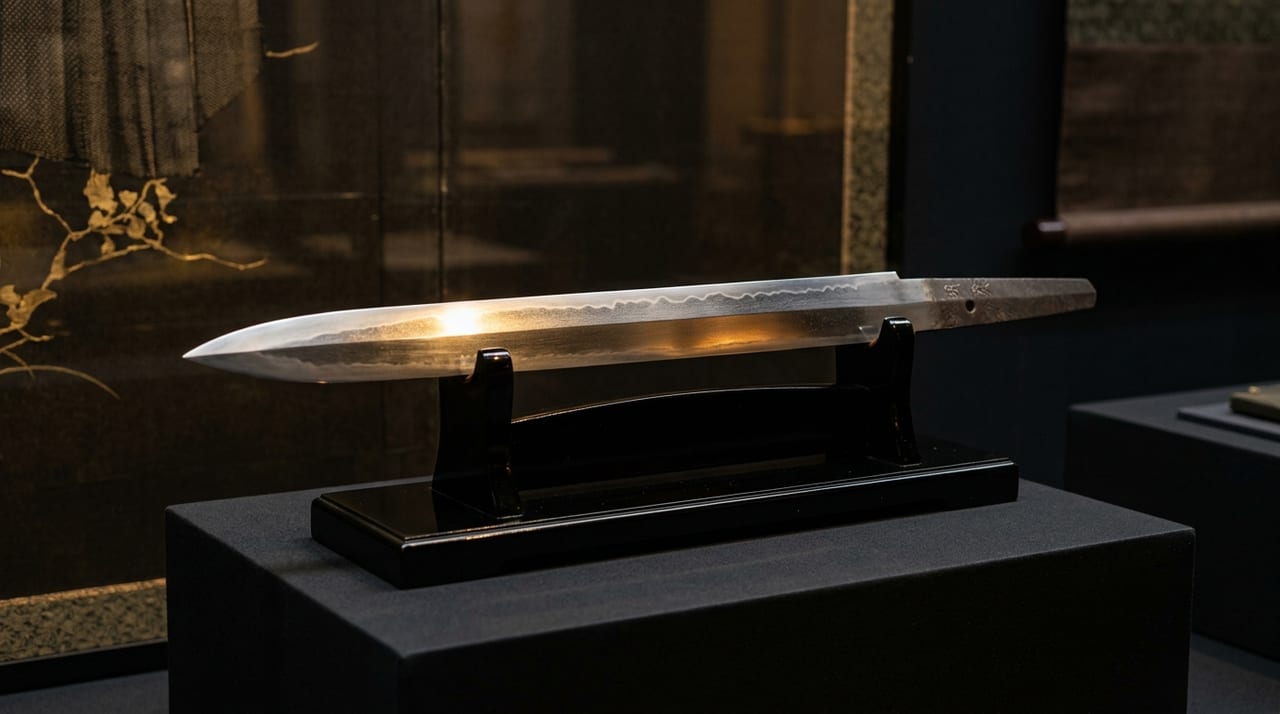
Nagasa (blade length): most commonly tantō-sized, approximately one shaku (about 30 cm). This length was chosen for ease of handling and drawing on horseback. Wakizashi-class examples (one to just under two shaku) also exist, but the tantō class is considered the mainstream.
Construction (cross-sectional shape): there is a tendency for many to have the robust construction of the yoroidōshi type, which prioritizes thrusting. Hira-zukuri or kiriha-zukuri were frequently used.
Koshirae (mounting): to prevent the sword from falling out during vigorous movement on horseback, koshirae may incorporate sayatome (saya-retention devices). Additionally, examples can be seen in which the tsuka (hilt) is wrapped in diamond-pattern (hishigata) ray skin or thick cord wrapping to prevent the hand from slipping during drawing.
Saya (scabbard) and sageo design: the saya of mete-zashi sometimes featured unique ingenuity in the obitore (belt attachment) and the tying method of the sageo (suspension cord), in order to cope with the rocking of horseback. Such details in the design are considered to have combined both the functionality of a practical combat weapon and the decorative quality of displaying a warrior family's dignity.
The Tactical Role of Mete-zashi
Historical records showing how mete-zashi was actually used in battle are limited, but its uses can be inferred from several documents and picture scrolls.
Self-defense after being unhorsed: when a rider was attacked by arrows or a long spear and fell from the horse, mete-zashi became the first means of self-defense in situations where there was no time to draw the tachi. Particularly when wearing yoroi (armor), the drawing motion of a tachi is restricted, making immediate use of a tantō important.
Todomesashi (finishing blow) in kumiuchi (grappling): in the close grappling of kumiuchi, in which warriors clinched with each other in battle, skill was required to thrust a blade into the gaps in armor. The tantō-class mete-zashi was a weapon well suited to this todomesashi.
Kubitoru (taking heads): tantō were also used in kubitoru (taking of enemy heads) as proof of military merit. A tantō is better suited than a large tachi for such detailed work, and mete-zashi also served this practical purpose.
What these situations have in common is that all are extreme circumstances in which "it is impossible to find the range to swing a tachi, or the tachi itself cannot be used." It is reasonable to understand mete-zashi not as a primary weapon used frequently on a daily basis, but as a self-defense implement carried strictly as a preparation for emergencies.
Extant Examples of Mete-zashi and Their Significance for Collectors
Swords bearing the mei (signature) "mete-zashi" are rare in existence, and swords recorded as "mete-zashi" in transmission documents and the like exist, though in small numbers, in museum and private collections.
The following points are noted as matters of caution when collecting and appreciating mete-zashi.
- The morphological category of mete-zashi was established during the late Muromachi through Sengoku period; strictly speaking, swords from earlier periods do not fall into this category
- Swords almost never bear the mei "mete-zashi"; they are identified by their morphology, koshirae characteristics, and transmission records
- Mete-zashi and yunde-zashi are sometimes produced and transmitted as a matched pair (ittsui) owing to the bilateral symmetry of the equipment; collecting them together as a complete pair is considered ideal for research and appreciation
It should be noted that a kanteisho (appraisal certificate) from NBTHK (Society for the Preservation of Japanese Art Swords) certifies the period, quality, and authenticity of the blade itself, and the functional designation "mete-zashi" is not necessarily stated explicitly in the kanteisho. When considering a purchase, the practical key point is to cross-reference the blade's period and taihai (overall form and construction) as recorded in the kanteisho against the style and transmission information of the accompanying koshirae, and to confirm that the two are consistent with each other. Since later repairs or replacements may also have been made to the fittings and saya of the koshirae, the perspective of determining whether they constitute an original single set (ichigu) or a later combination is also indispensable.
Reassessment in the Modern Age
As research in the fields of "armor crafting" and "period costume" that recreate the equipment of Sengoku warlords in detail has advanced, the existence of mete-zashi has also been reassessed.
At historical cosplay events, jidai matsuri (period festivals), and reenactment events at locations associated with Sengoku warlords, the "complete equipment of a mounted warrior" including mete-zashi is increasingly being recreated, and awareness among sword enthusiasts is growing. Collecting with attention to the craftsmanship of the saya and koshirae as tōsōgu (sword fittings) is also being pursued, and mete-zashi is a type of sword with its own unique collecting value as an "intersection of functional beauty and warrior culture."
Because so few survive, a single sword with a clear transmission as mete-zashi is positioned not merely as a tantō but also as a document that tells the story of the entire equipment system of a mounted warrior. It could be said that the particular pleasure of appreciating mete-zashi lies in the fact that, by viewing it from multiple perspectives — its contrast with yunde-zashi, the design of the koshirae, and the history of its transmission — one can read into it both the tension of practical combat equipment and the aesthetic sensibility cultivated by warrior culture.