Sword Culture in the Hoei-Shotoku Period (1704–1715): The Flourishing of New Swords and the Refinement of Sword-Fitting Craftsmanship from Tokugawa Tsunayoshi's Final Years through the Reigns of Shoguns Ienobu and Ietsugu
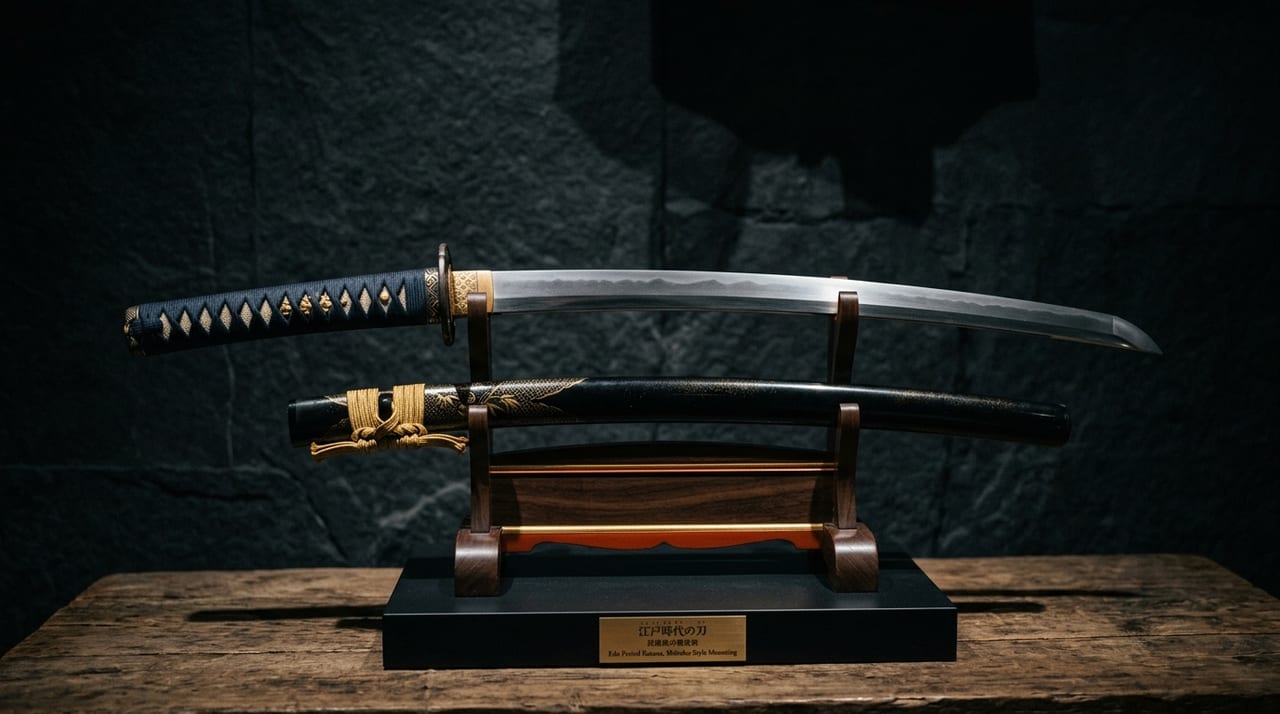 * Image is for illustrative purposes only.
Table of Contents
The Hōei-Shōtoku Period: What Kind of Era Was It?
The Hōei-Shōtoku period refers to approximately 12 years, beginning from the late reign of the fifth shogun Tokugawa Tsunayoshi (Hōei 1, 1704) and passing through the reigns of the sixth shogun Ienobu and seventh shogun Ietsugu, extending to Shōtoku 5 (1715). This era came immediately after the flourishing period of Genroku culture (1688–1703), and was also a turning point where society as a whole moved toward reflection on extravagance and the reconstruction of Confucian order.
In the world of swords as well, this period marks a distinct boundary. The aesthetic of "decorative swords" that had reached its peak during the Genroku period began to show signs of settling down, and the era became one in which the refinement of sword fittings and a return to the quality of the blade itself were being explored.
Changes in the World of Swordsmiths — Reorganization of the Goban-kaji
The transition from the fifth shogun Tsunayoshi to the sixth shogun Ienobu brought changes to the ranks of the shogunate's retained swordsmiths (goban-kaji). Many swordsmiths who had received patronage from the shogunate and daimyo families during Tsunayoshi's reign lost their backing with the change of their lords and were forced to operate as independent workshops.
Meanwhile, the sixth shogun Ienobu appointed the Confucian scholar Arai Hakuseki as a close advisor and promoted political reforms (the Shōtoku administration). Arai Hakuseki's Confucian emphasis on ritual propriety aligned with the direction of redefining the sword from a "symbol of martial prowess" to an "instrument of ritual propriety." The emphasis on refinement in sword fittings became one of the currents of this era.
Some swordsmiths who had lost their patronage left major consumer centers such as Edo and Osaka, seeking new patrons in provincial castle towns. Such movements are thought to have contributed to the spread of sword culture, which had been nurtured primarily in Edo and the Kamigata region, to the hands of provincial daimyo families and wealthy merchants.
Characteristics of Blade Forms — The Maturation and Subtle Changes of Shintō
Looking at blade morphology, swords of the Hōei-Shōtoku period show a gradual return from the thin, light "decoration-focused" style of the Genroku period toward more practical blade geometry. However, this change was gradual, and no conspicuous "new trend in swords" emerged; rather, this era should be evaluated in terms of the stable supply of high-quality shintō.
Hamon patterns were typically straight blades and gentle gunome, and a restrained style avoiding excessive flashiness was the mainstream. The jihada remained largely smooth, still under the influence of Osaka shintō, though some swordsmiths attempted to express itame influenced by the Yamashiro tradition.
Notable swordsmiths include the line of the second-generation Tsuda Echizen-no-kami Sukehiro, who succeeded the Osaka shintō master the first Soboro Sukehiro, as well as Settsu-no-kami Tadayuki and others. These swordsmiths all inherited the techniques of the previous generation's masters while establishing a solid style appropriate to the quieter spirit of the age.
Sword Fittings — Refinement of Metalworking and the "Shōtoku Mounting"
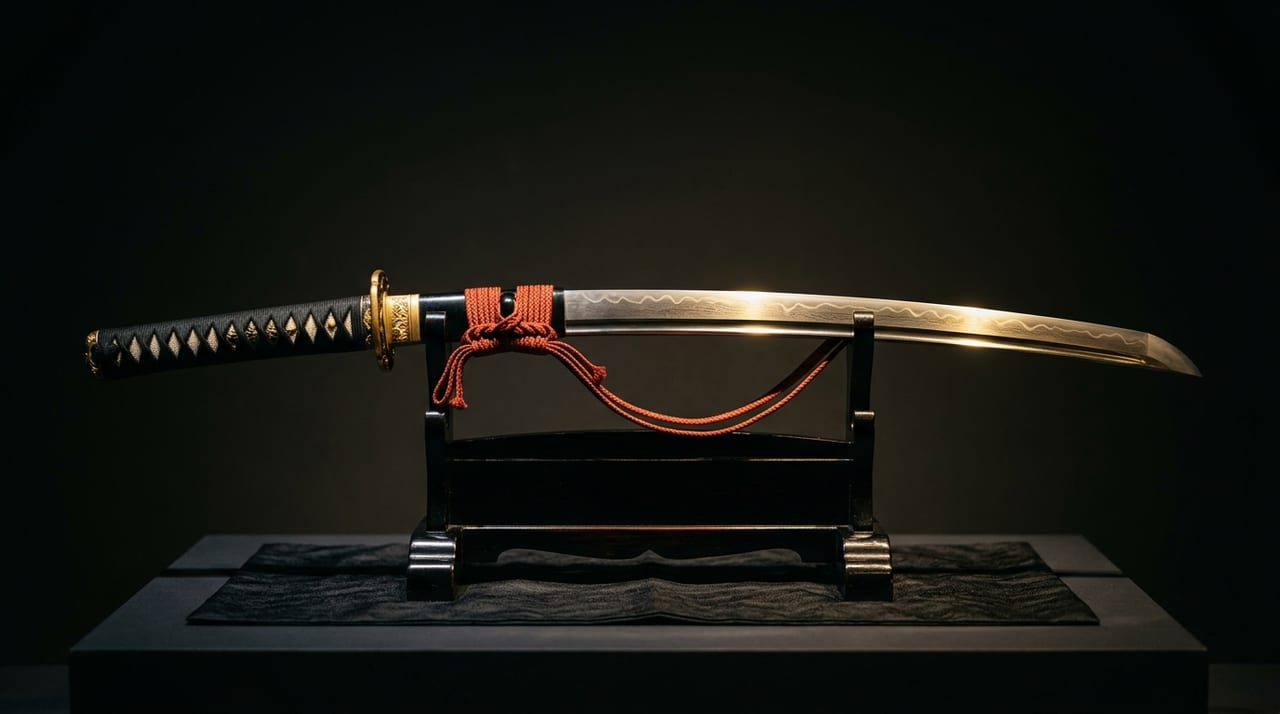
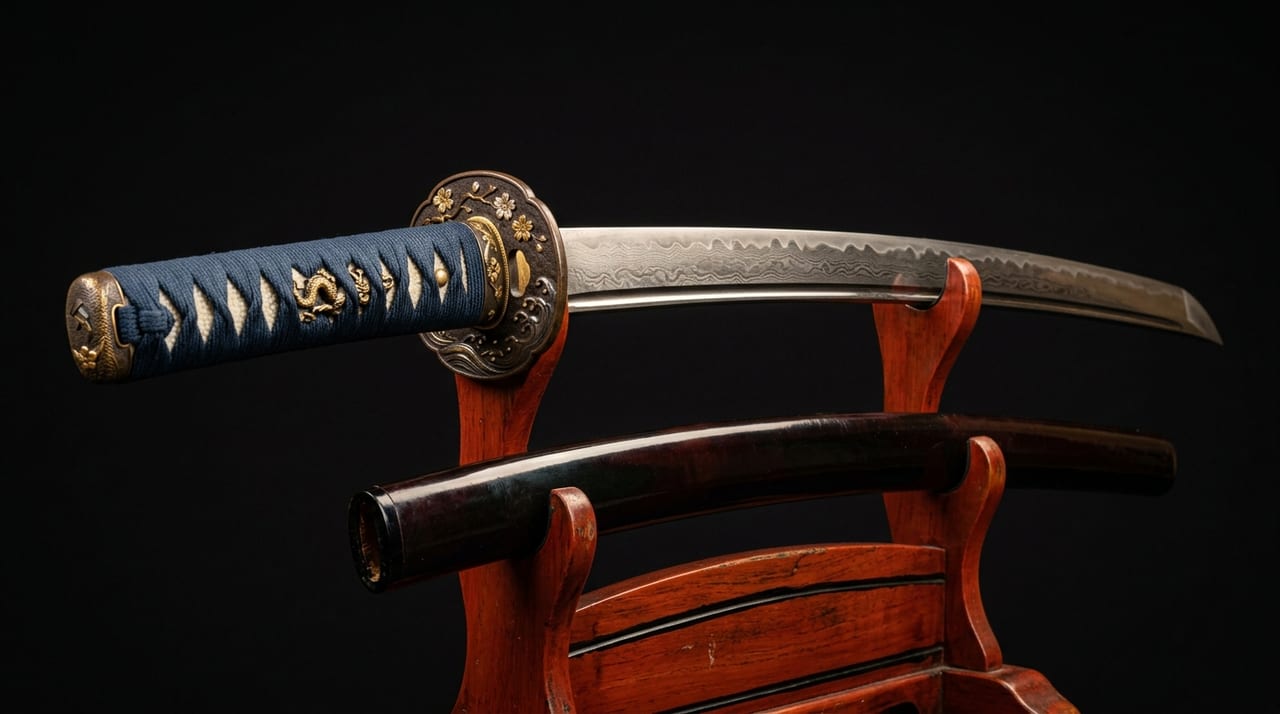
What most characterizes this era is the refinement of sword mounting (koshirae) craftsmanship. The style later called the "Shōtoku mounting" is characterized by fittings such as the pommel, ferrule, tsuba, and menuki adorned with exquisite carving, emphasizing overall coherence and refinement.
In terms of metalworking technique, complex carving methods combining single-blade cutting, hair-line engraving, and full-relief carving matured. In the tsuba, the subdued character of iron tsuba was complemented by the popularity of ornate designs in the style of kinko masters, inlaid with gold and silver. Technical knowledge leading to later metalworking masters such as Yokoya Sōmin can be seen to have accumulated and deepened during this era.
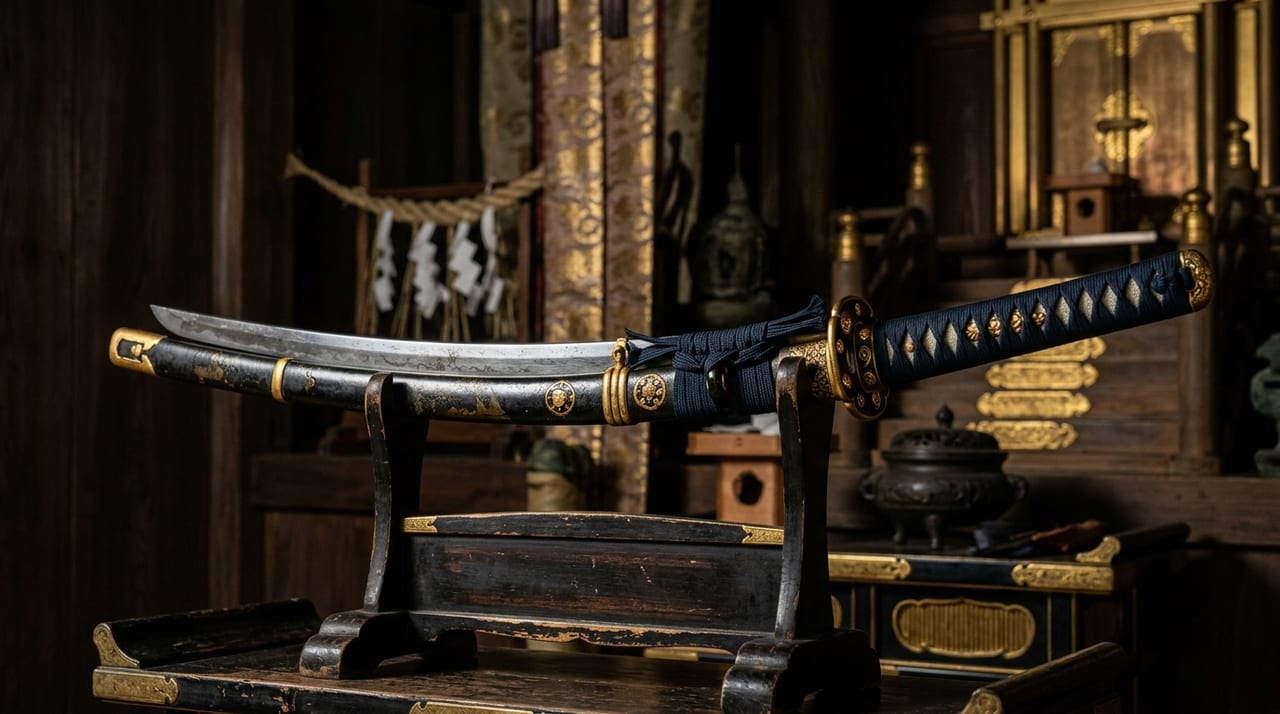
In saya lacquering as well, designs employing polish-out lacquer and maki-e became increasingly refined. Beyond the sword mountings commissioned by the shogunal house and high-ranking daimyo, such refined designs began to be applied to mountings of "semi-formal swords" ordered by wealthy merchant classes and hatamoto.
Such designs in metal fittings and lacquer served not merely as decoration, but also functioned as a means of expressing the status and taste of the warrior who wore the sword. Even with the same blade, the overall impression could change greatly depending on the mounting applied, so it is thought that warriors and merchants of the time paid considerable attention to the selection of the mounting as well as to the quality of the blade itself.
The Abolition of Tsunayoshi's "Edict on Compassion for Living Things" and Sword Culture
In Hōei 1 (1704), Tsunayoshi abolished his notorious "Edict on Compassion for Living Things" (more precisely, Ienobu completely abolished it in Hōei 6, 1709, after Tsunayoshi's death). This shift in policy brought about a social-psychological affirmation of "utility and martial prowess," creating conditions for renewed interest in swords, including among the merchant class.
Furthermore, financial crisis continued in Tsunayoshi's late years, and there was a rise in cases of warriors selling or converting swords to cash to maintain their standard of living. Sword merchants established market functions firmly during this era, and the circulation of old swords and celebrated blades became more active. The maturation of this "used-sword distribution market" directly led to the development of later connoisseurship and sword-collecting culture.
What the Shōtoku Administration Left in the World of Swords
Arai Hakuseki's political reforms had an impact on sword culture in terms of the establishment of ritual propriety in samurai society. Hakuseki revised the reception rituals for Korean official envoys, replacing the former title "Nihon-koku Taikun" (Grand Lord of Japan) with "Nihon-koku Ō" (King of Japan) (Shōtoku 1, 1711). He deemed "Taikun" to be of inferior rank, and had the intention of elevating diplomatic standing. Such efforts to strengthen ritual propriety were also reflected in the demand for refinement in sword mountings worn by daimyo in official contexts.
The Hōei-Shōtoku period was an era in which sword culture was organized along the axis of refinement over flashiness and propriety over mere decoration. As an intermediate period moving from the flourishing Genroku era to the frugality of the Kyōho period, the swords of this age, while modest, possessed technically mature characteristics, and are often evaluated by later collectors as "plain but of high quality."
Points to Keep in Mind When Appreciating or Collecting Swords of This Era
When actually handling swords of the Hōei-Shōtoku period or considering their purchase, the following perspectives can deepen understanding.
- Cross-checking with Certificates of Authenticity: Certificates of authenticity issued by organizations such as the Japanese Art Sword Preservation Association (NBTHK) contain information on the swordsmith's name and views on the era. One should develop the habit of verifying this against the actual blade's signature and proportions.
- Condition of the Nakago: The depth of carving in the signature and the color of rust can serve as clues for gauging the age and storage environment.
- Provenance of Blade and Mounting: Whether the blade and mounting have been transmitted together as a matched pair from the outset, or whether they were combined later, may affect their positioning in terms of appreciation.
- Direct Observation of Jihada and Hamon: When possible, holding the actual sword up to light and confirming the jihada skin pattern and hamon activity with one's own eyes leads to an understanding difficult to obtain from photographs and documents alone.
While these perspectives are fundamental to appreciating or collecting swords of any era, not only the Hōei-Shōtoku period, they become particularly effective guides when examining swords of this era, in which the balance between decoration and utility was reconsidered.