Kiku-ichimonji (kikuichimonji) — The Pinnacle of Retired Emperor Go-Toba and the Bizen Ichimonji School: The Finest Work of the Early Kamakura Period as Told by the Chrysanthemum-Inscribed Tachi
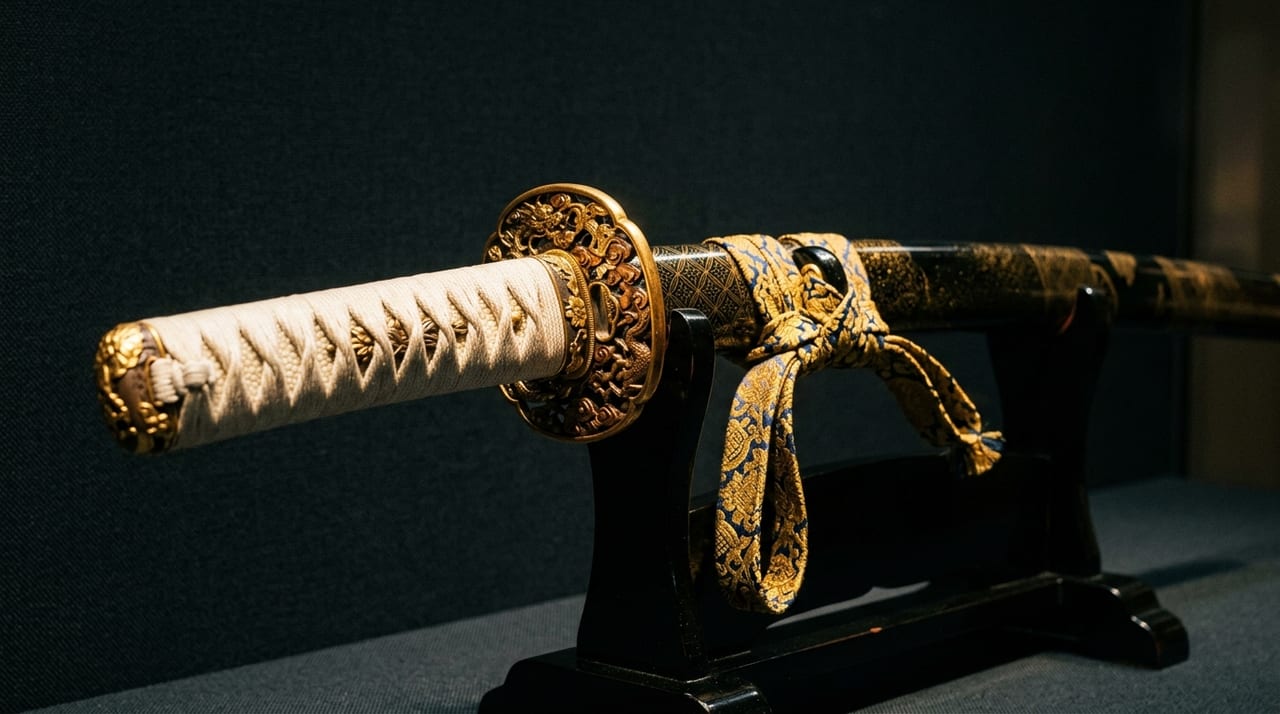 * Image is for illustrative purposes only.
Table of Contents
What is Kiku-ichimonji? — The Origin of the Name and Historical Background
"Kiku-ichimonji" is a term for tachi made at the palace of Retired Emperor Go-Toba (1180–1239) during the early Kamakura period. Retired Emperor Go-Toba had a deep love of swords and summoned skilled tōkō from across the country, establishing the go-ban kaji system. The name "Kiku-ichimonji" arose because the Retired Emperor had the chrysanthemum crest (kiku-mon) engraved on swords made by the Ichimonji school tōkō — from Bizen Province (present-day Okayama Prefecture) — who were selected for this go-ban kaji system.
The kiku-mon is the family crest of the imperial household and is not permitted for general use. The fact that Retired Emperor Go-Toba had the kiku-mon engraved on swords he personally treasured means that he officially recognized them as works of the highest standard in both quality and artistry. Kiku-ichimonji swords remain highly regarded today as representing the pinnacle of early Kamakura sword art.
The Formation of the Ichimonji School and the Go-ban Kaji
The Ichimonji school was a group of tōkō that flourished in Bizen Province, called "Ichimonji" (one character) from their custom of engraving the character "一" (ichi) as their mei. Representative tōkō include Norimune, Sukemune, and Shigemune; these tōkō served at the palace on a monthly rotating basis as go-ban kaji for Retired Emperor Go-Toba, and it is said that the Retired Emperor himself sometimes wielded the hammer.
Retired Emperor Go-Toba's passion for swords was extraordinary, and there is an account that even after he was exiled to Oki following his defeat in the Jōkyū War (1221), he continued to secretly forge swords on the island. This passion of the Retired Emperor is thought to have motivated the go-ban kaji to demonstrate their finest skills.
The Blade Form of Kiku-ichimonji — The Pinnacle of Early Kamakura
The tachi of Kiku-ichimonji possess the typical form of the early Kamakura period while presenting a more fully realized version of that form. The main characteristics are as follows.
- Sugata (overall shape): The form is that of a long early-Kamakura tachi; the sori is based on koshi-zori, and the overall impression is one of dignified elegance. The nagasa is in most cases around 2 shaku 5 sun (approximately 76 cm), and the blades also possess a practicality suited to the mounted combat of the time.
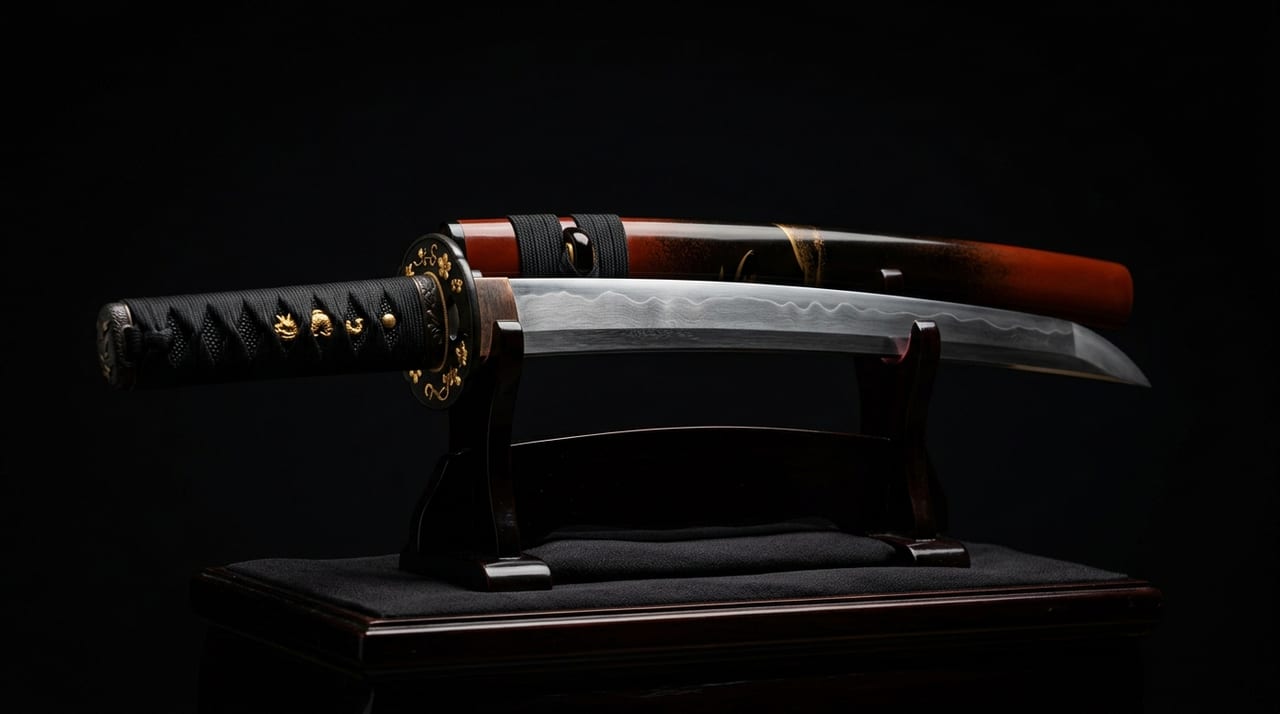
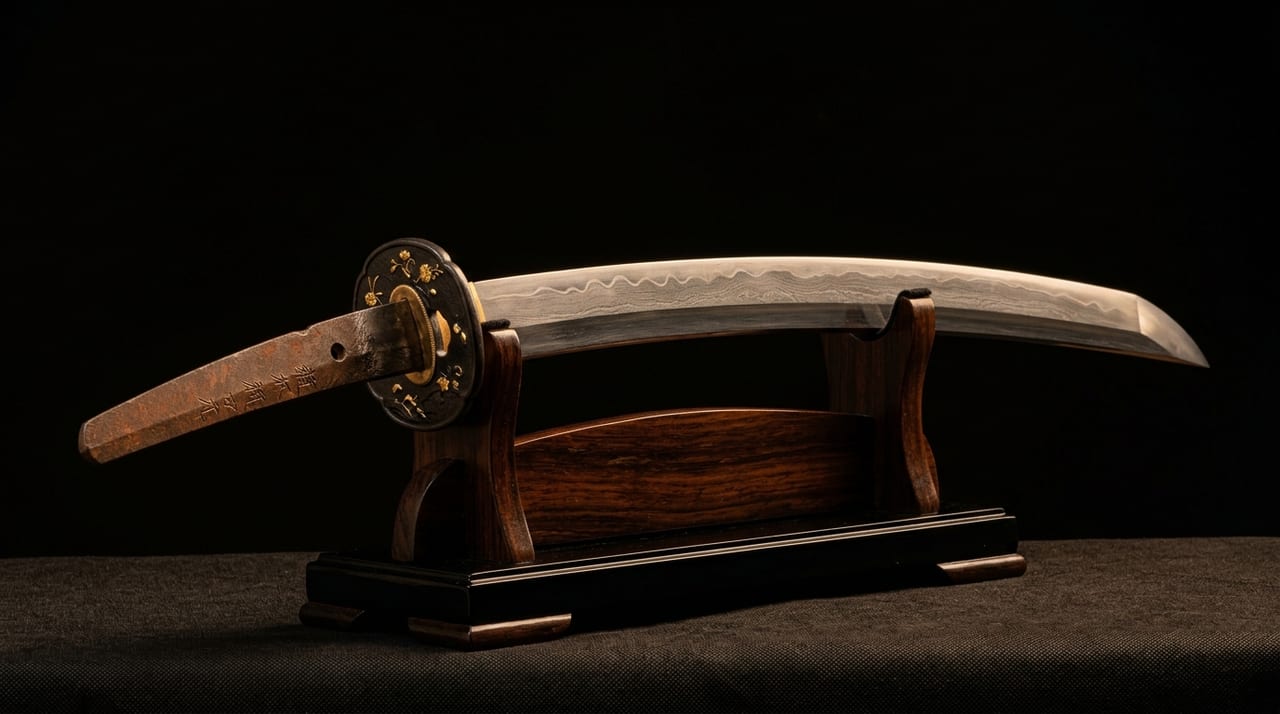
- Jigane (steel of the blade surface): The ko-itame texture is tightly packed, imparting a vibrant quality and rich luster to the whole. The ideal jigane of Kiku-ichimonji is considered to be one that conveys a clean impression without the grain standing out. In well-forged jigane, white shining granules (ji-nie) gleam across the entire surface, and deep ji-kei appear.
- Hamon (temper line): The chōji hamon is representative; rounded, full chōji are arranged in regular rows, interspersed with ko-chōji and a slight tendency toward pointed forms, creating a beautifully varied composition. Fine kinsuji and sunagashi run along the edge of the hamon, giving the whole a splendid appearance.
- Bōshi (temper line in the point): The typical bōshi is roundly swept (a full, rounded hamon in the kissaki), with a short turnback and an air of refinement.
Surviving Representative Works and Museum Holdings
The best-known surviving work of Kiku-ichimonji is the "Tachi, mei: Norimune" held at Hie Shrine (Akasaka), Tokyo. This tachi is designated as a kokuhō (National Treasure) and, while it does not bear the engraved kiku-mon, it is known as a masterpiece embodying the typical beauty of Kiku-ichimonji.
The "Tachi, mei: Sukemune" held at the Tokyo National Museum is also a representative work of the Ichimonji school, preserving to this day the jigane and hamon of the highest standard of that era.
Kiku-ichimonji with the kiku-mon actually engraved survive in extremely small numbers. Most of those currently confirmed are held at the Okayama Prefectural Museum or in private collections, with limited opportunities for public viewing.
How to Identify Them in Appraisal — Key Points for Distinguishing the Ichimonji School
The following points are important for distinguishing Ichimonji school swords from those of other Bizen-based tōkō (such as the Osafune school).
- Density of the jigane: The jigane of the Ichimonji school is particularly fine and uniform, showing a "tightly packed" quality. Whereas the Osafune school (Norimitsu, Mitsutada, etc.) often shows a flowing itame, the Ichimonji school gives a strong impression of finely packed ko-itame.
- Form of the chōji hamon: The chōji of the Ichimonji school is characterized by "rounded chōji" with a head that swells roundly, distinguishable from "pointed chōji" with a tapering head. It is clearly distinct from the pointed chōji seen in later Osafune school smiths such as Nagamitsu and Sanenaga.
- Kinsuji and sunagashi along the edge: The hamon of the Ichimonji school often features shining lines called kinsuji running along the edge, which give the entire hamon a sense of dynamic energy.
- Style of the mei: The mei "一" of the Ichimonji school is engraved in a fine, elegant regular script, and on higher-ranking works the kiku-mon is added. The kiku-mon that Retired Emperor Go-Toba had engraved is the 16-petal imperial chrysanthemum crest.
The Contemporary Value and Collecting of Kiku-ichimonji
Kiku-ichimonji is extremely rare on the market, and it is almost unheard of for a work definitively authenticated as Kiku-ichimonji to come up for sale. If a genuine work were to be offered, a kanteisho (appraisal certificate) of NBTHK Tokubetsu Jūyō Tōken or higher would be essential, and the price would frequently run into the several tens of millions of yen.
For sword collectors, Kiku-ichimonji is one of the "ultimate goals," and few are fortunate enough to actually acquire one. However, experiencing the beauty of Kiku-ichimonji through museum visits is one of the finest experiences in nihontō appreciation. The skills of the Bizen Ichimonji school, which flourished under the patronage of the artist-sovereign Retired Emperor Go-Toba, can be said to find their ultimate expression in the name Kiku-ichimonji.