A Morphological History of the Ken (Tsurugi): The Lineage of Double-Edged Straight Blades from Yayoi Bronze Swords to the Nara Chokutō and Warabite-tō
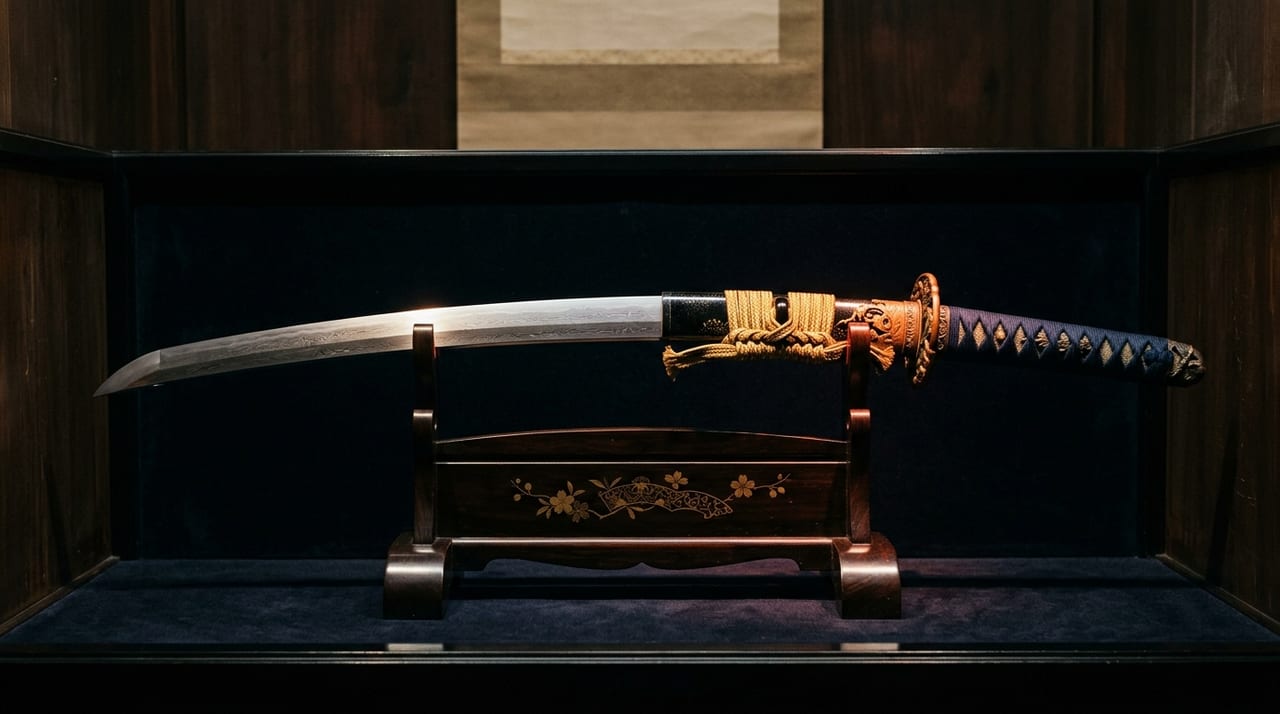 * Image is for illustrative purposes only.
Table of Contents
What Is the Ken? — The Fundamental Difference from the Tachi and Katana
In modern Japanese, it is not uncommon to conflate "ken" (tsurugi) and "katana," but in the history of swords these two terms are strictly distinguished. "Ken" refers to a double-edged straight blade, while "katana" is single-edged and possesses sori (curvature). This difference in form reflects differences in manufacturing technique, function, and historical context.
The history of the ken in Japan begins with continental influences that brought bronze culture. In the Yayoi period (3rd century BCE–3rd century CE), bronze swords brought from China and the Korean Peninsula were used in ritual settings, after which iron straight blades spread as practical weapons.
Ken of the Yayoi and Kofun Periods — From Bronze to Iron
The bronze swords that reached the Japanese archipelago during the Yayoi period were used primarily in funerary and ritual contexts. Bronze swords have been excavated as grave goods from Yayoi burial mounds in northern Kyushu (including the Yoshinogari site), and it is believed that their primary role was as a "symbol of power and sanctity" rather than as weapons.
Entering the Kofun period (3rd–7th centuries), iron straight blades — sokantō-tachi, kondōsō-tachi, and others — became the dominant grave goods as ironworking technology spread. The sokantō-tachi is a straight blade fitted with a ring-shaped ornament on the pommel (tsuka-gashira), inheriting a continental form while incorporating distinctly Japanese decoration. The Tokyo National Museum and the Nara National Museum hold numerous magnificent kondōsō straight blades from the Kofun period, conveying to this day the political message that the ruling power of that era invested in swords.
The Nara and Heian Periods — From the Karayō Chokutō to the Warabite-tō
In the Nara period (8th century), as the ritsuryō state organized its military system, double-edged straight blades modeled on the Tang Chinese style (karayō-tachi) were adopted as the principal weapons of the imperial army. The Shōsōin holds multiple straight blades from the Nara period, making them precious evidence of the cultural exchange with the continent.
In the early Heian period (around the 9th century), through combat with the Ezo who inhabited the Tōhoku and Hokkaidō regions, the warabite-tō — a blade with a distinctive sori — attracted attention. The warabite-tō has a pommel (tsuka-gashira) curved in the shape of a young fern shoot (warabite), and it is thought that its sori developed for ease of use in mounted combat. Many researchers see the warabite-tō as representing a stage in the transition to the later tachi — single-edged blades with sori.
The Kusanagi-no-Tsurugi — The "Ken" among the Three Sacred Treasures
One cannot speak of the Japanese ken without addressing the Kusanagi-no-Tsurugi (also known as the Ama-no-Murakumo-no-Tsurugi), one of the Imperial Family's Three Sacred Treasures.
According to Kiki mythology, the Kusanagi-no-Tsurugi is said to have been transmitted as follows.
- When Susanoo defeated Yamata-no-Orochi, the Kusanagi-no-Tsurugi emerged from within its body
- It was presented to Amaterasu-Ōmikami
- It was passed to Ninigi as one of the Three Sacred Treasures
- It was moved to Ise Jingū during the reign of Emperor Sujin
- It was bestowed upon Yamato Takeru through Yamatohime-no-Mikoto
Today, the Kusanagi-no-Tsurugi is enshrined as the shintai of Atsuta Shrine in Aichi Prefecture, and members of the general public are in principle not permitted to view the object itself.
There are various theories about the true nature of the Kusanagi-no-Tsurugi; the predominant view holds that it is an iron straight blade, but its religious and political significance as a "divine sword" has long been valued more highly than the physical object itself. The Three Sacred Treasures, including the Kusanagi-no-Tsurugi, are used in the important ceremonies of imperial enthronement to this day as symbols of imperial legitimacy.
Medieval Ceremonial Ken — Kenji and the Etiquette of the Warrior Class
Even in medieval warrior society, the "ken" played an important role not as a practical weapon but as a symbol of ritual authority. The term "kenji" refers to the symbols of imperial succession comprising the sword and the imperial seal, but the ceremonial bestowing and receiving of swords also took place among shogunal and daimyo houses.
In the Muromachi and Sengoku periods, a two-tier structure of "ceremonial tachi" and "practical uchigatana" became established, and the "ken" (double-edged straight blade) survived principally as votive swords dedicated to shrines and as ritual implements of shrine priests. Most of the hōnō-ken dedicated to shrines follow the double-edged straight-blade form, preserving the ancient form of the "ken" within the world of religious faith.
The Modern "Ken" — Bokkun in Kendo and Replica Swords
The shinai and bokkun used in modern kendo are etymologically in the lineage of the "ken." The shinai used in kendo matches is based on the form of a long straight blade (without sori), and spiritually inherits the form of the ancient "straight-blade ken" predating the tachi and uchigatana.
Furthermore, "ken" made as shrine implements and sacred objects continue to be produced today by metalworkers and tōkō (swordsmiths). The production of hōnō-ken demands a high level of skill from tōkō due to the difficulty of forging a double-edged blade, and they are traded at prices ranging from hundreds of thousands to several million yen.
Conclusion — The World Before the Nihontō, as Told by the Ken
The history of the ken (tsurugi) continues unbroken from the Yayoi period, when metalworking culture first reached the Japanese archipelago, to the present day. As a practical weapon, as a symbol of authority, and as an offering to the gods, it has lived on in Japanese culture, transforming its appearance from age to age. Knowing the "age of straight blades" that preceded the world of the curved tachi and uchigatana is an indispensable perspective for viewing Japanese sword culture from the vantage point of the continent and antiquity.