The Techniques of the Togishi and the Lineage of the Honami Family — The World of Shitaji Togi, Kesho Togi, and the Appraiser's Eye
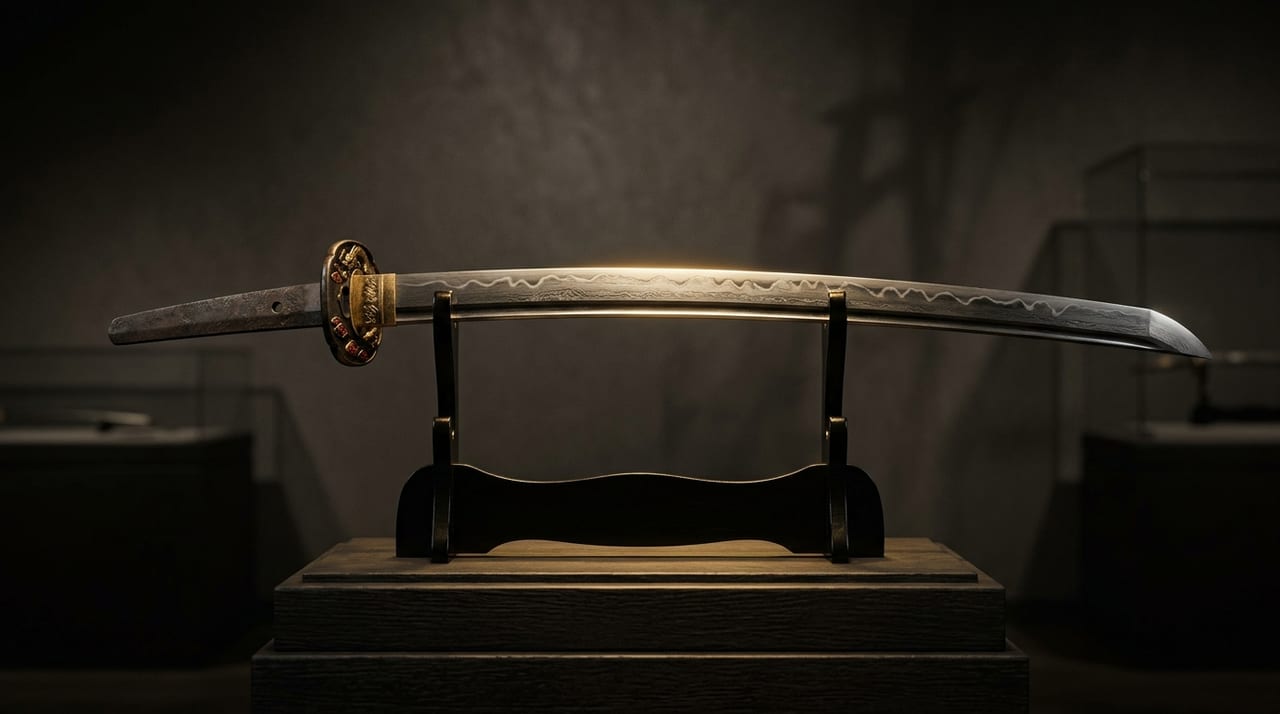 * Image is for illustrative purposes only.
Table of Contents
The Togishi as Craftsman — One Who Hears the "Voice" of the Sword
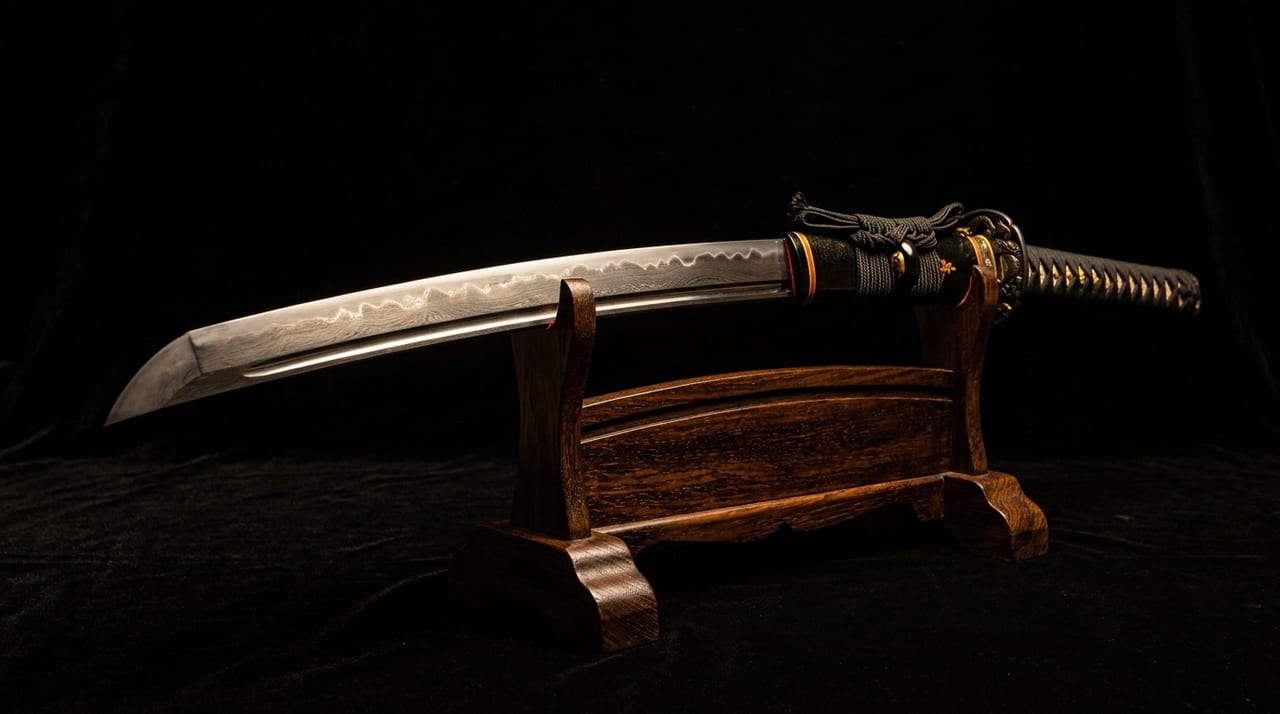
The most direct beauty in appreciating a Japanese sword — the utsuri of the jigane, the scenery of the hamon, the sharpness of the kissaki — does not arise from the tōkō's forging alone. Only through the work of the togishi (polisher), who "brings out" the sword that the tōkō has forged, does the sword's true form reveal itself.
The relationship between the tōkō and the togishi is sometimes compared to that of a musician and a sound engineer. If the tōkō "creates the music," the togishi is the craftsman who "plays back" that music in its finest form. No matter how excellent a sword, if the togi is poor its beauty will not come through. Conversely, a skilled togishi can restore the original brilliance of an "aged masterpiece sword," and greatly influences a sword's value.
The Honami Family — A Renowned House of Polishing and Appraisal since the Muromachi Period
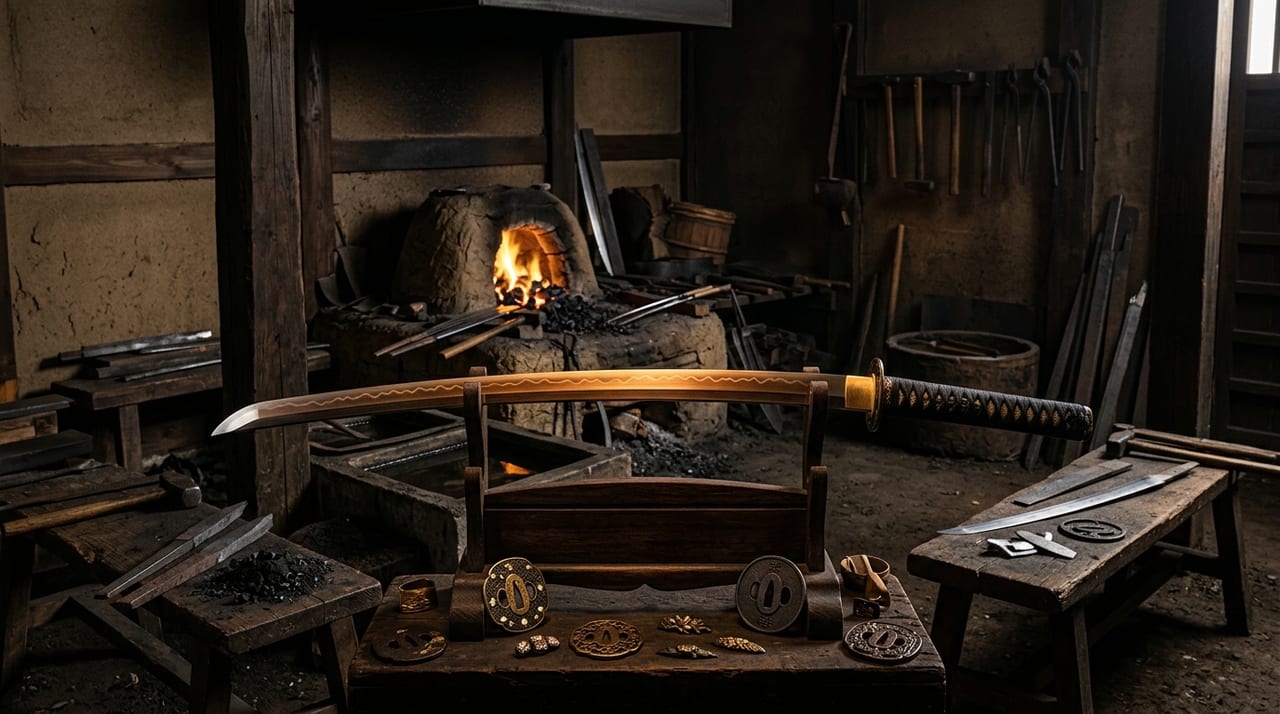
The most important lineage in the history of Japanese sword polishing is the Honami family. The Honami family, which has continued since the Muromachi period, served successive generations of the Ashikaga shogunal house, Toyotomi Hideyoshi, and the Tokugawa shogunal house, and was known as a prestigious house entrusted with "sword service" — polishing, appraising, and issuing origami (certificates of authenticity and quality).
Honami Kōetsu (1558–1637) was a particularly distinguished figure within the family, possessing exceptional aesthetic sensibility not only in sword polishing but also in calligraphy, ceramics, and lacquerwork, and is still highly regarded today as a complete artist representative of Kan'ei culture.
The origami issued by the Honami family were documents equivalent to a kanteisho (appraisal certificate) and certificate of guarantee in modern terms, evaluating the value of a single sword in terms of "how many pieces of gold." The existence of these origami became an important indicator determining the market price of Japanese swords, and the authority of the Honami family was immense throughout the Edo period. After the Meiji era, this role shifted to the appraisal review of NBTHK, but the traditional methods of the Honami family have been passed down to modern togishi and appraisers.
The Polishing Process — From Shitaji Togi to Kesho Togi
The togi of a sword is not simple "polishing" but a precise technical system comprising multiple stages. It divides broadly into "shitaji togi (foundation polishing)" and "shiage togi/kesho togi (finishing/cosmetic polishing)."
Shitaji togi begins with coarse whetstone (arato) and progresses gradually to finer whetstones, straightening the shape and sori of the blade and removing oxidation, scratches, and rust from the forging process. The whetstones used become progressively finer through "arato → nakatogi → hosoto," and at each stage the scratches from the previous whetstone are removed. In shitaji togi the "skeleton" of the sword — the shinogi-suji, hamachi, and the shape of the kissaki — is established, and the beauty of the sword's overall form is determined.
As of 2026, the depletion of natural whetstone production has grown even more serious, and the use of synthetic whetstones is spreading in workshops. The supply of natural uchigumori whetstone from Kameoka, Kyoto is thinning year by year, and brands that are difficult to obtain are increasing, so some togishi are incorporating high-precision synthetic whetstones into the intermediate stages of shitaji togi. However, in the final stages of kesho togi the subtle unevenness of the abrasive particles in natural whetstones is said to draw out the jihada scenery, and synthetic whetstones have not yet reached the point of full substitution.
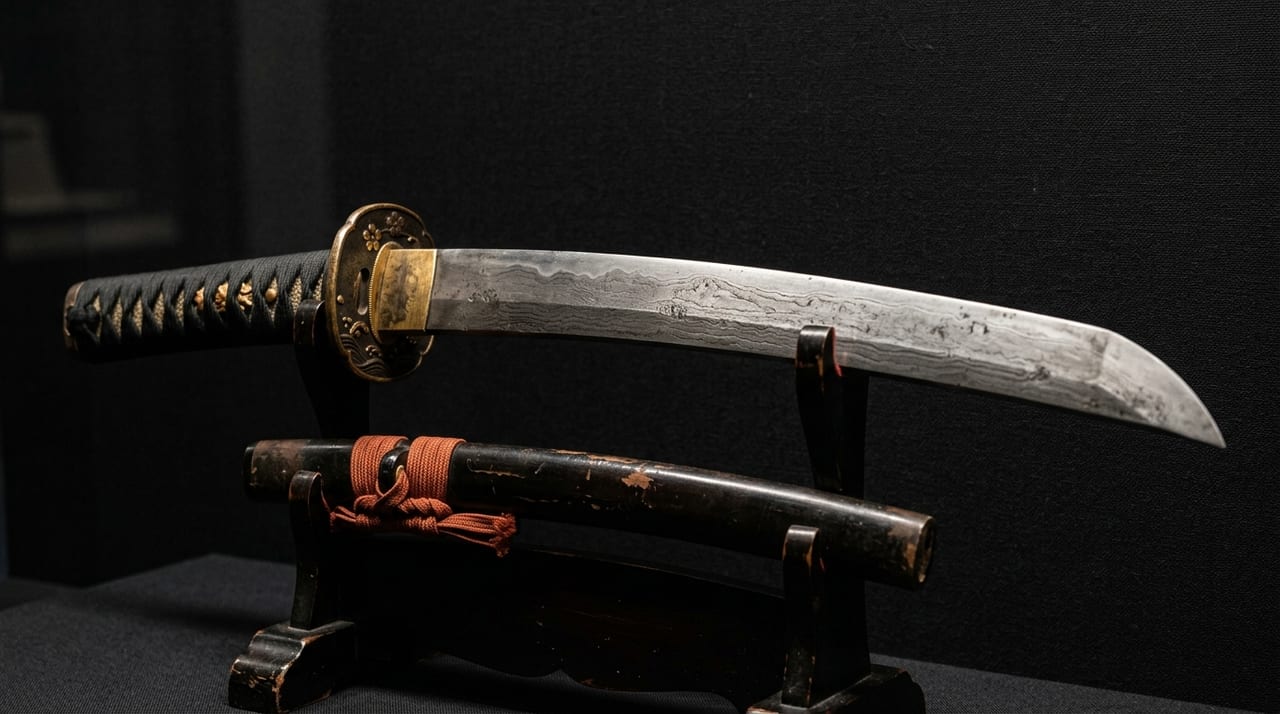
Shiage togi/kesho togi uses tools such as hazuya and jizuya — thin pieces of paper to which uchigumori whetstone is attached — to bring out the utsuri of the jigane, the grain of the jihada, and the scenery of the hamon. Note that uchigumori whetstone is used in the final stage of shitaji togi, and in the finishing stage it is used in processed form as hazuya and jizuya. At this stage the extremely delicate work called "hatori" is performed — a technique in which whetstone is drawn across the blade with the fingertips to accentuate the outline of the hamon — and this is the part where individual differences among togishi show most clearly.
Through the repeated wiping and polishing work called "nugui" in kesho togi, minute scenic effects such as the "chikei" in the jigane and the kinsuji and sunagashi in the hamon emerge. It is said that a first-rate togishi can read all the fine characteristics needed for appraisal at this stage of kesho togi.
Togi and the Appraiser's Eye — The Togishi as "One Who Knows the Sword Most Deeply"
In the world of Japanese sword appraisal it is said that "the togishi knows the sword most deeply." The tōkō makes the sword, but changes after it is made — deterioration over time, reduction through polishing, the condition of the forge welds — are best understood by the togishi. Through the process of polishing the blade repeatedly, the condition of the forge welds, the quality of the iron, and the depth of the yaki-ire are conveyed to the togishi's hands via the way the whetstone meets the blade.
For this reason, many of the appraisal examiners of NBTHK are from a togishi background, and "experience in togi is considered the best method for developing the appraiser's eye." Conversely, there is also the risk that a togishi without appraisal knowledge will make mistakes such as "over-polishing" or "altering the form," and the skills and knowledge of the togishi are two sides of the same coin.
The Modern Togishi — The Successor Problem and International Expansion
The greatest challenge facing modern togishi is the successor problem. It is said that at least 7 to 10 years of apprenticeship is required to become a fully capable togishi, and income during that period is extremely low. With demand for swords itself contracting, the number of togishi able to accept apprentices is also limited.
On the other hand, togi commissions from overseas Japanese sword collectors continue to increase, and cases have emerged of wealthy collectors from Europe, America, and Asia traveling to Japan in search of skilled togishi. Some togishi have created English-language social media accounts and video channels, disseminating togi techniques overseas and cultivating new international demand.
Documentary videos introducing the work of togishi have been viewed millions of times on social media, and general public interest in "sword polishing" as a profession is growing. Institutional support to translate this interest into the development of professional successors has become an urgent need for the entire industry.
The number of active togishi nationwide is estimated at around 50, and waiting times of 1 to 3 years for commissions to first-rate togishi have become the norm. In response to this supply-demand tightness, the industry has developed a qualification certification system, which evaluates togishi roughly in three stages: "passing the togishi certification examination" → "certified excellent togishi" → "specially important certified togishi." The higher the stage attained, the broader the class of swords that can be accepted for commission (Jūyō Tōken, jūyō bunkazai designated items, and so on).
A Guide to Polishing Costs
Polishing costs vary greatly depending on the condition and dimensions of the sword and the standing of the togishi commissioned.
| Commission Rank | Estimated Cost | Primary Subjects |
|---|---|---|
| General maintenance togi | 50,000–150,000 yen | Iai swords, practice swords, light rust removal |
| Full art togi | 150,000–300,000 yen | Swords for appreciation, pre-Hozon Tōken review |
| Jūyō Tōken / masterpiece class | 300,000–1,000,000+ yen | Jūyō Tōken, jūyō bunkazai designated items, overseas collector commissions |
The majority of the cost is the togishi's labor, and since the number of stages, the cost of whetstones, and the precision of the finishing all accumulate, it is important to understand that an inexpensive "re-polish" and a full art togi are entirely different things.
Conclusion — No Masterpiece Sword Without the Togishi
If the tōkō's forging technique "creates the soul of the sword," the togishi's polishing technique is the practice that "brings that soul into the world." From the historical authority of the Honami family lineage to responding to modern international demand, the world of the togishi as craftsman continues to support the heart of Japanese sword culture while constantly changing. When a single sword appears beautiful to the eye of its viewer, within it dwells the many hundreds of hours of silent labor of the togishi.