The Taika Reform (645) and Swords — The Emergence of Sword Regulations and Weapons Management during the Formation of the Ritsuryō State
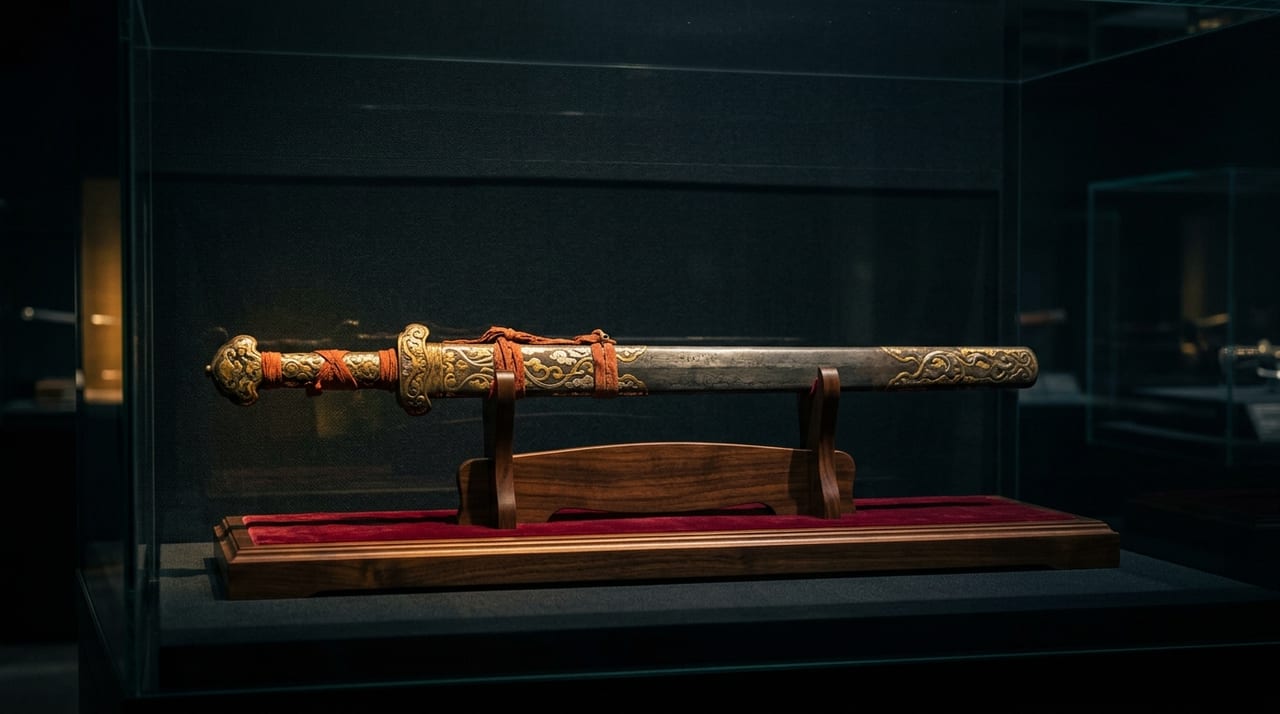 * Image is for illustrative purposes only.
Table of Contents
The Taika Reform and the Embryonic Steps toward "State Control of Weapons"
In 645, the "Taika Reform," which began with the assassination of Soga no Iruka by Prince Naka no Ōe and Nakatomi no Kamatari, was a turning point that fundamentally transformed Japan's political structure. This reform sought to establish a state governance system centered on the emperor over land and people through the introduction of the ritsuryō system. And in this process, the issue of "managing weapons and swords" came to be institutionally recognized for the first time.
In the clan society before the reform, each clan possessed its own armed forces, and swords were also tribal possessions. The Taika Reform aimed to concentrate this dispersed military power in the emperor and the court. This is the beginning of a history in which swords would be redefined as symbols of state power.
Sword Regulations under the Ritsuryō System — The Establishment of the "Heiki no Kin"
Within the ritsuryō system established after the Taika Reform, the first full-scale laws concerning swords appeared. The Taihō Code of 701 and the Yōrō Code of 757 contained weapons-carrying restrictions known as the "Heiki no Kin" (prohibition of weapons).
The Yōrō Code in principle prohibited ordinary citizens from carrying swords and bows and arrows within the capital (Kyōshi). However, nobles of the fifth rank and above, and warriors of the Efu (palace guards) were exempt from this rule. This regulation reflected the fundamental policy of the ritsuryō state: to concentrate military force in the military apparatus directly under the emperor and to suppress the private military power of powerful clans.
Meanwhile, fighting against the Emishi and Hayato continued in frontier regions (especially Tōhoku and Kyushu), and the military relationship between local powerful clans and the court was complex. The management and distribution of swords remained a delicate issue reflecting the political tension between the center and the regions.
The Reality of Swords in the Asuka and Nara Periods — From Chokutō to Tachi
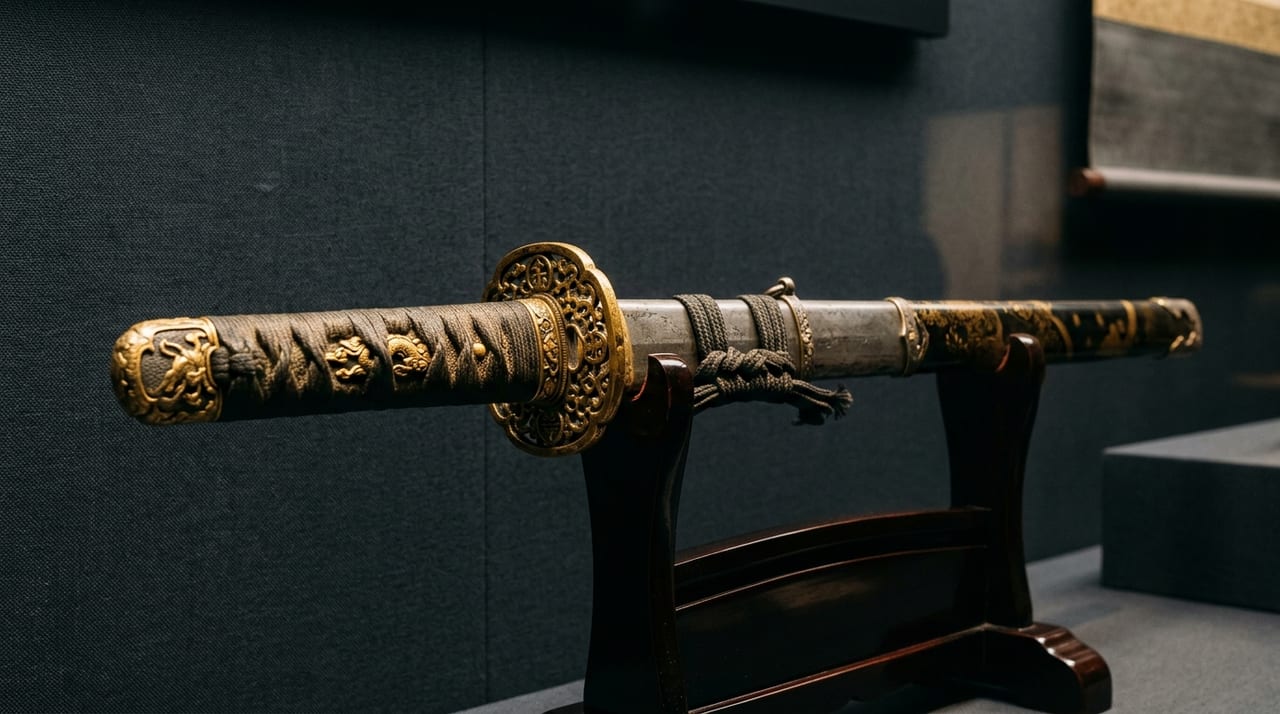
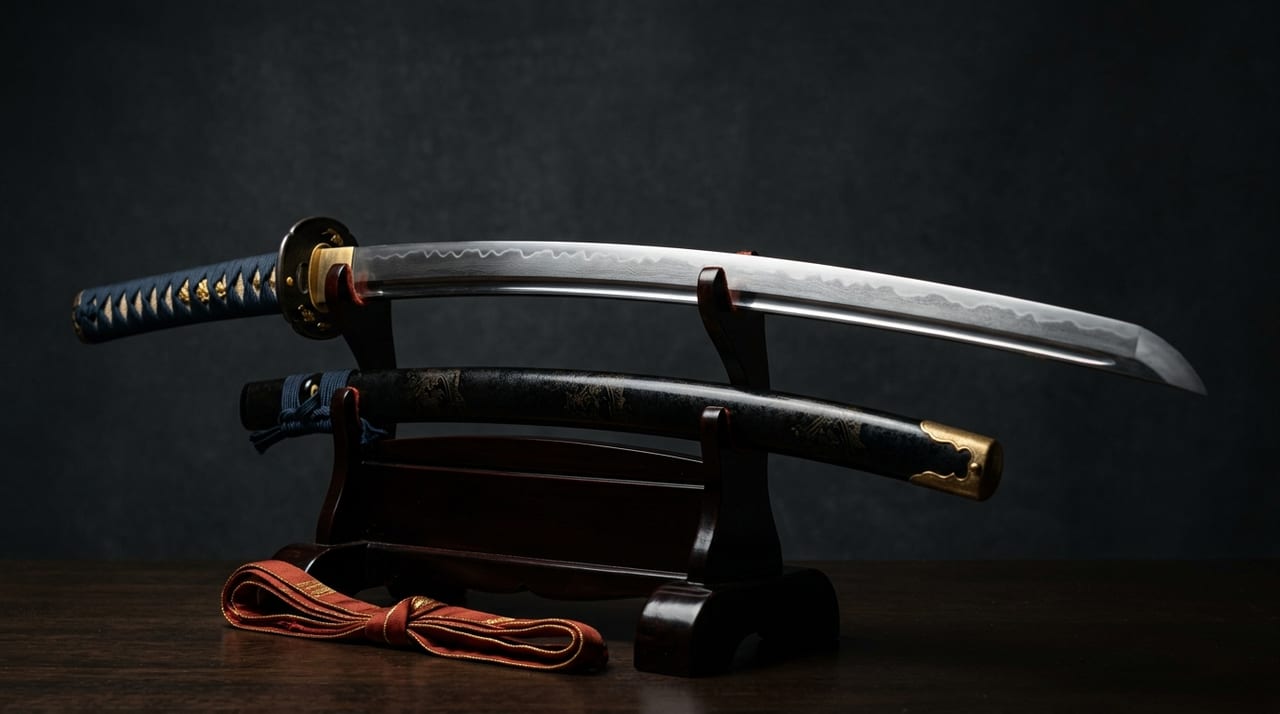
The dominant type of sword in this era was the "chokutō" (straight sword). The curved tachi that we today associate with the word "Japanese sword" did not yet exist. Swords of the Asuka and Nara periods were double-edged or single-edged chokutō strongly influenced by the sword cultures of China and Korea, combining decorative and practical qualities.
Shōsōin (Nara) houses several swords associated with Emperor Shōmu, providing valuable materials for understanding the reality of swords from this era. The swords preserved in Shōsōin, typified by the kin-gin-sō tachi (gold and silver-mounted tachi), are lavishly decorated chokutō with gold and silver metalwork, with a character more suited to ceremonial use and display of status than to actual combat. Many have a nagasa of around 60 to 90 cm, with intricate gold metalwork decoration on the tsuka and saya.
Emperor Tenmu's Military Reforms and the Position of Swords
About forty years after the Taika Reform, the Jinshin no Ran of 672 was an event that more directly illustrated the relationship between swords and political power. This civil conflict, in which Prince Ōama (later Emperor Tenmu) overthrew the Ōmi court, was decided by the mobilization of armed powerful clan forces.
After ascending to the throne, Emperor Tenmu began compiling the Asuka Kiyomihara Code in 681–682, and in 683 issued an edict declaring "from this day forth, always carry a sword." This made it obligatory for senior warriors and officials to carry swords at all times, and became a forerunner of the ritsuryō warrior's concept of "proving one's status by bearing a sword."
Meanwhile, during the same period, the Tenmu court also advanced state control over tōshō (swordsmiths). It placed weapons workshops (Heikishi) directly under the court, establishing a system of state-managed sword production. This became the embryo of the later "ritsuryō tōkō" system.
The Emishi Campaigns and the Supply of Swords to the Regions
The ritsuryō state's northern policy — campaigns against the Emishi — generated enormous demand for swords. The advance into Mutsu and Dewa in the 8th century was connected to the practical matter of supplying soldiers with swords, as Ōtomo no Yakamochi sang in the "Sakimori no Uta."
As fighting in Tōhoku continued — including the Emishi Great Uprising of 709 (the rebellion of the Mutsu Emishi), the establishment of Tagajō in 724, and the Hōki Rebellion of 780 (large-scale Emishi uprising) — the court was compelled to systematically stockpile and transport weapons. Ancient records such as the "Shōzeichō" record the quantities of swords stockpiled in each province (kokufu), giving us a glimpse into the reality of weapons management in the ritsuryō era.
Swords and the Ritsuryō Status System — The Status Signified by Carrying a Sword
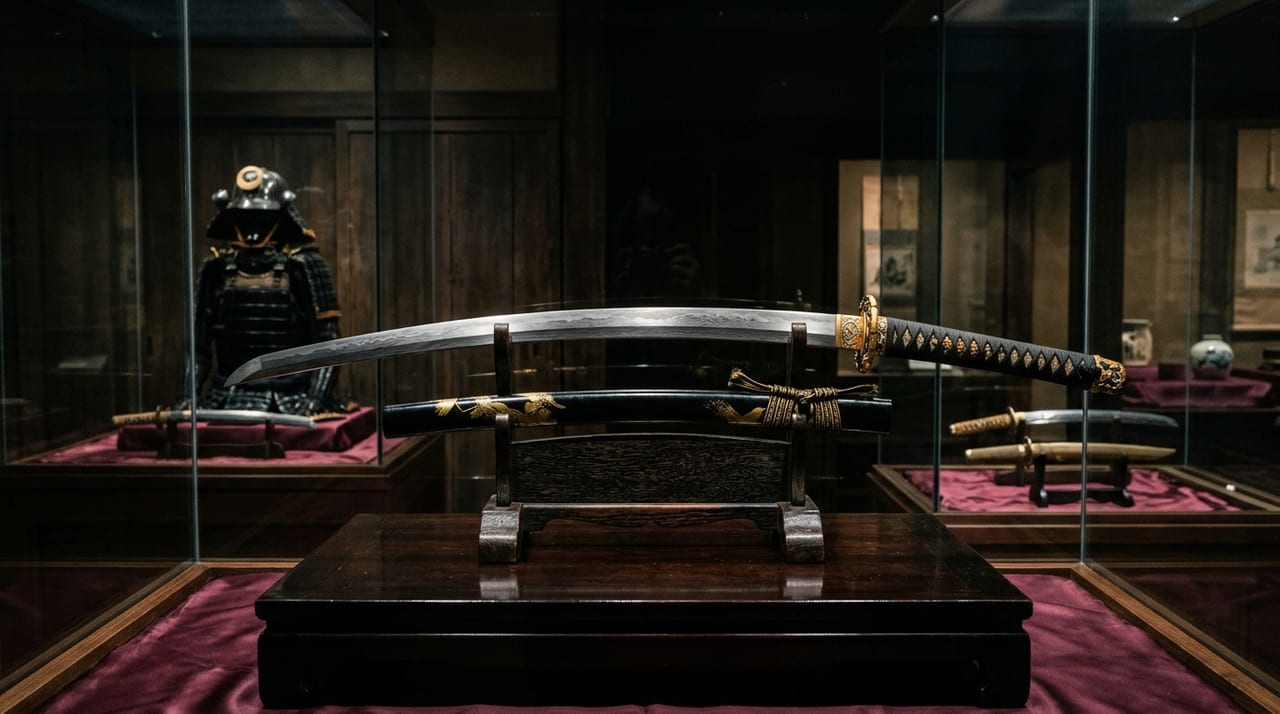
In ritsuryō society, what kind of sword one "wore (carried)" was an important marker of social status. The "Giseirei" (ceremonial codes) of the Taihō Code and the Yōrō Code specified in detail the materials and forms of sword fittings permitted according to rank (ikai), with distinctions such as the ōgon-sō tachi (gold-mounted tachi), gin-sō tachi (silver-mounted tachi), and kuro-urushi tachi (black lacquer tachi) corresponding to the rank of officials.
Carrying a sword was "the privilege of nobles and warriors," and farmers and commoners were prohibited from carrying swords within the capital. This system was inherited into the Heian period and became the prototype for the social significance of "the tachi and the sashiryō" in the later warrior society.
What the Ritsuryō Sword System Left Behind
The sword regulations established during the formation of the ritsuryō state that began with the Taika Reform left three important legacies for later Japanese sword culture.
- The first is the principle of "state control of swords." The concept of treating swords not as private property but as "proof of armed force" managed by the state became a long tradition that continued through the sword hunts and sword-carrying regulations of the Edo period.
- The second is "the correspondence between status and sword fittings." The practice of indicating social standing by which materials and forms of sword one wore developed into the manner of wearing the wakizashi in warrior society and the sword etiquette of the Edo period.
- The third is "the bureaucratization of craftsmen (tōkō)." The tradition of tōkō employed by the state under the ritsuryō system led to the later system of court-appointed and shogunal-appointed tōkō.
The embryonic ritsuryō sword regulations that began with the political upheaval of 645 hold important significance as the origin of the relationship between "the state and the sword," predating the birth of the unique cultural and craft tradition that is the Japanese sword.