The Golden Age of Kamakura Swords — The History of the Warrior Government, Patronage of Master Smiths, and the Formation of the Three Great Traditions
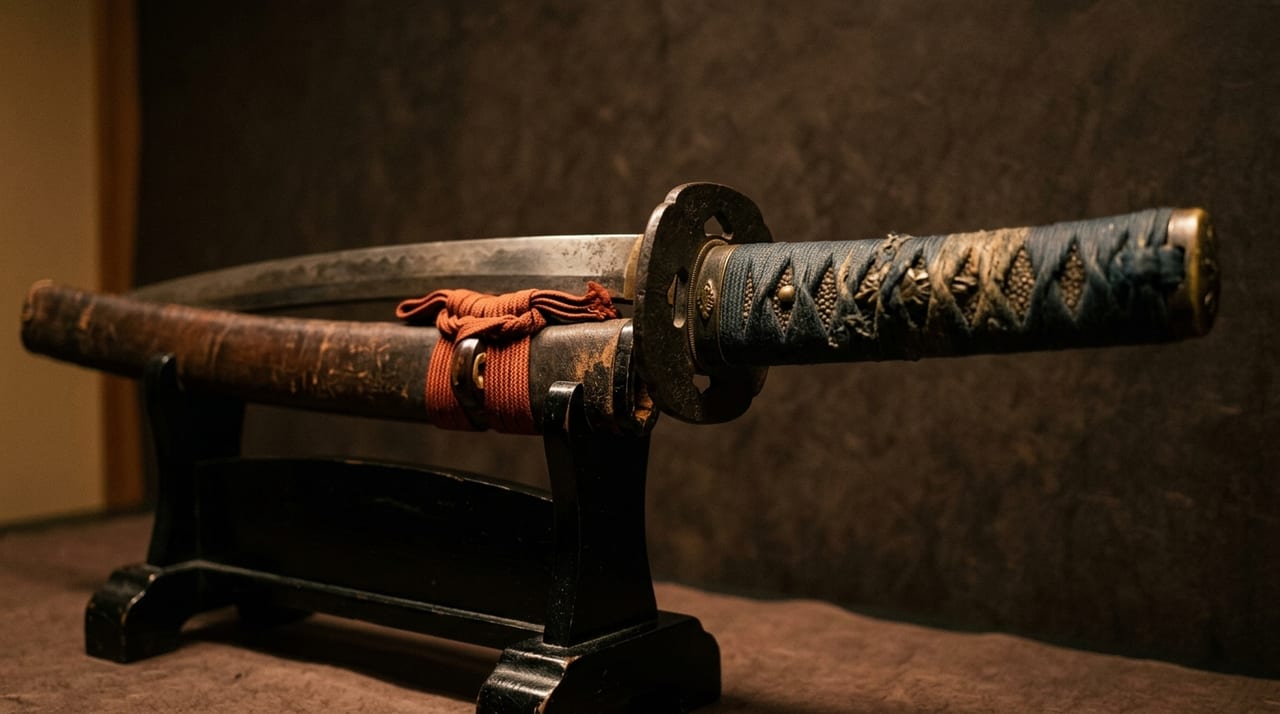 * Image is for illustrative purposes only.
Table of Contents
The Birth of the Warrior Government and the Growing Demand for Swords
The Jishō-Juei War (1180–1185), known as the Genpei War, fundamentally changed the role of swords in Japan. In the aristocratic society of the Heian period, swords carried strong ritual and symbolic significance, while the bow and arrow were the primary weapons in actual combat. However, when Minamoto no Yoritomo established his shogunate in Kamakura (1185/1192) and the warrior class stepped onto the political stage, demand for swords designed for actual combat grew rapidly.
In the battles of the late Heian period, which centered on mounted combat, the tachi wielded on horseback was the dominant weapon. The tachi — slender, deeply curved, with a nagasa exceeding 2 shaku 4 sun (approximately 73 cm) — was the optimal solution for cutting down enemies from horseback. For provincial warrior bands after the collapse of the ritsuryō state's military system, the sword was the most important equipment for demonstrating one's prowess and authority. As the warrior class took root throughout the country with the establishment of the Kamakura shogunate, powerful gokenin began to seek out skilled tōkō. This was the beginning of the relationship known as "patronage of tōkō by warrior houses" — a relationship that would greatly shape the history of the Japanese sword.
The Formation of the Three Great Traditions — The Dominance of Yamashiro, Yamato, and Bizen
Entering the Kamakura period, among the regional schools later collectively called the Gokaden (five traditions), the three schools of Yamashiro-den, Yamato-den, and Bizen-den flourished with particular prominence.
- Yamashiro-den (Kyoto) had deep ties to the court and the aristocracy, and developed centered on Awataguchi. The tōkō of the Awataguchiha excelled in a calm and bright jigane (steel of the blade surface) and a refined ko-chōji hamon (temper line). The names Awataguchi Kunitomo, Hisakuni, and Arikuni appear in historical records, and their style possessed the refined beauty known as "Kyō-mono" (Kyoto work).
- Yamato-den (Nara) developed as large temples and shrines such as Tōdaiji, Kōfukuji, and Kasuga Taisha took tōkō under their patronage. It is characterized by a jigane with prominent masame (forging grain) and a hamon of suguha or large patterns. The cultural background unique to medieval Japan — the fusion of religion and military might — is strongly reflected here. The five main schools were:
- Tegai
- Senjuin
- Taima
- Hōshō
- Shikkake
- Bizen-den (Okayama) boasted the largest production volume throughout the Kamakura period. High-quality iron sand and charcoal sources were concentrated along the Yoshii River basin, enabling large-scale sword production. The Ichimonji and Osafune schools flourished, and their brilliant hamon centered on chōji-midare suited the tastes of the warrior class and gained nationwide demand.
Ko-Bizen and Ko-Sanjō — The Technical Accumulation Before Kamakura
To speak of the full flowering of Kamakura swords, one cannot avoid their prehistory: Ko-Bizen and Ko-Sanjō.
Ko-Bizen is the collective name for the early Bizen kaji who were active from the late Heian period through the early Kamakura period. Tōkō such as Tomonari, Masatsune, and Kanehira are regarded as their representatives, and many of their surviving works have been designated as kokuhō (National Treasure) or jūyō bunkazai (Important Cultural Property). Ko-Bizen swords are slender and deeply curved, with a hamon based on ko-midare as a distinctive feature. The jigane has a well-worked itame-hada and possesses an archaic elegance. Modern research regards the techniques of Ko-Bizen as having formed the foundation of the later Bizen Ichimonji school.
Ko-Sanjō is synonymous with Sanjō Munechika. Munechika, who had a workshop in Sanjō, Kyoto, in the late Heian period, is widely known as the maker of Mikazuki Munechika, one of the five great swords of the realm. He is regarded as the founding figure of Yamashiro-den, and his flowing hamon and intricate kitae-hada (forging grain) may be said to represent the pinnacle of Heian art. Munechika's sword-making technique combined "notare" and "ko-chōji" to achieve gentle variation, and it exerted a great influence on the later Awataguchiha.
The Patronage Relationship Between Kamakura Warriors and Tōkō
The establishment of the Kamakura shogunate brought dramatic changes to the social standing of tōkō. Before that, tōkō had operated under the patronage of temples, shrines, and local magnates, but with the establishment of warrior rule, an era arrived in which powerful gokenin and shugo daimyō competed to retain master smiths.
Under the concept that "the sword is the soul of the warrior," gokenin kept celebrated tōkō in residence within their estates, assisted in procuring the raw materials of iron sand and charcoal, and used the completed swords as gifts presented to shoguns and emperors. This was not merely procurement of weapons; it carried the meaning of a political performance. The equation "one who possesses a fine sword is a fine warrior" raised the social value of tōkō and created a virtuous cycle that attracted skilled craftsmen.
In Bizen, powerful jitō systematically supported the groups of tōkō at Osafune, and a system of individual commissions called "chūmon-uchi" was established. Commissioners could specify the material, dimensions, and shape of the hamon, and tōkō were required to refine themselves in both technical skill and creativity. This competitive environment directly contributed to the improvement in quality of Kamakura swords.
Master Smiths Representative of the Kamakura Period and the Heights of Technical Achievement
From the mid- to late Kamakura period, tōkō who shine brilliantly in the history of the Japanese sword appeared one after another.
The tōkō of the Bizen Yoshioka Ichimonji and Fukuoka Ichimonji schools brought the perfection of chōji-midare to the ultimate degree, establishing the advanced technique of linking the utsuri of the jigane — known as "midare-utsuri" — to the hamon. This was the compound achievement of selecting iron sand, precisely controlling tanren (forging) temperatures, and advancing yaki-ire (quenching) technique, and it is highly regarded from the perspective of modern metallurgy.
Yamashiro's Rai School was centered on Rai Kuniyuki and Rai Kunitoshi, and was known for its intricate jigane of small itame and a beautiful hamon with uniformly applied ko-nie. Multiple tachi by Rai Kunitoshi have been designated as kokuhō (National Treasure), demonstrating the highest standard of Yamashiro swords of the Kamakura period.
The Eve of Masamune — The Horizon Opened Up by Kamakura Swords
The emergence of Masamune (dates of birth and death uncertain; active from the late Kamakura period to the early Nanbokuchō period) is described as one of the pinnacles of the history of the Japanese sword. Yet even his genius could not have come about without the technical legacy accumulated throughout the Kamakura period.
Masamune absorbed and integrated the technical accumulation of the methods of forging jigane, the technology of controlling the hamon, and the refinement of tsuchioki (applying the clay coating) used in yaki-ire (quenching), which had been perfected by the three traditions of Bizen, Yamashiro, and Yamato, and opened up a new horizon with Sōshū-den. Shintōgo Kunimitsu, regarded as Masamune's teacher, was also a master smith representative of the Kamakura period, and his story tells how the techniques of the regional schools came to fruition in Sōshū.
The approximately 150 years of the Kamakura period were a transitional era in which the Japanese sword was elevated from "a practical weapon" to "a work of art combining beauty and function." The warfare of the Genpei conflict generated demand for swords, the establishment of the warrior government gave patronage to craftsmen, and the competition among regional schools honed their techniques. The fruit of those endeavors is the brilliance of the Kamakura swords we see today.