The Lineage of Suruga Shimada Smiths — Yoshisuke, Sukemune, Hirotsuke, and the Tōkaidō Swordsmith Collective
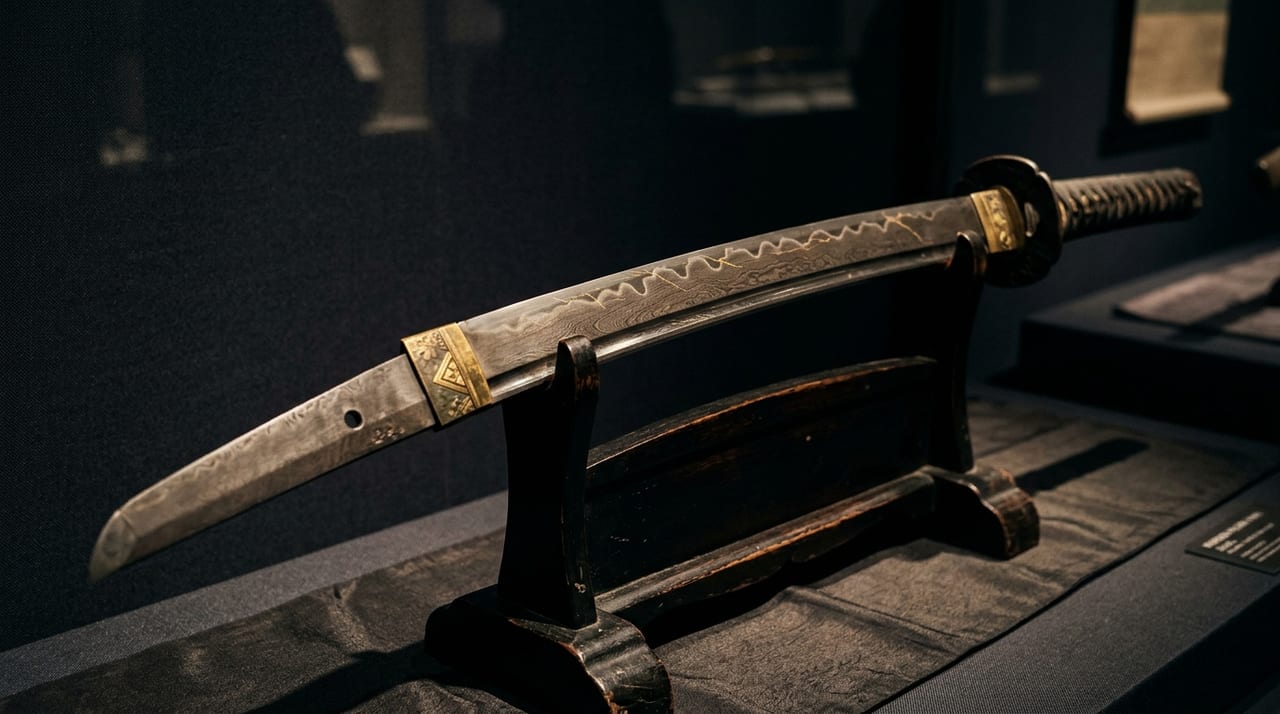 * Image is for illustrative purposes only.
Table of Contents
Shimada in Suruga Province (present-day Shimada City, Shizuoka Prefecture) is a town known as a post station on the Tōkaidō. From the Muromachi period through the Edo period, sword smiths gathered and settled in and around this town, and the group has generally been called the "Shimada smiths" or the "Shimada school." Compared with large traditions such as Sōshū or Bizen, the name is not often heard, yet this was a swordsmith collective that sustained the name-lines of Yoshisuke, Sukemune, and Hirotsuke and was held in esteem by Sengoku daimyō. The following is a survey of the Shimada smiths confined to what can be confirmed.
What Kind of Collective Were the Shimada Smiths?
The Shimada smiths are described as a gathering of sword smiths who lived in and around Shimada-juku on the Tōkaidō. The span of their activity is introduced as roughly 400 to 450 years, with variations in how the years are counted depending on the source. It is therefore prudent to understand them not as a group active from one fixed year to another, but as a collective that continued from the Muromachi period through the Edo period.
It is also written that they were held in esteem by the Imagawa, Takeda, and Tokugawa clans. Their location along the Tōkaidō highway, on land that connected Suruga, Tōtōmi, and Kai, is thought to have created favorable conditions for receiving demand from warrior families — though this is inference from geography alone, not something substantiated by historical documents.
A point to bear in mind when researching the Shimada smiths is that explanations of generation numbers and lineages differ from source to source. Even for a single "Yoshisuke," the generation being referred to is not counted consistently, and birth and death years cannot be considered settled. When examining an individual sword, it is necessary to make judgments based on the character style of the mei and the working style.
- Home territory: around Shimada-juku on the Tōkaidō (Suruga Province)
- Period: from the Muromachi period through the Edo period
- The mainstream was the Yoshisuke line, with the names of Sukemune and Hirotsuke also known
- Generation numbers and birth and death years vary by source
The Name-Lines of Yoshisuke, Sukemune, and Hirotsuke
The mainstream of the Shimada smiths is said to be the Yoshisuke line. Yoshisuke was also known as a master maker of spears, and Otegine, one of the Three Great Spears of the Realm (Tenka Sanmeiyari), is said to be the work of the fourth-generation Yoshisuke. The provenance of Otegine itself is covered in a separate article.
The fourth-generation Yoshisuke is also written as Gojō Yoshisuke. It is said that he was a craftsman invited from Kyoto by the Imagawa clan, and a tantō bearing the mei of Yoshisuke with a date inscription of Genki 2 (1571) has been introduced. Source: Shizuoka Shimbun article.
Sukemune is described as a tōkō said to be the younger brother of Yoshisuke, with one theory holding that he came from Bizen. Hirotsuke is said to be the son of the second-generation Yoshisuke and is described as the most skilled among the Shimada smiths of around the Tenbun era. Comparing the three — Yoshisuke, Sukemune, and Hirotsuke — Hirotsuke is considered to have the most powerful and bold working style. Source: Shimada City sword-related event introduction.
As this shows, each name-line had a slightly different specialty and character. It is possible to view the school as having tōkō who each excelled in swords, tantō, and spears respectively, though to what extent there was any such division of roles could not be confirmed.
Points of Interest in the Working Style
Regarding working style, Yoshisuke is often described as being strongly influenced by the Sue-Sōshū smiths. Hitatsura, irregular hamon, and suguha are all said to appear. Sue-Sōshū is covered in a separate article on the Sōshū-den tradition centered on Odawara.
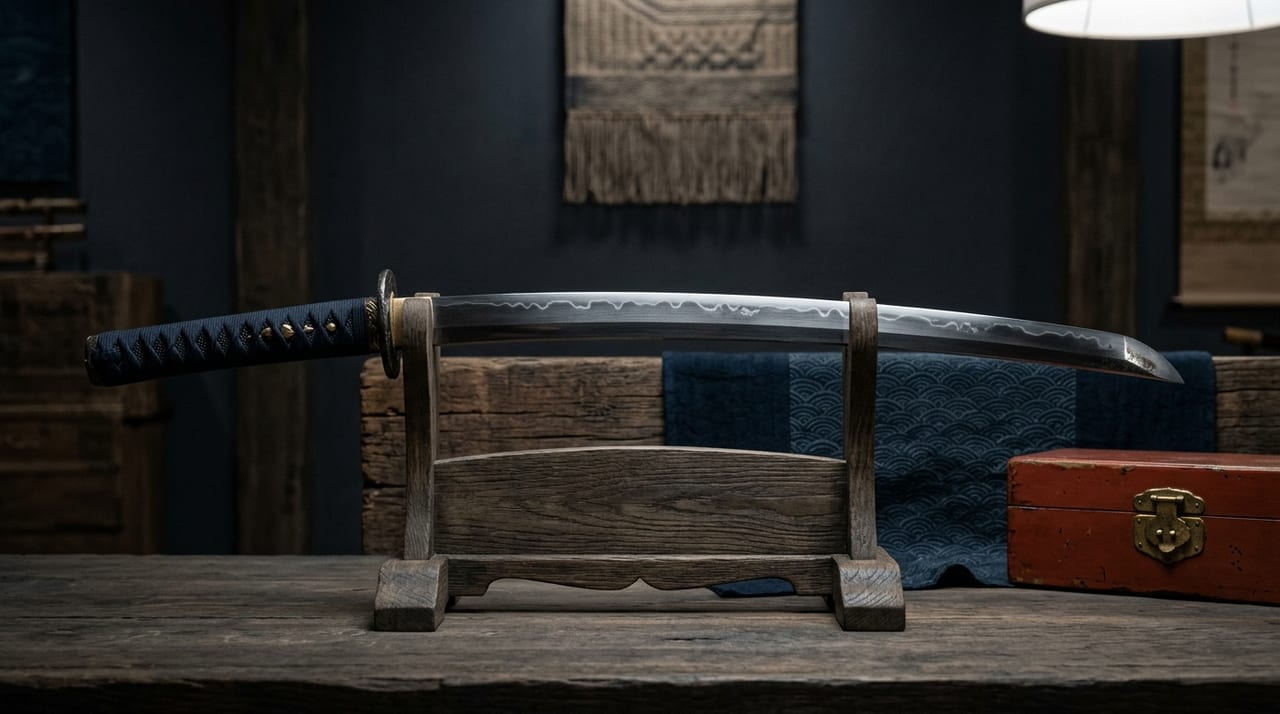
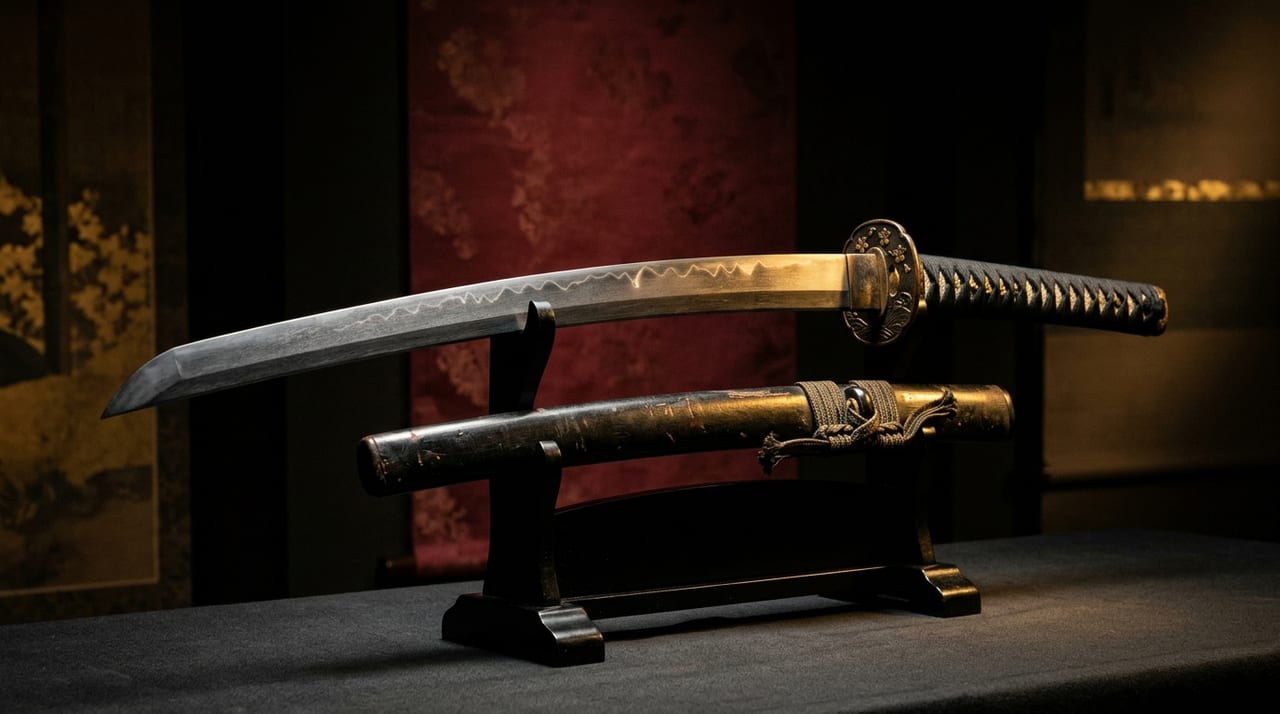
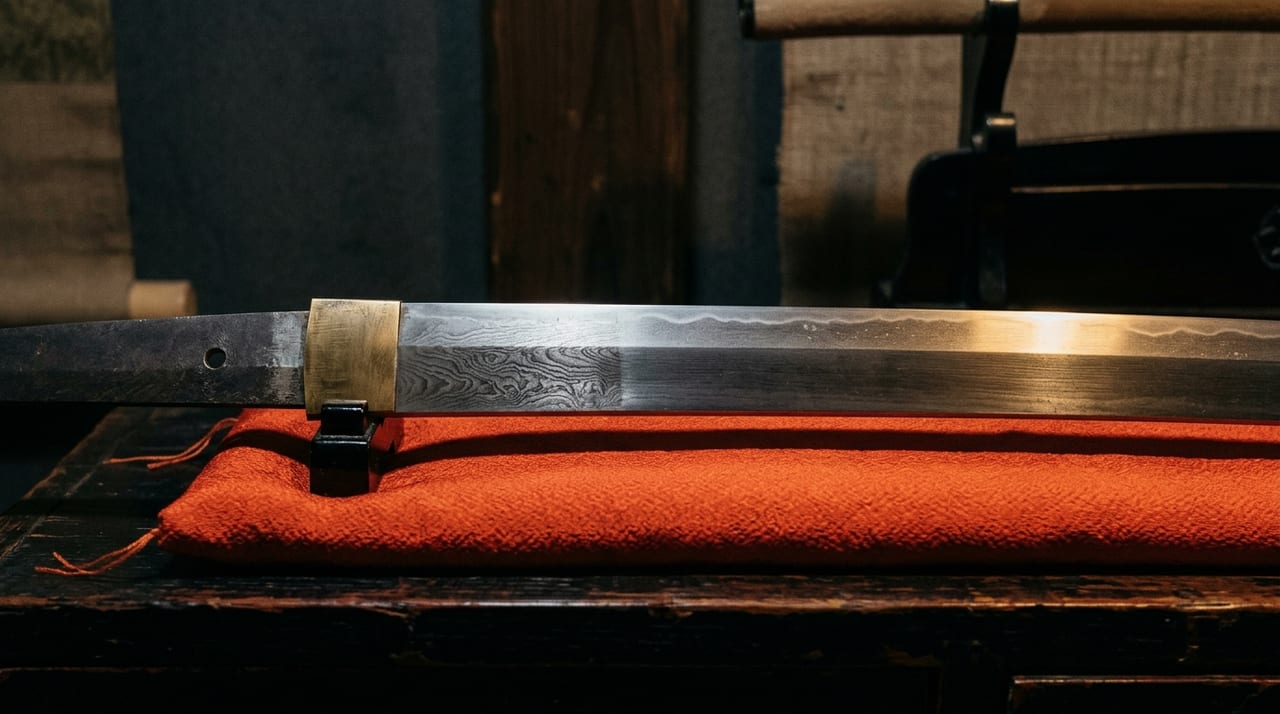
According to explanations from sword dealers, the jigane is well-compacted with thick ji-nie, with gunome and pointed hamon elements intermixed, and kinsuji and sunagashi are active. For Hirotsuke, appraisal examples describe itame mixed with mokume, gunome midare with ko-nie, and tobiyaki. These are, however, dealer explanations and not primary sources. Because individual variation is also considerable, it is better to use this as a rough guide — "a Suruga sword with Sue-Sōshū working qualities" — rather than fixing these as defining characteristics of the Shimada smiths.
When appreciating a sword, it is useful to check the following points in order.
- The character style of the mei and whether it includes a place of residence, and how it is cut
- The compactness of the jigane and how the ji-nie appears
- The strength of the irregularity in the hamon (whether gunome, or closer to hitatsura)
- The presence or absence of activities such as kinsuji, sunagashi, and tobiyaki
How to read place-name elements in the mei is covered in the following article.
Designated Cultural Properties and Points to Note When Purchasing
In the course of this research, no works by the Shimada school designated by the national government, prefecture, or municipality could be confirmed. Phrasing such as "a jūyō bunkazai (Important Cultural Property) by Shimada Yoshisuke" should not be taken at face value unless it can be verified. Some sword dealer product pages describe items as "Hozon Tōken" or "Tokubetsu Kichō Tōken," but these are classifications under NBTHK (Society for the Preservation of Japanese Art Swords) examination and are separate from cultural property designation.
Additionally, the Otegine on display at the Shimada City Museum is introduced as a copy of the original, which was lost in wartime destruction. It is also important not to confuse a display replica with the original.
When encountering a Shimada smith sword, the following approach is recommended.
- For name-lines such as Yoshisuke and Hirotsuke, determine the generation with care, judging from the mei and working style
- Even when zaimei (signed), keep in mind the possibility that it is a later work or the work of a different person with the same name
- Read kanteisho (appraisal certificate) classifications and cultural property designations as distinct things
The Shimada smiths tend to be overshadowed by the stories of famous celebrated swords, yet they were a collective engaged in sword-making deeply rooted in daily life in a Tōkaidō town over a long span. As Suruga swords carrying the influence of Sue-Sōshū, they serve as a point of entry for turning attention to regional tōkō beyond the framework of the Gokaden (five traditions). The following article offers a similar perspective.
If a sword catches your interest, swords currently listed in the TOUKENZA online catalog can be browsed. Questions before purchasing can be sent via the contact form.