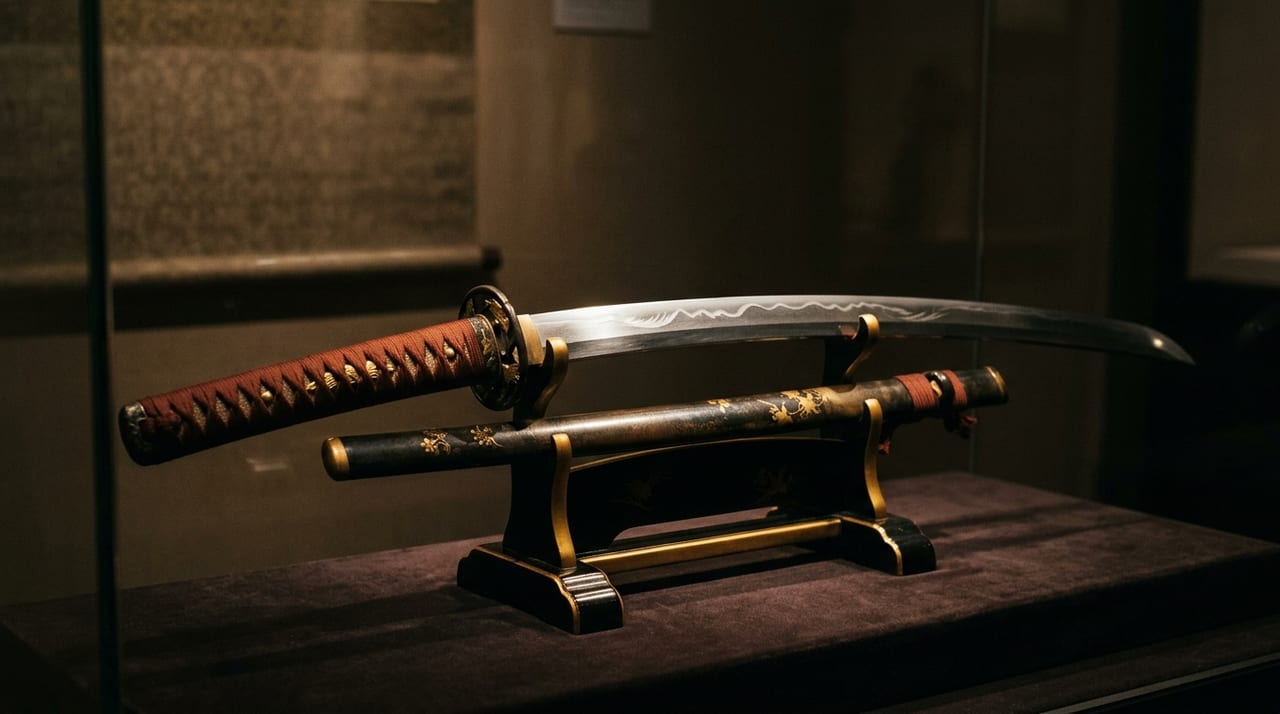
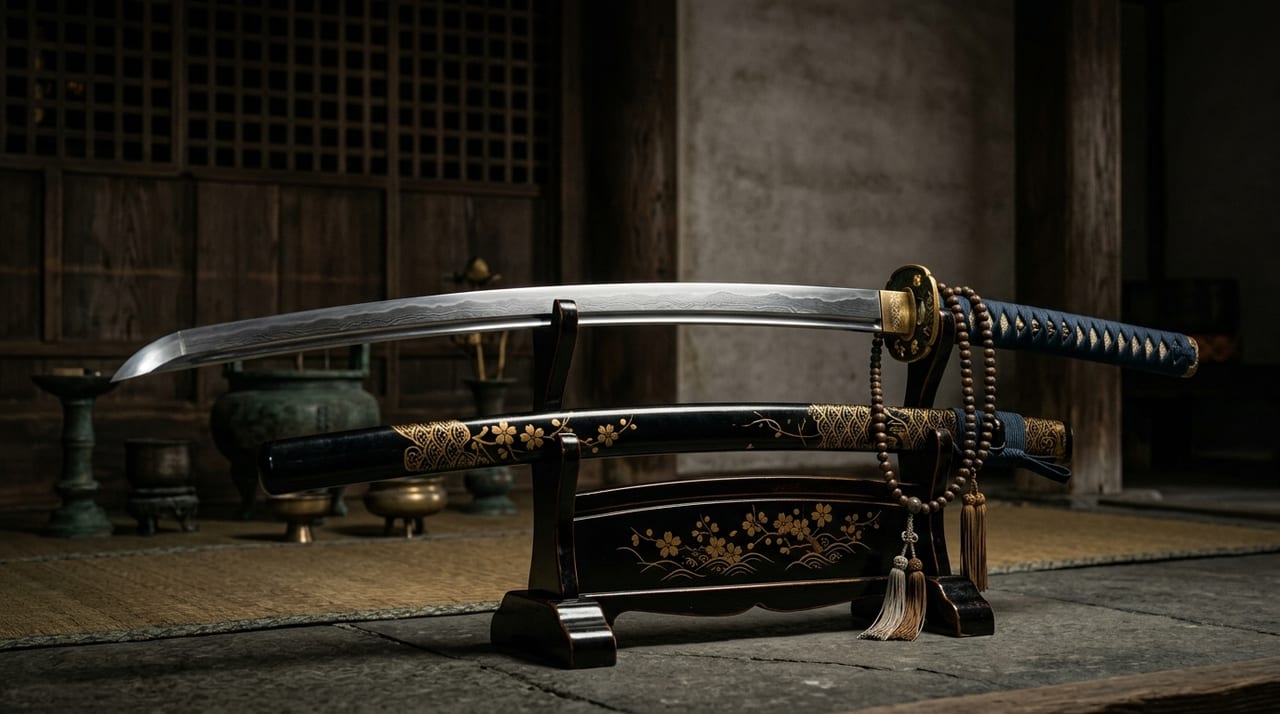
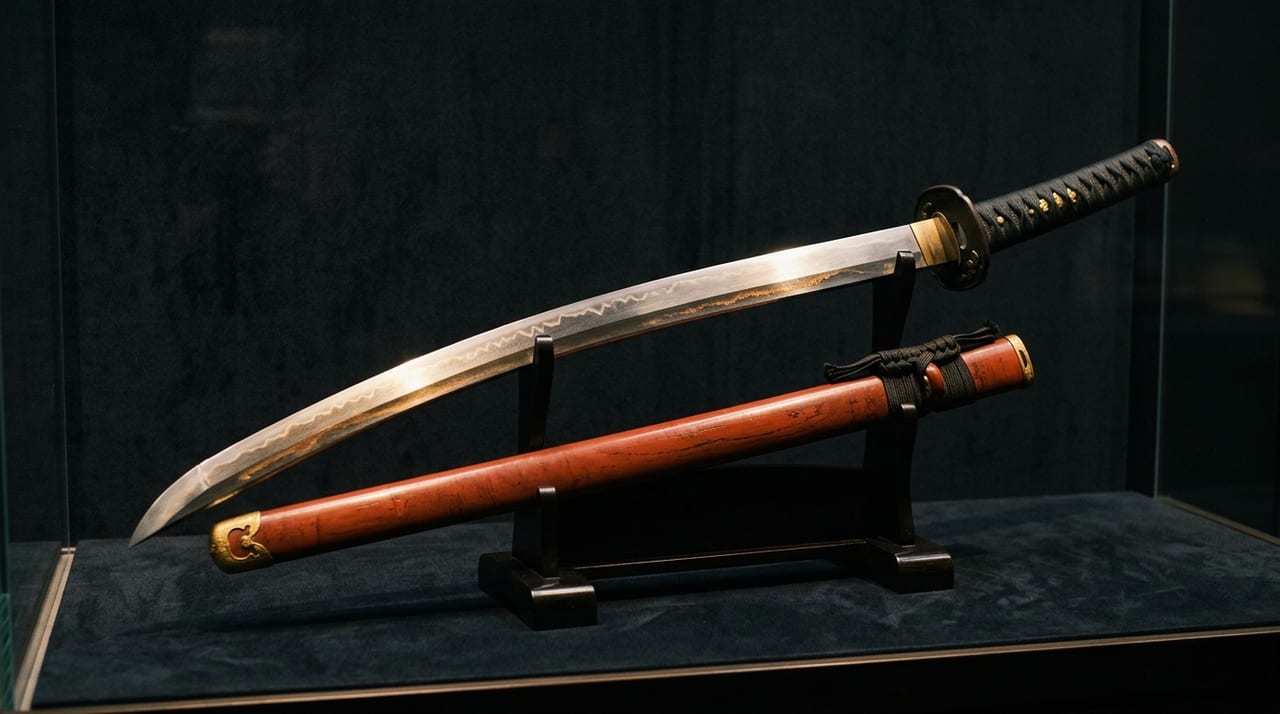
Tenka Sanmeiyari: The Legendary Spears Nihongo, Otehagi, and Tonbogiri
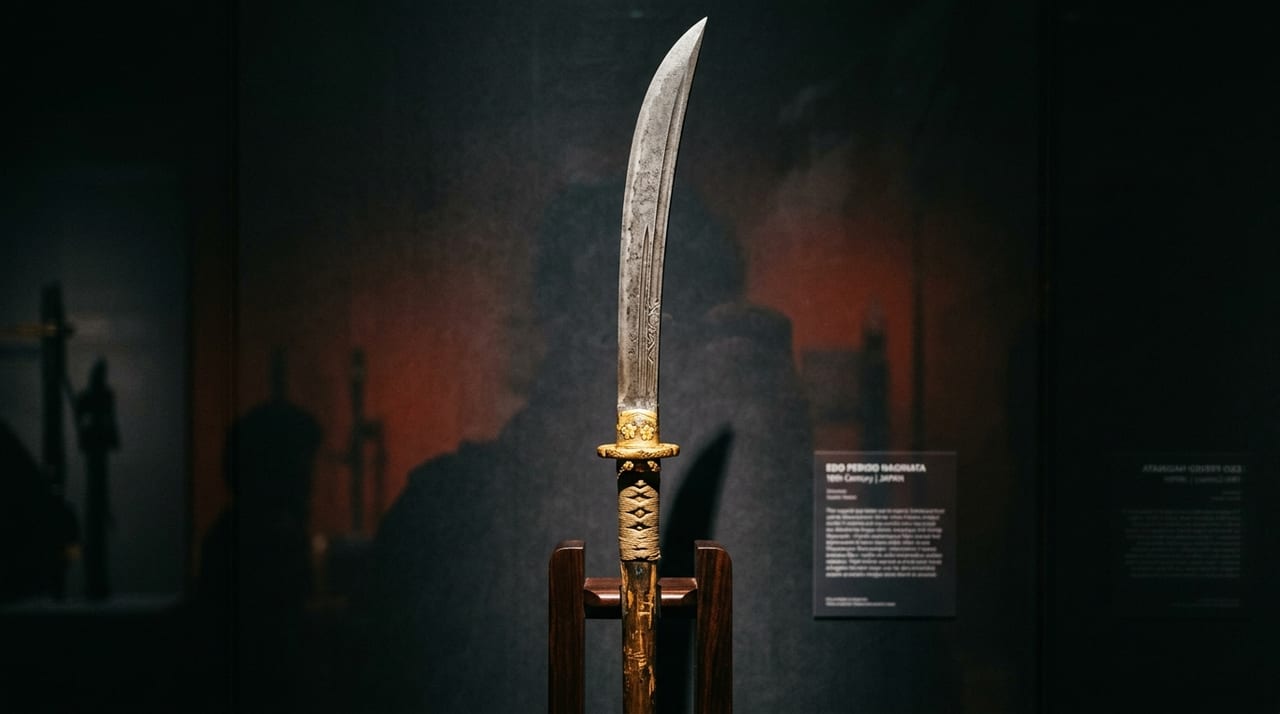 * Image is for illustrative purposes only.
Table of Contents
The term "Tenka Sanmeisou" (Three Great Spears Under Heaven) refers to three great long-spears—Nihongo, Otegine, and Tonbokiri—a designation passed down from the Edo period. As the equivalent of the "Tenka Gosken" (Five Great Swords Under Heaven) in the world of Japanese swords, they are among the most renowned spears and have been passed down through generations. What these three spears have in common is that their value extends beyond their evaluation as mere practical weapons—they have accumulated cultural significance alongside the anecdotes of the lords who possessed them. In this article, we examine the provenance and current custodianship of each to understand how these renowned spears have been transmitted to the present day.
Tenka Sanmeisou—The Three Great Spears Ranked Alongside the Tenka Gosken
In the world of Japanese swords, the "Tenka Gosken" designates five great swords—Doji Ansatsu, Mikazuki Munene, Onimaru Kunitsuna, Daitetsudai Mitsuo, and Juzumaru Tsunetsugu—while in the world of spears, the ranking equivalent is the Tenka Sanmeisou. In Edo period samurai society, great spears, like great swords, were treated as treasures symbolizing family prestige and martial achievement, and through the transmission of anecdotes, their reputation became fixed. What all three of the great spears share is not merely superior craftsmanship of the blade, but also specific episodes concerning their owners that have been recounted throughout history.
Nihongo—The Spear of the Kuroda Samurai, Won Through Drinking
Nihongo is a great long-spear with a bamboo-leaf-shaped point and is said to have originally been a treasured item connected to the imperial household, passing through the hands of several powerful figures before ultimately coming into the possession of the Kuroda clan. Most famously known is the anecdote concerning Mori Taheiji, a retainer of the Kuroda house. The story tells that when Mori Taheiji was offered sake at the residence of Fukushima Masanori, he received this spear as a reward for drinking a large cup in one gulp. This anecdote later became the subject of a folk song called "Kuroda-bushi" and remains widely beloved to this day. It is currently held in the Fukuoka City Museum and has opportunities for public viewing through permanent exhibitions and special displays.
Otegine—The Giant Bamboo-Leaf-Pointed Spear Lost to Wartime
Otegine is said to have been passed down in the Yuki clan and is an exceptionally large great long-spear that, owing to the length of its shaft and the size of its point, has been evaluated as possessing the greatest impact among the three great spears. Its name is said to derive from the thick, mortar-like shape of its scabbard. Unfortunately, the original has been lost; it is said to have been destroyed in air raids during the final stages of the Pacific War. What can be seen today in museums and memorial facilities is a reproduction made on the basis of historical documents and records. The very fact that the original has been lost carries an important historical lesson indispensable to understanding the provenance of these great spears.
Tonbokiri—The Masterwork of Fujiwara Masasane, Cherished by Honda Tadakatsu
Tonbokiri is particularly famous as the beloved spear of Honda Tadakatsu, known as one of the Four Heavenly Kings of Tokugawa. The origin of its name is said to derive from an anecdote demonstrating the sharpness of its point: legend holds that a dragonfly touched the point and was split in two. It is said to have been forged by Fujiwara Masasane, a swordsmith of Mikawa, and the refined grooves carved into the blade demonstrate exceptional craftsmanship. It is one of the great spears whose survival has been confirmed and is notably held and displayed at the Sano Art Museum in Mishima City, Shizuoka Prefecture.
The Present Location of the Three Great Spears—Current Status, Custody, and Public Access
The three great spears have each followed a different path. Organizing their current status yields the following:
| Name | Major Clan That Possessed It | Current Status |
|---|---|---|
| Nihongo | Kuroda clan | Extant, held by Fukuoka City Museum |
| Otegine | Yuki clan | Lost in wartime destruction, reproduction extant |
| Tonbokiri | Honda clan | Extant, held by Sano Art Museum |
Thus, while Nihongo and Tonbokiri are extant and can be appreciated at museums, Otegine has lost its original and can only be commemorated through reproductions. The fact that even within the same category of "Tenka Sanmeisou," their fates have diverged so greatly speaks to how the transmission of masterworks rests upon accumulated chance and preservation efforts. Despite repeatedly facing the danger of loss through warfare, disaster, or change of ownership, the transmission of records and anecdotes has preserved for us the knowledge of these three great spears.
How Great Spears Speak to Japanese Martial Culture
The Tenka Sanmeisou demonstrate that spears, like all martial implements, have not been treated merely as tools of combat but as cultural heritage intertwined with the achievements and anecdotes of their owners. The paths taken by the three spears differ markedly: Nihongo persists and is made accessible to the public, Otegine was lost to fire and is recalled through reproductions, and Tonbokiri can be directly appreciated at a museum. Like Japanese swords, spears too are witnesses to history, transmitted or lost through the vicissitudes of time and ownership. Understanding these anecdotes enriches our perspective when appreciating swords and martial implements.
At TOUKENZA, in addition to Japanese swords themselves, we publish columns online that introduce the history and culture surrounding these martial implements. If you are considering purchasing a Japanese sword, you can browse our current offerings in our online catalog, and if you have any questions, you can contact us through our inquiry form.