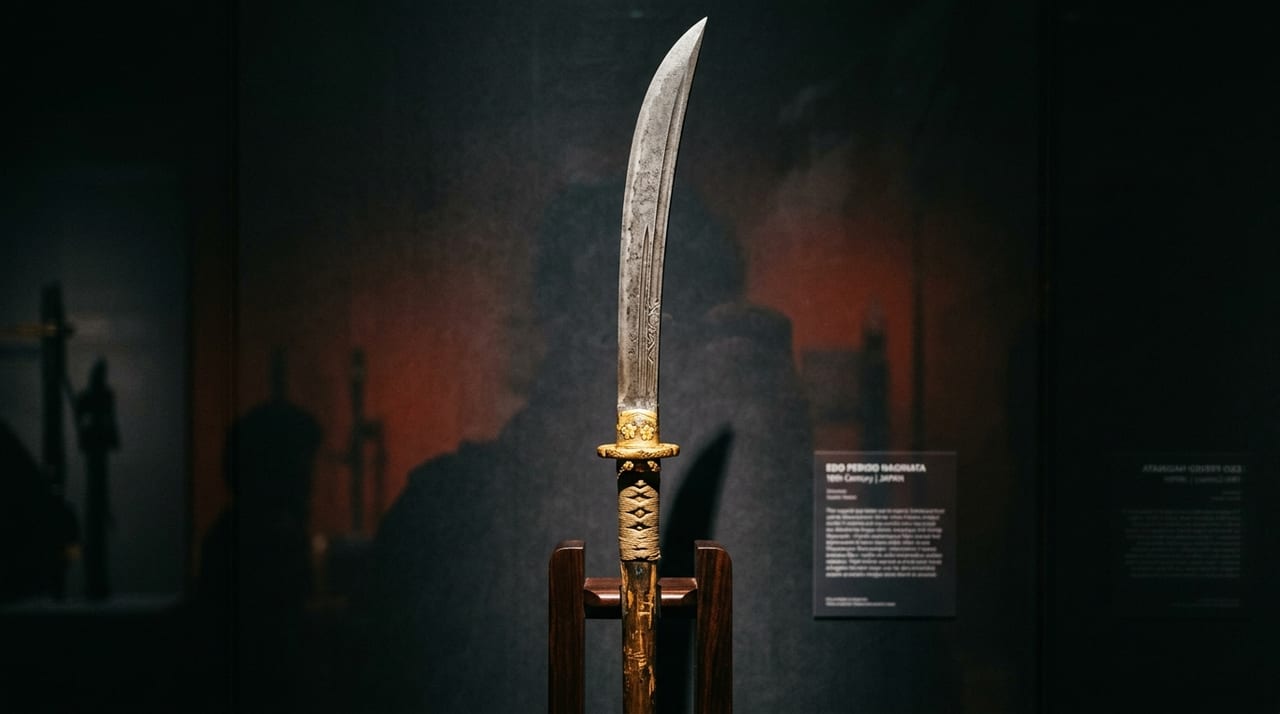
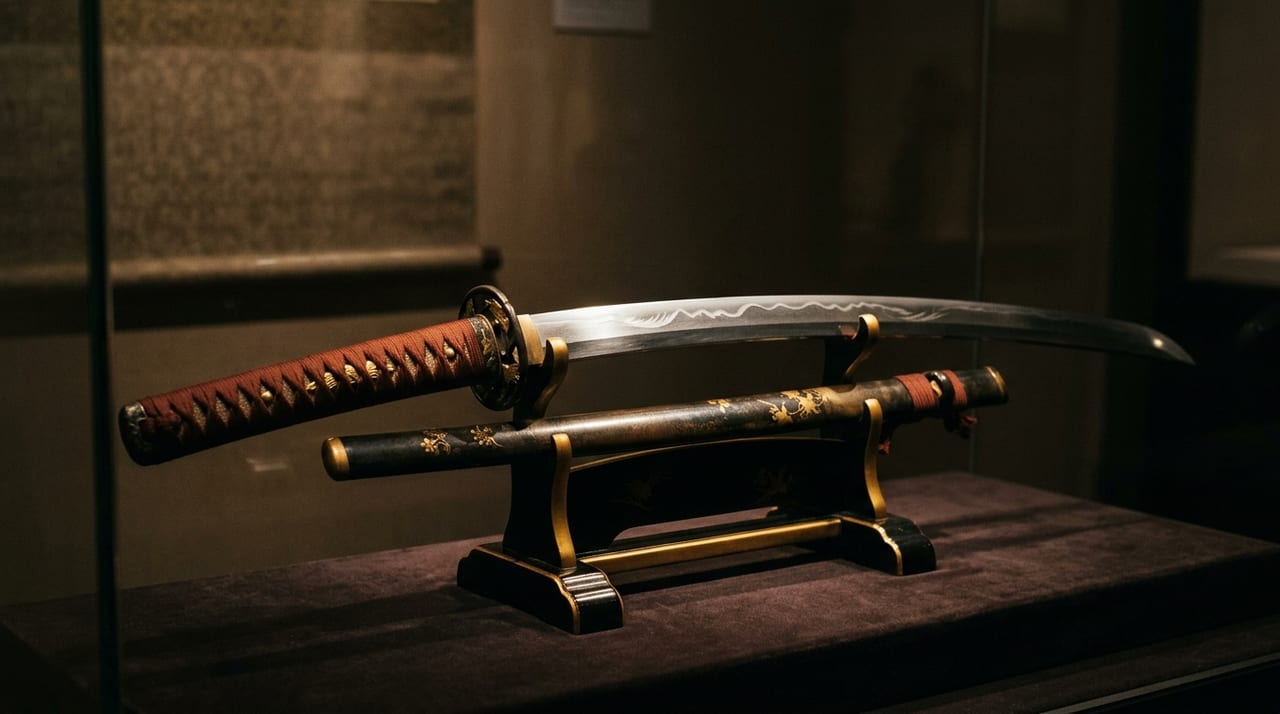
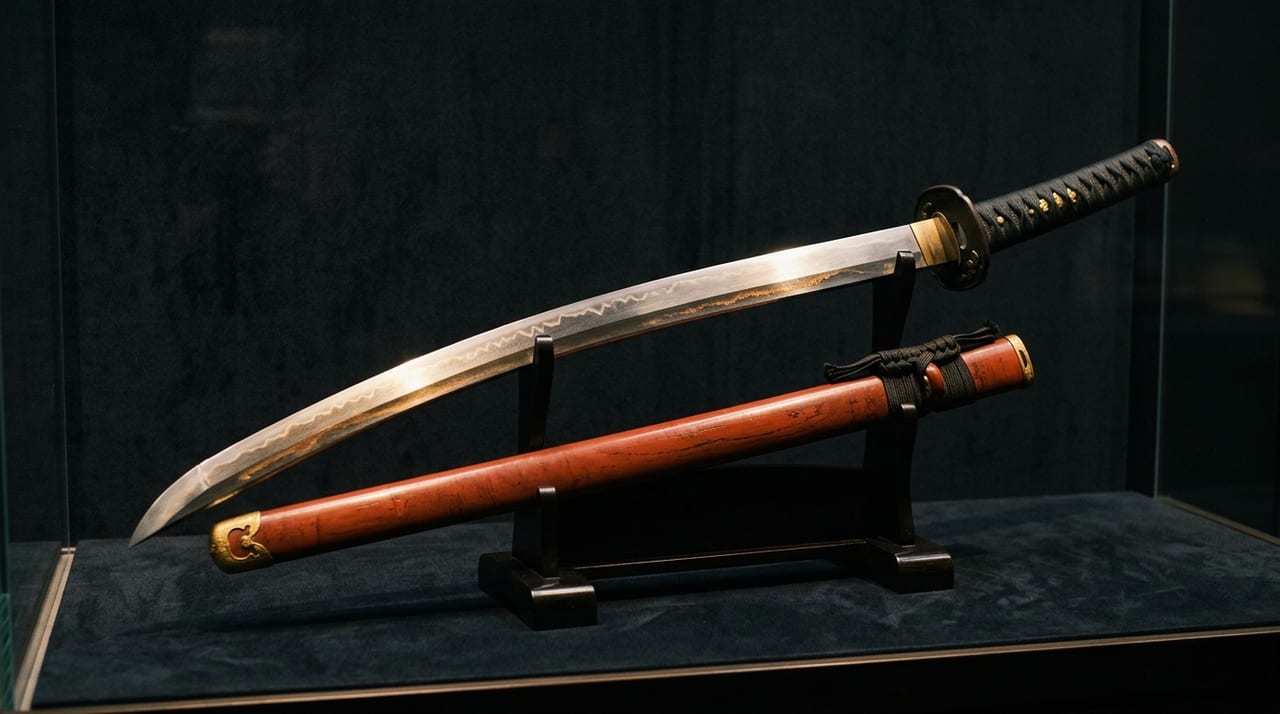
Juzumaru Tsunetsugu — A Tenka Goken Tachi Linked to Saint Nichiren and Kuon-ji Temple
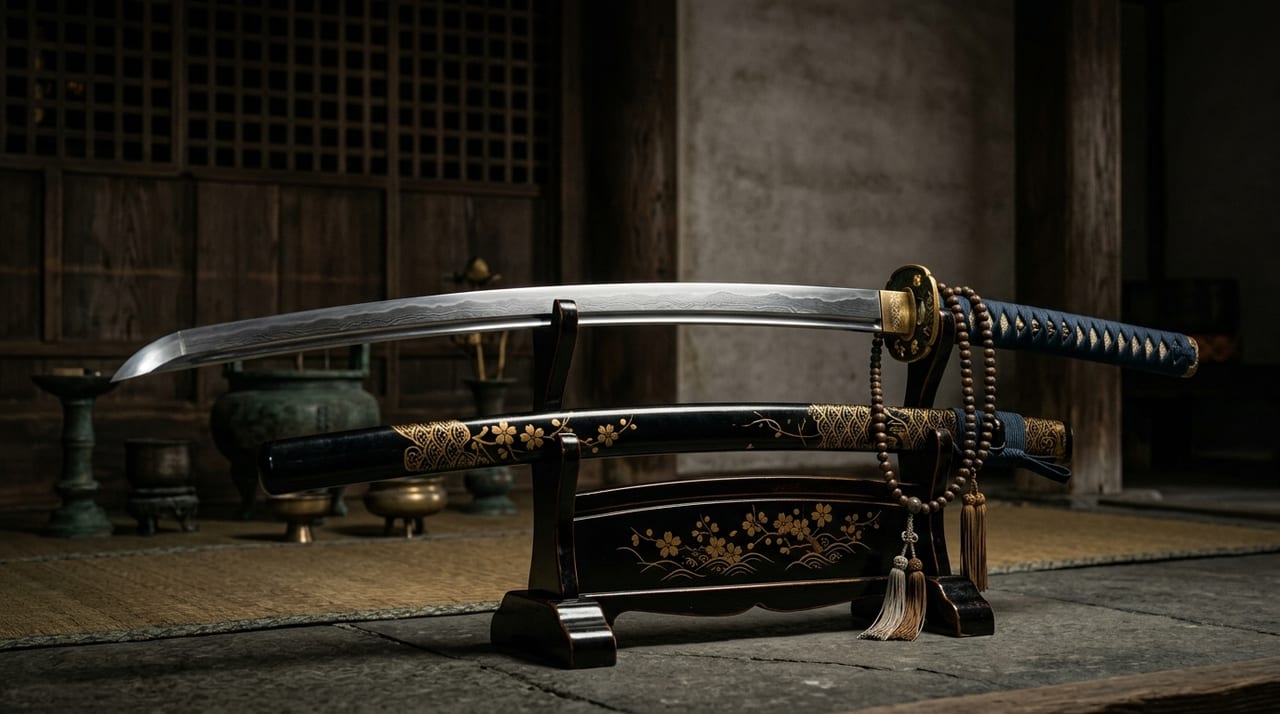 * Image is for illustrative purposes only.
Table of Contents
The Five Swords Under Heaven is a collective designation for five celebrated blades, originating from the traditional ranking system established by the Hon'ami family, who conducted sword appraisals during the Edo period, and preserved through later generations.
- Dōjigiri Yasutsuna
- Mikazuki Munechika
- Onimaru Kunitsuna
- Ōdenta Mitsuyo
- Juzumaru Tsunetsugu
Among these, only Juzumaru Tsunetsugu possesses distinctive features that distinguish it from the other four. It is the sole blade known to have been carried by a Buddhist priest rather than a warrior, and its provenance has followed a fundamentally different path from the other four.
What Are the Five Swords Under Heaven——Standards for Selecting Five Legendary Blades
The designation of the Five Swords Under Heaven itself is said to have been established from the modern period onward, based on the lineage of blade evaluations visible in appraisal documents and sword texts of the Edo period, and is understood to have been systematized among sword enthusiasts and researchers from the Meiji and Taishō periods onward. What they share in common is that all are tachi forged by renowned swordsmiths, and their provenances are marked by deep connections with warrior clans, the imperial court, or religious institutions.
| Blade | Designation |
|---|---|
| Dōjigiri Yasutsuna | National Treasure |
| Mikazuki Munechika | National Treasure |
| Onimaru Kunitsuna | National Treasure |
| Ōdenta Mitsuyo | National Treasure |
| Juzumaru Tsunetsugu | Important Cultural Property |
This difference is not merely a matter of ranking, but is thought to reflect multiple factors related to designation criteria, including how clearly the provenance is documented and the depth of records concerning the current condition of the blades.
The Maker of Juzumaru Tsunetsugu——Tsunetsugu of the Aoe School of Bitchū
Juzumaru Tsunetsugu is said to have been forged by Tsunetsugu, a swordsmith of the Aoe school, who was active in Bitchū Province (now western Okayama Prefecture). The Aoe school was a group of swordsmiths who flourished in Bitchū Province during the Kamakura period, characterized by refined workmanship with densely packed jigane and elegant tachi forms with pronounced waist curvature. Works by the Aoe school are known in later times as "Ko-Aoe" (Old Aoe), and those from the early to middle Kamakura period have been highly regarded. Tsunetsugu is regarded as one of the representative swordsmiths of the Aoe school, and works bearing his signature survive in addition to the Juzumaru.
The Artistic Style of Ko-Aoe and Points of Connoisseurship
Ko-Aoe tachi are characterized by a graceful form, strongly curved at the waist and tapering smoothly toward the kissaki. The jigane typically exhibits densely packed, lustrous ko-itame grain patterns, and the hamon displays a serene quality with a foundation of straight blade or fine wave-like patterns. This style is understood to be a product of the distinctive forging traditions of Bitchū Province, differing from the swordsmiths of Bizen and Yamashiro who flourished during the same period. Juzumaru Tsunetsugu is said to possess the stylistic characteristics of Ko-Aoe and is positioned as a document that conveys the beauty of form inherent in Kamakura-period tachi to the present day.
The Origin of the Name "Juzumaru"——The Blade of Saint Nichiren and the Lotus Sutra
The distinctive name Juzumaru derives from a tradition that it was owned by Saint Nichiren. Nichiren was a Buddhist priest of the Kamakura period and is known as the founder of the Nichiren school; tradition holds that he carried this tachi as a means of protection during his propagation journeys, which exposed him to danger. According to legend, the name Juzumaru comes from prayer beads wrapped around the handle, and the anecdote that a Buddhist priest carried a practical blade establishes this tachi within a context distinct from that of the other swords of the Five Swords Under Heaven. In contrast to the four blades whose provenances are tied to warrior power or imperial treasures, Juzumaru has been passed down through history intertwined with a narrative of faith and pilgrimage.
Transmission to Minobu-san Kuon-ji Temple
Minobu-san Kuon-ji Temple (Minobu, Minamikoma District, Yamanashi Prefecture) is the head temple of the Nichiren school and was founded at the place where Nichiren spent his final years and passed away. Juzumaru Tsunetsugu has been preserved as a temple treasure passed down at Kuon-ji to the present day. There was reportedly a period during its long history when its whereabouts became unclear, but it was later rediscovered and confirmed to be held by Kuon-ji Temple, where it remains today. While warrior blades commonly pass down through castles and daimyo families, the fact that a temple has preserved this blade as an object connected to its founder distinguishes the provenance of Juzumaru Tsunetsugu. Such temple-held masterworks serve as documents conveying how swords were cherished within faith communities, distinct from the power structures of warrior society.
What the Five Swords Under Heaven Convey to Us Today
The Five Swords Under Heaven is more than a mere catalog of five celebrated blades; it exemplifies how the Japanese sword has been invested with value across distinct contexts of power, faith, and aesthetic sensibility, transcending its function as a military implement. Among these, Juzumaru Tsunetsugu shines distinctly as a tool of faith and as a blade bound to the life of Nichiren, a religious figure, bearing testimony to how the Japanese sword has taken root in diverse contexts of Japanese culture beyond the confines of warrior society. When comparing the provenances of the Five Swords Under Heaven, one can discern that different lineages of value——legitimizing warrior authority, imperial treasures, and objects of religious devotion——coexist within the common designation of "masterworks."
In recent years, interest in the Five Swords Under Heaven itself has expanded to younger generations, sparked by video games and media works featuring swords as subject matter. Institutions holding these works occasionally host special exhibitions, and should one have the opportunity to view the actual blade, one could directly sense the beauty of the Kamakura-period tachi form conveyed by Juzumaru Tsunetsugu and the weight of history as an object cherished in faith.
While opportunities to directly handle such historical masterworks are limited, one can encounter swords of comparable style and period or works preserving the aesthetic forms of Kamakura-period tachi through online catalogs. On TOUKENZA, you can browse a list of available swords, and if you find a work of interest, you can contact us through the inquiry form.