The Niō School: Swordsmiths of Suo Province and the Genealogy of the Niō Legend
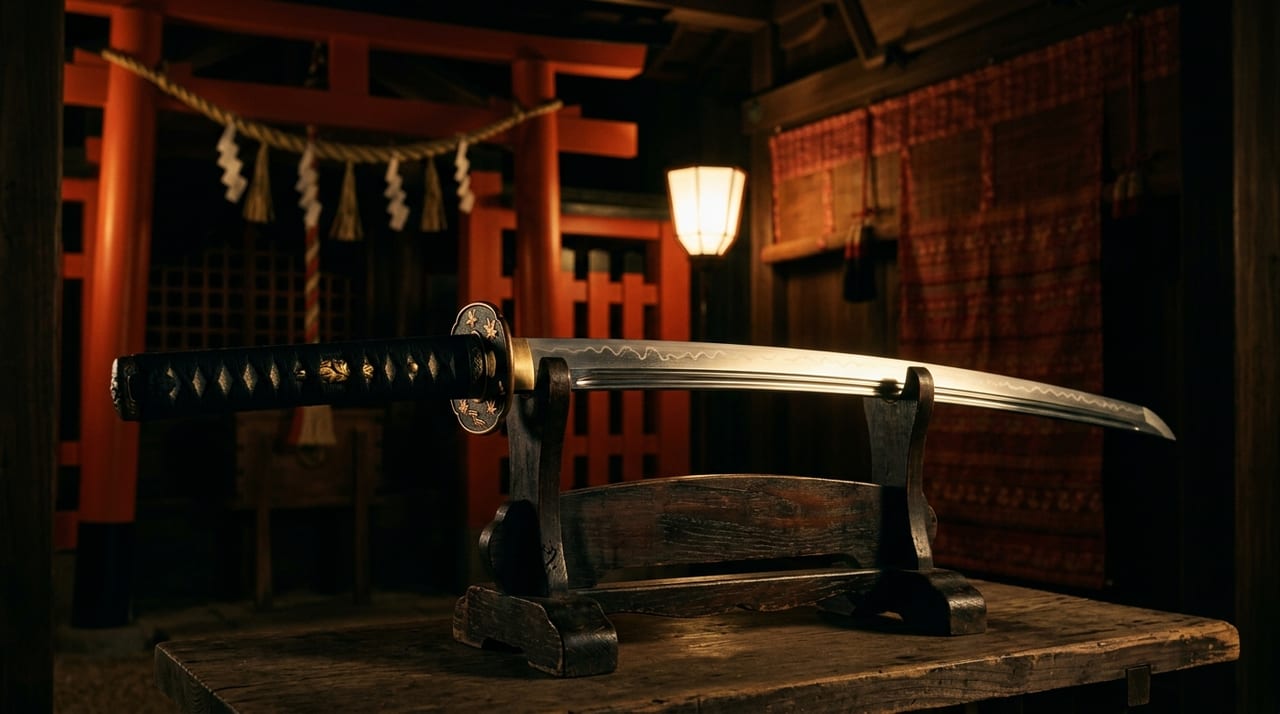 * Image is for illustrative purposes only.
Table of Contents
When discussing the history of Japanese swords, the names of famous sword makers like Masamune and Muramasa, or major production centers such as those represented by the "Five Traditions" of Bizen, Soshu, Yamashiro, Yamato, and Mino are often at the center of discussion. The Five Traditions include the following five provinces.
- Bizen
- Soshu
- Yamashiro
- Yamato
- Mino
However, in the shadows of this, there existed many small groups of sword makers who, while rooted in the provinces, continued to maintain their own lineages. The "Nihon-pa" (二王派) that arose in Suo Province (present-day eastern Yamaguchi Prefecture) is one such example. While not counted among the central Five Traditions, it passed down through the generations from the Nanboku-Cho to the Muromachi period, and to this day continues to attract the attention of Japanese sword enthusiasts as a presence that demonstrates the depth of regional sword culture.
The Origin of the Name "Nihon"—The Legend of the Guardian Kings
The unusual name "Nihon-pa" is linked to a tradition concerning images of the Nio (Vajrapani, or Kongō Rikishi) installed in the mountain gates of temples. An old tradition passed down tells that the sword maker credited as the founder of the school, when facing difficulties in sword forging, received the protection of the Nio image and crafted a fine sword, and this is said to be the origin of the name "Nihon" for the school. Such traditions in which sword makers describe their techniques as deriving from connections with Shinto and Buddhist deities are a cultural characteristic widely seen throughout Japanese sword forging, and the Nihon-pa is no exception. However, there are discrepancies in the details of the tradition depending on the historical sources, and parts that cannot be definitively confirmed as historical fact remain. Legends of Japanese sword production sites often show vestiges of an era when tatara iron production and sword forging were inseparably connected with religious practices, and it is reasonable to understand the founding legend of the Nihon-pa as lying on the continuum of such belief culture.
Suo Province as a Region and the Character of the Sword-Making Group
Suo Province faced the Seto Inland Sea and was a region with traffic to and from the Kinai and Kyushu through the Sanyo Road. While located at a distance from major centers of sword demand such as Kyoto, Yamato, and Bizen, it became the backdrop for the emergence of regional sword-making groups in various places that independently nurtured forging traditions in response to the needs of local warrior clans and temples and shrines. The Nihon-pa was one such regionally distinctive group of sword makers, and while it did not enjoy the broad renown of the central Five Traditions, its characteristic was that it continued to support regionally rooted demand over a long period. The Seto Inland Sea coast was also a distribution route for goods and technology via water transport, and the existence of soil in which forging techniques transmitted from other regions took root while carrying regional characteristics is thought to have been one factor that allowed regional workshops like the Nihon-pa to survive.
Sword Forging Passed Down Through the Generations and the Continuation of the School
The sword makers of the Nihon-pa are said to have continued forging over several generations while inheriting the lineage of the person considered to be the first generation, with a common character crowned in their names. While it is not necessarily unusual for regional sword-making groups to survive over several generations, the fact that it maintained continuity even through the turmoil of the Nanboku-Cho and the social changes of the Muromachi period can be said to be a manifestation that it had gathered a certain level of demand and trust in the region. However, detailed genealogical records are not preserved in abundance as they are for the major workshops of the Five Traditions, and there are many aspects of the activity periods of each generation and the evolution of their styles that must rely on estimates based on extant signed works and later sword-related texts.
Examination of Style—The Individuality of a Regional Sword Maker
Regarding the style of the Nihon-pa, views that it inherited from the Yamato tradition have been introduced since ancient times, but this too is one of the conventional positions in the genealogical organization of regional sword makers, and cannot be said to constitute definitive proof of technical lineage. In general, regional sword makers with limited materials compared to central prestigious workshops must often describe their styles based on the characteristics of the ground metal and blade patterns of extant works, and for the Nihon-pa as well, it is an honest approach to refrain from overly definitive characterization and to maintain understanding within the broad framework of "a group of sword makers who aimed for practical, utilitarian sword forging while maintaining regional character." This cautious stance is a particularly required attitude when dealing with regional sword makers outside the Five Traditions, and we must avoid spinning excessively elaborate narratives from fragmentary historical sources.
Common Ground with Other Regional Sword-Making Groups
Beyond just the Nihon-pa, there existed many lineages of regional sword makers throughout Japan that were not counted among the central Five Traditions. For example, in regions such as the following, groups of sword makers meeting local demand took root.
- Tohoku
- Kyushu
- Shikoku
Like these regional sword-making groups, the Nihon-pa is thought to have continued practical, utilitarian sword forging within the limited market of local warrior and temple/shrine demand. The existence of such regional sword makers shows that the production and distribution of Japanese swords was not supported solely by central prestigious workshops, but that each region had its own system of demand and supply. When attempting to understand sword history through only the framework of the Five Traditions, it is necessary to be aware that this can make the broad base of such regional development difficult to see.
The Positioning of the Nihon-pa Today
Today, works of the Nihon-pa have limited circulation compared to sword makers from other major production centers, and opportunities to see them on the market are few. Precisely because of this, they are attracting attention from some sword researchers and collectors as valuable materials to fill gaps in regional sword history. The appeal of Japanese swords lies not only in the works of outstanding master craftsmen like Masamune and Muramasa, but also in the breadth of the base built up by countless groups of sword makers rooted in such regions. Tracing the history of the Nihon-pa would also be an opportunity to reconfirm the diversity of sword culture in various parts of Japan that cannot be seen through only the central historical view of the Five Traditions.
TOUKENZA publishes online explanatory columns related to the history and techniques of Japanese swords, including the lineages of such regional sword makers. We would be pleased if you could deepen your understanding of sword culture through these columns in conjunction with the swords currently on display.