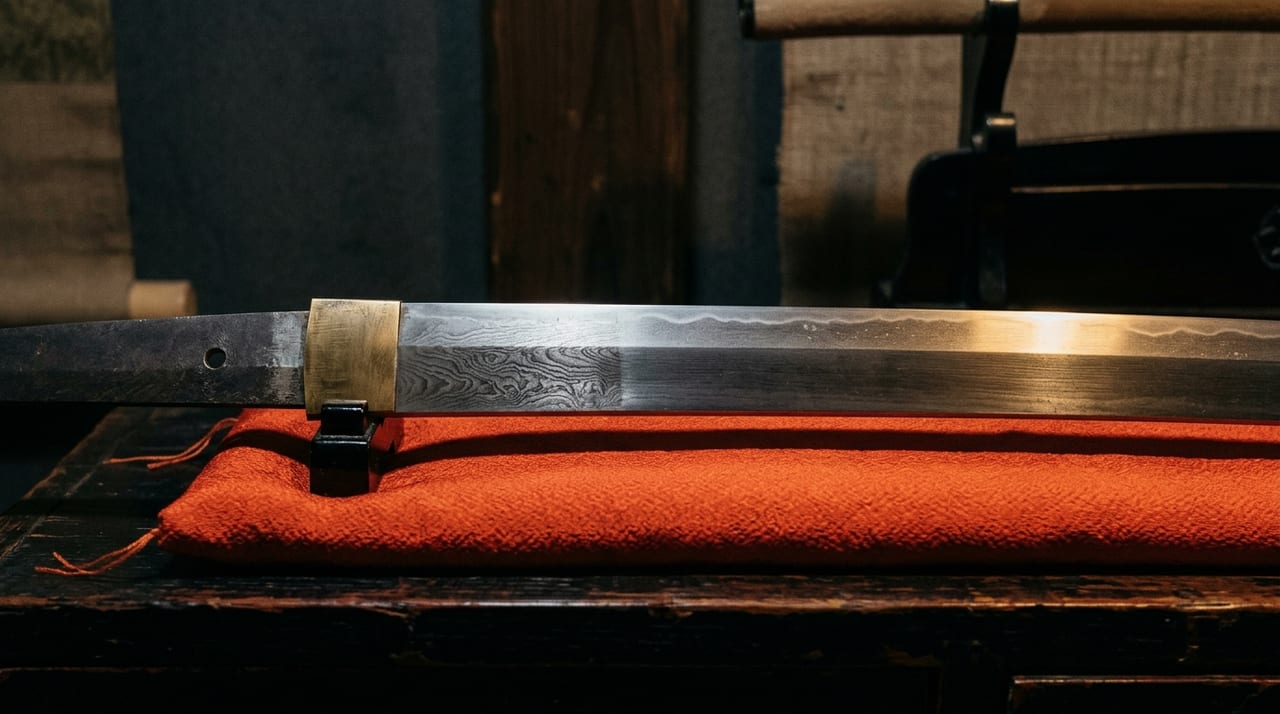
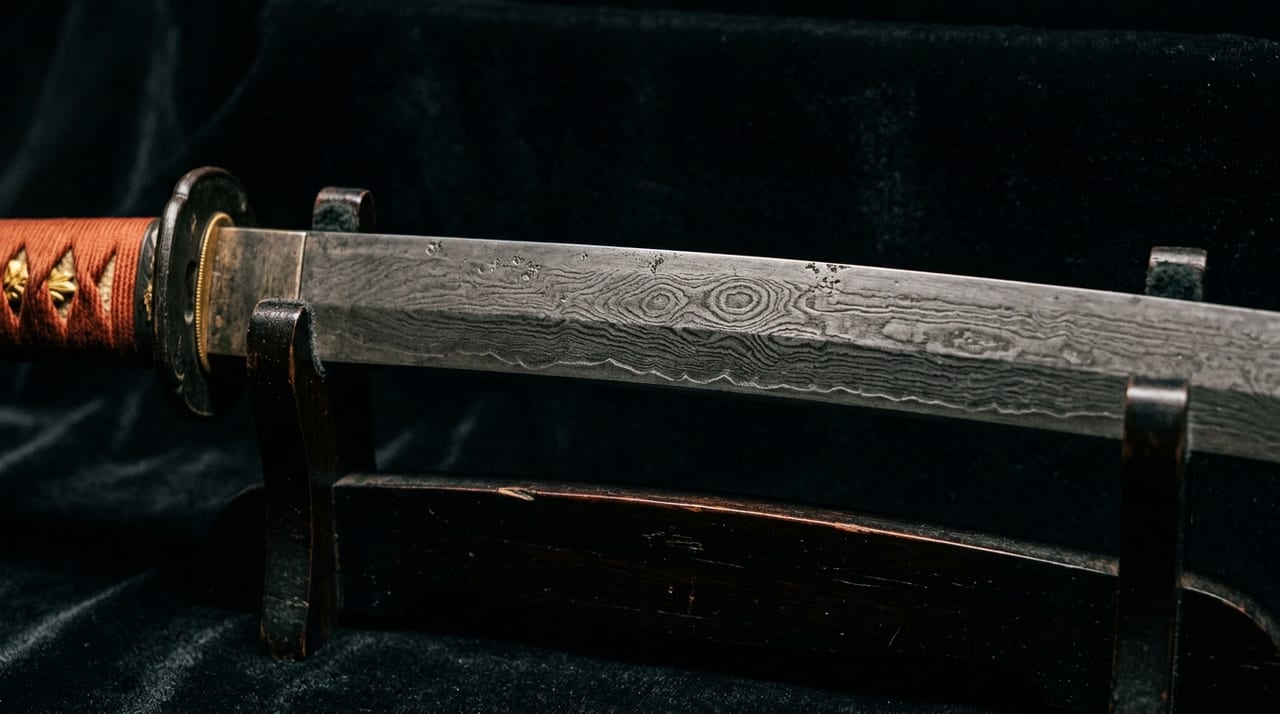
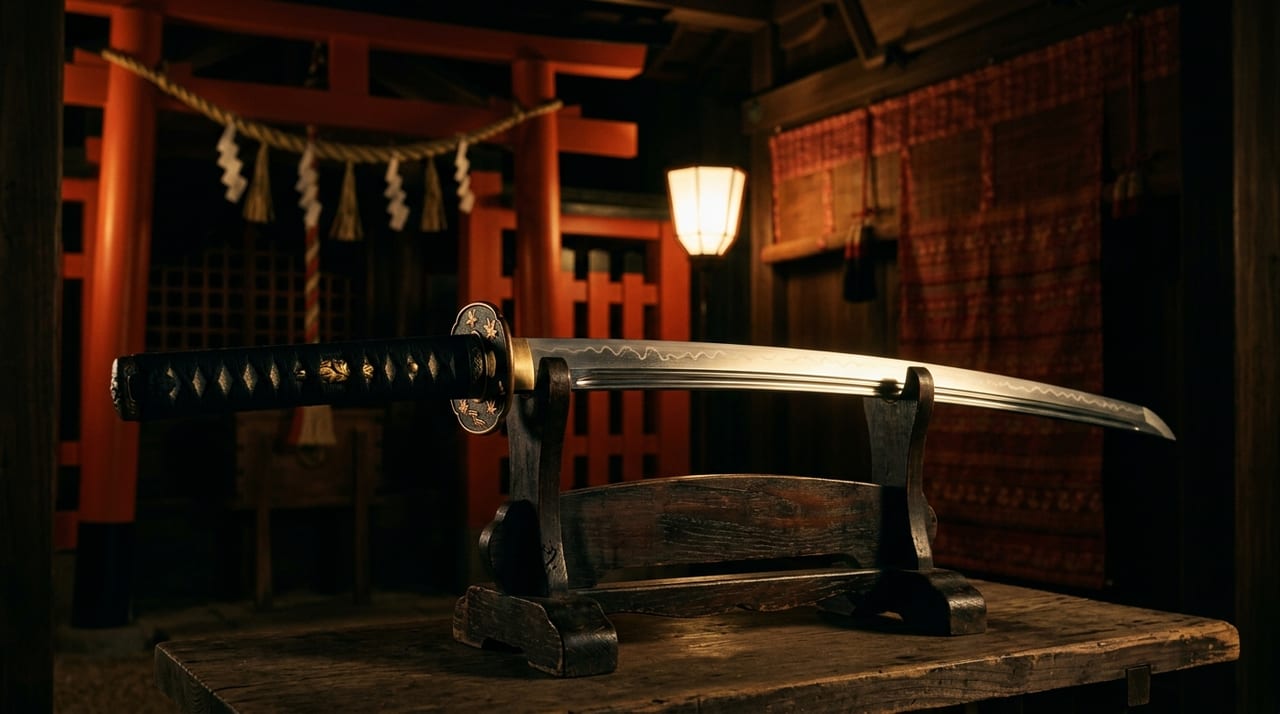
Mokusa kaji —— an ancient group of tōkō from Tōhoku and Ichinoseki, outside the Gokaden
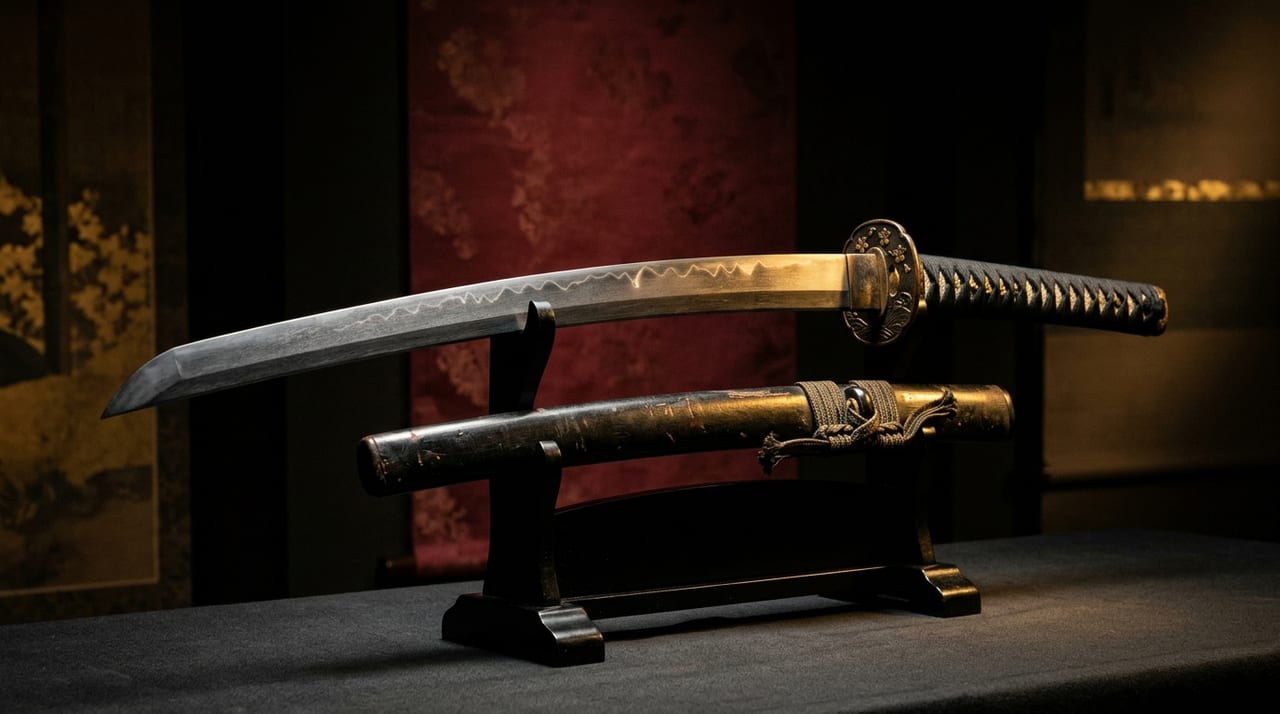 * Image is for illustrative purposes only.
Table of Contents
Yamato of Nara, Yamashiro of Kyoto, Bizen, Sagami, Mino. When one thinks of the production centers of Japanese swords, the Gokaden (five traditions) comes to mind first. However, in Iwate Prefecture in Tōhoku, there was also a group of kaji tracing back to the founding period of the Japanese sword. That group was the Mokusa kaji. This article organizes what can be confirmed about the Mokusa kaji.
What is the Mokusa kaji?
The Mokusa kaji were a group of tōkō who continued forging swords in the area around present-day Ichinoseki City, Iwate Prefecture. According to introductions such as that from the Ichinoseki City Museum, they are regarded as a kaji group that left its name in the history of blades from the Heian period through the Muromachi period. They are often described as one of the oldest kaji groups in Japan.
The name "Mokusa" derives from a place name in Daitō-machi, Ichinoseki City. The reading is "Mokusa," not "Maikusa," and it is easy to misread at first glance.
The background of a land that produced iron
To forge a sword, one first needs high-quality iron. The area around Ichinoseki was known as a production center for iron sand, and it is thought that an environment in which iron was readily available fostered the kaji group. Having both materials and techniques in the same place is a founding condition common to every production center.
The method of making iron from iron sand is called tatara (traditional smelting). The process from raw materials to finished sword is explained in Tamahagane and Tatara Ironmaking. Understanding that the same type of technology was practiced in Tōhoku makes it easier to see the place of Mokusa within that context.
Connection with Hiraizumi
When speaking of Tōhoku in the Heian period, one cannot leave out the Ōshū Fujiwara clan of Hiraizumi. Tourist guides and similar sources note that the "iron tree" displayed in the treasure hall of Mōtsūji in Hiraizumi is attributed to the Mokusa kaji. However, since the circumstances of its creation have not been confirmed in detail, we will limit ourselves here to saying "it is so transmitted."
Furthermore, Tōhoku during the Heian period was a region where demand for weapons and iron was high amid relations with the Emishi. Sword forms different from the sori-less straight sword were also known in the weapons culture of Tōhoku at the time. The background is taken up in the article Sakanoue no Tamuramaro and the Emishi Campaign.
How to view the formation of the Japanese sword
The Japanese sword is said to have taken shape as it transitioned from straight swords to swords with sori (curvature). That transitional period is summarized in Morphological Characteristics of Early Heian Swords. Among the noted craftsmen of the Heian period, Sanjō Munechika of Kyoto is well known (see the article on Sanjō Munechika).
The reason the Mokusa sword attracts attention is that, within this debate over the formation of the Japanese sword, there is discussion of the possibility that the kaji of Tōhoku played a certain role. However, there is a range of scholarly opinion on the question of influence between Mokusa and other production centers. Rather than drawing firm conclusions, we will note this as a point of debate.
Positioning relative to the Gokaden
The Gokaden (five traditions) is often used as a framework for organizing sword production centers. The Gokaden consists of the five traditions of Yamato, Yamashiro, Bizen, Sōshū, and Mino, and forms the basis for studying the Japanese sword (see What are the Five Traditions of the Japanese Sword?).
The Mokusa kaji are positioned as an ancient regional kaji group that falls outside the framework of the Gokaden. Looking at other ancient currents from the Heian period, such as the Ko-Bizen school, which forms the origins of Bizen (see the article on the Ko-Bizen school), one can appreciate that the Japanese sword did not emerge from a single place but developed in parallel across various regions.
Starting points for learning about Mokusa swords
When one becomes interested in the Mokusa kaji, the following are good entry points.
- Exhibits and explanations at local public museums such as the Ichinoseki City Museum
- Introductions to the "iron tree" said to be preserved at Mōtsūji in Hiraizumi
- Basic knowledge of iron sand and tatara
Ancient swords survive in limited numbers, and it is difficult to describe the characteristics of a production center from a single piece. That is precisely why understanding the history of a production center before engaging with the works changes what one sees.
How to read the traces of Mokusa that remain today
Examples of work by the Mokusa kaji are fragmentary in terms of information compared to later, more famous production centers. For this reason, discussions of Mokusa often rely on place names, oral traditions, and exhibition explanations as reference points rather than on extant swords themselves. This is a situation common to all ancient kaji groups of Tōhoku.
There are two things the reader should keep in mind.
- For swords introduced as "works of Mokusa," check whether supporting documentation such as a kanteisho (appraisal certificate) or exhibition explanation is provided
- Receive traditions as traditions, and do not mix them with confirmed facts
Topics about ancient production centers are all the more compelling, and stories tend to run ahead of the facts. Reading with a mindset that separates facts from traditions deepens one's understanding of swords.
Summary
The Mokusa kaji are a kaji group from Tōhoku that left their name in the history of the Japanese sword outside the Gokaden. While some details remain unconfirmed, they are a presence that teaches us that the Japanese sword grew through the iron and kaji of various regions.
TOUKENZA's online catalogue allows you to browse and purchase listed swords. For any questions about swords, please use the inquiry form to get in touch.