Tamahagane and tatara Smelting — How the Steel for Japanese Swords Is Made
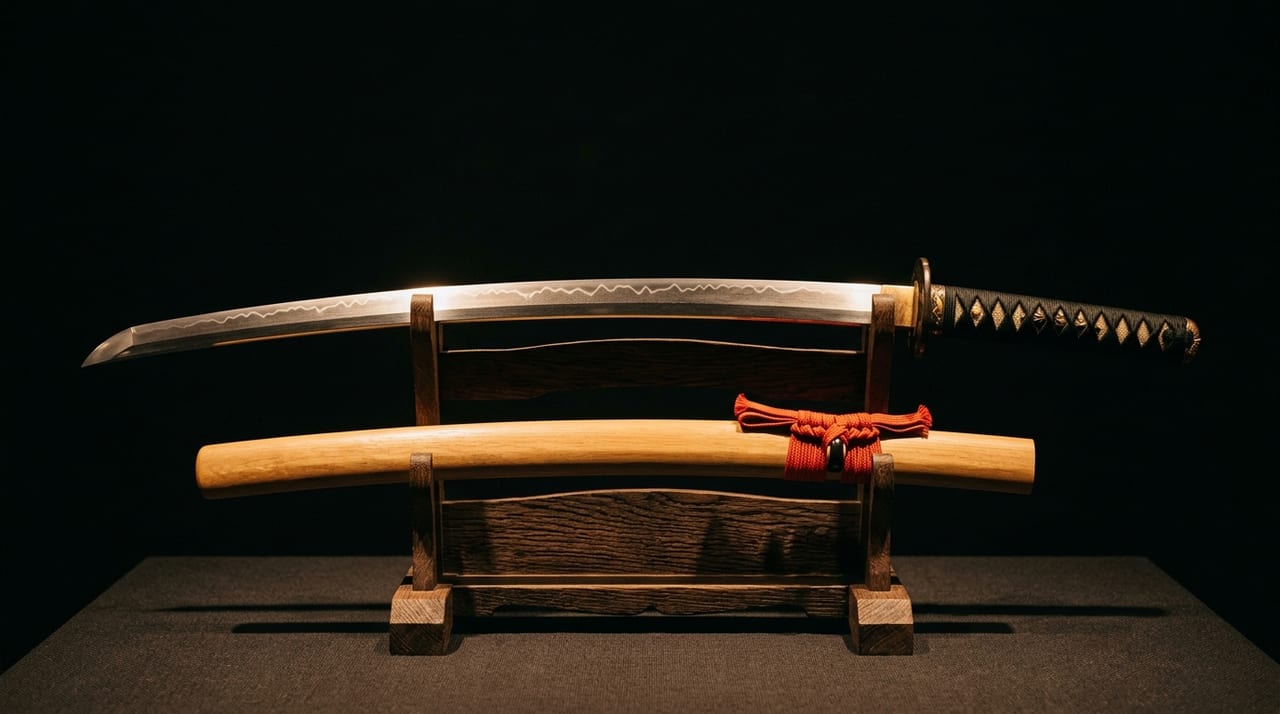 * Image is for illustrative purposes only.
Table of Contents
What Is Tamahagane?
Tamahagane is steel produced specifically as the raw material for Japanese swords, manufactured exclusively through tatara smelting using iron sand (satetsu) and charcoal. Through a distinctive production process unlike ordinary steelmaking (coke blast-furnace smelting), it yields steel with a wide range of carbon content, from 0.6 to 1.5%.
Tamahagane is a heterogeneous mass in which portions with high carbon content (steel = hagane) and portions with low carbon content (iron = tetsu) coexist; the tōshō turns this mixture to advantage in the combined technique of selecting between kawagane and shingane. The method of extracting the iron sand used as raw material is explained in detail in "Kanna-nagashi and Iron Sand Extraction Techniques."
The Basic Structure of tatara Smelting
Tatara is the collective term for Japan's indigenous smelting furnaces, in which iron sand and charcoal are layered alternately and burned. They consist of the following elements.
Structure of the Furnace (kera-ba)
- Tokozuri: the base of the furnace; has a subterranean heating and drying structure
- Haguchi: the air-inlet nozzle; forces air in from wooden bellows (fuigo)
- Charcoal and iron-sand layers: stacked alternately and ignited
- Rogawa: the furnace wall, built from clay, sand, and whetstone powder
Operating Scale
- Furnace size: approximately 3 m long, 1 m wide, and 1.2 m tall
- Iron sand used: 10 to 15 tonnes per operation
- Charcoal used: 10 to 12 tonnes
- Output: approximately 2.5 to 3 tonnes of kera (iron bloom), of which tamahagane accounts for about 30%
Three Days and Three Nights of Continuous Operation
tatara smelting requires more than 72 hours of continuous operation. Once ignited, the furnace cannot be extinguished and is managed around the clock in shifts.
Sequence of Operations
- Hiire (lighting): the furnace is ignited; it is initially warmed at low temperature
- Main operation: iron sand and charcoal are fed alternately while the temperature is raised to approximately 1,400 °C
- Kera-dashi (bloom extraction): after 72 hours, the iron bloom (kera) is removed from the base of the furnace
- Kera-wake (bloom sorting): the extracted kera is broken apart and sorted into tamahagane (first-grade material), mid-grade material, and low-grade material (for shingane)
Note: pig iron (zuku) is a product of the zuku-oshi method and is not obtained from the kera-dashi of the kera-oshi method.
Temperature Control Techniques
The tatara master (murage) manages furnace temperature by empirically adjusting the volume of air blown in and the ratio of iron sand to charcoal fed in. Excessive airflow causes the iron to over-melt and become pig iron (excess carbon), while insufficient airflow prevents the iron from solidifying. This delicate control is the core of tatara technique.
Sorting Tamahagane by Carbon Content
After kera-dashi, the kera is broken apart and sorted into several grades according to carbon content.
| Type | Carbon Content | Use |
|---|---|---|
| High-carbon tamahagane | 1.0–1.5% | For the cutting edge (hagane) and kawagane |
| Medium-carbon tamahagane | 0.7–1.0% | Primary structural material of the blade |
| Shingane material (low-grade) | 0.3–0.6% | For shingane (used as core material) |
Tamahagane refers specifically to first-grade material with a carbon content of roughly 1.0% or more; the low-carbon material of 0.3–0.6% is low-grade material for shingane and is distinguished from tamahagane. The tōshō blends multiple materials with differing carbon contents to create the hardness and toughness appropriate for each part of the sword.
The quality of iron sand can be judged by its color. Dark brown indicates high-quality iron sand dominated by magnetite (Fe₃O₄); reddish-brown indicates iron sand dominated by hematite (Fe₂O₃), which requires additional reduction steps; and yellowish-brown is considered unsuitable for smelting due to its high impurity content. The abundant production of magnetite-type iron sand in the Okuizumo region, formed by the weathering of granite in the Chugoku Mountains, is the fundamental reason the area became a major center of tatara smelting.
The Modern Production System: Nittoho Tatara
Today, tamahagane is produced in only one place in the world: Nittoho Tatara (Okuizumo-cho, Nita-gun, Shimane Prefecture), operated by the NBTHK (Society for the Preservation of Japanese Art Swords).
Overview of Nittoho Tatara
- Established: restored operations began in 1977 (Showa 52)
- Operating period: annually in winter (January to February; low-moisture charcoal and iron sand conditions are optimal)
- Annual output: approximately 3 tonnes of tamahagane (total from three operations per year (sandai); distributed to all certified tōshō in Japan)
- Distribution: distributed to certified tōshō nationwide through the All Japan Swordsmith Association
Supply falls short of demand for tamahagane, and the annual allocation per certified tōshō is limited.
tatara smelting declined rapidly with the introduction of Western-style blast furnaces after the Meiji period and had nearly died out by the early Showa era. The revival of Nittoho Tatara in 1977 (Showa 52) is one of the world's rare cases of "restarting an extinct traditional smelting practice," undertaken in the name of preserving sword culture. The tamahagane produced is folded approximately 15 times through orikaeshi tanren, forming a laminated structure of 2¹⁵ = 32,768 layers, which is the source of the distinctive toughness and jihada grain pattern (hada-moyo) characteristic of Japanese swords. The details of this process are explained in "Orikaeshi Tanren: The Relationship Between Fold Count, Jihada, and Hamon."
The Rarity and Price of Tamahagane Today
The distribution price of tamahagane produced at Nittoho Tatara is kept relatively low for tōshō members, but tamahagane circulating on the open market is priced very high, sometimes reaching tens of thousands to over 100,000 yen per kilogram.
Moreover, with growing numbers of foreign sword enthusiasts and demand from overseas kaji, tamahagane is expected to become even scarcer going forward.
Conclusion
Tamahagane and tatara smelting are technologies that underpin the foundations of Japanese sword culture, and production continues today using traditional methods. It is precisely because this special raw material exists that the distinctive jihada grain pattern and hamon of Japanese swords come into being. Understanding the production process of tamahagane provides an important foundation for a deep understanding of the artistic and craft essence of Japanese swords.