The Number of Orikaeshi Tanren Folds and Changes in Steel — The Scientific Basis for the Effect That the Difference Between 15 and 20 Folds Has on Jigane Density and Hamon Quality
 * Image is for illustrative purposes only.
Table of Contents
What Is Orikaeshi Tanren?
In nihontō making, orikaeshi tanren is one of the most important processes governing steel quality. Tamahagane is heated, spread flat, folded, and forged again. By repeating this work, impurities are removed, the steel structure becomes homogeneous, and the beauty and strength of the blade's jigane are born.
At first glance it seems a simple task, but the number of folds has a decisive influence on the properties of the steel. Too few, and impurities remain and the structure becomes coarse. Too many, and excess carbon is lost, making the steel brittle. The tōshō determines the number of folds by observing the condition of the material and finding this balance.
The Mathematics of Orikaeshi Tanren — Calculating the Layers
The relationship between the number of folds and the number of steel layers can be expressed as a simple sequence. One fold gives 2 layers, two folds give 4, three folds give 8, four folds give 16, and for n folds the number of layers is 2ⁿ.
Based on this calculation:
- 10 folds: 1,024 layers
- 15 folds: 32,768 layers
- 20 folds: 1,048,576 layers (approximately one million layers)
Looking at the numbers alone, 20 folds would seem to produce far more layers and a denser steel. In reality, however, it is not that simple. With each fold, each layer's thickness is halved, and beyond a certain number of folds, individual layers become as thin as a few atoms. Any further layer formation is physically meaningless, and the steel simply continues to lose carbon.
The Relationship Between Carbon Content and Folding
The principal factor determining steel properties is carbon content. Higher carbon makes the steel harder but more brittle; less carbon increases toughness but reduces hardness. In nihontō, structures such as kōbuse — which combines high-carbon kawagane on the edge side with low-carbon shingane at the core — are employed to achieve both hardness and toughness.
Orikaeshi tanren also affects carbon content. During forging, decarburization occurs, in which carbon escapes into the atmosphere from the surface of the steel exposed to high temperatures. The more folds are made, the longer the total forging time becomes and the greater the decarburization. The tōshō manages carbon content throughout tanren, working from the initial carbon content of the tamahagane (approximately 1.0–1.5%) toward the appropriate carbon content required for the blade (approximately 0.6–1.0% in the edge section, where hardness is needed).
Between 15 and 20 folds there is a clear difference in the amount of decarburization. Forging 20 times risks the steel losing so much carbon that it approaches a low-carbon steel that is "difficult to quench." For this reason, many modern tōshō use approximately 8–15 folds as their standard number of tanren repetitions.
Effects on Jigane
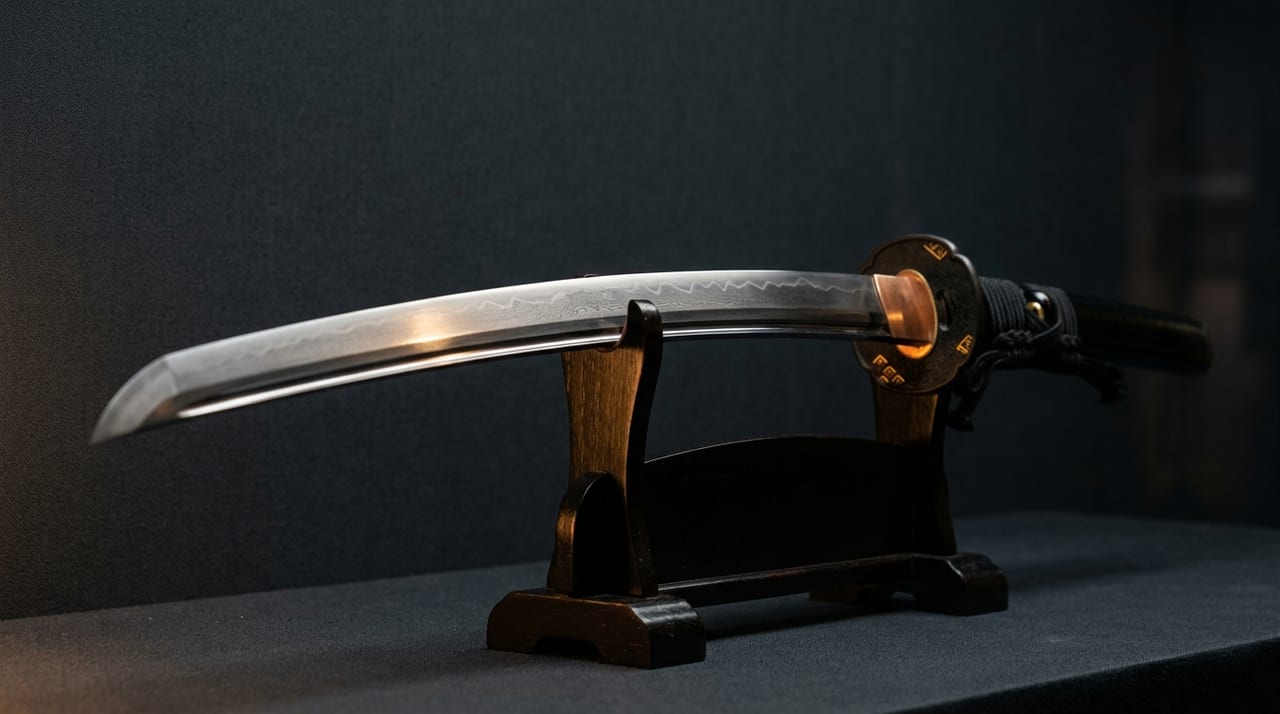
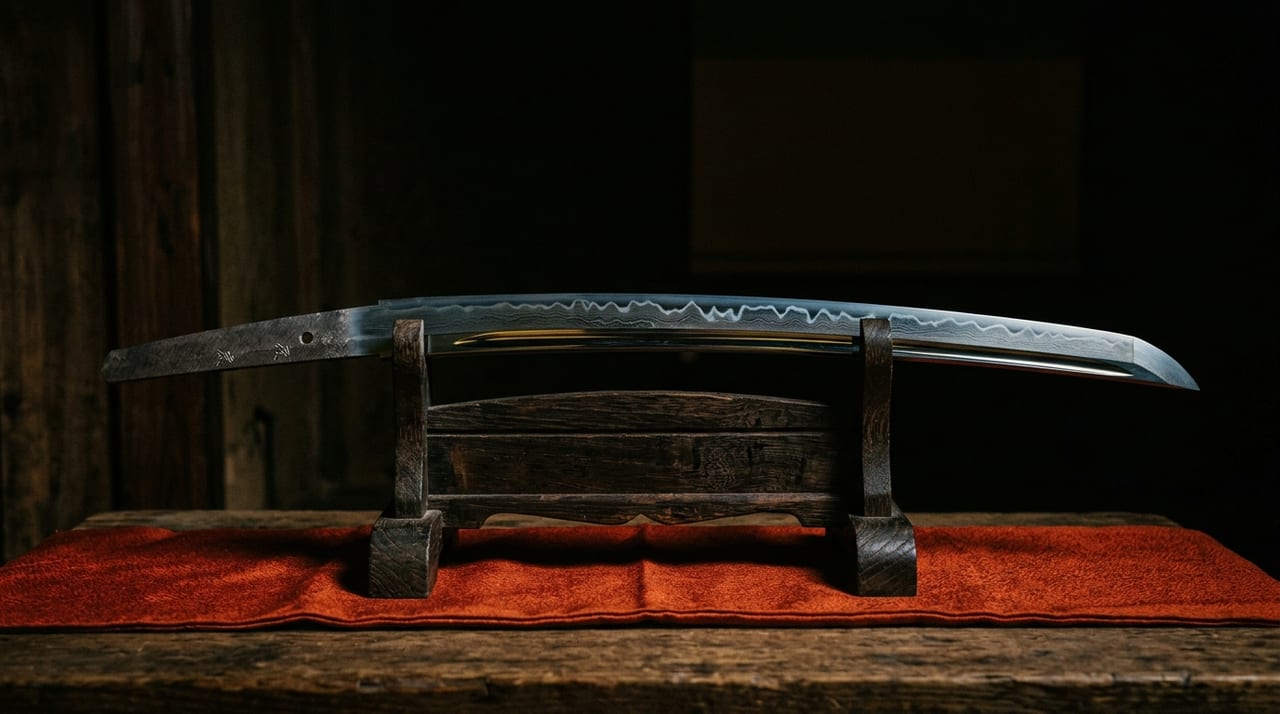
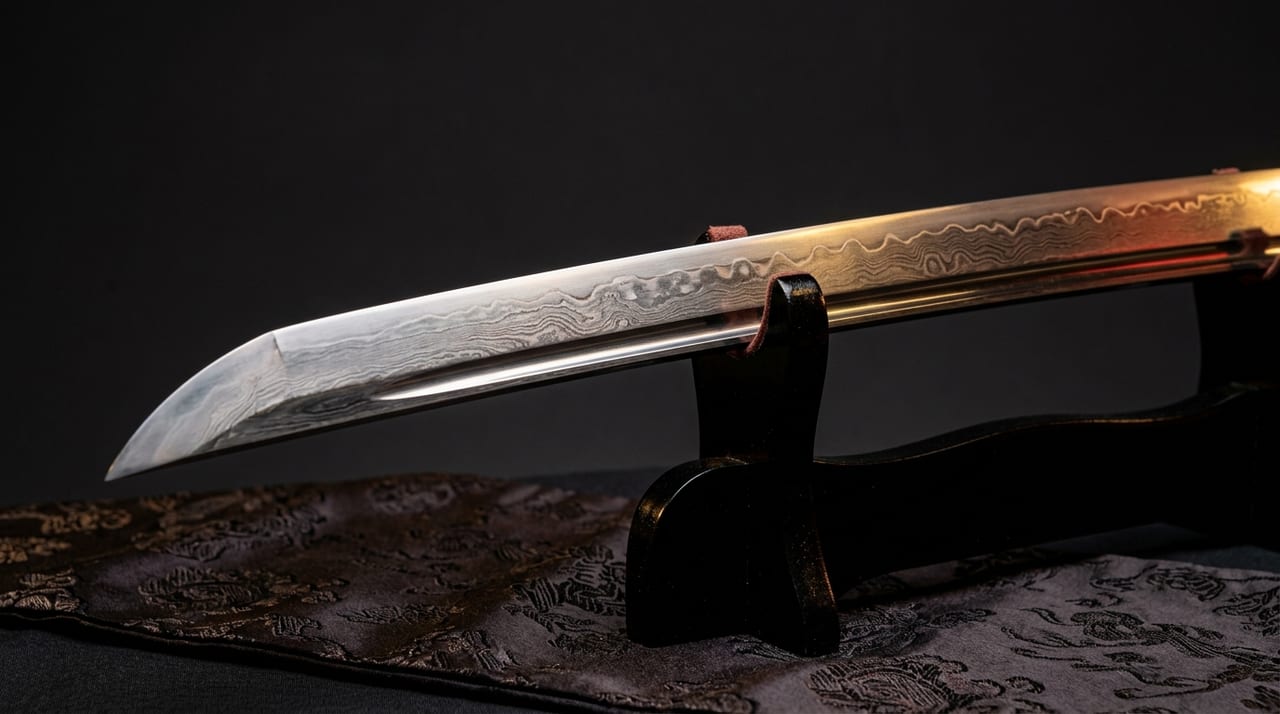
Jigane refers to the surface texture of the steel that appears on the blade, a structural pattern analogous to the grain of wood. This pattern changes depending on the number and direction of the folds.
Representative jigane patterns include the following:
- itame: a wood-grain-like pattern. It tends to appear when the number of folds is relatively small or when forging is done in one direction
- masame: a pattern of straight, aligned lines. It appears when forging is done extensively in the longitudinal direction
- mokume: a swirling pattern like burls in wood. It is produced by forging and folding in multiple directions
As the number of folds increases, the jigane tends overall to become denser and more homogeneous. However, if the number of folds is too great, the distinction between individual layers is lost and the jigane pattern itself disappears. From an aesthetic standpoint, a jigane that retains a moderate degree of texture is said to produce the beauty of utsuri and hadaai, while an excessively homogeneous jigane can instead give a monotonous impression.
Effects on Hamon Quality
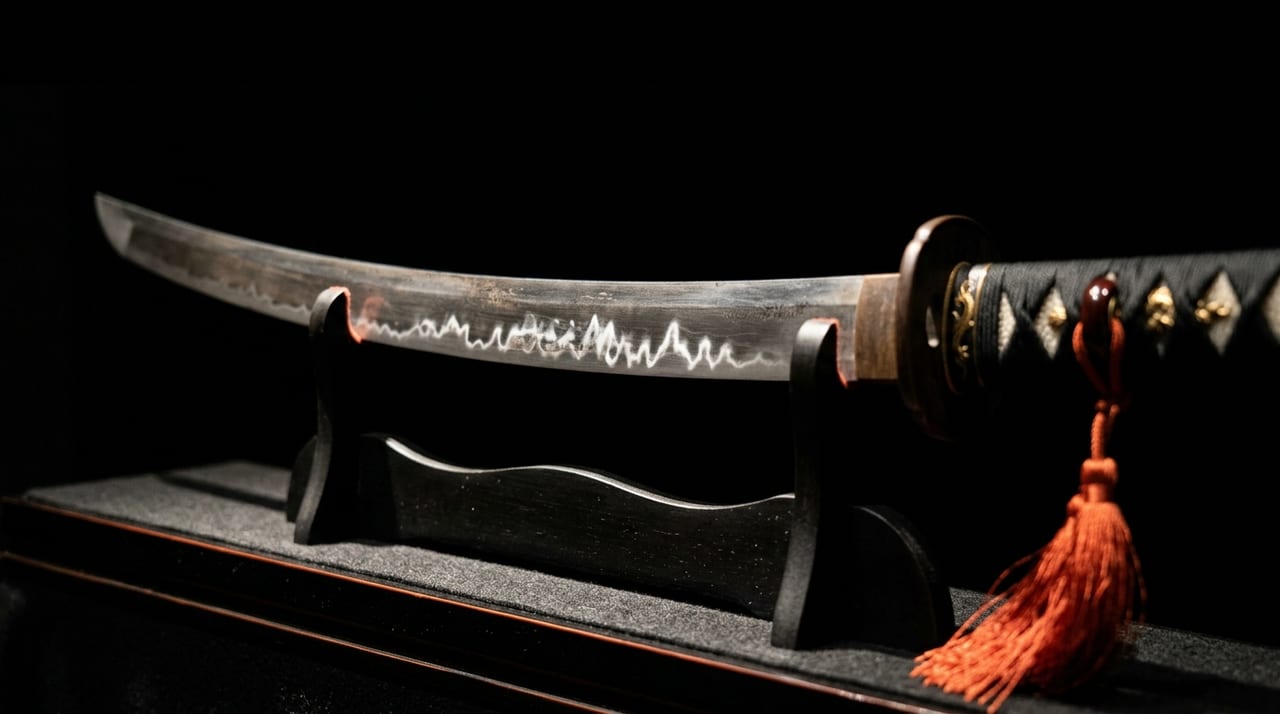
Orikaeshi tanren also indirectly affects the quality of the hamon. This is because the hamon that appears during the yaki-ire process is determined by the carbon distribution in the blade, the homogeneity of the structure, and the distribution of residual stress.
Steel that has been forged homogeneously shows predictable transformation behavior during quenching. This forms the foundation for producing clear and complex hamon such as chōji, midare, nioi, and nie. Conversely, if tanren is insufficient and the structure is non-uniform or there is uneven carbon distribution, unexpected transformation occurs during yaki-ire, the hamon becomes disordered, and in the worst case, quench cracking results.
A uniform steel structure is indispensable as the prerequisite for tsuchioki, which shapes the hamon. Orikaeshi tanren is what produces that uniformity, and the appropriate number of folds together with process management underpins the hamon quality of great swords.
The Optimal Number of Folds from the Perspective of Modern Tōshō
When prominent modern tōshō are asked about the number of orikaeshi tanren folds, many answer "approximately 10–16." This range is knowledge based on empirical rules, reflecting the view that it most well balances the three elements of impurity removal, structural homogenization, and carbon management.
At the same time, the optimal number changes depending on the quality of the tamahagane used, its carbon content, the forging temperature, and the jigane pattern being aimed for. Skilled tōshō make their judgment case by case while observing the condition of the material, and there is no fixed answer of "this many folds is correct." This flexible judgment is what can be said to be the essence of a tōshō's skill.
The pursuit of orikaeshi tanren is a domain where the metallurgy of steel meets the intuition of the craftsman. Today, structural observation by electron microscope and chemical analysis have become possible, and the scientific elucidation of traditional techniques has advanced. Even so, ultimately it is the tōshō's own eyes, hands, and experience that read the "condition" of the steel in ways no equation can express, and that become the key to producing the finest blade.