The History of Nihontō Specialist Books and Publishing Distribution — The Role of Sword Books, Illustrated Catalogs, and Journals in Spreading Knowledge, and the Digital Transformation Today
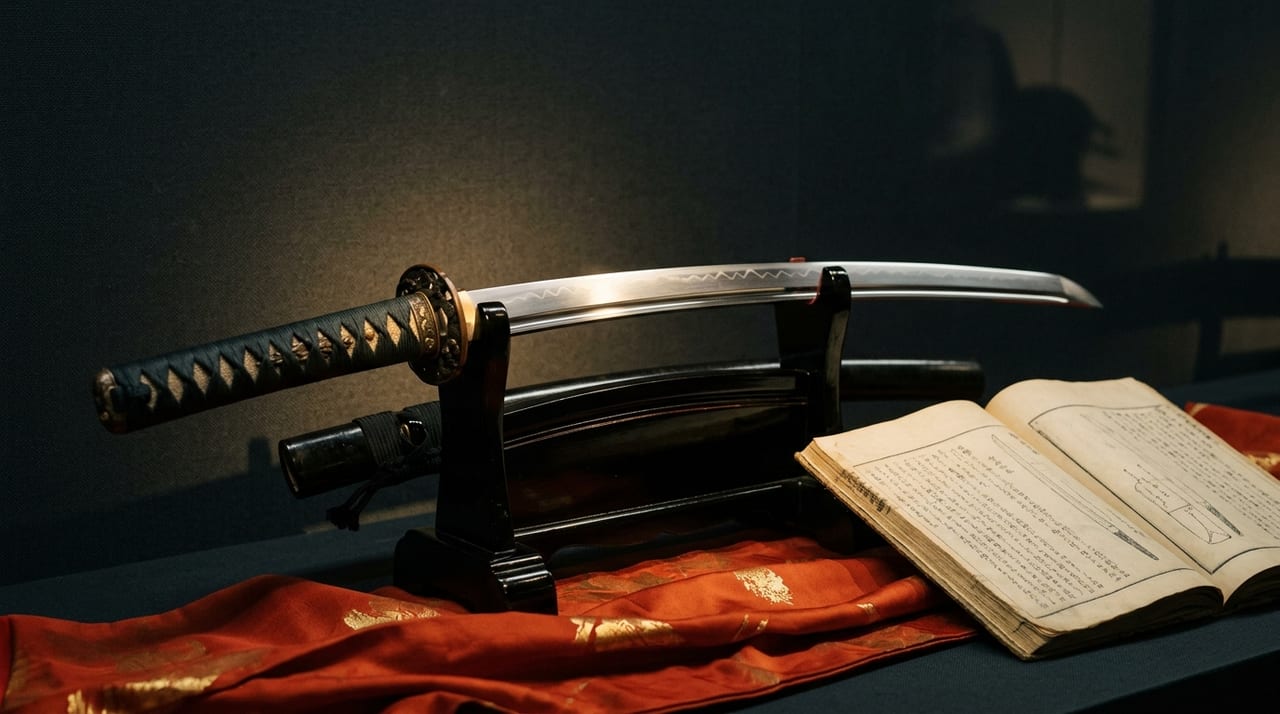 * Image is for illustrative purposes only.
Table of Contents
The Dawn of Sword Books — Pioneers of the Meiji and Taishō Eras
Systematic specialist books on nihontō began to be published in earnest in the late Meiji era. Even after the culture of wearing swords was lost following the Sword Abolishment Edict (Haitōrei) (1876), sword enthusiasts and researchers made every effort to leave scholarly records of swords. In the Meiji 40s, centered on researchers who inherited the lineage of the Hon'ami family — authorities on sword appraisal — records of tōkō by school and provenance, as well as commentaries on famous swords, were published. These books were epoch-making in that, together with advances in letterpress printing technology, they opened appraisal knowledge that had previously been guarded as secret traditions to the general public.
Entering the Taishō era, sword appreciation clubs and research groups were organized throughout the country, and regular information dissemination began in the form of association newsletters and research reports. Pamphlets issued by industry associations organized by sword dealers centered on Tokyo and Osaka carried sale information and appraisal opinions, serving a function that could be called the prototype of the modern auction catalog. This publishing activity made the market value of swords visible and also had the effect of increasing the transparency of buying and selling.
The NBTHK and the Launch of the Journal Tōken Bijutsu
In 1948 (Shōwa 23), under the GHQ occupation, the NBTHK was established as a juridical foundation, and publication of its journal Tōken Bijutsu began. This journal continues to be published today, functioning as the central medium for nihontō research. The commentary articles by appraisal committee members, photographs of famous swords' oshigata (rubbings), and activity reports from preservation societies across the country included in every issue have become indispensable study material for members.
A defining characteristic of Tōken Bijutsu is its editorial policy of carrying both introductory articles aimed at general readers and academic papers for specialists within the same pages. By placing introductory articles through which beginners learn the basics of sword appreciation alongside reports on tōkō genealogical research and metal microstructure analysis, the journal has attracted a wide readership. Current membership totals several thousand both domestically and internationally, with overseas nihontō researchers and museum staff also appearing among regular subscribers. Issues that carry the Association's shinsa results attract particular attention and are eagerly read by enthusiasts seeking the following designation information:
- Hozon Tōken
- Jūyō Tōken
- jūyō bijutsuhin (Important Art Object)
The Golden Age of Specialist Book Publishing — From the Later Shōwa Era to the Heisei Era
The Shōwa 40s through 60s (1960s–1980s) were the era when publication of nihontō specialist books was most active. Major publishers competed to release series such as Nihontō Taikan and Meitō Hiwa, and together with improvements in color photography technology, blade photographs of a fineness surpassing the originals captivated readers. In particular, illustrated catalogs produced by publishers such as Kadokawa Shoten, Yūzankaku, and Kōgei Shuppan were supported by both researchers and general enthusiasts. The editing of these illustrated catalogs frequently involved supervision by active tōkō and togishi designated as Living National Treasures or holders of Important Intangible Cultural Properties, and the reliability of the content was highly regarded.
During the same period, Boards of Education and museums in each prefecture published local historical materials compiling the histories of regional tōkō, which also created a major current in the spread of sword books. For example, in the regions of each of the Gokaden (five traditions), local newspapers and regional publishers issued their own tōkō chronologies and provenance-specific appraisal guides.
- Bizen
- Sōshū
- Yamato
- Mino
- Yamashiro
Many of these regional publications are now out of print, but they are treasured by enthusiasts as rare materials that command high prices in the secondhand book market.
The Digital Transition — The Internet and the Democratization of Information
Entering the latter half of the Heisei era (the 2000s), the forms in which nihontō information was disseminated underwent a major transformation. First, websites became widespread, and sword dealers and enthusiasts opened personal blogs and information sites, beginning to publish free of charge the knowledge that had previously only been obtainable from specialist books. This "democratization of information" had a dual impact: while it increased young people's interest in nihontō, it also put pressure on the sales figures of specialist books.
Furthermore, from the 2010s onward, the spread of smartphones and social media dramatically changed the distribution of sword information. Sword photographs posted on social media reached viewers around the world in an instant, causing a rapid increase in young sword fans. Distribution of sword specialist books as e-books has also progressed, and an environment in which overseas nihontō enthusiasts can more easily access Japanese-language specialist books is gradually taking shape.
Contemporary Challenges and Prospects — The Shrinking Publishing Market and New Forms of Dissemination
The greatest challenge facing contemporary sword publishing is the aging of the specialist book readership and the shrinking of the market. Illustrated catalogs that once sold in units of several thousand copies now frequently have first print runs of under one thousand. Publishers handling highly specialized content find it difficult to ensure profitability, and cases where authors resort to self-publishing are increasing.
In response to this, the publication of specialist books using crowdfunding has attracted attention as a new method. Cases of research books specializing in particular tōkō or production regions being published by gathering funds from enthusiasts have followed one after another, proving that a niche but reliable demand exists. Video explanations through YouTube channels and audio content through podcasts have also achieved a certain effectiveness in acquiring the next generation of sword fans. The role that specialist books have played — "recording and transmitting sword knowledge" — will continue to be carried forward in both digital and print forms.