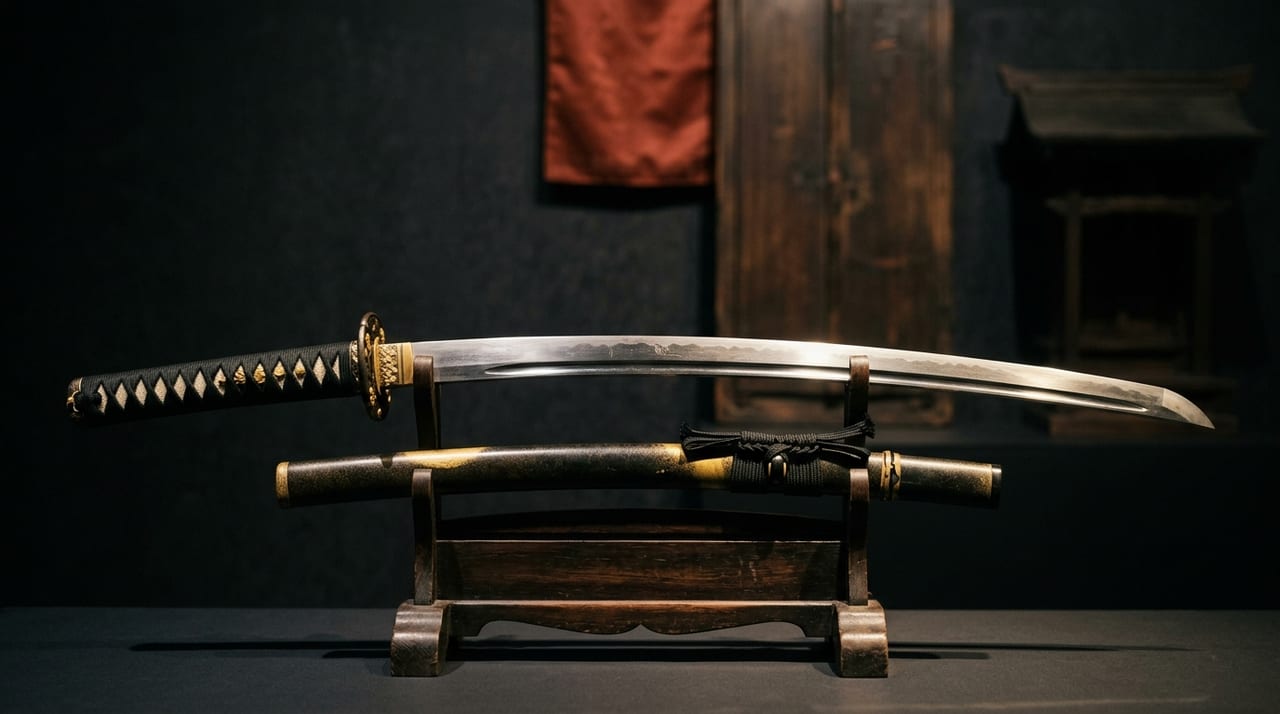
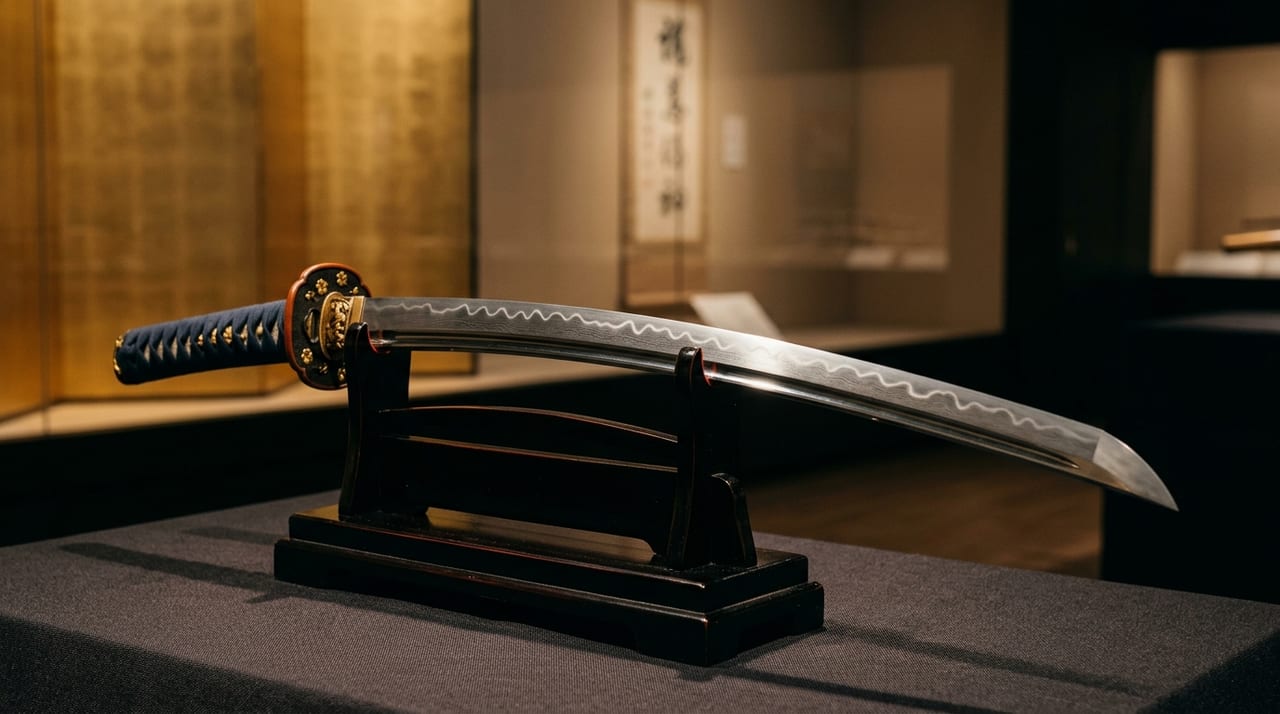
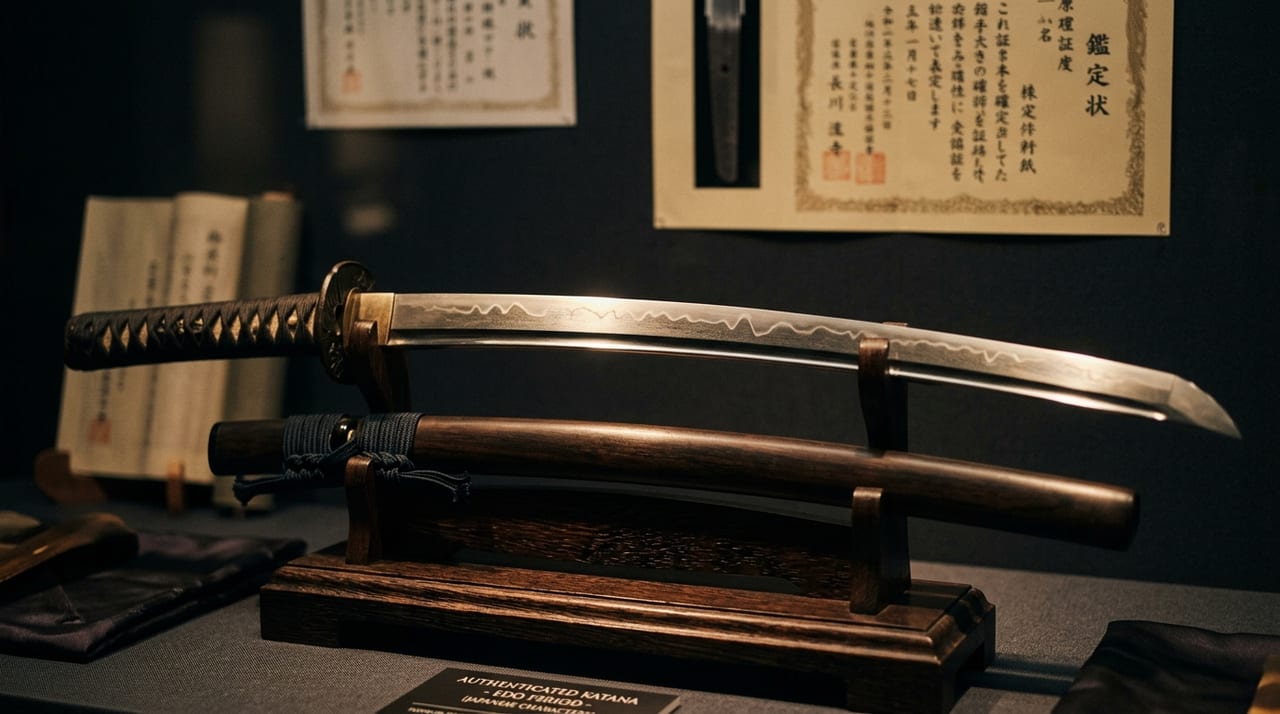
Tanto Construction — A Complete Guide to Forms and Historical Evolution
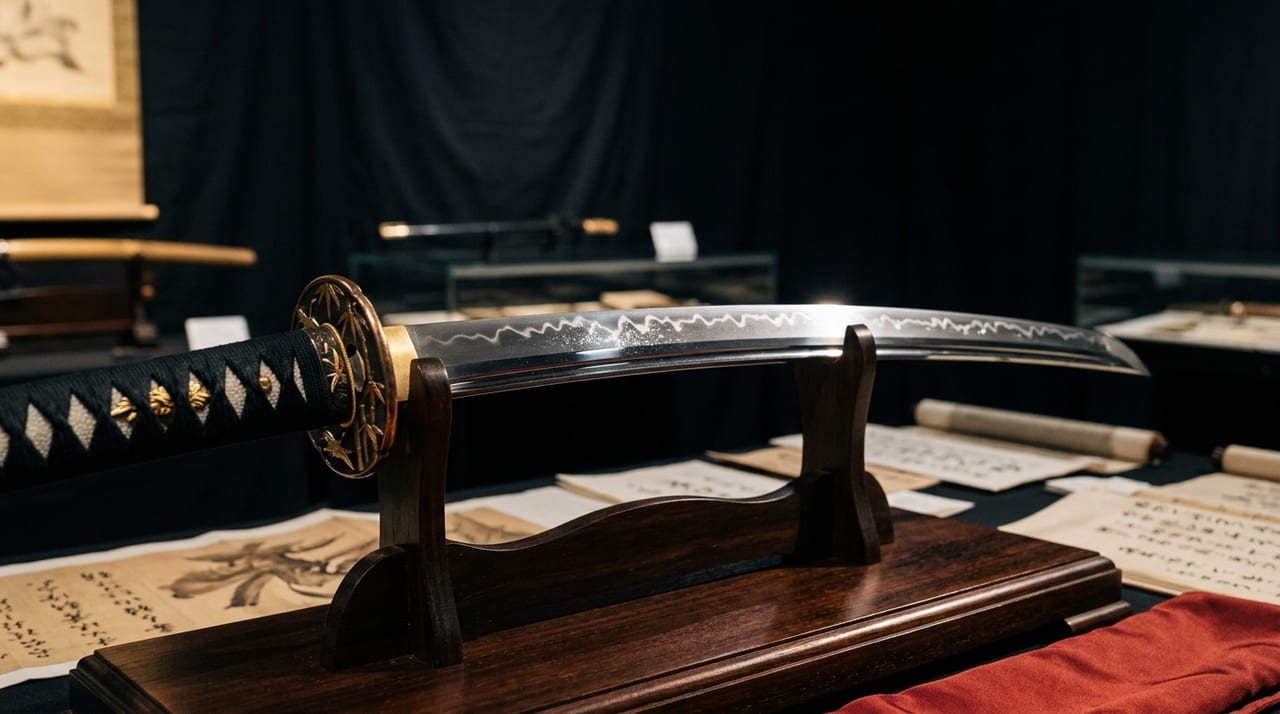 * Image is for illustrative purposes only.
Table of Contents
Definition and Classification Perspectives of Tanto
Tanto (short swords) are legally defined as swords with a blade length of less than 1 shaku (approximately 30 cm), but in practice, blades measuring 1 to 1.3 shaku (approximately 30–39 cm) are sometimes classified as "tanto." Blades 1 to less than 1.8 shaku in length are classified as wakizashi, but the boundary between categories is not always strict.
Classification by shape (tsukurikomi) is fundamental to tanto evaluation. Based on cross-sectional shape, the presence or absence of shinogi, the presence or absence of yokote, and the manner of edge attachment, tanto are divided into several tsukurikomi types. The frequency of particular forms varies by era and region, making tsukurikomi an important clue for studying schools (ryuha) and swordmakers.
Hirazukuri
Hirazukuri is a tsukurikomi with a flat cross-section lacking shinogi, and is the basic form most commonly adopted for tanto.
Characteristics:
- The blade cross-section is flat, making the hamon easy to observe
- The jihada of the jigane can be clearly seen
- The most common tanto form spanning the Kamakura through Edo periods
- Lacking yokote, the blade narrows toward the kissaki
Hirazukuri tanto flourished during the Kamakura period, and the hirazukuri triple-ridge tanto created by Shintōgo Kunimitsu, a foundational swordmaker of the Soshu (Sagami) tradition, are renowned. Kunimitsu's tanto are recorded from around 1293–1324, and multiple masterpieces designated as National Treasures survive, including the representative work "Aizu Shintōgo" (blade length 25.5 cm, designated National Treasure in 1951, housed in the Fukuyama Museum). Its characteristic is a delicate hamon combining thin, slender suguha with hotsure and uchinoke patterns, forming the prototype of the aesthetic sensibility of the later Soshu tradition.
Shinogizukuri
Shinogizukuri features a cross-section with shinogi running along the blade's side surface, similar to tachi and uchigatana, and appears in tanto from the mid-Kamakura period onward. It has higher rigidity than hirazukuri and is suitable for combat-use tanto demanding greater strength. The presence of shinogi makes the blade less prone to breaking and allows it to handle both cutting and thrusting.
Shobuzukuri
Shobuzukuri lacks yokote and features a tsukurikomi in which the shinogi runs in a straight line from the habaki-moto (the base of the blade at the habaki) to the kissaki. It is named for the way the blade narrows toward the kissaki, resembling a shobu (iris) leaf.
Characteristics:
- Lacks yokote, with the shinogi extending linearly to the kissaki
- The blade is elongated and leaf-shaped
- Frequently seen in Mihara works (mihara-mono) and other productions from the late Muromachi period
- Also adopted in archaizing works from the Shinshin-to period (late Edo)
Shobuzukuri has a variant called "kata-shobuzukuri," which refers to a blade with one face hirazukuri and the other face shobuzukuri.
Kanmuri otoshi zukuri
Kanmuri otoshi zukuri is a variant of uno-kubi zukuri with a special cross-sectional shape in which the lateral flesh of the upper half of the shinogi surface is beveled away. The name derives from the appearance of the kissaki region, where the mune (spine) side appears as though "a crown has been removed."
Characteristics:
- The blade tip has a cross-section approaching a triangular cone, increasing thrusting and penetrating power
- Frequently adopted in tanto and wakizashi
- A shape optimized for thrusting in close-quarters combat
Uno-kubi zukuri
Uno-kubi zukuri is a special cross-sectional shape in which the shinogi of the upper half is high and close to the mune, becoming thin, but thickens again near the kissaki; when viewed from the side, it exhibits an outline resembling a cormorant (umidori) neck. It is considered a tsukurikomi found only in tanto.
Characteristics:
- A distinctive silhouette in which the blade center narrows and expands again at the kissaki
- Holds high aesthetic value as a classical and graceful tsukurikomi
- Common in Kamakura through Nanboku-cho period works, with representative examples among Awataguchi and Rai-school swordmakers
Uno-kubi zukuri tanto created by Rai Kunitoshi, Yoshimitsu (Tōshirō), and other Awataguchi-school swordmakers are highly regarded.
Moroha zukuri / Ryoha zukuri
Ryoha zukuri (double-edge construction) is a tanto with edges on both sides of the blade, following the form of ancient ken (swords). Primarily made for shrine offerings and ritual use, it carries more symbolic and religious significance than practical combat purpose. In modern tanto works, ryoha zukuri is also valued as a high form of artistic expression.
Sun-nobi Tanto
"Sun-nobi tanto" is a colloquial classification referring to tanto with longer blade lengths (approximately 1 to 1.3 shaku) than standard tanto. Though within the boundary zone between tanto and wakizashi, the term is applied when the tsukurikomi and overall form follow the typical tanto standard rather than that of wakizashi. During the Nanboku-cho period (14th century), a tendency toward larger sizes led to the production of numerous sun-nobi tanto, with substantial works remaining that are also called "o-tanto" (large tanto) or "tachi-gata tanto."
Yoroi-doshi — Tanto Designed for Armor Penetration
Yoroi-doshi is a specialized tanto designed specifically for penetrating armor (yoroi), primarily used during the Sengoku period (late Muromachi to Azuchi-Momoyama period). It is specialized for use in close-quarters combat (kumi-uchi), where it is thrust through gaps in the armor of a downed opponent.
Formal Characteristics:
- The blade is extremely slender with a cross-section approaching a triangular prism, with little difference between blade width and spine width
- The edge point is sharply tapered (cross-section approaching a triangular cone)
- Nearly straight blade with minimal curvature
- Blade length approximately 9–10 sun (27–30 cm)
Specialized for close-quarters combat use, with insertion through armor gaps (such as the armpits and neck area), it is designed with emphasis on thrusting rather than cutting.
Tsukurikomi and Temporal Evolution
Tanto tsukurikomi show the following temporal trends:
| Period | Primary Tsukurikomi |
|---|---|
| Early Kamakura | Hirazukuri (Shintōgo / Awataguchi schools) |
| Late Kamakura–Nanboku-cho | Uno-kubi / Kanmuri otoshi zukuri (Rai / Soshu schools) |
| Nanboku-cho | Sun-nobi tanto (trend toward larger size) |
| Late Muromachi | Shobuzukuri (Mihara-mono) |
| Sengoku | Yoroi-doshi (emphasis on combat use) |
| Edo period | Hirazukuri / Shinogizukuri (emphasis on appreciation) |
Tsukurikomi serves as the "first impression" for distinguishing periods and schools, and the temporal consistency of tsukurikomi is also a standard in NBTHK evaluation.