Date Masamune and the History of Sword Culture in Sendai — The One-Eyed Dragon's Beloved Swords, the Sendai Domain Tōkō Kunikane, and Sword Culture During the Domain Era
 * Image is for illustrative purposes only.
Table of Contents
Date Masamune and Swords — What the One-Eyed Dragon Put into His Blades
Date Masamune (1567–1636), who swept through Tōhoku in the late Sengoku period, was known not only for his outstanding military talent but also for his deep knowledge of the arts and culture. Masamune's aesthetic sensibility, which extended to renga poetry, painting, and cuisine, was equally expressed in swords.
The era in which Masamune lived coincided with a transitional period in which the Japanese sword was shifting from "a weapon of actual combat" to "a spiritual symbol and work of art for the samurai." Large-scale fighting drew to a close after the Keichō Campaign (1597), and a lasting peace followed the establishment of the Edo shogunate (1603). Yet for Masamune, swords remained a symbol of authority.
According to tradition, Masamune is said to have used and kept multiple fine blades, but there is little documentary confirmation regarding specific beloved swords, and much later embellishment. What is certain is that the Sendai domain, as a daimyo house, made efforts to collect and preserve swords befitting its standing and promoted the training of tōkō within the domain.
The Lineage of the Sendai Domain Tōkō — The Kunikane School
Indispensable to any discussion of the sword culture of the Sendai domain is the lineage of Sendai domain tōkō bearing the name Kunikane.
The first-generation Kunikane (Mutsu no Kami Kunikane) was a tōkō from Echizen (present-day Fukui Prefecture) who is said to have been taken into service by the Sendai domain at the beginning of the 17th century. The works of Kunikane, who was granted the jūryō title of Mutsu no Kami (a system by which tōkō bore court official titles derived from the ritsuryō system as honorary designations), were highly regarded as Sendai shintō of the Edo period. The characteristics of Kunikane's swords are summarized in the table below.
| Item | Details |
|---|---|
| Origin | Echizen (present-day Fukui Prefecture) |
| Jūryō title | Mutsu no Kami |
| Blade form | A composed form rooted in the character of Tōhoku, while influenced by Osaka Shintō |
| Hamon | Based on gunome midare and ko-midare |
| Jigane | A rich surface in itame mixed with small mokume |
| Lineage | From the first generation onward, the name Kunikane was passed down through the second and third generations, serving successive domain lords as the official tōkō of the Sendai domain |
The Kunikane school served as the core of Sendai's sword culture, acting not only as suppliers of swords to domain retainers but also as the bearers of the region's sword culture. This lineage of Kunikane is one of the most tangible legacies that the samurai culture of the Date domain left in the world of sword craftsmanship.
Sword Administration in the Sendai Domain — The Okoshimono Bugyō and Stored Swords
Among the institutions that supported the sword culture of daimyo houses was an official post called the okoshimono bugyō. This role was responsible for managing, procuring, and repairing the swords worn by the domain lord and senior retainers, and such a sword-administration system was also established in the Sendai domain as its governance was organized.
The domain's sword storerooms (stored swords) held notable blades and treasured swords. These were sometimes used as gifts in diplomacy with other domains and were also displayed on ceremonial occasions to demonstrate the domain's authority. The fact that swords functioned beyond mere weapons as "tools of diplomacy" and "proof of authority" was common not only to the Date house but to daimyo houses of the Edo period in general.
In the case of the Date house, within the complex political relationships with the Toyotomi and Tokugawa regimes, the gifting of swords was an important part of diplomatic ceremony. Multiple records remain of Masamune presenting swords to Tokugawa Ieyasu and Hideyoshi.
The Legacy of the Date House Preserved by the Sendai City Museum
In modern Sendai, the most important place to actually see swords associated with the Date house is the Sendai City Museum (on the site of the secondary compound of Sendai Castle, also known as Aoba Castle).
The museum holds a vast collection of materials donated or entrusted by the Date house, including swords, armor, and old documents, and allows visitors to experience the history of Sendai through objects associated with successive domain lords including Date Masamune. Swords on display may include works by the domain tōkō Kunikane and inherited blades associated with the Date house (as permanent display items change, prior confirmation is recommended).
For tourism and museum information within Sendai, sorou.jp compiles detailed local information, where access to the Sendai City Museum and nearby attractions can also be confirmed. It is recommended as a reference when planning an itinerary that combines sword appreciation with sightseeing in Sendai.
In recent years, Shokudaikiri Mitsutada, which appears in the online game Tōken Ranbu, has become widely known as a sword associated with Date Masamune, and there has been a growing trend of "sword girls" (tōken joshi) — primarily young women — visiting the Sendai City Museum. Shokudaikiri Mitsutada is currently held and displayed by the Tokugawa Museum (Mito), but its connection to Sendai continues to be spoken of through anecdotes about Masamune. It is worth noting that this contemporary fan culture has become a new pathway broadening the reach of the traditional culture of swords.
Sword Culture in Tōhoku and Sendai — The Strength of Regional Tōkō
The sword-crafting culture of Tōhoku, as represented by Sendai and Kunikane, may lag in general name recognition compared to the central prestigious traditions of the Gokaden (Bizen, Yamashiro, Yamato, Sōshū, and Mino). However, there is an aspect to the significance of regional domain tōkō developing their own styles under domain patronage and producing large quantities of swords above a certain standard that has been undervalued.
The sword culture of the Edo period, while centered on the three cities of Edo, Osaka, and Kyoto, was also a regionally decentralized culture in which domain tōkō throughout the country competed with their individual characteristics. The lineage of Sendai's Kunikane is a prime example.
Sendai was also geographically a hub for sword distribution in Tōhoku. From the mid-Edo period onward, as distribution routes to Edo were established, swords produced in Tōhoku passing through Sendai flowed into the national sword market, and Sendai-made swords including those by Kunikane came to be appreciated by sword enthusiasts in Edo.
Masamune's View of Swords — The Integration of Martial Valor and Beauty
If Masamune's view of swords were to be summed up in a single phrase, it would be "the integration of martial valor and beauty."
As seen in his own armor (the black lacquer gōmai dōgusoku famous for its crescent-moon maedate), Masamune placed great importance on achieving both practicality and beauty at a high level. This aesthetic sensibility was naturally reflected in his swords as well. It is thought that for Masamune, the ideal sword had to simultaneously satisfy the following two conditions.
- Being a fine blade capable of withstanding actual combat
- Being a work of art embodying the spirit and dignity of the samurai
Even after the Sengoku era ended and peace arrived, Masamune never lost his ambition throughout his life. The temperament conveyed by his words "Had I not been born in this age of peace..." would surely have been reflected in his choice of swords.
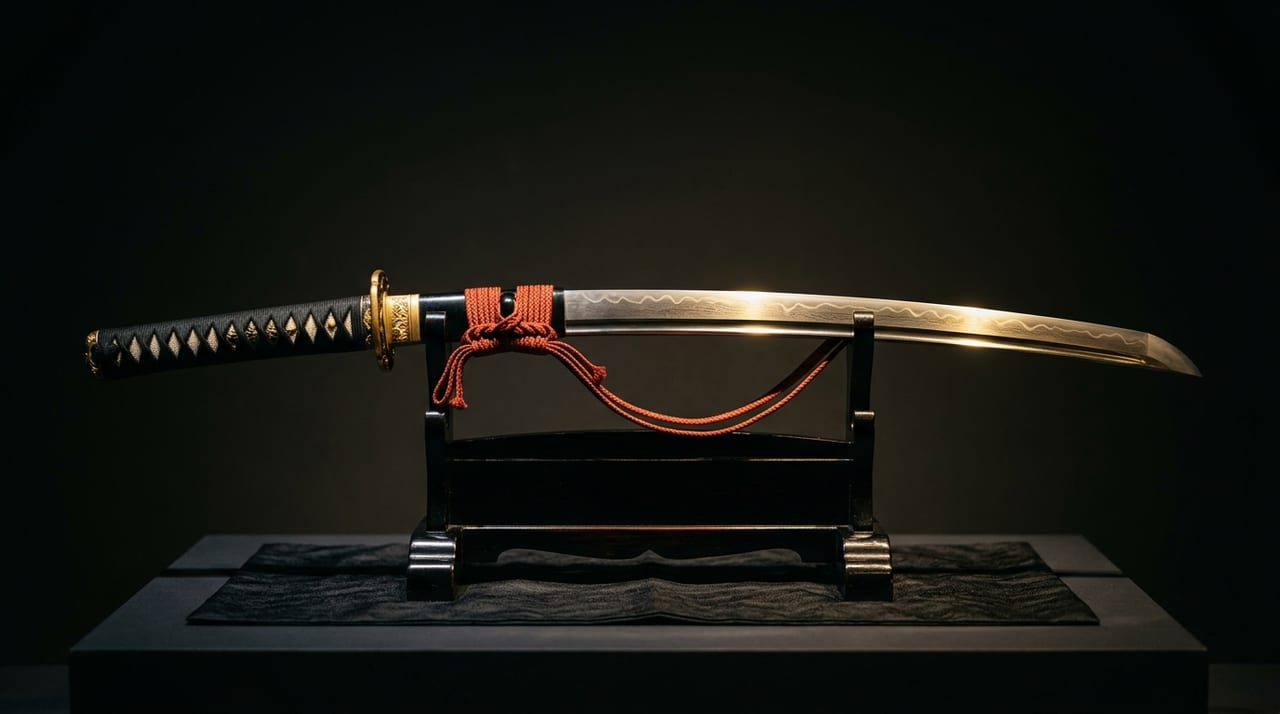
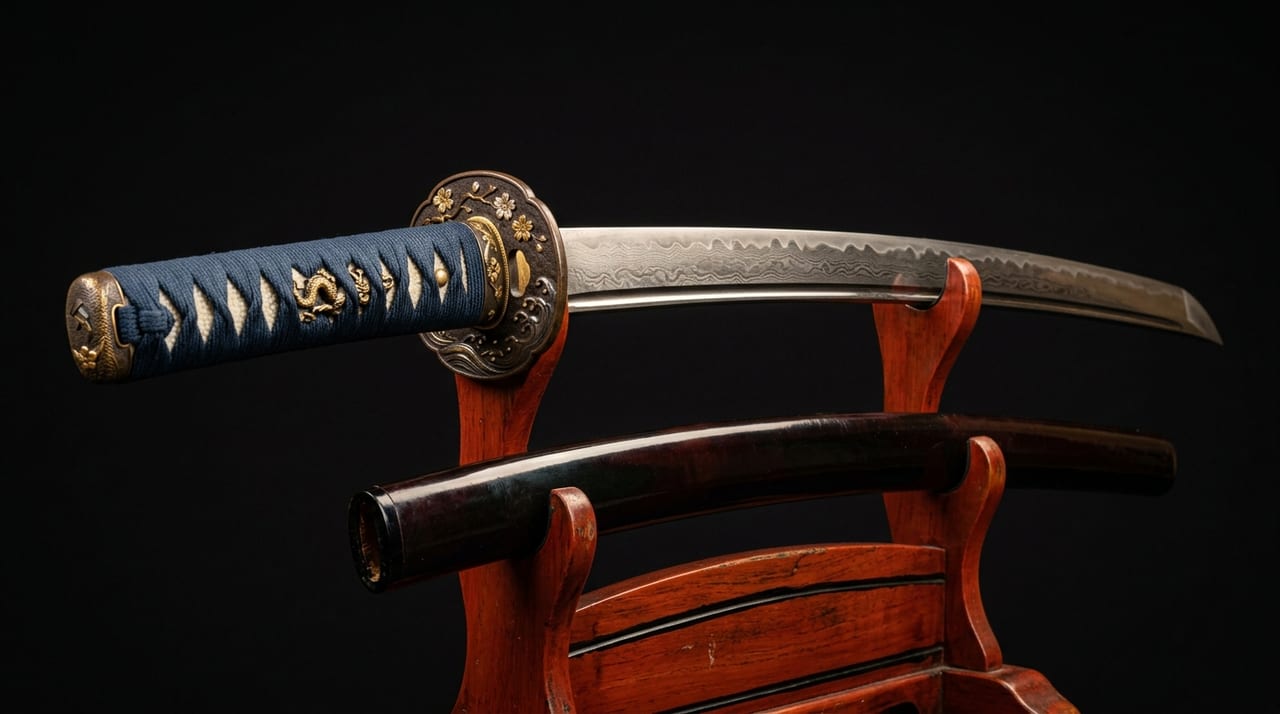
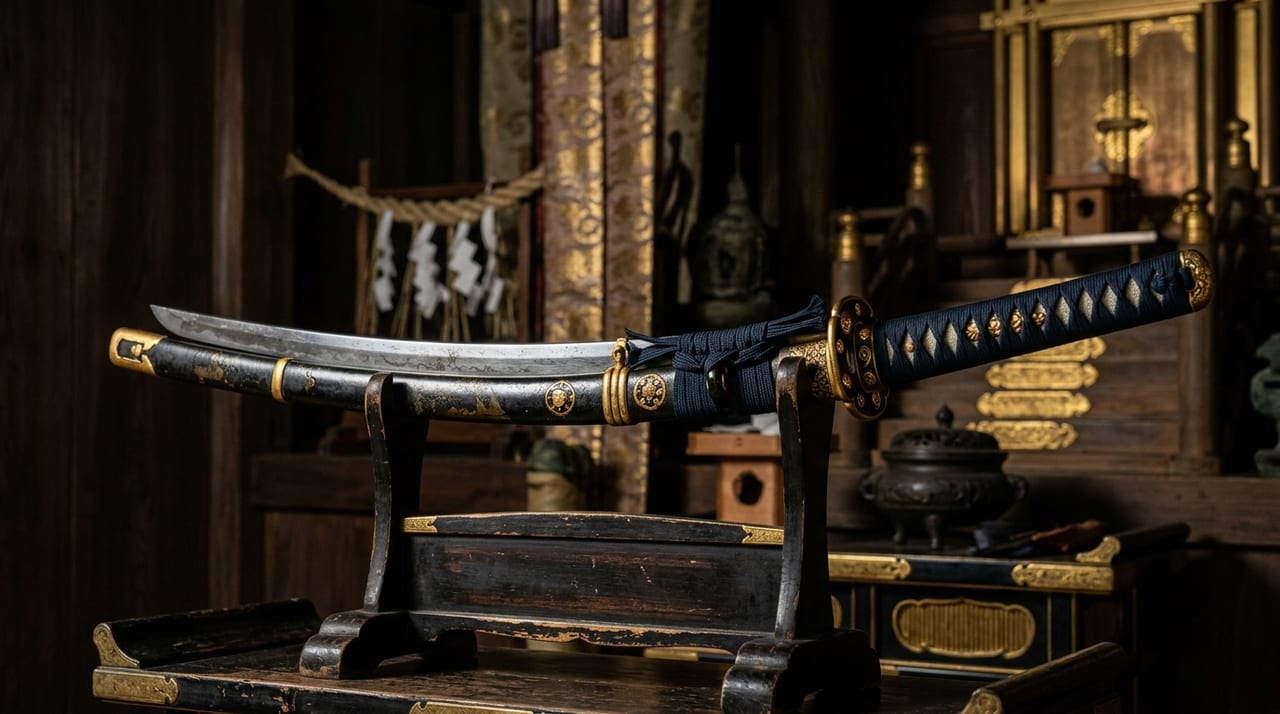
The distinctive koshirae (the complete set of fittings and mounting for a sword) known as "Date koshirae" is one of the legacies that most directly expresses Masamune's aesthetic. The Date koshirae, decorated with gold maki-e bamboo and sparrow designs on a jet-black saya and adorned with the family crest "mitsu-biki," embodies an exquisite balance that is magnificent yet never loses the dignity of a samurai house. The Sendai City Museum holds surviving examples of koshirae associated with the Date house, allowing visitors to sense Masamune's aesthetic sensibility from the actual objects.
Conclusion — The World of Date Read Through Swords
The sword culture of Date Masamune and Sendai can be understood on two levels: the personal tastes of an individual Sengoku warlord, and the organized cultivation of sword culture throughout the domain era.
Masamune's personal eye for and passion for swords was institutionalized in the form of cultivating the Sendai domain tōkō Kunikane, and this became the foundation of a Sendai sword culture that continued through the Bakumatsu period. The swords associated with the Date house preserved today in the Sendai City Museum are material evidence of this long chain.
For Japanese sword collectors and enthusiasts, Sendai is a destination with the special theme of "the sword culture of the Date house." By combining the experience of seeing actual objects on site with an understanding of the historical background, one can more richly savor the depth of Sendai's sword culture.