What Is Sori on a Japanese Sword — A Complete Guide to Types, Measurement, Depth Guidelines, and Historical Changes
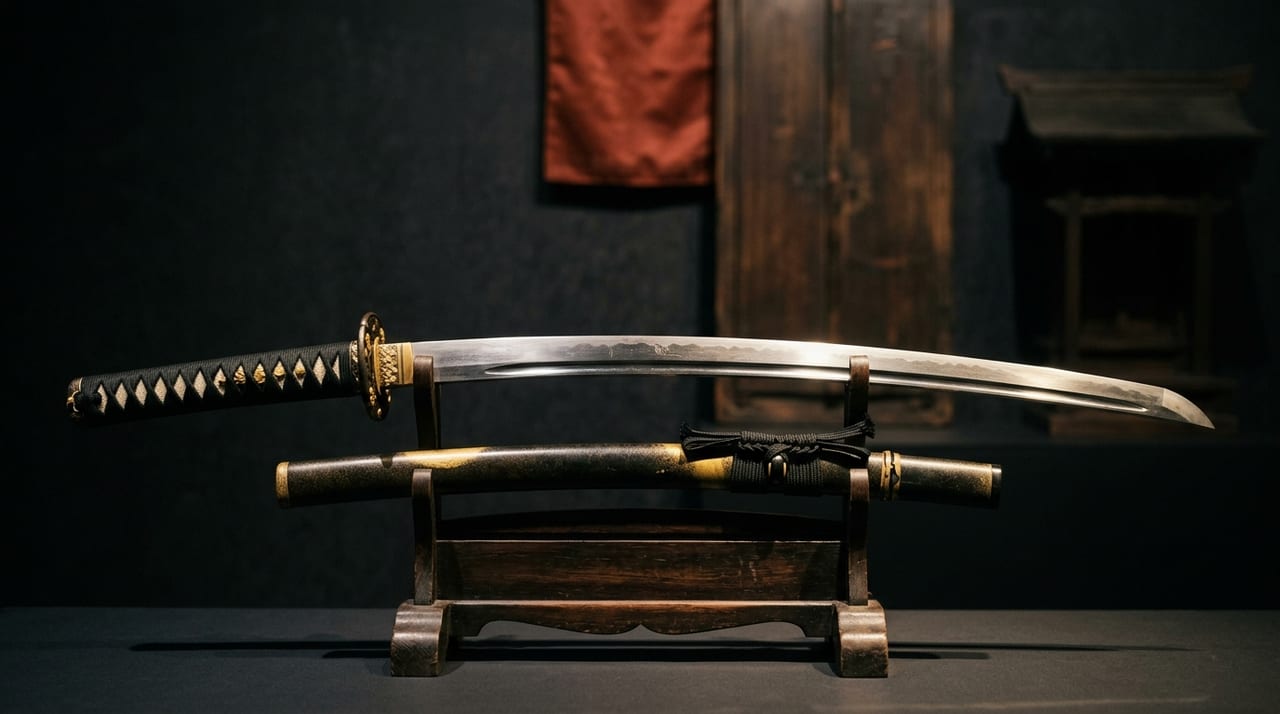 * Image is for illustrative purposes only.
Table of Contents
What Is Sori — The Curve Where the Soul of the Japanese Sword Resides
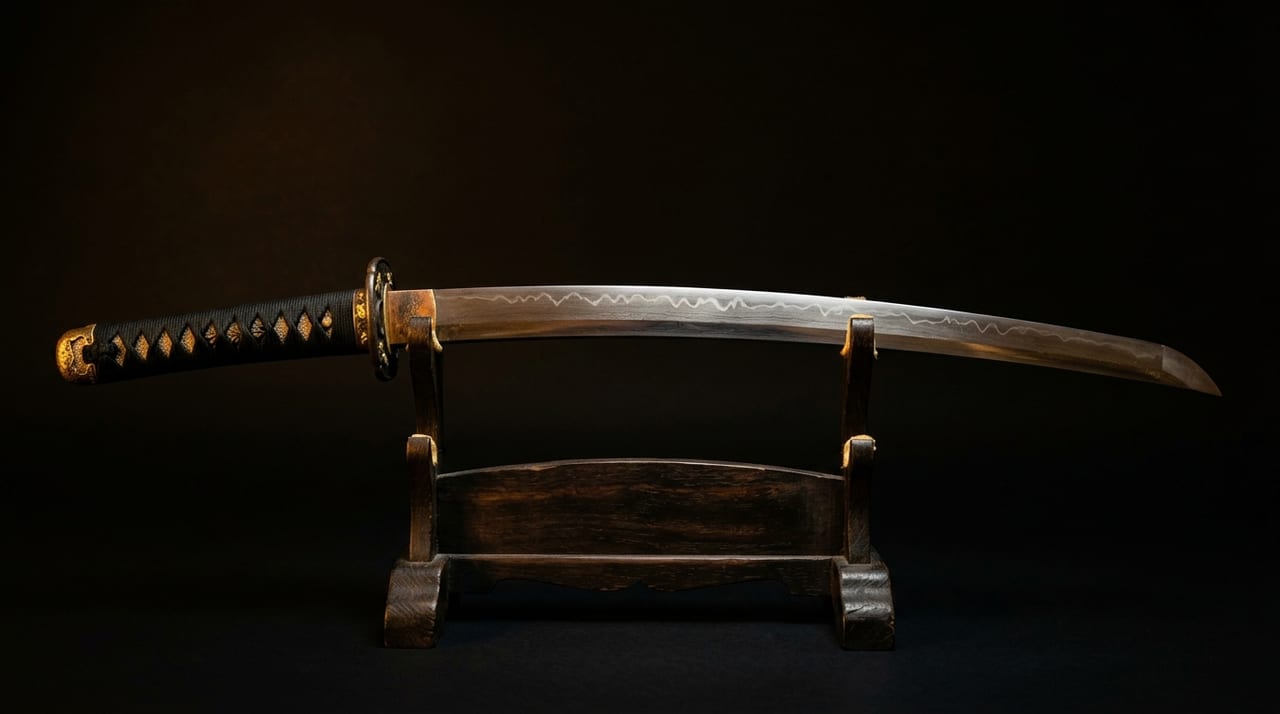
One of the elements that fundamentally sets the Japanese sword apart from the swords of other countries is sori. The graceful arc traced by the blade is not mere aesthetic design. The combat style of the era, whether mounted or on foot, the need for drawing speed, the characteristics of the iron used — all of these crystallize into the form of sori.
In sword appreciation, the skill of "reading the sori" provides the first clue for identifying the period, place of production, and school of a sword. This article systematically explains everything from the types and measurement methods of sori to period-specific characteristics and evaluation criteria in sword appreciation.
Measuring and Classifying Sori
How to Measure Sori
Sori is measured as "the distance from the deepest point of the mune (back of the blade) to the reference line on the cutting-edge side (the straight line connecting both ends of the blade)." In modern measurement it is typically expressed in centimeters; a typical uchigatana measures around 1–2 cm, while some ōdachi exceed 3 cm.
The dimensions of each part of the blade are evaluated in conjunction with sori. For a typical uchigatana (mid-Edo period, nagasa (blade length) approximately 70 cm), the representative values considered the standard range for appraisal are: motohaba 32–33 mm, sakihaba 21–22 mm, moto-kasane 7–8 mm, saki-kasane 5–6 mm, and sori 1.2–1.5 cm; values that deviate significantly suggest suriage, later modification, or a different place of origin.
Quantitative trisection measurement model: As a practical method for determining the position of the sori apex, the blade (the nagasa portion excluding the nakago (tang)) is divided into three equal parts from the base to the kissaki (point). If the deepest point falls within the base-side third, it is classified as koshi-zori; within the central third, naka-zori; within the kissaki-side third, saki-zori. This method is also useful for comparing the sori type recorded in a kanteisho (appraisal certificate) against the actual sword; a discrepancy between the measured value and the stated type suggests the possibility of later modification or suriage.
Yaki-ire and the Mechanism Behind the Formation of Sori
Sori is not merely a designed shape but emerges from the manufacturing process itself. Before yaki-ire (quenching), the tōkō (swordsmith) applies tsuchioki (applying the clay coating) to the blade, intentionally varying the quenching speed between the cutting-edge side and the mune side. During quenching, the cutting-edge side contracts rapidly while the mune side cools gradually, and this difference in contraction produces the arced sori. Skilled tōkō deliberately enter the blade into the water in a "reverse sori" state and adjust so that natural koshi-zori or naka-zori forms after quenching. In other words, sori is the result of the tōkō's skill in "controlling the physical phenomenon of quenching," and the tōkō's level of technical mastery is clearly reflected in the sori of the finished sword.
The nature of this difference in contraction lies in martensitic transformation. When rapid quenching on the cutting-edge side causes the steel's crystal structure to undergo martensitic transformation, the volume expands by approximately 1%, and this expansion generates bending stress toward the mune side. Before quenching, the tōkō pre-shapes the blade by bending it in the reverse direction called "uchi-sori" (in the direction in which the cutting-edge side is convex), and predictively controls the sori so that the desired koshi-zori or naka-zori is formed by the martensitic expansion that occurs after rapid quenching in water.
Classification by Position of Sori
The name differs depending on "where the deepest point of the sori is located."
Koshi-zori: The deepest point of the sori is located near the base (koshi) of the blade. It is commonly seen in tachi from the late Heian through early Kamakura periods. It is a characteristic often found in tachi made by Kyoto tōkō represented by "Yamashiro-mono," and it is an elegant form in which the arch toward the cutting edge is gently distributed across the entire blade.
Naka-zori / torii-zori / Kyo-zori: The deepest point of the sori is located near the center of the blade. It appears frequently from the mid-Kamakura period onward and is characterized by a combination of practical usability and aesthetic balance. It is commonly seen in swords of Sōshū-den and develops into the standard form of the later uchigatana.
Saki-zori: The deepest point of the sori is shifted toward the tip (kissaki) side of the blade. It is seen in tachi made in a revival style during the Bakumatsu and shinshintō eras. It is considered a form conceived with mounted use in mind.
Saki-zori is also noted for its affinity with iai. When drawing from the sashi-katana style (a method of wearing the sword with the cutting edge facing upward), having the deepest point of the sori on the kissaki side causes the kissaki to quickly face forward the moment the sword is drawn from the saya (scabbard). This characteristic is said to work advantageously in fundamental iai techniques (ichimonji, kesa-giri, etc.), and saki-zori is sometimes chosen for modern swords made for iai practice.
Funbari: Strictly speaking this is not a type of sori, but refers to a form in which the difference between the motohaba and sakihaba is large, giving the blade a wide base that tapers toward the tip. It is common in tachi from the mid-Kamakura period, and the presence of funbari is highly valued as a characteristic of kotō.
Uchi-zori: The reverse of ordinary sori, a form in which the mune side is convex. It is also called gyaku-zori (reverse sori). It is seen in tantō and yoroi-doshi, and is a special sori suited for the purpose of thrusting through gaps in armor. In the context of sword appreciation, swords bearing the marking "uchi-zori" are exceedingly rare, and if one exists it becomes an important characteristic directly linked to identifying the place of origin and intended use.
Changes in Sori Across Eras
Late Heian through Early Kamakura: The Golden Age of Koshi-zori Tachi
Japanese swords are believed to have developed sori in the late Heian period (around the 10th century). The jōkotō that preceded them were straight swords.
During the Heian-Kamakura period when mounted warriors were the main fighting force, tachi were worn suspended from the waist (tachi-haki style). In this style the sword hangs from the waist with the cutting edge facing downward, so a koshi-zori that "arcs from the waist" aligned with ease of drawing.
As typical examples, tachi made by the Sanjō school and Awataguchiha of Yamashiro are slender with pronounced koshi-zori, and their hamon (temper line) frequently features hoso-suguha and ko-midare. These are called ko-yu and are highly valued for appreciation.
Mid-to-Late Kamakura: Becoming More Robust and Transitioning to Naka-zori
In the late Kamakura period following the Mongol invasions (1274 and 1281), swords changed to a more robust construction in response to "infantry combat in group battles" and "advances in armor."
- The blade becomes wider and heavier ("yutaka-na sugata," a full and imposing form)
- Sori shifts toward naka-zori
- The bōshi (temper line in the point) becomes larger
Swords of this period, represented by Masamune and Sadamune of Sōshū-den, receive the highest acclaim as works that "combine power and elegance."
Nanbokuchō Period: Extreme ōnaginata and Robust Tachi
The Nanbokuchō period (14th century) was an era in which "exceptionally large swords" were made. ōdachi and nodachi appeared, with extremely wide mihaba (blade width) and thick kasane (blade thickness). Many also had deep sori, and it is not unusual for sori to exceed 3 cm.
Many swords from this period were later shortened by suriage, and in many cases the original sori was greatly reduced.
Muromachi through Sengoku: The Shift to Uchigatana and Shallower Sori
From the mid-Muromachi period onward, uchigatana replaced tachi as the mainstream sword form. Uchigatana are worn thrust through the belt with the cutting edge facing upward (sashisoe style).
As the wearing method changed, the functional requirements for sori also changed. There is also the theory that when worn with the cutting edge facing upward, a shallower sori is easier to draw. Uchigatana of the Sengoku period tended overall toward shallower sori.
Swords of the sue-kotō and shintō periods, represented by "mass-produced Keichō swords," also feature predominantly uniform and shallow sori as a result of prioritizing practicality.
Edo Period: Changes in Sori During the Shintō and Shinshintō Eras
As peace continued through the Edo period, swords became more strongly associated with "art objects and formal dress" rather than weapons. This change also influenced sori.
Shintō period (early Edo): Tōkō in Kyoto, Osaka, and Edo competed to explore their own distinctive sugata. The Kanbun Shintō produced by Osaka Shintō tōkō is characterized by a slender blade with shallow sori and a refined sugata. This was a form that responded to the demand among samurai of the time for a "formal dress sword."
Shinshintō period (late Edo): Suishinshi Masahide and others advocated a "revival of kotō," consciously attempting to restore the robust sugata of the Kamakura and Nanbokuchō periods. Under this influence, "revival-style tachi" with pronounced koshi-zori and wide blades were also produced in the late Edo period.
Reading Sori in Sword Appreciation
Comprehensive Evaluation of Sugata
The sugata of a sword refers to the comprehensive visual impression encompassing the overall proportions, sori, and the flow of the hamon (temper line). Sori is the central element of this sugata.
What is required of the sori in a fine sword:
- The sori flows "naturally" across the entire blade (without awkwardness)
- The depth of the sori matches the typical standard for its period and school
- The sori has not been deformed by suriage or later modification
Changes to Sori Caused by Suriage
When a kotō (particularly an ōdachi from the Nanbokuchō period) is later shortened by suriage, the original koshi-zori may diminish or disappear, causing it to appear as naka-zori or shallow sori. The ability to detect this "change in sori after suriage" is itself one aspect of connoisseurship.
The manner of suriage on the nakago (tang), kinsuji, and the presence or absence of the mei (signature) serve as evidence of suriage.
How to Measure Sori — The Basic Figures Also Recorded in the Registration Certificate
The sori figure is expressed as the depth at the point where the distance between the mune and a straight line is greatest, that line being drawn from the munemachi (the boundary between the blade and the nakago on the mune side) to the tip of the kissaki. When measuring on the actual sword, lay the blade flat, place a thread or straight ruler against the munemachi and the kissaki, and measure the maximum distance to the mune.
This value is recorded in centimeters as "sori" on the sword registration certificate issued by the prefectural Board of Education, and together with the nagasa it provides the basic data for estimating a sword's sugata. Even simply examining the ratio of the sori figure to the nagasa on the registration certificate when considering a purchase gives a rough sense of whether the sword has a tachi-style sugata or the shallow sugata of the Kanbun Shintō style.
Guidelines for Sori Depth — Tachi, Uchigatana, Wakizashi, and Tantō
Sori depth varies greatly by period and sword type, and differs from one sword to the next even within the same category. The general tendencies are as follows.
- Tachi: Tachi from the late Heian through early Kamakura periods predominantly have koshi-zori with a deep curve close to the hilt
- Uchigatana: Uchigatana of the Muromachi period predominantly have saki-zori with the curve closer to the kissaki
- Wakizashi: Wakizashi mostly follow the sugata of uchigatana from the same period
- Tantō: Tantō mostly have little or no sori
For period-by-period tendencies, see Touken World "Nihontō no Sugata"; for tantō sugata, see Nagoya Japanese Sword Museum "Tantō". The sori of individual swords can be verified using the figures recorded on the registration certificate (Nagoya Japanese Sword Museum "Sword Registration with the Prefectural Board of Education").
What "Deep Sori" and "Shallow Sori" Mean
Swords with deep sori are predominantly kotō that retain a tachi-style sugata, or revival works in the shinshintō tradition that copy kotō, and they give an impression of elegance and courtly refinement. By contrast, the prime example of a sword with shallow sori is the Kanbun Shintō of the early Edo period, which is considered a form adapted to the swordsmanship of a peaceful era (the dojo-style fencing that emphasized thrusting). In the Bakumatsu shinshintō period, long swords with shallow sori known as "kinnō-tō" came into fashion, and the spirit of the age once again found expression in sori.
In this way, the depth or shallowness of sori is not a measure of quality but a record of the combat methods and aesthetic sensibility of the era in which the sword was made. In appraisal too, the combination of "sori depth × position of the sori apex" is the first step in determining the period.
Conclusion — Sori Is the Testimony of the Era in Which the Sword Lived
The sori of a Japanese sword is a testimony to the era — showing "what combat style the sword was made for, and with what philosophy, in the era when it was created." While it cannot simply be said that "deep sori = old" or "shallow sori = new," reading the type, depth, and position of the sori provides major clues for determining a sword's period, place of origin, and school.
The next time you appreciate a sword, try starting by observing the sori of the entire blade. The craftsman's intent and the memory of the era embedded in that curve will, little by little, begin to come into view.