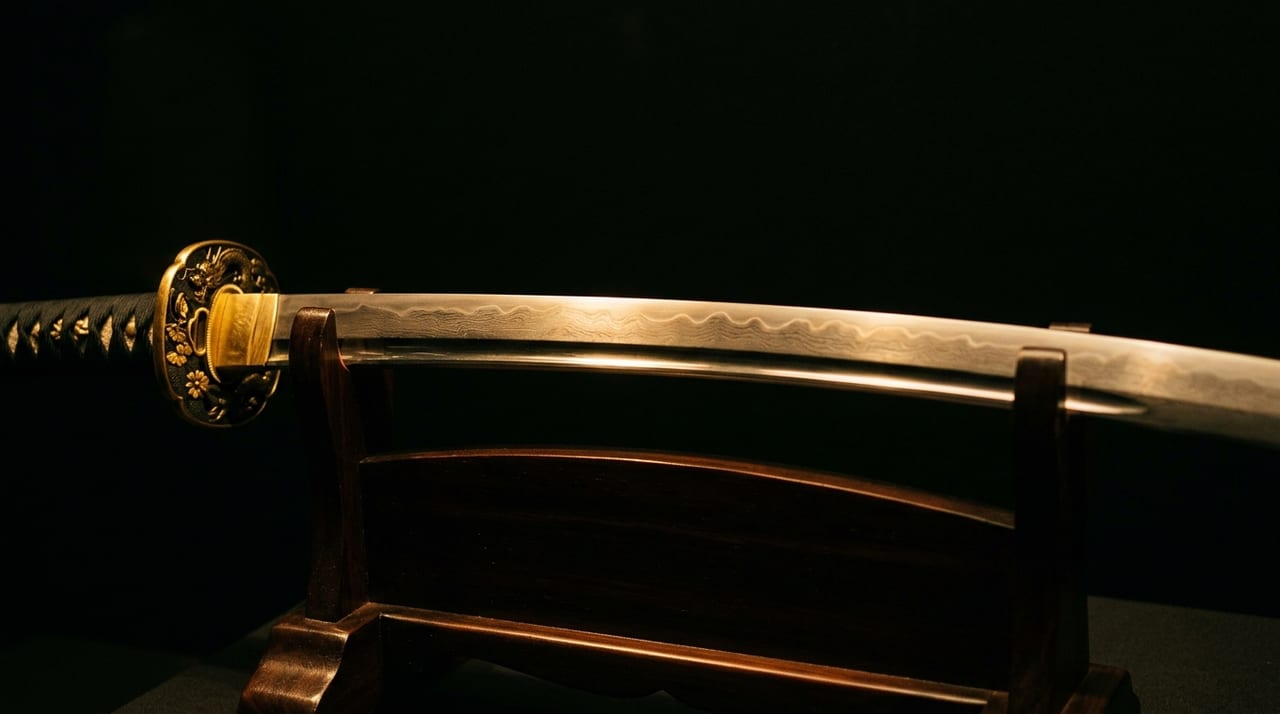
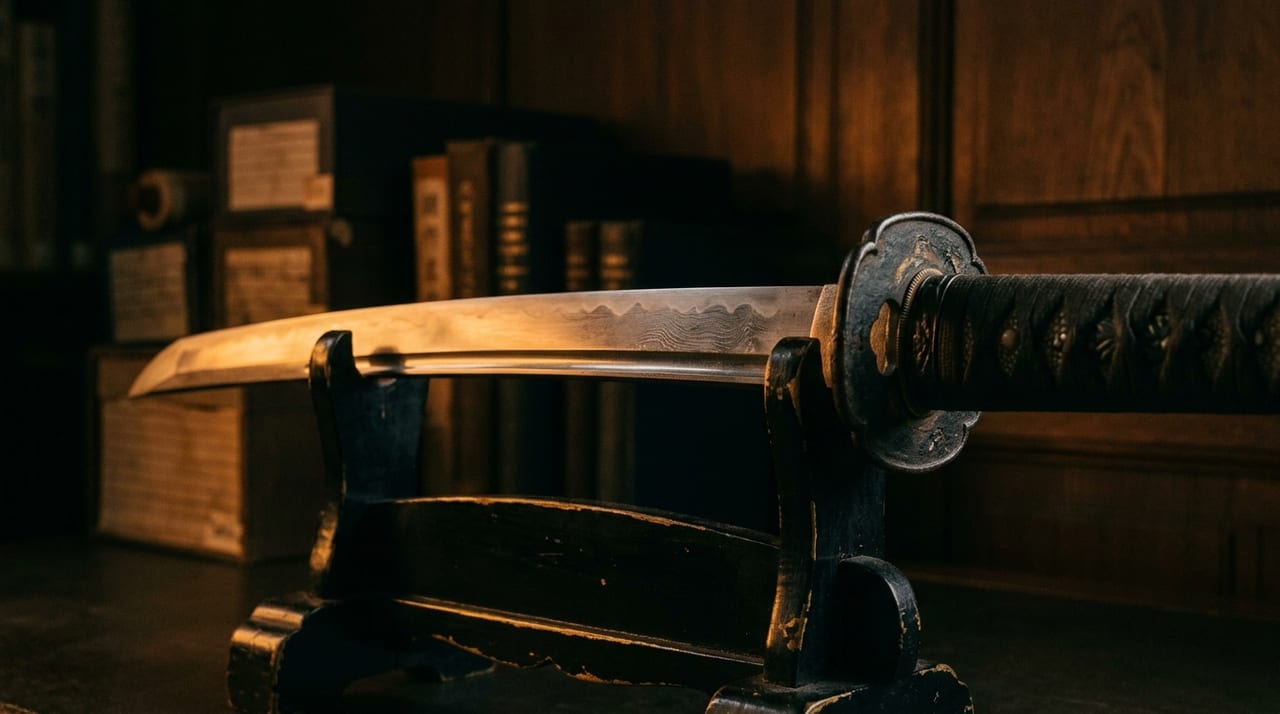
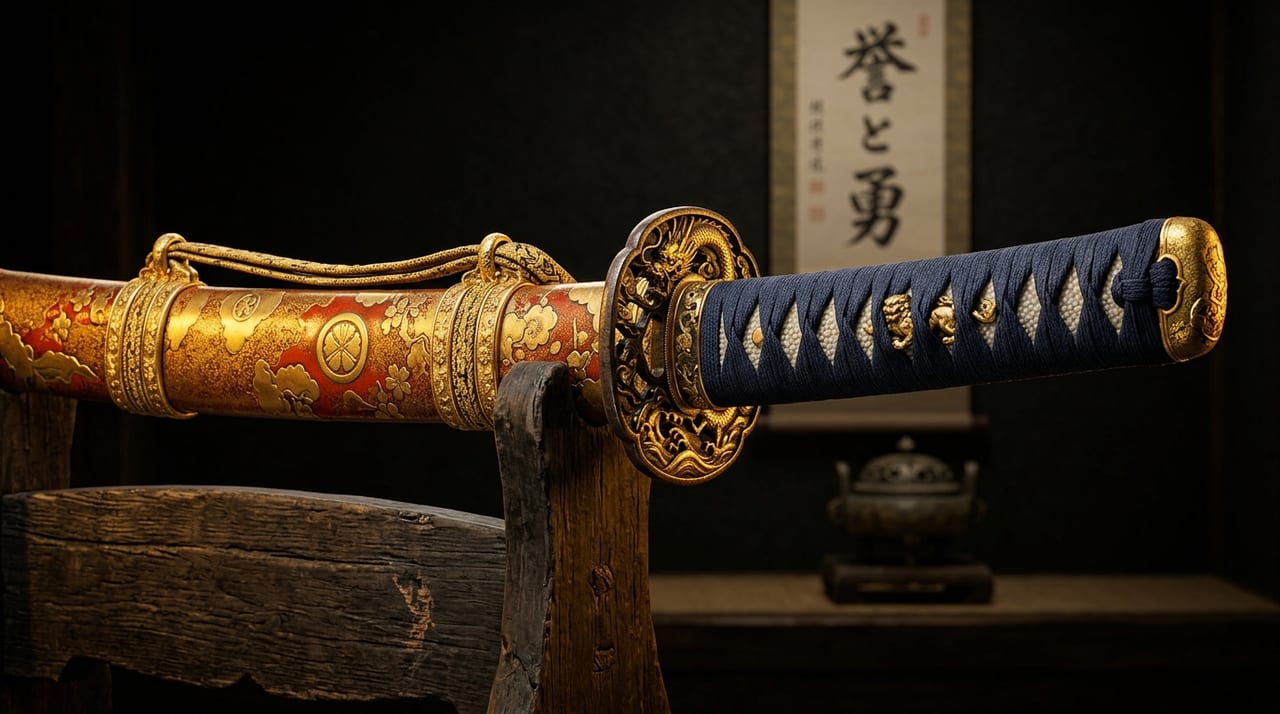
The Sword and Tea — The Deep Spiritual Intersection of "Sword" and "Tea" in Warrior Culture
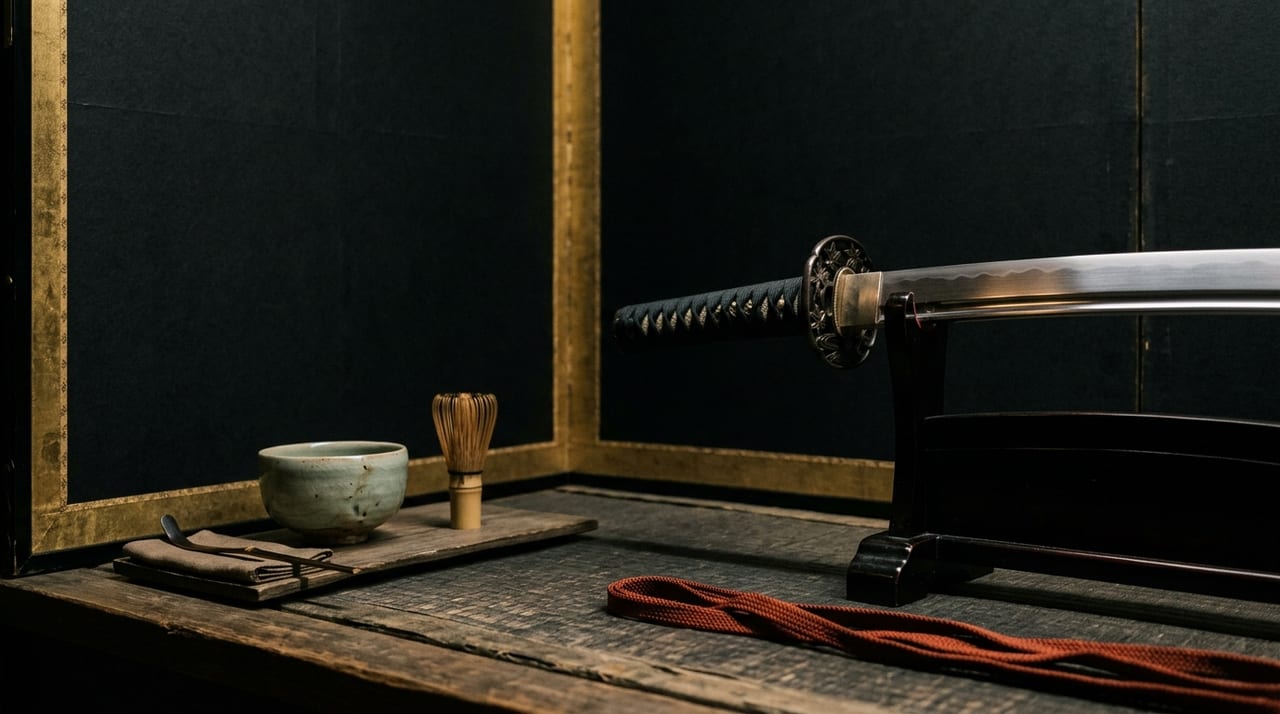 * Image is for illustrative purposes only.
Table of Contents
"The Sword Person" and "The Tea Person" — They Are One and the Same
When we speak of the warlords of the Sengoku period, we often imagine "war" and "tea" as two separate worlds. In reality, however, the very warlords who collected the finest swords and staked their lives on the battlefield were the same individuals who collected the finest tea utensils and cherished the tea ceremony deeply.
Oda Nobunaga, Toyotomi Hideyoshi, Tokugawa Ieyasu — all of them, in their pursuit of supremacy over the realm, competed to collect the finest swords and the finest tea utensils. This simultaneous collecting of swords and tea utensils was no coincidence; it was the result of the representation of power and the pursuit of spiritual depth converging within warrior culture.
This article explores how the nihontō and chado intersected spiritually within warrior culture, drawing on specific anecdotes and philosophical reflection.
The "Chanoyu Governance" of Sengoku Warlords and Sword Collecting
Nobunaga's "Ochayu Goseidō"
Oda Nobunaga consciously used the tea ceremony as a political tool. As the highest reward for his retainers, he employed the "Ochayu Goseidō" — the authority to grant the right to participate in the tea ceremony and to bestow tea utensils.
The tea utensils Nobunaga gave to his retainers — beginning with the foremost chaire (tea caddies) known as the "Tenka Mitsu Katatsuki" (Hatsuhana, Nitta, and Narashibu) — carried the highest political significance as hairyō no chadōgu (bestowed tea utensils).
At the same time, Nobunaga was an enthusiastic collector of swords, and placed great importance on famous blades such as Masamune and Muramasa. For Nobunaga, the "finest sword under heaven" and the "finest tea utensils under heaven" occupied the same position as proof of the unification of the realm.
Hideyoshi's "Golden Tea Chamber" and His Obsession with Swords
Toyotomi Hideyoshi's passion for collecting tea utensils and swords was even grander.
Hideyoshi formed a deep master-disciple relationship with Sen no Rikyū and pursued the highest attainment in chado. At the same time, his obsession with swords was extraordinary; he collected famous blades and treasured swords offered as tribute by powerful warlords.
The "golden tea chamber" Hideyoshi used — a portable tea room constructed of gold — functioned as a setting that displayed the pinnacle of power. Attendance here was considered the highest honor for warlords and court nobles alike, and upon entering, swords were placed on the katanakake at the entrance, signaling their "presence" while remaining outside the space.
Multiple theories exist regarding the breakdown of the relationship between Hideyoshi and Rikyū and the circumstances that led to Rikyū being forced to commit seppuku (1591). Various explanations have been proposed — "a difference of opinion over tea utensils," "resistance to the power structure," and others — and the event continues to be debated today as a symbolic incident of the tension between "tea and power."
The Etiquette of Swords at the Tea Room — The Culture of the Katanakake
The Tea Room's Katanakake
In a formal tea gathering, guests observe the practice of removing their swords before the tea room entrance known as the nijiriguchi, placing them on the provided katanakake before entering.
The nijiriguchi is intentionally made small, so that an adult must stoop to pass through. This design embodies the spirit of chado — "that both the highborn and the lowborn bow their heads equally before the tea room." And by removing one's sword — the soul of the samurai and the symbol of rank — before entering, the act of crossing a boundary "beyond status within the tea room" was created.
The Spiritual Resonance of Wabi in Swords and Tea
The aesthetic of wabi-cha perfected by Sen no Rikyū pursues "essential beauty rather than splendor" and "the depth that emerges when what is superfluous has been stripped away."
This spirit resonates deeply with the aesthetics of fine sword appreciation. "The sword of the finest tōkō reveals the purity of forging without unnecessary ornament" — this view aligns with chado's idea that "a utensil should possess the essential beauty intrinsic to its nature as a utensil."
Murata Jukō, the great master of wabi-cha, held that the ideal of tea was to "blur the boundary between Japanese and Chinese." Likewise, in the appreciation of nihontō, the perspective that blurs the boundary between "the functional beauty of a weapon" and "the spirituality of a work of art" is considered the highest form of appreciation.
The Aesthetic Dialogue Between Tōkō and Tea Utensil Craftsmen
Iron and Clay — The Aesthetic Philosophy of Different Materials
The tōkō of the nihontō and the potters of tea utensils (in particular, tea bowls) appear at first glance to work with entirely different materials. Yet they share the philosophy of "drawing out the essential beauty of the material."
Just as the tōkō confronts his material in order to "draw out the beauty of tamahagane to the greatest degree possible," the potter makes the most of "the accidental beauty produced by the chemical reaction between clay and glaze." Both share a common philosophy of creation: "engaging in dialogue with the material" and "standing at the boundary between control and chance."
The Formal Beauty of Tsuba and the Tea Bowl
The tsuba of a sword and the tea bowl share common ground in terms of formal beauty.
"First there is the beauty of use (functional beauty), and within that, decorative beauty resides" — a tea bowl must be functional as a vessel for drinking tea, and a tsuba must be functional as a hand guard. The finest tea bowl and the finest tsuba share the same essence in that both achieve "the unity of function and beauty."
Among the sword fitting metalworkers (tsuba craftsmen, menuki craftsmen, and others) of the Edo period, many possessed the aesthetic sensibility of chado, and the existence of "sword fitting metalworkers who were also tea practitioners" is documented. Critics point out that the spirit of chado's "wabi and sabi" influenced their work.
Daimyo Tea Masters and Swords — The "Dual-Wielding" Cultured Man
Hosokawa Tadaoki (Sansai) — Swordsman and Tea Master
Hosokawa Tadaoki (1563–1646, pen name: Sansai) stood at the very pinnacle of the tea ceremony as one of Sen no Rikyū's foremost disciples, the "Seven Sages of Rikyū," while at the same time being a master of swordsmanship.
Tadaoki was also first-rate in the collecting of tea utensils, and an anecdote survives in which he protected Rikyū's tea utensils when Rikyū took his own life. His attachment to swords was equally strong; he collected famous blades and is said to have been a considerable practitioner of swordsmanship himself.
"Seeking the highest attainment in both the sword and tea" — Hosokawa Tadaoki is the archetypal example of this "dual-wielding cultured man."
Matsudaira Fumai — The Greatest Daimyo Tea Master of the Late Edo Period
Matsudaira Harusato (pen name: Fumai, 1751–1818), daimyo of the Matsue domain in the late Edo period, is known as the greatest daimyo tea master of the Edo period.
Fumai's collection of tea utensils was of an unprecedented and unparalleled scale; the "Fumai-kō Collection" continues to be held in the world's finest museums as supreme examples of tea utensils. At the same time, Fumai had a deep interest in swords and devoted himself to the protection of sword culture in the Matsue domain.
Conclusion — The Sword and Tea as "The Two Pillars of the Warrior Spirit"
The nihontō and chado appear on the surface to be entirely different cultures, but in their essence they share the spiritual depth that warrior culture pursued.
- The pursuit of "essential beauty" with what is superfluous stripped away
- Dialogue with materials; the beauty of control and chance
- The integration of functional beauty and spirituality
- Both the tea room and the sword as "a space of beauty that transcends rank"
When appreciating nihontō in the modern age, understanding "the beauty of the sword" within the context of "the beauty of tea" helps one grasp nihontō culture more deeply. By viewing the sword through the eyes of the warlords and cultured men who loved both the sword and tea, the nihontō emerges as a spiritual heritage that transcends the merely "functional" as a weapon.